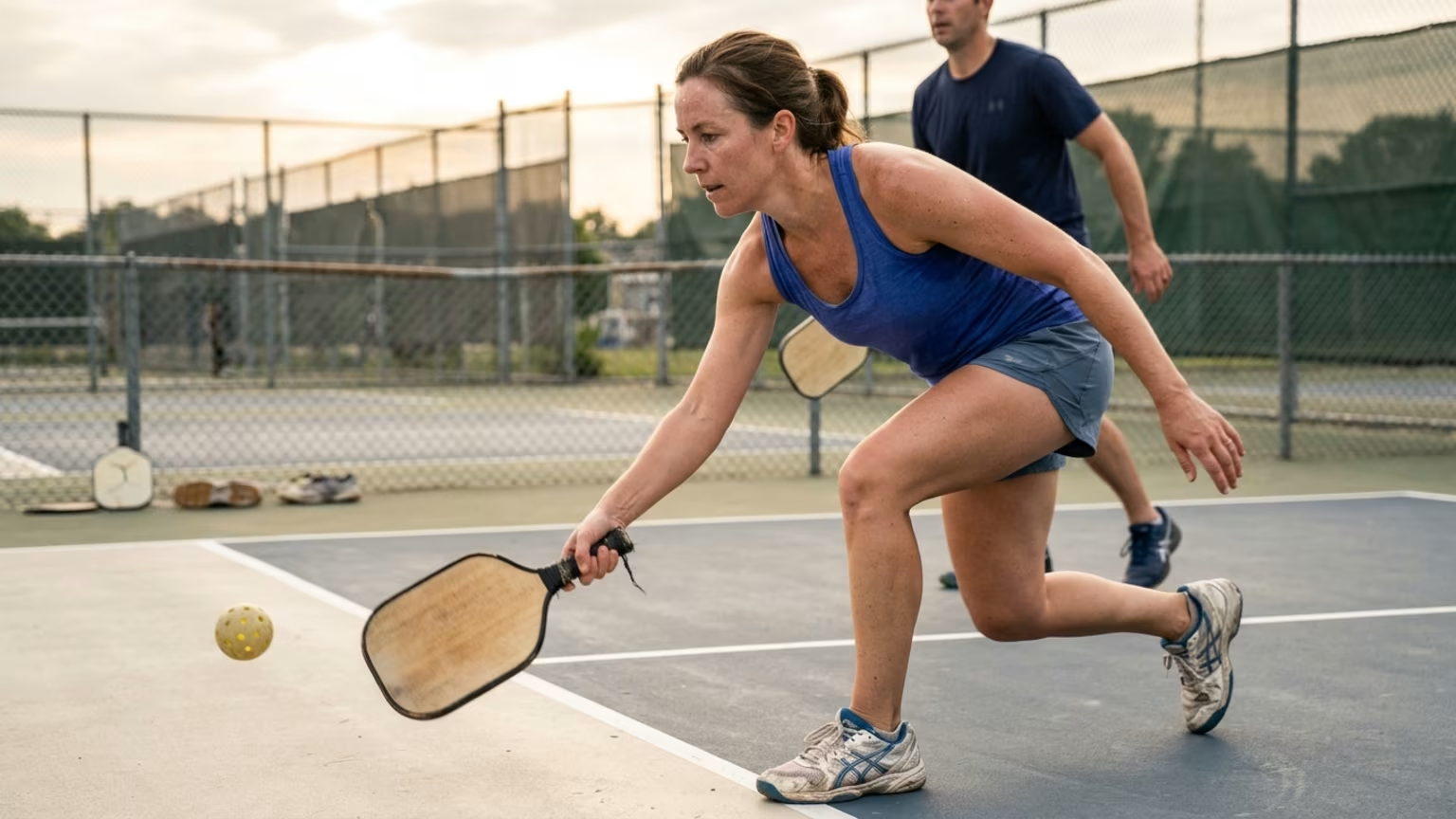

Learn when to replace your racquet, paddle, and court shoes using a data-backed condition framework that protects your body from overuse injuries.




In a 2026 Korean recreational-player study, 38.1% of participants reported an injury during the preceding 12 months. This prominent prevalence of lower-extremity and overuse injuries highlights the physical toll that repeated explosive court movements take on the adult body. Managing that workload requires proactive care, making condition-based equipment replacement a vital part of staying healthy on the court.
The rapid lateral transitions in racquet sports place constant stress on joints, tendons, and ligaments. Players frequently underestimate the sheer volume of sudden stops and explosive starts required during a standard match. This constant braking generates massive force that must be absorbed by the body and the equipment. Without proper gear to manage this force, the joints endure unnecessary wear over time.
When our team first started playing pickleball, we noticed how many people skipped warming up entirely. They would jump straight out of their cars and right up to the kitchen line. One of our staff tried doing exactly that and immediately pulled a calf muscle. Pickleball requires just as much explosive lateral movement as tennis, just in a tighter space. Since then, we always spend five minutes doing dynamic lunges and ankle rolls. It changes everything about how confident we feel pushing off the baseline.
This lateral stress is exactly why worn-out shoes pose a silent risk to players. Footwear can lose crucial internal stability and cushioning long before the outside shows obvious visual failure. Relying on shoes with collapsed midsoles or smooth traction zones forces the lower extremities to absorb the shock of every sudden stop. Upgrading court footwear based on lost stability rather than age helps protect against the overuse injuries seen in recent studies.
Beyond shoes, the condition of your racquet or paddle directly influences the physical toll on your upper body. When strings lose their resilience or a paddle core begins to fail, players naturally compensate by swinging harder to generate the same power. This compensatory effort increases the strain on the wrist, elbow, and shoulder. Regularly inspecting your gear ensures that the equipment does the work, allowing your body to focus on smooth mechanics.
The data clearly shows how court workloads impact different demographics as participation grows across the country. A report carried by Missouri Public Radio cited an analysis of U.S. Consumer Product Safety Commission data showing a sharp rise in incidents. According to that analysis, pickleball-related emergency-room injuries rose from about 8,300 in 2018 to more than 31,000 in 2025. Adults aged 50 and older accounted for more than four out of five of those pickleball-related emergency visits between 2018 and 2025.
While emergency room data highlights severe incidents, it does not paint the complete picture of daily wear and tear. These figures are counts of emergency-room-treated injuries, reflecting the massive surge in total older players rather than the inherent danger of every single session. However, the data does emphasize the importance of preparation and appropriate gear for an aging demographic. Protecting the body becomes a primary objective when participating in sports with high lateral demands.
A closer look into older player demographics reveals specific vulnerabilities during court play. A 2025 study discussed by UT Health San Antonio analyzed 1,110 cases representing an estimated 66,350 pickleball-related injuries from 2013 to 2022. The research found that most injuries occurred among players aged 65 to 80. Furthermore, the same medical source reports that fractures were particularly common among women over 60. These fractures most often involved the arm and especially the wrist.
Equipment fit also plays a role in managing upper-body stress during competitive play. A 2006 study summarized by ScienceDaily found no association between an improperly sized tennis-racquet grip and tennis elbow in the studied recreational players. The researchers nevertheless recommended using the conventional grip-measurement method as a starting point and then choosing the size that feels most comfortable. Maintaining a fresh overgrip prevents slipping, which keeps players from squeezing the handle too tightly and straining the forearm muscles.
While all three sports share a reliance on quick reactions, the physical toll varies based on court geometry and equipment weight. Tennis players cover larger distances, resulting in heavy wear on shoe traction zones and strings over the course of a season. The long swings and heavier racquets require consistent equipment maintenance to avoid poor compensatory habits. Relying on a consistent gear maintenance cycle ensures that the racquet stringbed absorbs the ball impact rather than the player's shoulder.
Tennis also involves higher top speeds before deceleration, which heavily taxes the shoe's heel counter and midsole cushioning. Players must regularly check their footwear for uneven wear patterns that could destabilize their planting foot. Replacing shoes when the cushioning collapses provides a better foundation for the intense braking required on hard courts. This simple equipment upgrade can make a noticeable difference in post-match knee comfort.
Pickleball forces players into a more compressed area, intensifying the frequency of sudden lateral shifts. The rapid exchanges at the net require paddles to have a structurally sound core for consistent and reliable rebound. When a paddle suffers broad delamination or a cracked core, it severely compromises the player's ability to control fast-paced shots. The high rate of lower-extremity injuries in pickleball underscores the need for highly stable court footwear.
Padel combines the continuous movement of tennis with the enclosed dynamics of a squash court. Players must brake sharply and rotate frequently to track balls rebounding off the surrounding glass walls. This constant twisting places unique rotational stress on the knees and ankles, demanding footwear with exceptional grip and structured lateral support. Understanding how movement patterns change across court dimensions helps players choose the right equipment to handle these distinct rotational forces safely.
The 38.1% injury prevalence among recreational players should prompt a shift in how we approach our preparation on the court. Instead of waiting for strings to snap or shoes to develop visible holes, implement a simple, condition-based inspection of your gear before every session. Check your footwear for internal stability, ensure your paddle is structurally sound, and replace worn grips to prevent excessive tension in your hands. Taking a few moments to evaluate your equipment and perform dynamic lunges is a small investment that pays off immensely over a long season.
Treating equipment maintenance as a core part of your injury prevention strategy helps manage the cumulative workload of racquet sports. Worn gear subtly changes your mechanics, forcing your muscles and joints to compensate for lost traction or dead strings. Replacing items based on their actual condition rather than their calendar age keeps your body moving efficiently. It turns the transition from the car to the baseline into a measured, confident step rather than a risky gamble.
Follow Evercourts for practical insights on tennis, pickleball and padel performance, movement, recovery and healthy ageing. Stay connected for new articles, research-led guidance and ideas to help you play well and keep playing for years.


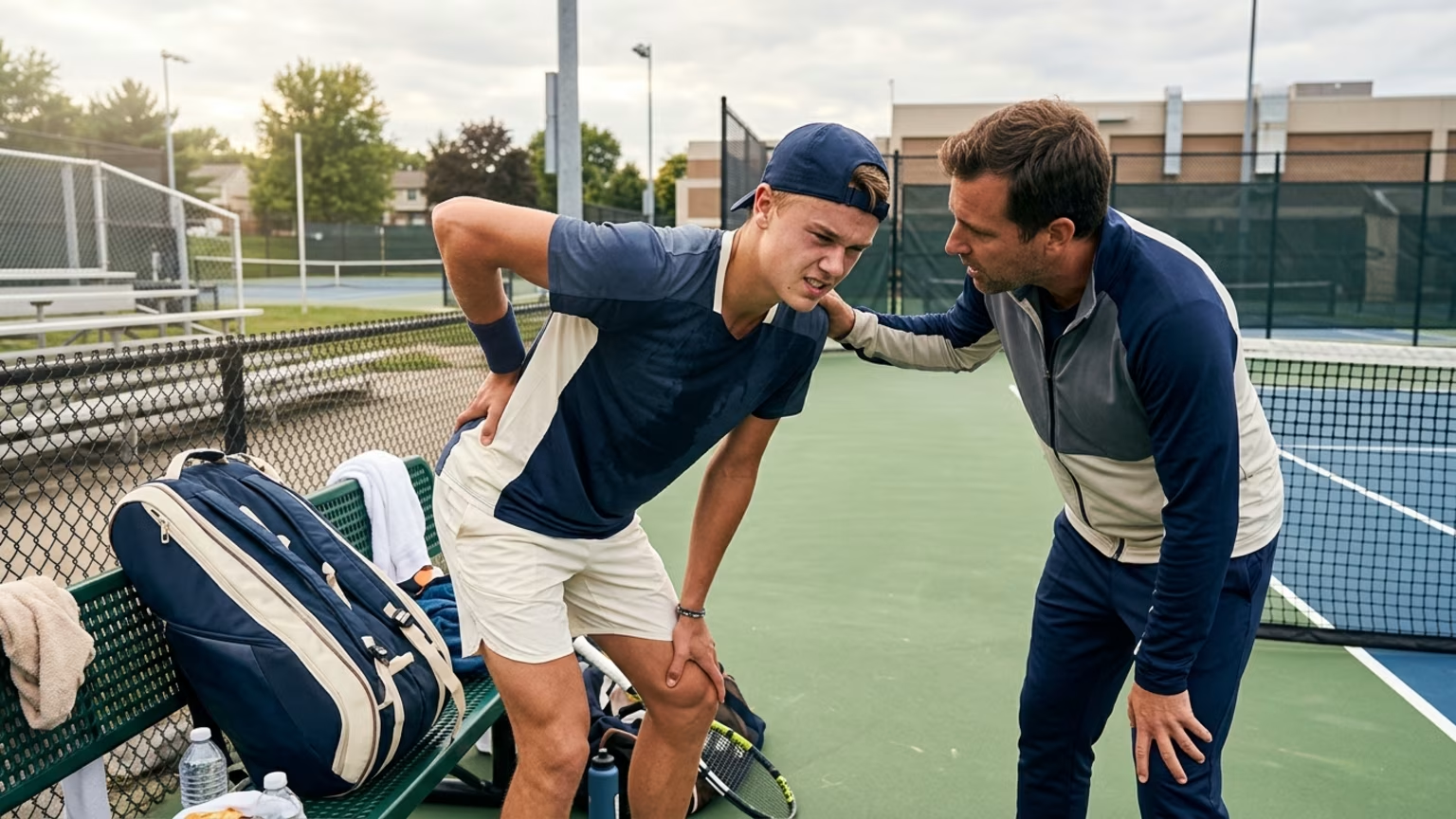
Holger Rune withdrew from the European Open with a back problem. The facts behind his decision and a grounded perspective for recreational players.

The Dink’s October 17 guide emphasizes deep returns, ball-height decisions and positioning against faster pickleball opponents.

A new report outlines padel and tennis gear trends. Learn how to assess adjustable rackets, sensor feedback and smart-court claims.
Read practical guidance for better movement, smarter preparation and a game that keeps working for you.
explore the Blog
