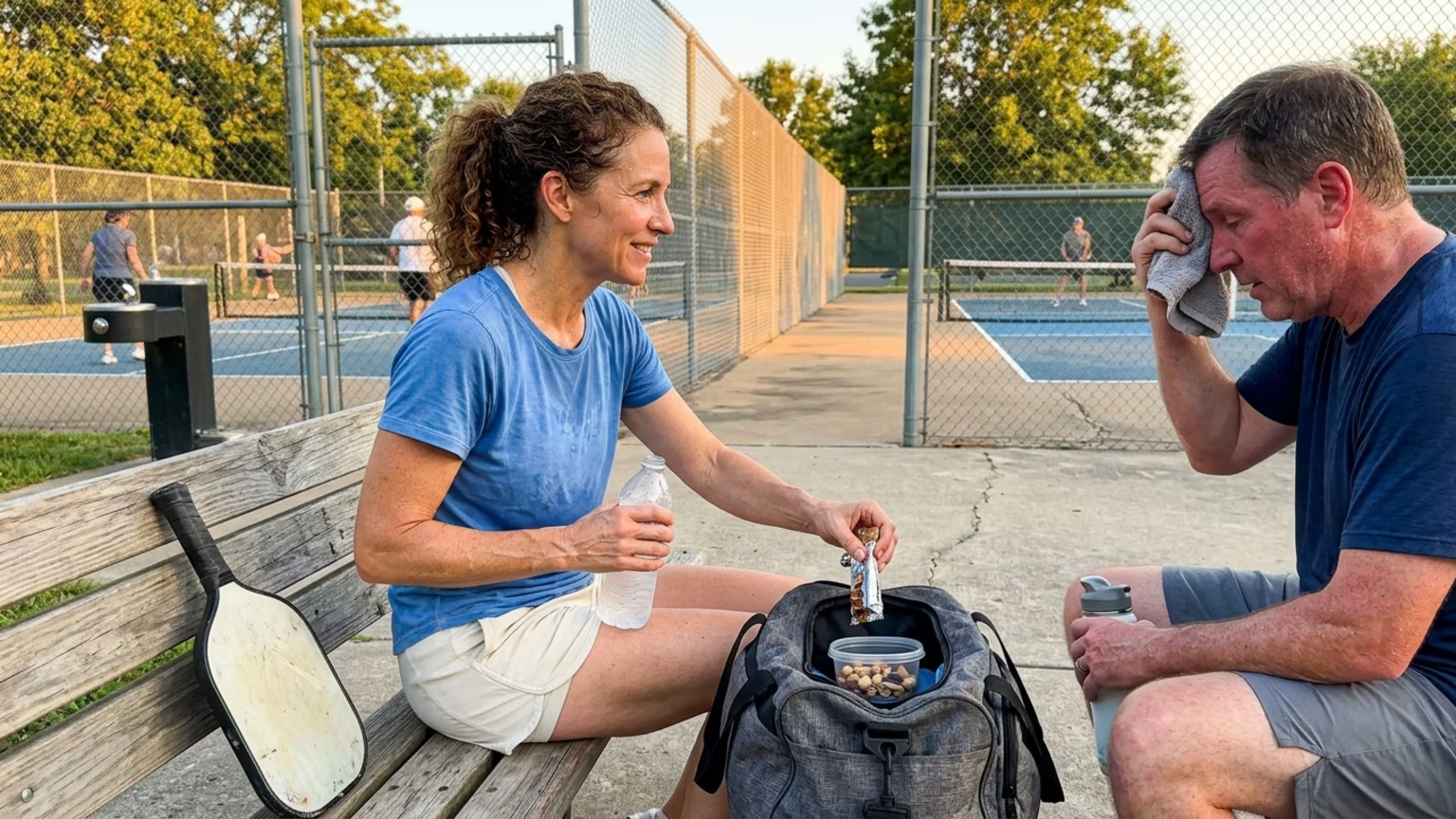

Discover how recent recovery science highlights daily protein distribution and consistent sleep as the key drivers for tissue repair in racquet sports players.




On September 4, 2026, Health and Beyond published a new synthesis of exercise recovery research focusing on protein distribution and sleep hygiene. The publication detailed how these foundational habits outpace short-term interventions for muscle repair. It highlighted that distributing protein evenly throughout the day provides more reliable tissue recovery than any post-workout supplement. The review also stressed that quality sleep schedules remain the most critical variable for long-term athletic health. Current recovery guidance increasingly treats sleep, nutrition, hydration, and low-intensity movement as the absolute foundation of human performance. Cold exposure, massage tools, and compression garments are now being positioned as optional tools rather than universal necessities.
The Health and Beyond article evaluated current recovery protocols to identify the most effective strategies for active individuals. The central nutrition recommendation establishes a target of 1.6 to 2.2 grams of protein per kilogram of body weight per day. It advises dividing this daily intake across four to five meals. Each of these meals should contain approximately 20 to 40 grams of protein to optimize the repair process. Applying this formula, a player weighing 75 kg would calculate an intake of roughly 120 to 165 grams of protein per day.
The publication notes that this broad recommendation is not a personalized medical prescription. Individual body size, age, energy intake, and overall kidney health can all influence an appropriate daily target. The review explicitly acknowledges that recovery needs will vary among individuals.
This approach shifts the focus away from a narrowly defined post-workout anabolic window. The publication noted that total daily intake matters far more than rushing to consume protein immediately after exercise. However, the review still recommends eating a protein-rich meal within two to three hours of finishing a training session. This practical guideline ensures players receive necessary nutrients without the stress of an immediate deadline. It provides a flexible framework that integrates easily into a normal daily routine.
The article also clarified the physiological timelines of muscle repair. It states that muscle protein synthesis rates can remain elevated for 24 to 72 hours after exercise in trained individuals. For untrained individuals exposed to a novel training stimulus, these rates can stay elevated for as long as five days. This extended window proves that tissue repair is a continuous process requiring sustained nutritional support. Proper recovery extends well past the drive home from the courts.
Additionally, the publication detailed the progression of delayed-onset muscle soreness. It describes this soreness as typically peaking 24 to 72 hours after physical exertion. The review points out that inflammatory and regenerative processes may continue long after a player stops feeling sore. Therefore, a complete recovery protocol must account for these extended physiological timelines.
Professional athletes often employ extreme recovery methods to manage brutal travel and competition schedules. Adult recreational racquet sports players require a much more measured approach to athletic longevity. Elite players might use immediate cold-water immersion to survive a congested tournament weekend. However, the Health and Beyond article specifically warns against copying this practice blindly. It states that repeated immediate post-resistance-training exposure to cold water could blunt some long-term adaptation.
This blunting effect occurs because extreme cold reduces the necessary inflammatory response that signals the body to adapt. Similarly, many recreational players rely on NSAIDs like ibuprofen to manage joint stiffness. The review notes that these medications may reduce perceived soreness effectively. Yet, they can potentially interfere with satellite-cell activation and the vital protein synthesis response involved in tissue adaptation. Weekend warriors seeking better performance must navigate these trade-offs carefully.
For adult tennis, pickleball, and padel players, masking pain can lead to poor load management. Players must distinguish between routine muscle soreness and genuine connective tissue fatigue. The publication explains that muscle contractile capacity may recover within 48 to 72 hours. In contrast, connective tissue often requires much longer to regain its full strength. This difference creates a critical vulnerability window for overuse injuries if players return to the court too quickly. Furthermore, general recovery advice should never encourage athletes to train through sharp pain or persistent joint symptoms.
Recovery requirements will naturally vary based on training experience, exercise type, overall training volume, and life stress. Instead of relying on pills or ice baths, players should treat sleep as their primary recovery tool. Evercourts emphasizes that consistent training helps older adults preserve recovery capacity better than sedentary aging alone would predict. By prioritizing regular meals and adequate rest, amateur athletes can maintain their court movement safely. A grounded routine beats expensive quick fixes every time.
The Health and Beyond review provided concrete metrics to guide daily recovery habits. It contrasted athletes sleeping fewer than seven hours with those sleeping eight or more hours. The review associated inadequate sleep with slower reaction times, poorer strength recovery, and higher injury rates. It cited research where nine to ten hours of sleep improved sprint times, shooting accuracy, and subjective well-being among collegiate athletes. While this specific collegiate evidence is not exclusive to tennis, pickleball, or padel, the broader physiological principles remain highly relevant.
To achieve these longer rest durations, the publication outlined specific environmental guidelines. Its practical sleep recommendations include maintaining a consistent schedule and keeping the bedroom temperature between 60 and 67°F. The article also suggests eliminating blue-light exposure during the 90 minutes before bed. Furthermore, it advises avoiding caffeine after the early afternoon to protect evening rest quality. These environmental tweaks can significantly influence how well the body repairs itself overnight.
These numerical targets provide a clear framework for players seeking better performance and injury prevention. While specific individual needs will always vary, these baselines offer a reliable starting point. The publication identified reputable sources like the Journal of Applied Physiology, the National Institutes of Health, and the American Academy of Sleep Medicine. Although it did not provide exhaustive bibliographic details for each claim, the synthesis aligns closely with established exercise physiology principles.
As sports science continues to evolve, expect a sustained shift back toward fundamental daily habits. Recovery guidelines will likely keep moving away from hyper-specific timing rules and isolated therapies. Instead, total daily protein distribution and sleep regularity will dominate the conversation. The Health and Beyond review concluded that sleep interventions cost nothing and deliver more recovery benefit than any supplement, device, or technique.
Over the next few seasons, racquet sports players should focus on tracking their performance trends rather than just muscle soreness. The article states that persistent soreness without declining performance can represent normal recovery, while repeated performance deterioration is a clearer warning sign. Repeated declines in movement quality or reaction speed indicate a need for a greater focus on the impact of extending rest periods. Future research will likely provide even more granular insights into how active adults can optimize these fundamental habits.
Until then, players who master the basics of nutrition and rest will enjoy the most resilient time on the court. Anyone dealing with major dietary restrictions, unexplained fatigue, or recurrent injuries should seek guidance from a qualified clinician. A sports dietitian can also help tailor these broad recommendations into a personalized daily plan. Integrating these principles sensibly will help players thrive during a long season.
Follow Evercourts for practical insights on tennis, pickleball and padel performance, movement, recovery and healthy ageing. Stay connected for new articles, research-led guidance and ideas to help you play well and keep playing for years.


A practical guide to padel fatigue, flexible pacing, hydration considerations and symptoms that mean stopping play and seeking care.

Understand tennis shoulder strength beyond cuff exercises, including shoulder-blade work, whole-body serving, workload and signs to seek assessment.

Compare court size, singles and doubles formats, and wall rebounds to choose tennis, pickleball or padel around your preferences and schedule.
Read practical guidance for better movement, smarter preparation and a game that keeps working for you.
explore the Blog
