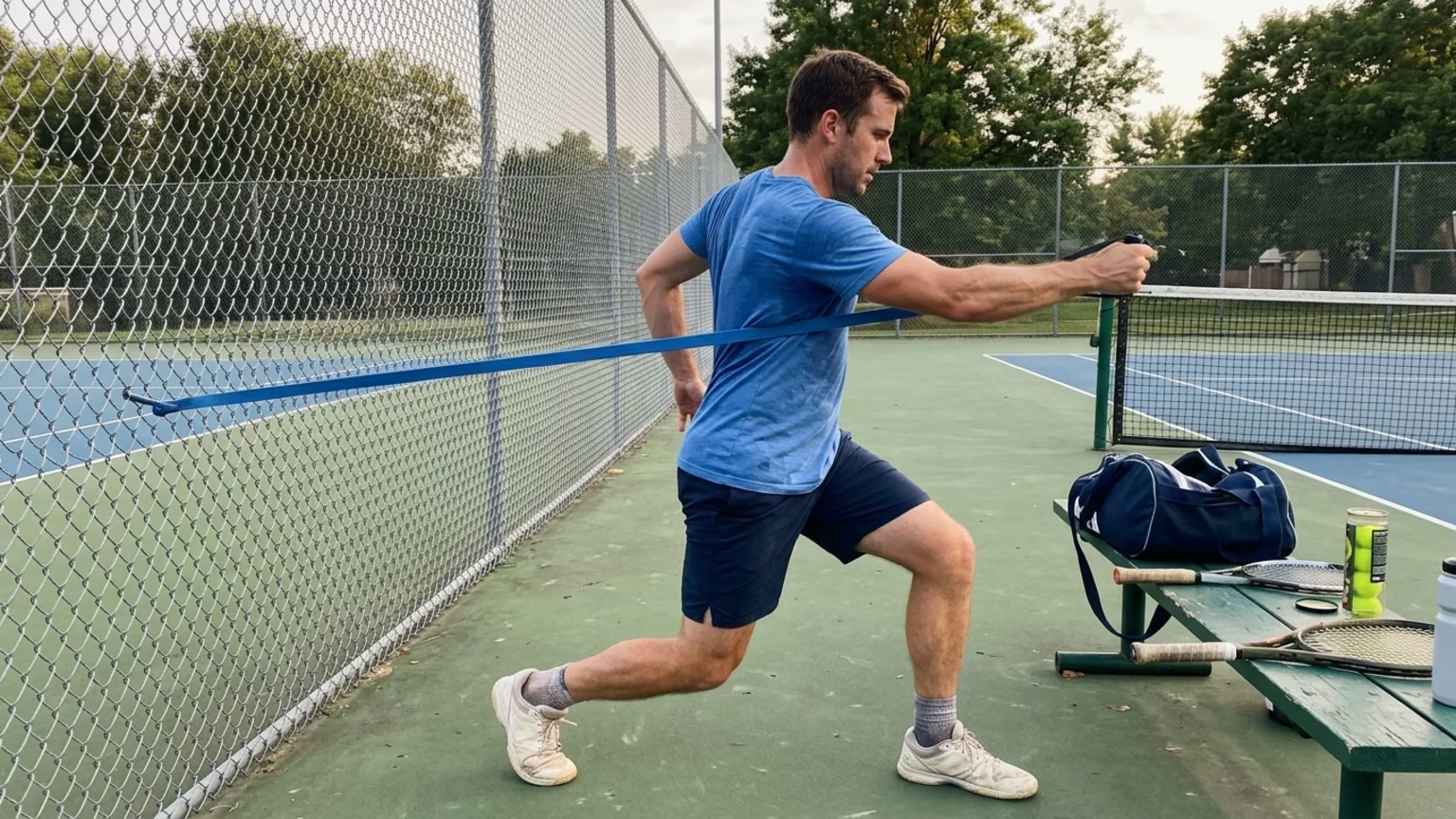

Understand tennis shoulder strength beyond cuff exercises, including shoulder-blade work, whole-body serving, workload and signs to seek assessment.




Shoulder strength for tennis is the ability to produce and control the arm movements used in serving and hitting. That includes accelerating the arm and controlling its slowdown after an overhead stroke. Tennis-specific clinical guidance describes both demands and explains that symptoms can develop when the workload exceeds what shoulder tissues tolerate.
Thinking beyond the rotator cuff does not mean leaving cuff exercises out. It means placing them beside shoulder-blade training and coordinated use of the legs and trunk. The useful question is not simply which shoulder exercise to add. It is whether your preparation reflects the movement you ask your body to repeat.
The serve is not an arm-only movement. A tennis-serving explainer describes the legs pushing against the ground while the trunk and arm contribute to the motion. The shoulder belongs within that linked movement rather than acting as its only source of effort.
The arm also needs control after the hitting effort. As the clinical guidance on serving explains, rapid acceleration is followed by the task of slowing the arm. A shoulder-strength discussion therefore needs to consider more than the moment of contact.
For players of tennis, pickleball and padel, a useful coaching question is how the shoulder fits into repeated explosive efforts and changes of direction. When a session combines those demands, looking only at the hitting arm gives an incomplete picture of the movement. That is a practical interpretation of the linked-movement principle, not a claim that these sports place identical loads on the shoulder.
In tennis, the available guidance supports looking at serving volume alongside whole-body coordination. For pickleball and padel players, the corresponding discussion should stay specific to the strokes and situations in their own game. Tennis serving advice should not become a ready-made overhead program for every racquet sport.
Tennis-focused exercise guidance says conditioning can develop strength and control but cannot guarantee freedom from shoulder pain. Workload and recovery matter alongside mobility and stroke mechanics. The exercise examples below are training options, not a proven injury-prevention routine or an individualized rehabilitation plan. The serving explanations also do not establish a single technique that suits every player.
Within those boundaries, the guidance offers a useful way to organize shoulder preparation.
A tennis-focused shoulder guide lists side-lying external rotation with a light dumbbell and banded external rotation among its exercise examples. These give players recognizable examples of what rotator-cuff work can look like.
Their place in a broader plan matters more than treating either exercise as essential for everyone. For a player seeking personal exercise selection, the useful conversation with a qualified professional includes current symptoms and the demands of their tennis. An exercise name alone does not answer those questions.
The same shoulder guide lists band rows for shoulder-blade retraction. It also describes prone T and Y positions as options for training muscles around the shoulder blade.
These examples make shoulder-blade work a distinct part of the preparation discussion. A plan described only as “rotator-cuff training” may not tell you whether that area has been considered. The practical question is whether the intended training includes both cuff work and muscles around the shoulder blade.
A recreational serving guide emphasizes coordinating the lower body and trunk with the arm. That supports a broad coaching cue: use the legs and trunk with the arm rather than trying to produce the whole serve at the shoulder.
This is a coordination question as well as a strength question. It shifts the discussion from finding another isolated shoulder exercise toward understanding how the player produces the stroke. A coach can help examine that movement without turning a general cue into a diagnosis.
For a broader planning perspective, read about fitting strength work around tennis.
For adult players, athletic longevity is a practical goal: maintaining the capabilities needed to keep enjoying the sport. Understanding the shoulder's role helps make preparation more deliberate. It also keeps strength work connected to the demands of playing rather than treating an exercise routine as a separate protective shield.
Workload deserves attention here. Tennis-specific clinical advice and Hoag Orthopedic Institute's sports guidance recommend gradual increases in serving or hitting volume. The tennis guidance notes that sudden increases can leave less recovery time between sessions.
A practical planning interpretation is to consider match play and serving practice together when reviewing workload. Adding serving sessions while keeping every existing session is still an increase in demand. Having shoulder exercises on the calendar does not remove the need to consider that change.
This is also where a broader view of preparation becomes useful. Rotator-cuff exercises address one training category. Shoulder-blade work and attention to the linked serving motion belong in the same discussion.
For players organizing a busy court schedule, the related planning questions include balancing play with off-court preparation and building a manageable padel week. The aim is a sustainable relationship between playing demands and preparation, not collecting more exercises.
Shoulder pain during tennis does not identify which structure is involved. The tennis exercise guidance notes several possible contributors, including technique and changes in serving volume. Mobility limitations or other shoulder problems may also be involved. Pain alone is not enough to label the problem a rotator-cuff injury.
ChiroCare Florida's tennis guidance advises stopping serving when the movement causes pain and seeking assessment. Repeatedly testing the painful serve is not the recommended response.
Hoag Orthopedic Institute recommends evaluation before returning to play when symptoms include:
Sudden severe pain or an apparent injury should not be treated as ordinary training soreness. Suspected dislocation or visible deformity calls for urgent evaluation. A qualified physiotherapist or healthcare provider can assess the situation rather than relying on an exercise article to identify the cause.
Today, make a plan to have persistent shoulder symptoms assessed rather than testing them with more serves.
Follow Evercourts for practical insights on tennis, pickleball and padel performance, movement, recovery and healthy ageing. Stay connected for new articles, research-led guidance and ideas to help you play well and keep playing for years.


Compare court size, singles and doubles formats, and wall rebounds to choose tennis, pickleball or padel around your preferences and schedule.
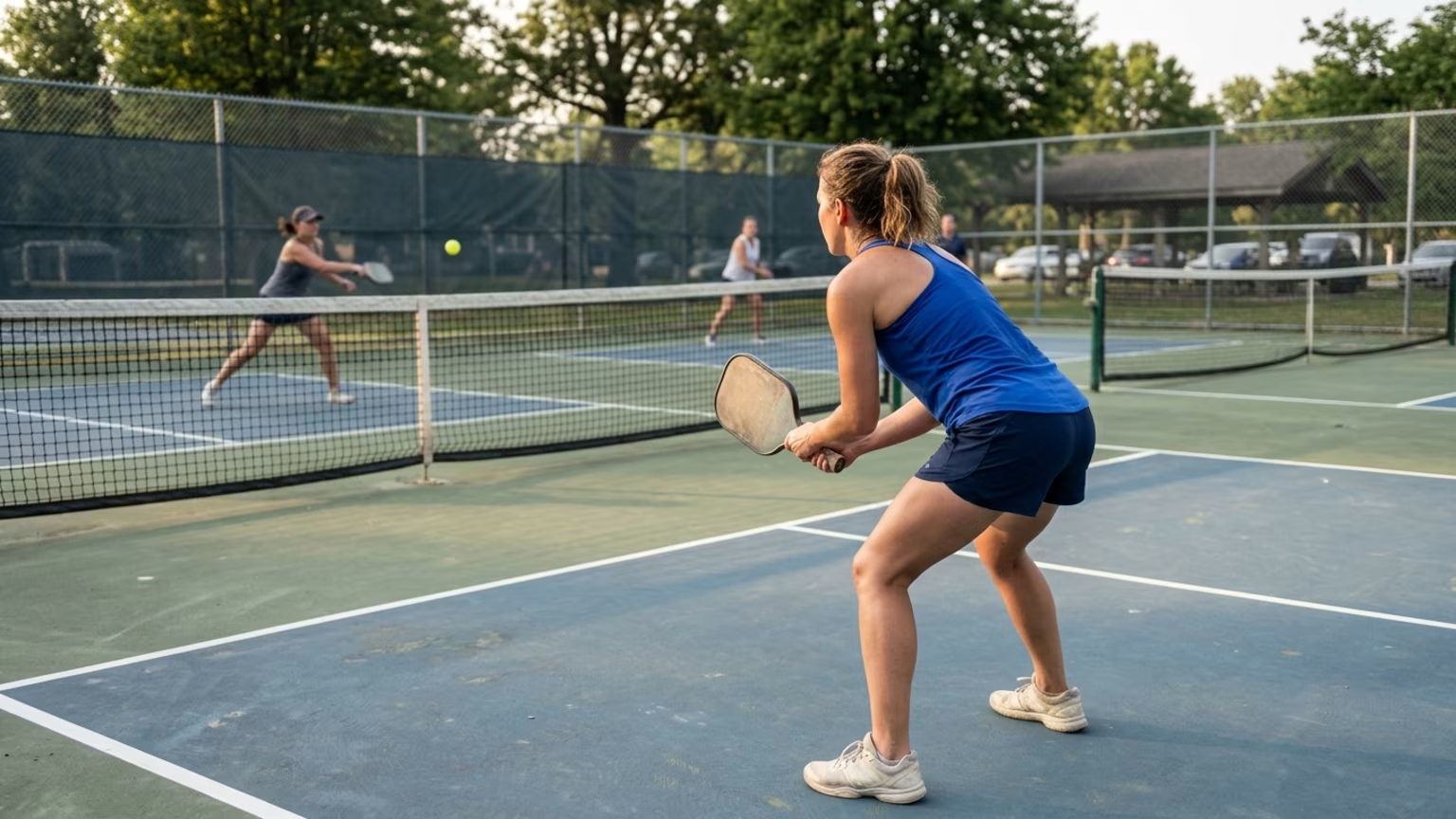
How anticipation informs movement in tennis, pickleball and padel, with research-backed distinctions and practical coaching cues for the next ball.
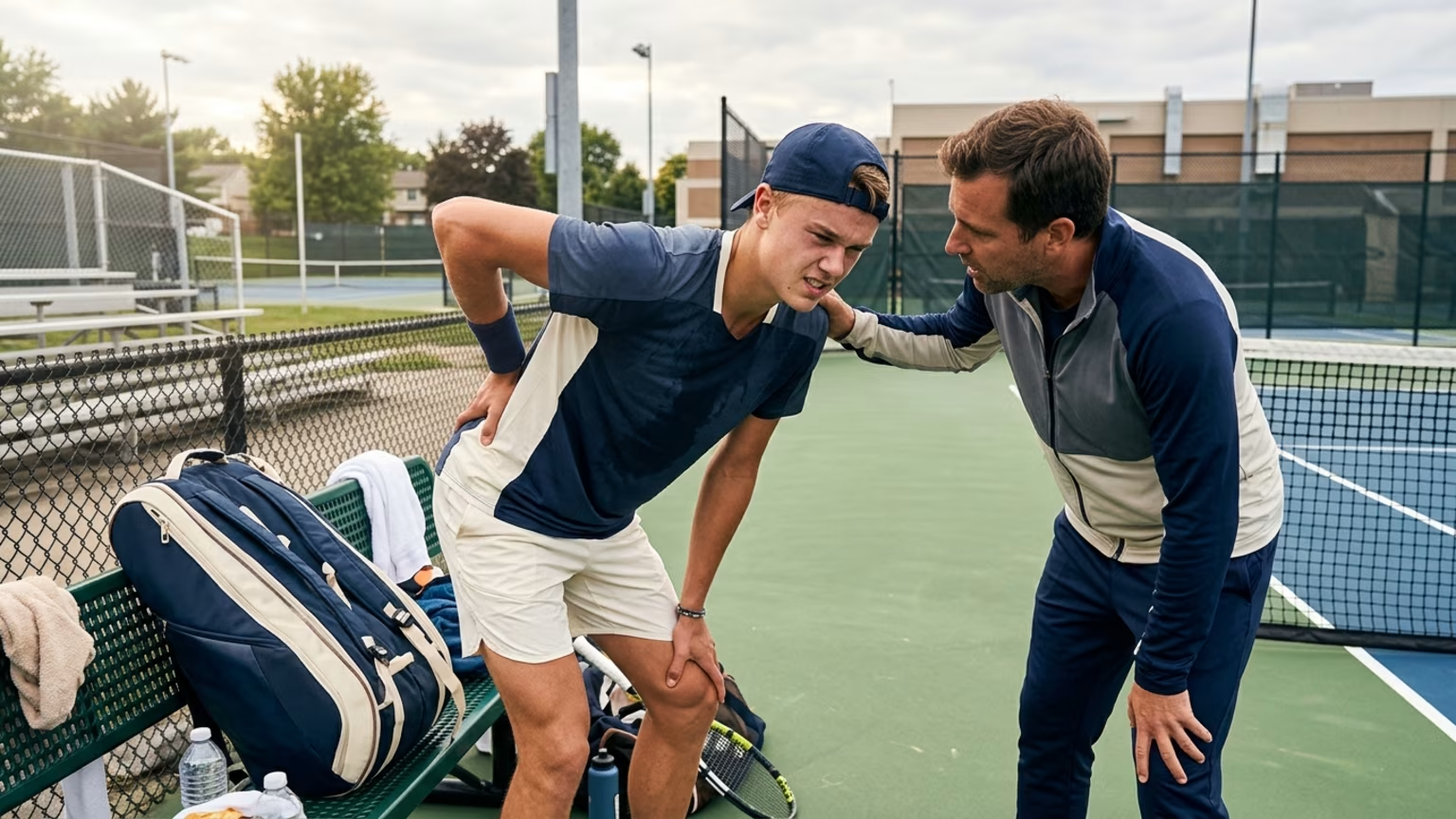
Holger Rune withdrew from the European Open with a back problem. The facts behind his decision and a grounded perspective for recreational players.
Read practical guidance for better movement, smarter preparation and a game that keeps working for you.
explore the Blog
