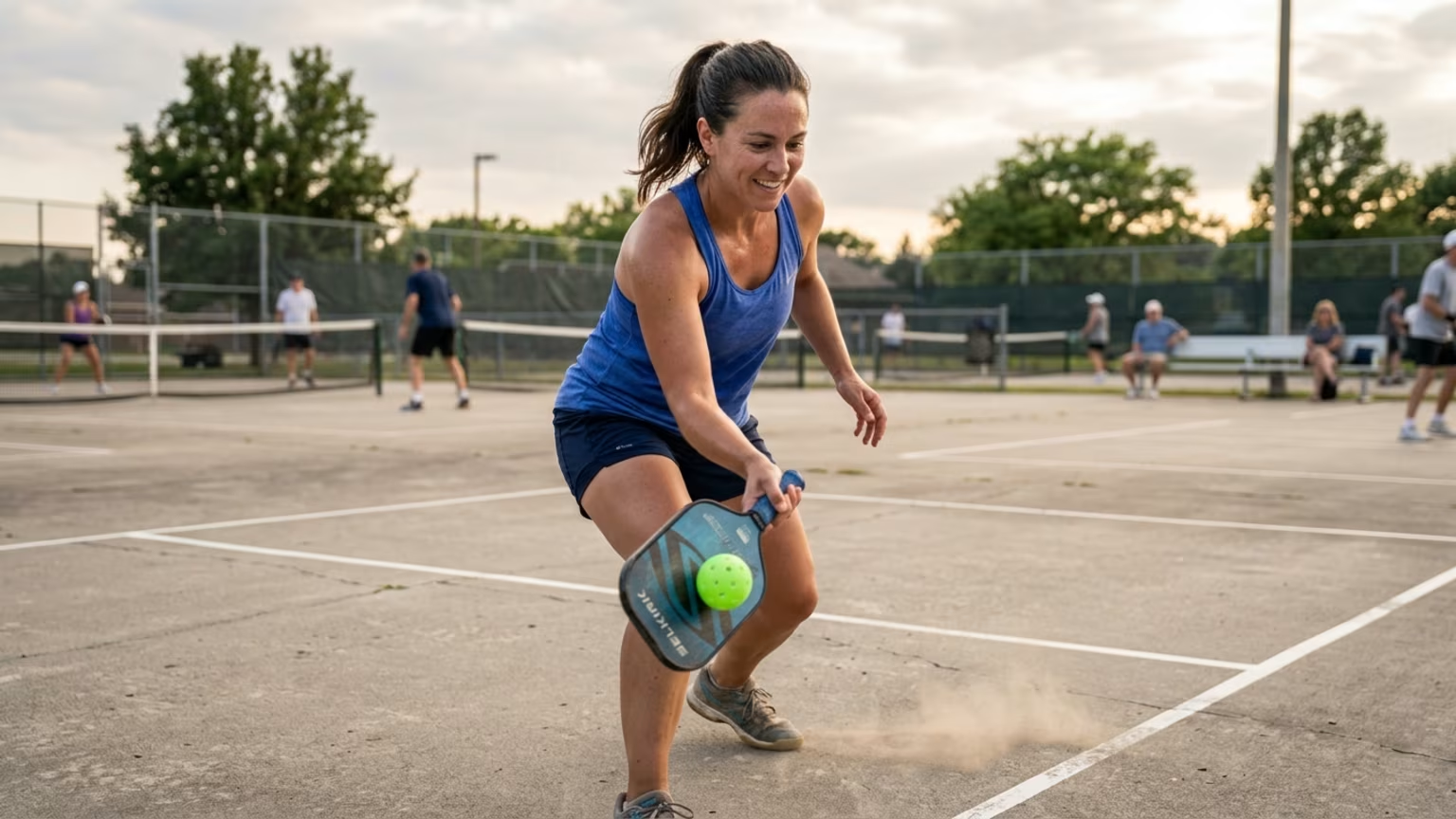

A detailed review of the Selkirk Boomstik paddle's power and comfort, offering practical advice on adjusting mechanics and managing injury risks.




Will switching to a power-oriented paddle like the Selkirk Boomstik cause arm fatigue during extended matches?
A recent BestPicklePad review found the Widebody Boomstik comfortable during two-hour blocks, but players must adjust their mechanics to handle its lively response.
BestPicklePad published a hands-on review of the Selkirk Labs Project Boomstik. The review was written by Dylan, whom BestPicklePad identifies as a 4.5-rated pickleball player and gear writer. He has tested more than 80 paddles across 400-plus hours on court. BestPicklePad rated the Widebody Selkirk Boomstik 8.7/10 after its reported on-court testing.
The paddle utilizes several specific structural components for its design. BestPicklePad describes the Boomstik as using a 16-millimeter BoomCore, combining PureFoam and an EVA Power Ring. It features a three-layer Multistrata T700 Carbon face and InfiniGrit surface. The review lists the Widebody model at 15.95 inches by 8 inches.
It features a 5.6-inch handle and a 4.25-inch grip circumference. BestPicklePad’s reviewer found that the Boomstik delivered strong pop and high exit velocity on drives and put-aways. The reviewer tested the paddle across numerous specific match scenarios. These included baseline drives, hard counters, dinking, and kitchen hand battles.
The testing block also featured off-center hits and sessions lasting more than two hours. The primary source remains a practitioner review rather than an academic test or laboratory report. The article claims no sponsored rankings dictate the score. However, the article text contains no separate disclosure confirming the reviewer's exact commercial relationship with Selkirk.
Moving to a high-velocity paddle requires a mechanical adjustment for touch shots. In BestPicklePad’s testing, the Boomstik required a softer hand on resets and could launch the ball high before the player adjusted. The reviewer notes that this lively response creates a meaningful learning curve for advanced players. A sensible trial should include multiple sessions, because the primary reviewer says the reset issue improved with repetition.
Despite the offensive output, the paddle demonstrated physical stability. The reviewer reported no hot spots or blistering during a two-hour-plus session. The Boomstik produced a crisp rather than hollow feel on drives. It only exhibited minor torsional twisting on extreme off-center hits.
Players should still evaluate their own physical grip requirements carefully. BestPicklePad cautions that larger-handed two-handed-backhand players may find the Widebody’s handle space tight. Reviewing your grip fit is a fundamental part of evaluating court gear maintenance and updates as you age. Adult competitive players should verify that their hands can remain relaxed to avoid excess tension.
It is also important to recognize the limits of this specific review. The reviewer tested the Widebody much more extensively than the Elongated model. Therefore, readers cannot safely generalize the Widebody comfort verdict to the Elongated shape. Players must view these results as one outlet's editorial judgment rather than a standardized medical guarantee.
The available coverage does not provide an independent sports-science assessment of the paddle. There is no clinical data regarding its effect on elbow loading or shoulder loading. A heavier or more powerful paddle may impose different demands on your swing mechanics. Players must distinguish between the absence of discomfort during one review session and true long-term joint safety.
Racquet sports demand specialized physical preparation regardless of your paddle. When I first started playing pickleball, I noticed how many people skipped warming up entirely. They would jump straight out of their cars and right up to the kitchen line. I tried doing that and immediately pulled a calf muscle.
Pickleball requires just as much explosive lateral movement as tennis, just in a tighter space. Since then, I always spend five minutes doing dynamic lunges and ankle rolls. It changes everything about how confident I feel pushing off the baseline. Developing good footwork skills and movement sequences keeps your body resilient.
The physical demands of the sport are widely documented in current literature. A 2026 bibliometric review describes pickleball research as dividing between evidence on health promotion and evidence on injury risk. This risk evidence includes falls, sprains, fractures, and injuries among older adults. The Fit Pickler reports that a study of 247 players aged 50 and older found roughly one-third had reported an injury in the previous year.
The same report noted that lower-body injuries proved more common than shoulder or elbow issues. However, the sport also offers substantial wellness benefits when approached correctly. The Fit Pickler cited a separate randomized controlled trial following older adults with pre-frailty through an eight-week pickleball program. The reported eight-week trial found improvements in functional fitness and quality of life and recorded no severe adverse events during the intervention.
Three participants in that trial experienced minor issues involving a shoulder strain, wrist pain, or hypoglycemia. This highlights why mobility and joint health training matters as much as selecting a comfortable paddle. Equipment choice is only one variable in maintaining athletic longevity on the court. Proper conditioning remains the ultimate driver of sustained court performance.
Older adults who return from inactivity should increase their court volume progressively. Rushing into several hours of play multiple times per week can shock the body. This measured approach aligns with injury-prevention warnings issued by physicians. Balancing your competitive schedule allows tissues to adapt safely.
Equipment regulations remain a practical priority for competitive adult players. The article says the Boomstik is USAP approved and identifies a UPA version for professional events. This approval information is attributed directly to Selkirk’s specification sheet. Before purchasing a new model, players should verify its current standing for their specific tournament circuits.
Players entering sanctioned competition can verify paddle approval through USA Pickleball’s Approved Equipment database. This database provides the most current rulings on specific shapes and core constructions. Approval lists change frequently as governing bodies update their testing parameters. Taking five minutes to check the official directory prevents frustrating disqualifications on match day.
Evaluating power paddles like the Boomstik requires balancing offensive potential with your own physical mechanics and adjustment period. Taking a holistic approach to equipment and conditioning ensures you can keep enjoying competitive racquet sports for decades to come.
Follow Evercourts for practical insights on tennis, pickleball and padel performance, movement, recovery and healthy ageing. Stay connected for new articles, research-led guidance and ideas to help you play well and keep playing for years.


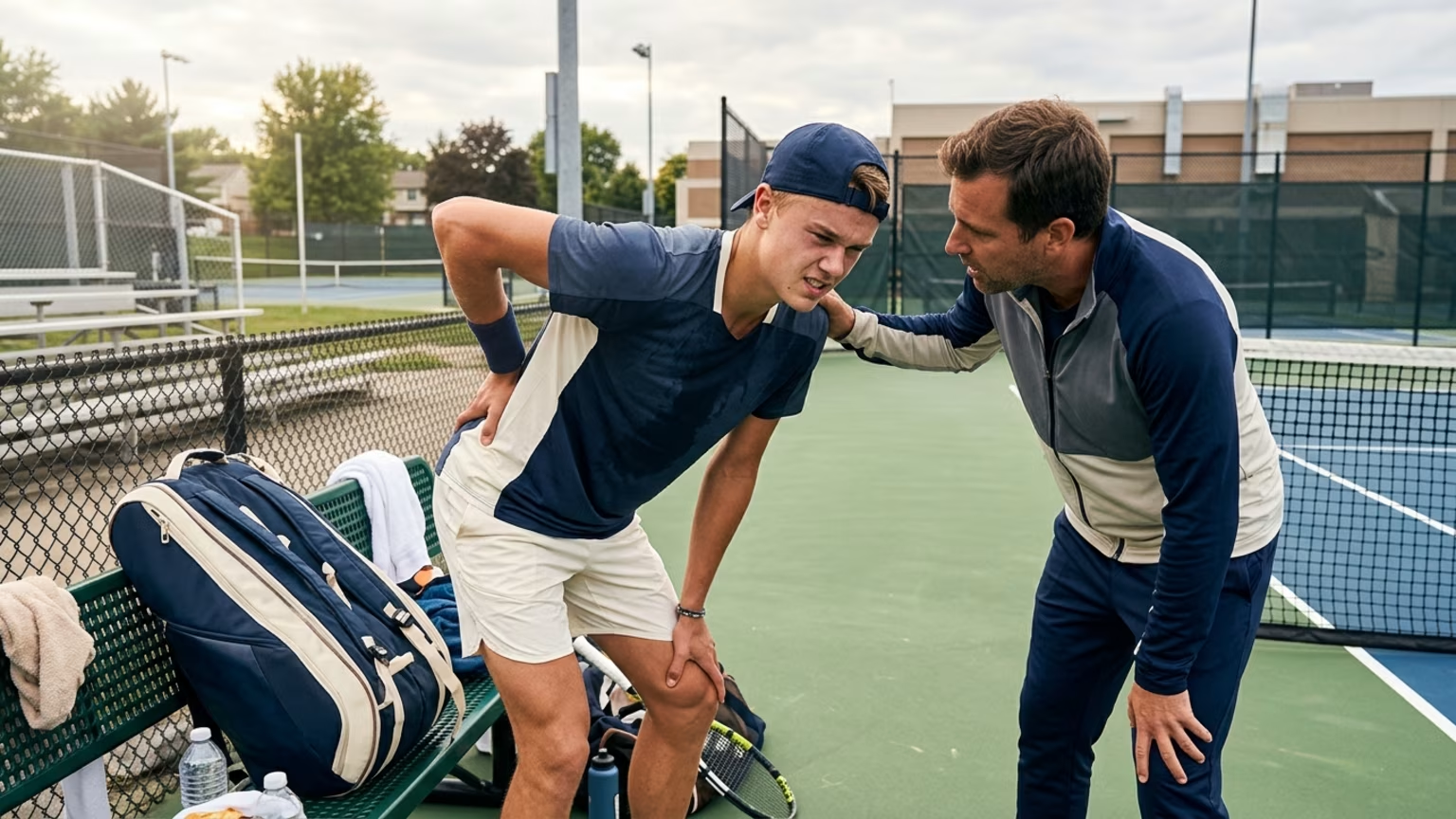
Holger Rune withdrew from the European Open with a back problem. The facts behind his decision and a grounded perspective for recreational players.

The Dink’s October 17 guide emphasizes deep returns, ball-height decisions and positioning against faster pickleball opponents.

A new report outlines padel and tennis gear trends. Learn how to assess adjustable rackets, sensor feedback and smart-court claims.
Read practical guidance for better movement, smarter preparation and a game that keeps working for you.
explore the Blog
