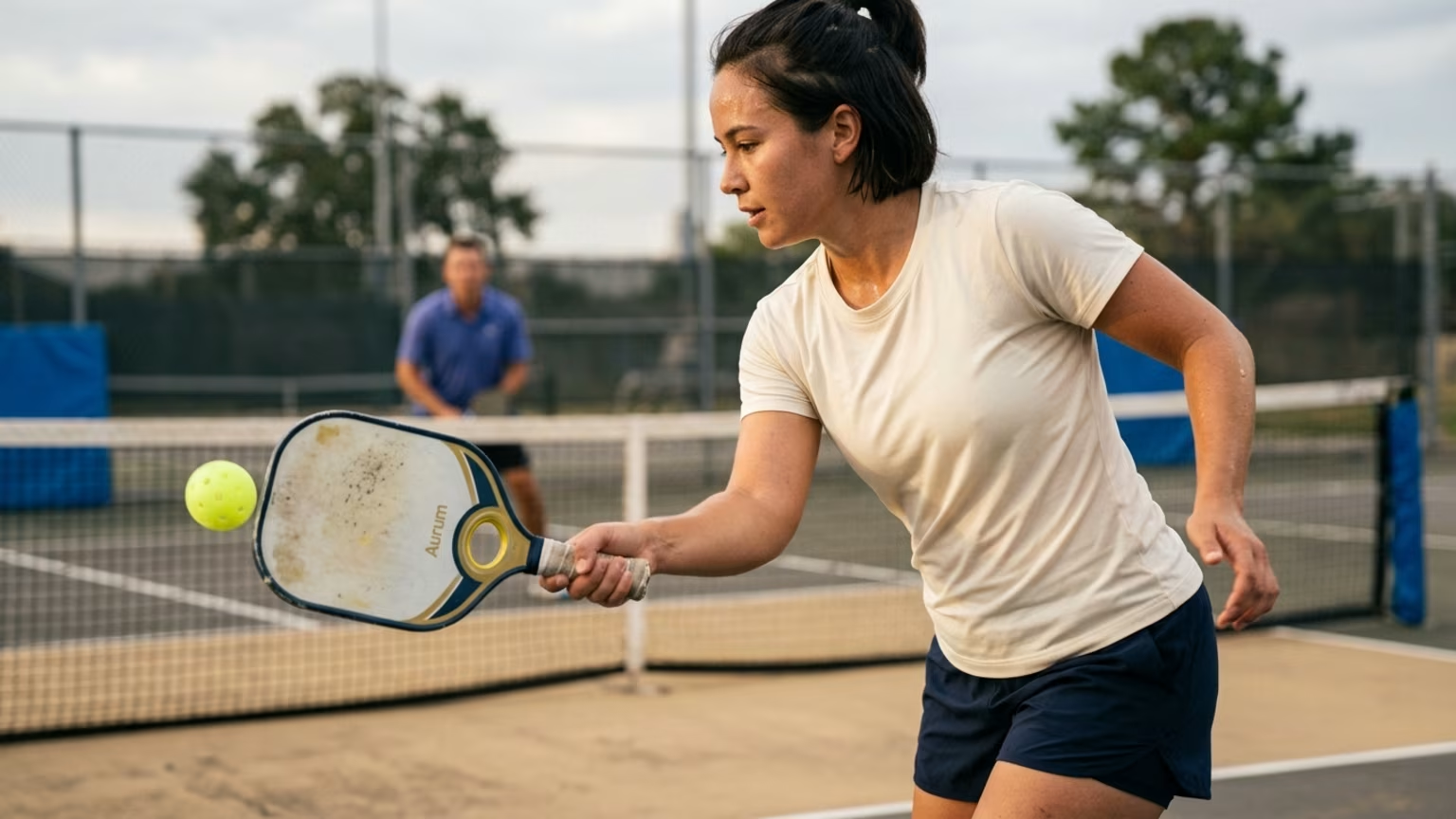

Selkirk Pickleball and Tesla have released the limited-edition Aurum paddle. Learn about its vibration-damping Power Ring design, specs, and comfort claims.




Is buying an expensive new paddle the secret to resolving joint discomfort on the court? Premium equipment upgrades will never cure underlying tendon injuries, but a vibration-damping perimeter could make your current court sessions noticeably more comfortable. Selkirk Pickleball and Tesla released the limited-edition Tesla Aurum Pickleball Paddle by Selkirk on August 20, 2026. The two companies are handling sales exclusively through Tesla’s website, presenting a high-profile release that blends automotive design with court sports.
The Aurum is a premium equipment collaboration developed by Tom Barnes of Selkirk and Javier Verdura of Tesla. According to Tesla's official product listing, it is a new finish of the existing Tesla Plaid Paddle. The original Plaid model was launched in 2025 to immense consumer demand. The Dink reported that the earlier Plaid release sold out in three hours, while a subsequent restock also sold out quickly.
Consumers can expect a steep price point for this highly anticipated limited-edition release. Tesla lists the product at $295 for the paddle alone, or $350 if purchased with a carrying case. Fans of the brand can also purchase a matching Aurum pickleball tee priced at $40. These prices place the paddle firmly in the luxury tier of racquet sports gear, reflecting the premium nature of the collaboration.
The physical design draws inspiration from the exterior color of Tesla’s Cybercab, utilizing gold-accented styling rather than introducing a new geometry. The Aurum retains the predecessor’s open-throat design, which industry coverage describes as part of its aerodynamic appearance. Tesla notes that the Aurum preserves the same shape, ergonomics, and all-court performance as the previous Plaid iteration. The paddle aims to offer a familiar playing experience wrapped in a bold visual identity.
The internal construction relies on advanced materials designed for specific court feedback. The reported build includes a full-foam PureFoam core, a two-ply carbon-fiber face, and Selkirk’s InfiniGrit textured surface. It also features an integrated MOI Tuning System to balance weight distribution. This combination of materials is intended to offer players a controlled, stable platform for both baseline drives and delicate net play.
Many players hope new gear will mask their recurring aches, making vibration control a major selling point for modern paddles. The Aurum features a TPU Power Ring that was developed specifically for this release. Selkirk says this lightweight perimeter structure was tested to dampen vibration and stabilize the paddle face upon impact. The company also claims the design works to prevent the long-term crushing associated with polymer honeycomb cores.
Tesla brought its automotive engineering perspective to the physical geometry of the paddle. TheKitchenPickle reports that Tesla’s design contribution focused deeply on airflow behavior during a swing. Their engineers analyzed drag coefficients, turbulent wake patterns, and how geometry changes affected acceleration. These elements aim to make the paddle swing efficiently, helping players maneuver quickly during fast exchanges at the kitchen line.
However, players must separate manufacturer performance claims from independent medical validation. There are no independent clinical studies proving that the Power Ring reduces joint pain or extends athletic longevity. Vibration reduction is simply a product attribute, not a verified medical treatment for lateral epicondylitis. Players should view the paddle as a tool for comfort rather than a guaranteed fix for sore elbows.
The influx of new players makes equipment education more important than ever. A secondary source citing SFIA reports that 24.3 million Americans played pickleball in 2025, representing massive growth compared with 4.2 million in 2020. As more adults pick up the sport, the search for comfortable equipment has grown exponentially. A well-designed paddle can certainly improve the user experience, but it remains only one piece of the healthy aging puzzle.
Equipment choices dictate how our arms absorb shock, but they do not single-handedly prevent injuries. The physical demands of our favorite games vary widely, requiring specific context for each discipline. Tennis strings stretch and snap back to absorb heavy ball impacts, creating a unique kinetic chain. Padel relies on solid perforated racquets that demand a different swing mechanic to generate pace safely.
Pickleball utilizes rigid polymer cores that transmit a distinct frequency of shock directly down the arm. A paddle with a full-foam core and vibration-damping perimeter might soften that specific impact profile. If you want to understand how these forces differ, comparing the movement demands that separate tennis, pickleball and padel provides valuable context. Upgrading your paddle might help manage the harshness of a plastic ball, but it cannot fix poor swing mechanics.
Those looking to maintain their physical capabilities should look beyond their equipment bag entirely. Proper preparation, load management, and thoughtful technique remain the most effective tools for a long playing career. You can learn more about breaking the recurring injury cycle in tennis, pickleball, and padel by adopting mindful recovery habits. A new paddle should supplement a smart routine, never serve as a substitute for actual physical conditioning.
Variety in your weekly routine can also protect your joints from repetitive stress. Participating in multiple racquet sports changes the angle of impact and works different muscle groups. For adult players interested in cross-training across courts, moderation and gradual progression are key. Staying active across different court surfaces builds resilience that no single piece of equipment can provide.
Deciding whether to purchase a $295 paddle requires a realistic assessment of your personal goals. The Aurum might appeal to players who prioritize a premium full-foam construction and a highly stable sweet-spot platform. It offers a softer impact sensation that some competitors find more comfortable during extended match play. Just remember to evaluate your own grip size and grip tension, as those factors also influence arm fatigue heavily.
Competitive athletes must also consider tournament regulations before bringing new gear to an event. The Dink reported that the Aurum is USA Pickleball-approved for tournament use. However, readers should confirm the paddle’s current status on the governing body’s official equipment list before entering sanctioned competition. Tournament rules can update frequently, making independent verification an essential step for serious players.
The limited-release format makes it difficult to demo the paddle properly before committing to a purchase. If you have the budget and appreciate the Tesla aesthetic, it represents an interesting piece of equipment to test on your home courts. Just avoid the assumption that a premium brand name will automatically resolve your persistent wrist or shoulder irritation.
Ultimately, the best equipment choices are made through careful testing rather than marketing hype. Compare the Aurum against your current paddle using the same ball, playing similar drills, and recording your session length. Monitor your physical symptoms during play and over the following day to gauge actual comfort levels. Honest self-assessment will tell you if the investment actually supports your time on the court.
Equipment innovations offer fascinating ways to refine our interaction with the game, but our physical longevity ultimately depends on how we care for ourselves. A comfortable paddle is a wonderful tool to own, yet mindful preparation remains our greatest asset on the court.
Follow Evercourts for practical insights on tennis, pickleball and padel performance, movement, recovery and healthy ageing. Stay connected for new articles, research-led guidance and ideas to help you play well and keep playing for years.


Holger Rune withdrew from the European Open with a back problem. The facts behind his decision and a grounded perspective for recreational players.

The Dink’s October 17 guide emphasizes deep returns, ball-height decisions and positioning against faster pickleball opponents.

A new report outlines padel and tennis gear trends. Learn how to assess adjustable rackets, sensor feedback and smart-court claims.
Read practical guidance for better movement, smarter preparation and a game that keeps working for you.
explore the Blog
