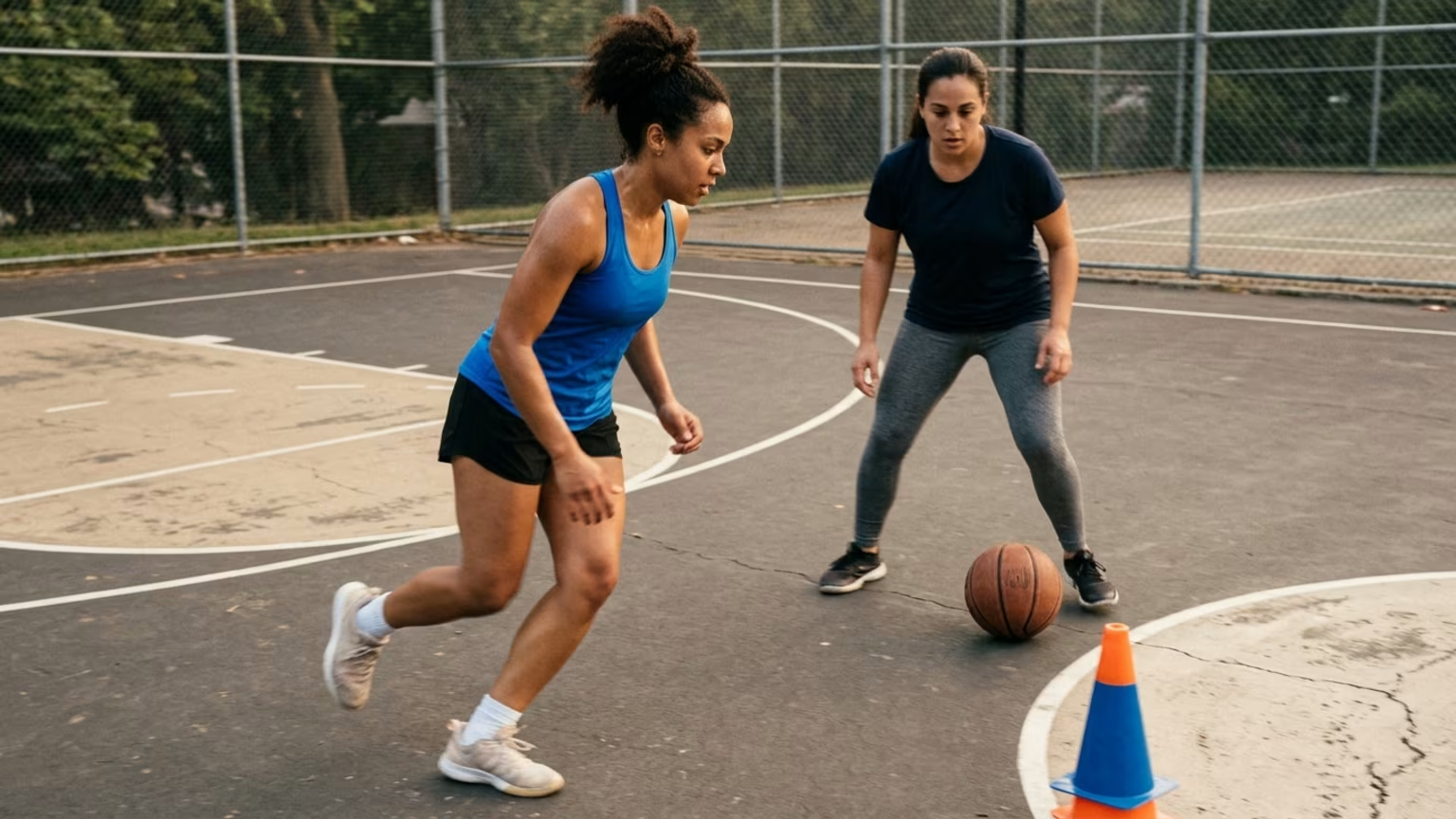

Discover the smallest effective strength training plan for racquet sports. Build resilient court capacity with just two simple sessions a week.




The secret to building resilient court strength is ignoring the traditional high volume bodybuilding routine entirely. A 2026 American College of Sports Medicine position stand synthesized 137 systematic reviews involving more than 30,000 participants. This massive review concluded that healthy adults should perform resistance training at least twice weekly. The most defensible starting point for adult racquet players is not an exhausting gym split but a consistent, manageable routine.
The evidence strongly supports getting started rather than seeking an overly complicated perfection. A large 2023 systematic review and Bayesian network meta-analysis included 178 studies examining strength and 119 examining hypertrophy. It found that every resistance training prescription studied outperformed no exercise for strength and muscle growth. The gap between doing nothing and completing a simple strength program is massive, as higher load programs tended to produce the strongest results.
Racquet sports repeatedly place the player on one leg during split steps, lunges, and heavy braking. The body absorbs immense force during these rapid decelerations and sudden changes of direction. The calf and foot act as a crucial force transfer system during every single point. Without adequate conditioning in these exact areas, repeated open stance shots and recovery steps cause heavy muscular fatigue.
I remember finishing a tough two hour padel match on a cold Tuesday night and waking up the next morning feeling like my lower back was locked in concrete. For a long time, I just accepted this as the price of playing hard in my forties. But once I started spending just ten minutes on targeted hip mobility before heading to the club, the stiffness almost completely vanished. It taught me that we do not have to accept pain as a default state of aging.
Trunk control is another vital aspect of enduring a long competitive match. For court players, trunk control means maintaining a useful physical position while the limbs move rapidly. Prioritizing exercises like side planks or suitcase carries builds resistance against unwanted torso rotation. This helps athletes maintain efficient technique even when they are physically tired late in the third set.
Players also perform significantly more pressing and hitting motions than pulling motions during a typical match. A balanced conditioning program must include pulling exercises to counteract this repetitive anterior stress. Adding basic pulling movements like band rows and assisted pull ups helps balance the shoulders. This structural balance is crucial for players who hit hundreds of serves and overheads every single week.
The data heavily favors consistent frequency over punishing gym sessions. An overview of reviews indexed by PEDro found evidence that physical activity containing a resistance training component can help reverse or prevent progression of frailty. This activity must be performed at least twice weekly to be effective. Not every individual trial showed a benefit, but the overall trend confirms the vast value of regular physical loading.
Furthermore, the 2026 American College of Sports Medicine guidance indicates that training to absolute failure is not required. Heavier loads around 80 percent of a one repetition maximum are particularly relevant when maximal strength is the main goal. However, pushing every single set to total muscular exhaustion is unnecessary and potentially counterproductive for recreational athletes. Leaving one to three technically sound repetitions in reserve is a much safer, more sustainable approach.
The summary distinguishes strength oriented heavier loading from power oriented moderate loading moved with high intended velocity. Weekly volume is especially important for hypertrophy, with approximately 10 sets per muscle group per week discussed as a useful target. A court focused maintenance plan can remain well below bodybuilding style volume while still progressing load and difficulty. Recreational athletes should focus on mastering the basic movement patterns first.
The physical toll varies slightly between different racquet sports. Pickleball requires constant low crouching, rapid forward steps, and frequent lateral lunging on hard playing surfaces. In a study of Korean recreational pickleball players, approximately two in five participants reported an injury during the preceding 12 months. Lower extremity and overuse injuries were the predominating issues among these participants.
This high rate of lower limb issues highlights the need for dedicated calf and foot capacity training. Simply holding onto a stable object during a single leg calf raise is a sensible way to increase leg strength safely. This prevents balance limitations from dominating the exercise while still fortifying the lower leg. Pickleball players must prepare their lower limbs to absorb repeated physical shock.
Tennis demands introduce slightly different performance variables and faster swing speeds. A recent systematic review of neuromuscular training in young male tennis players examined several distinct interventions. These programs involved force production, trunk control, agility, and tennis specific movement control. The review reported favorable pooled effects for stroke velocity, but researchers rated the certainty of evidence for those outcomes as low.
Padel requires massive volumes of deceleration, sudden vertical jumps, and turning off the back glass. To manage these specific demands, padel players must develop a highly reliable single leg movement pattern. Supported split squats and reverse lunges help prepare the knees and hips for the sport's rapid changes of direction. Building this foundational baseline capacity is the most effective way to stay on the court.
Translating this data into an actionable routine means starting with a modest, two day full-body plan. Perform these short sessions on non consecutive days to allow your muscles adequate time to recover. Focus on progressive strength training rather than chasing high volume exhaustion. The central priority is completing every physical movement with excellent technique and total control.
The first session focuses on foundational push and pull mechanics alongside a dominant leg exercise. Start with two sets of six to ten repetitions per side of a basic supported split squat. Pair this movement with a Romanian deadlift for two sets of six to ten repetitions. Follow this sequence with a standard push up and a dumbbell row for two sets each.
Finish the first workout with dedicated lower leg and trunk stability work. Complete two sets of single leg calf raises for eight to fifteen repetitions per side. Close the session with a side plank or a suitcase carry held for twenty to forty seconds per side. Rest between sixty and one hundred twenty seconds between sets to maintain perfectly clean technique.
The second session shifts the angles slightly to ensure comprehensive physical coverage. Begin with two sets of six to ten step ups or reverse lunges per side. Move smoothly into a goblet squat paired with an incline push up or a landmine press. Follow this physical sequence with a lat pulldown or a cable row for two sets of eight to twelve repetitions.
Conclude the second session with bent knee calf raises and a dedicated trunk control exercise. Perform two sets of ten to fifteen repetitions of the bent knee calf raise. Finish with a Pallof press or a dead bug exercise for two sets of eight to twelve repetitions per side. Increase the load slightly only when all prescribed sets feel perfectly controlled at the top of the repetition range.
An optional third session is incredibly useful when it improves overall consistency or allows for shorter individual workouts. Keep this extra training day light and athletic with simple isometric holds and low volume bodyweight movements. The strongest practical message from the evidence is that long term consistency matters significantly more than finding a magically complicated routine. Training the body simply provides the baseline foundation for decades of rewarding court play.
Finding the smallest useful dose of strength work strips away the anxiety of complex modern fitness routines. It replaces the heavy pressure of exhausting gym sessions with a quiet confidence in your own physical capacity. You do not need to train like a professional bodybuilder to enjoy racquet sports into your later years. You just need to show up, move with clear intention, and let your body adapt.
Follow Evercourts for practical insights on tennis, pickleball and padel performance, movement, recovery and healthy ageing. Stay connected for new articles, research-led guidance and ideas to help you play well and keep playing for years.


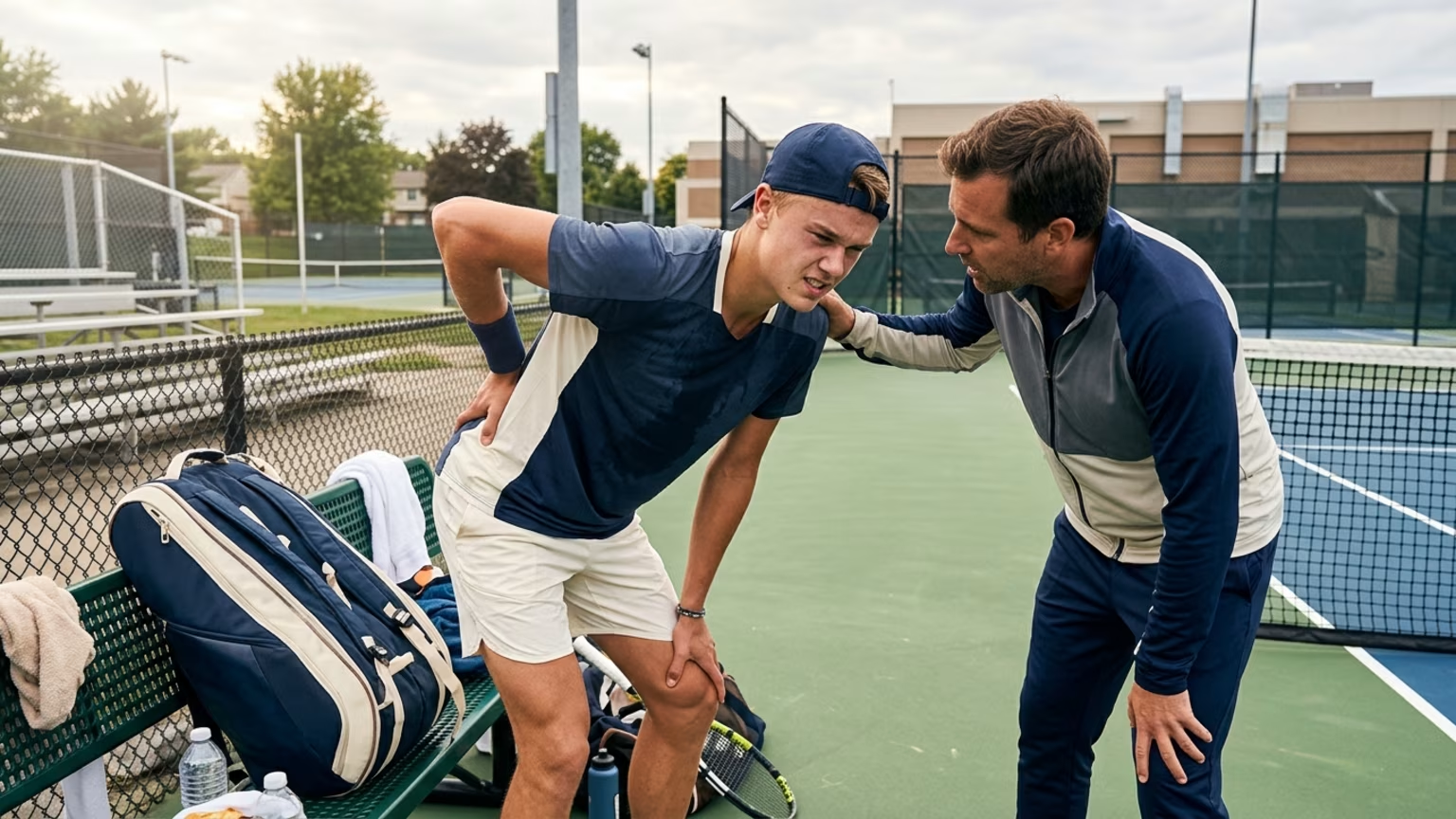
Holger Rune withdrew from the European Open with a back problem. The facts behind his decision and a grounded perspective for recreational players.

The Dink’s October 17 guide emphasizes deep returns, ball-height decisions and positioning against faster pickleball opponents.

A new report outlines padel and tennis gear trends. Learn how to assess adjustable rackets, sensor feedback and smart-court claims.
Read practical guidance for better movement, smarter preparation and a game that keeps working for you.
explore the Blog
