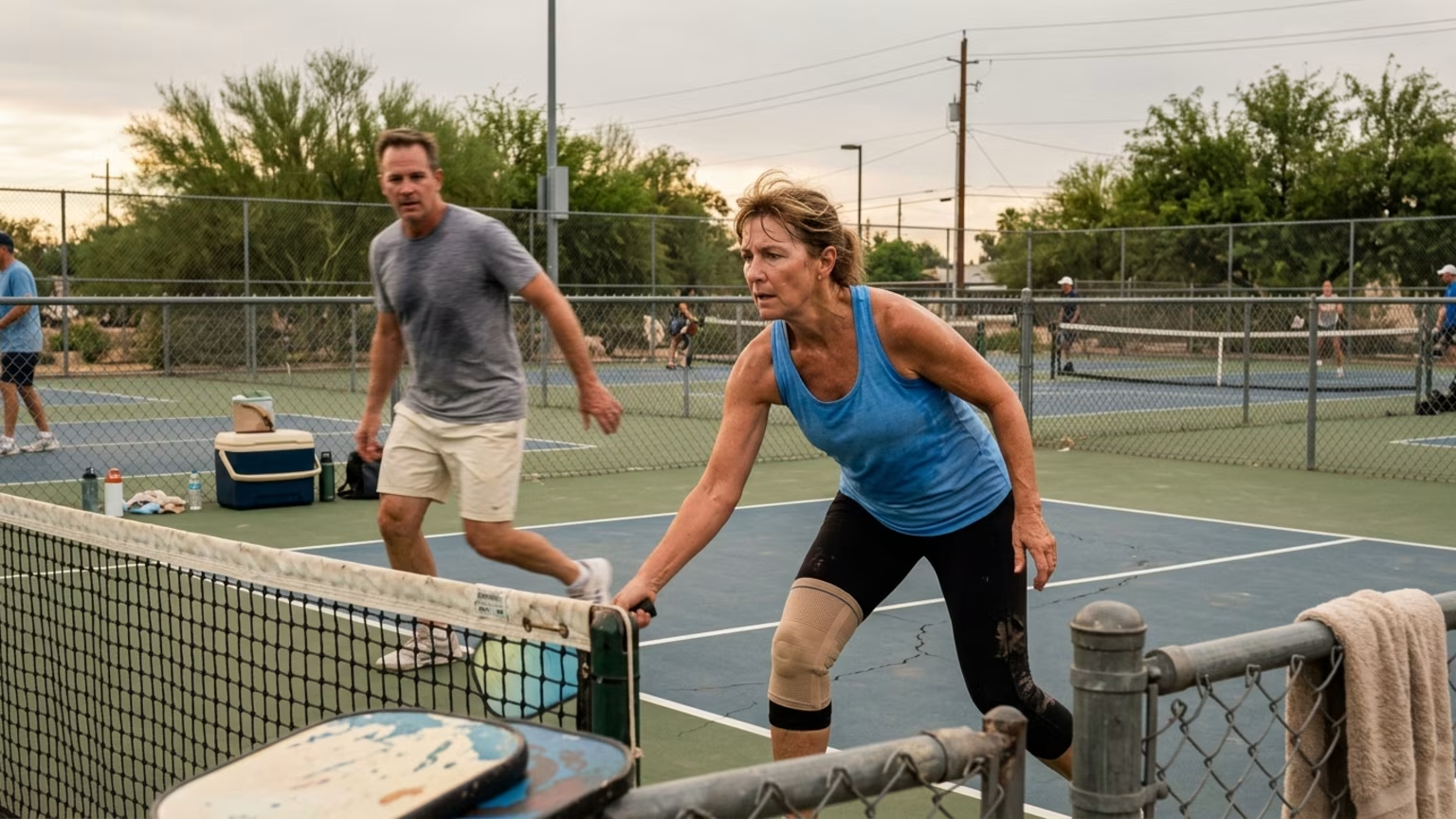

A new report ranks states by pickleball injury risk, but the real danger lies in wearing running shoes. Learn how to protect your joints and play safely.




The Action Network analysis ranks all 50 states by an estimated pickleball-injury risk score, with Florida identified as the top pickleball injury capital. Florida ranked first with an Injury Risk Score of 88.5 and an implied injury probability of 35.39%. This model uses national emergency-department data from the Consumer Product Safety Commission’s National Electronic Injury Surveillance System covering 2013 through 2025, USA Pickleball’s 2023 participation fact sheet, 2024 American Community Survey population data and the Pickleheads court directory. It provides a fascinating look at where players might be most exposed.
The Action Network placed Maine, Wisconsin, Vermont and New Hampshire alongside Florida in the top five. Maine ranked second at 81.5 and 32.59%, followed by Wisconsin at 79.5 and 31.79%. Vermont had the highest court density among the top five, with 56.75 courts per 100,000 residents, while Maine had 44.55 and Wisconsin had 37.64. At the other end of the table, North Dakota ranked 48th at 7.2%, while Alaska ranked 49th at 7.0%.
Geography only tells part of the story, as personal equipment choices heavily influence your daily risk. Many players mistakenly step onto the court wearing standard running shoes. Running shoes are primarily designed for forward motion, leaving players completely vulnerable during lateral exchanges. This creates a dangerous mismatch for a sport defined by rapid, multidirectional shifts.
This footwear mismatch becomes particularly dangerous for older demographics. Players aged 35 to 64 represented 32.4% of participants but 33.9% of injuries in the national data used by the analysis. The risk scales up sharply with age. Players aged 65 and older represented 17.6% of participants but 57.0% of injuries, making that age group substantially overrepresented in the injury dataset.
Instead of relying on jogging sneakers, players need equipment engineered for lateral movement. UT Health San Antonio recommends dynamic warm-ups, tennis or court shoes and stopping if pain develops. Appropriate footwear can help reduce slipping and lower-leg injuries. Baylor Scott & White advises players to use laterally supportive court shoes and check for debris or wet areas.
These purpose-built shoes are designed specifically for lateral movement, ankle support and secure grip. This stability is absolutely non-negotiable when defending the kitchen line or lunging for wide passing shots. Wearing the right shoe ensures your foot stays firmly planted when you need to change direction instantly.
In our experience at Evercourts, preparation dictates performance: "When I first started playing pickleball, I noticed how many people skipped warming up entirely. They would jump straight out of their cars and right up to the kitchen line. I tried doing that and immediately pulled a calf muscle. Pickleball requires just as much explosive lateral movement as tennis, just in a tighter space. Since then, I always spend five minutes doing dynamic lunges and ankle rolls. It changes everything about how confident I feel pushing off the baseline."
Treating warm-ups and correct footwear as non-negotiable habits is essential for every adult player. Breaking the recurring injury cycle in tennis, pickleball, and padel requires a commitment to proper preparation. A structured routine protects your joints, improves your balance and keeps you on the court longer.
The requirement for lateral stability applies heavily across all major racquet sports. Tennis features explosive demands that require players to slide, pivot and sprint across wide baseline distances. Court shoes are mandatory here, as running shoes would simply roll over under the extreme sideways pressure of a heavy forehand. Proper footwear anchors the player securely during these massive weight transfers.
Pickleball involves a different kind of intensity, characterized primarily by its rapid start and stop nature. Players constantly perform lateral shuffles at the non-volley zone. Even in states with lower risk scores, like Oklahoma which ranked 50th with a score of 16.5 and an implied probability of 6.6%, the physical demands remain identical. You still need shoes that grip the hard surface instantly without catching an outer edge.
Padel combines elements of both, demanding continuous multidirectional movement inside an enclosed glass court. Players must track balls off the walls, requiring rapid turning and immediate acceleration. Running shoes offer zero protection for these complex, rotating movement patterns. Across all three sports, adapting your movement to singles and doubles requires a completely stable foundation.
The right gear only works if the environment and the player are fully prepared for the activity. A ValuePenguin analysis of CPSC data, reported by KCUR, estimated that pickleball-related emergency-room injuries rose from about 8,300 in 2018 to more than 31,000 in 2025. The same analysis estimated more than 125,000 pickleball-related emergency-room visits among adults aged 50 and older between 2018 and 2025. Half of those visits involved people aged 65 and older.
Scientific interest continues to expand rapidly alongside the sport's massive growth. A 2026 bibliometric review reported an exponential increase in pickleball publications, especially after 2024, with the United States producing 172 publications and receiving 443 citations in the review’s dataset. A 2026 study listed by the Chinese University of Hong Kong examined pickleball’s effects on prefrailty, physical fitness and 24-hour movement behavior. These studies highlight that health benefits and injury risks coexist every time you play.
Action Network highlights warm-ups, court upkeep, suitable court shoes and avoiding backward-stepping falls as practical precautions. Players should carefully inspect the playing area, clear debris and remove wet spots before starting a match. Finally, replacing the instinct to backpedal with a proper turn and run technique can drastically reduce the risk of backward falls. Preparation ultimately controls your exposure to these very common physical hazards.
To stay active on the court for years, players must respect the physical reality of racquet sports. The combination of dynamic warm-ups and laterally supportive court shoes is the definitive winner for protecting your joints. Avoiding running shoes prevents unnecessary instability, giving your ankles the reliable support they need during intense rallies. Choosing proper gear is the easiest way to prevent avoidable setbacks.
Comparing injury risks across tennis, pickleball, and padel reveals that smart preparation is always cheaper than complex rehabilitation. True athletic longevity is not determined by state demographic rankings or national injury averages. It is built quietly in the five minutes before the first serve is struck.
Follow Evercourts for practical insights on tennis, pickleball and padel performance, movement, recovery and healthy ageing. Stay connected for new articles, research-led guidance and ideas to help you play well and keep playing for years.


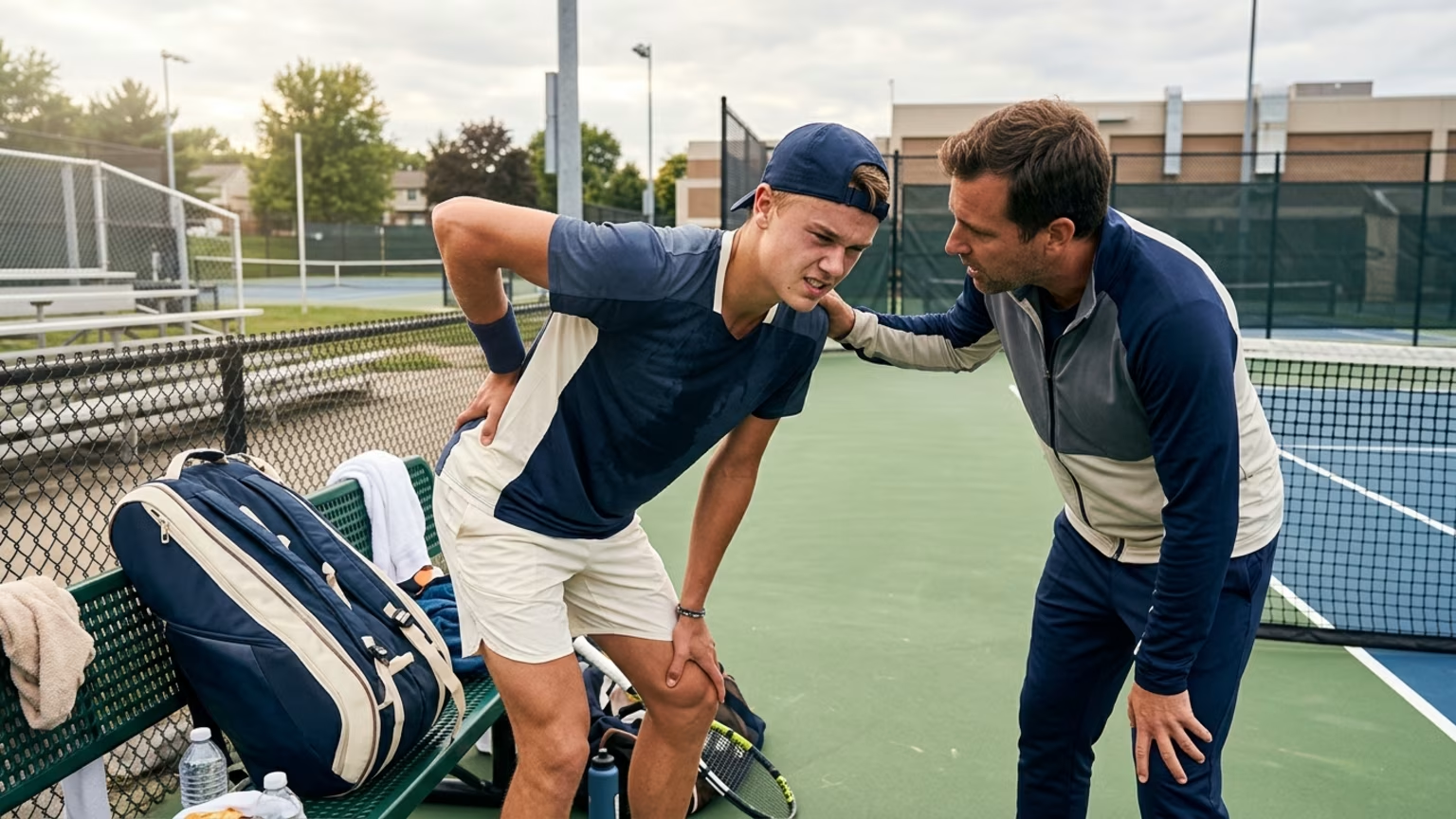
Holger Rune withdrew from the European Open with a back problem. The facts behind his decision and a grounded perspective for recreational players.

The Dink’s October 17 guide emphasizes deep returns, ball-height decisions and positioning against faster pickleball opponents.

A new report outlines padel and tennis gear trends. Learn how to assess adjustable rackets, sensor feedback and smart-court claims.
Read practical guidance for better movement, smarter preparation and a game that keeps working for you.
explore the Blog
