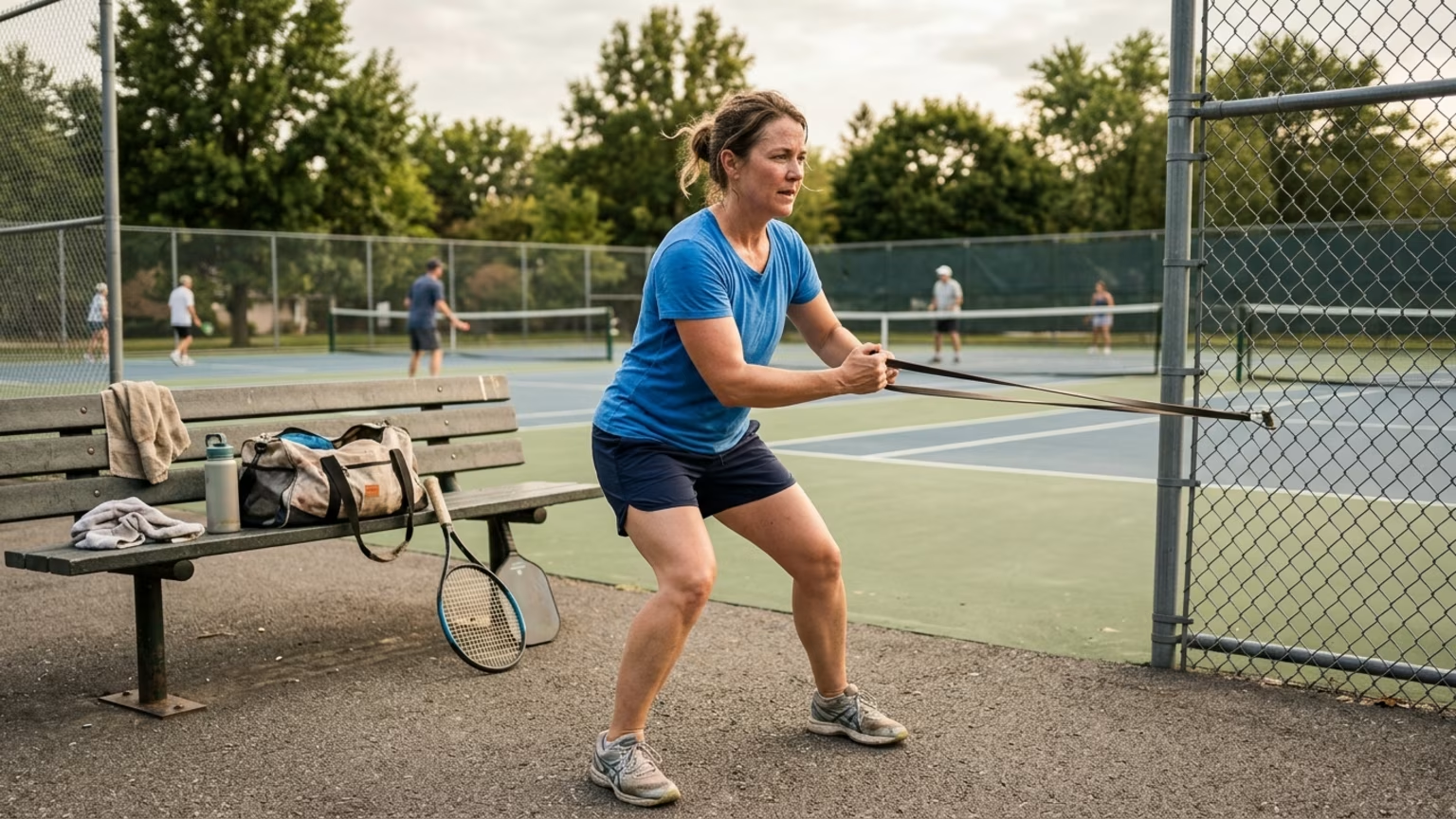

Learn why targeted strength training helps tennis, pickleball, and padel players maintain their court performance and support healthy aging over time.




Court-specific strength is the physical ability to produce, absorb, and control force during the distinct movements required to hit a ball and recover position. Rather than just lifting heavy weights, this type of fitness focuses directly on the actions players use most during a match. These core actions include pushing off, changing direction, reaching, and maintaining balance. Developing this targeted capacity helps adult players manage the repeated demands of their sport.
Racquet sports require repeated explosive efforts and rapid changes of direction. A player rarely moves in a simple straight line during a point. Instead, court movement involves lateral shuffling, sudden stops, deep lunges, and forceful overhead swings. This varied movement pattern taxes the muscular system heavily.
Every time a player plants a foot to change direction, the lower body must absorb a massive amount of force. Braking quickly places high demands on the quadriceps, hamstrings, and calves. After absorbing that energy, the legs must immediately push off to recover back toward the center of the court. This cycle of sudden deceleration and rapid acceleration fatigues the lower body quickly.
Furthermore, court surfaces dictate the specific physical toll a match takes on the body. Hard courts offer excellent grip but deliver unforgiving impact forces through the joints with every step. Pickleball and tennis players on hard courts must rely on strong leg muscles to dampen these harsh impacts. Padel players face different challenges, as the artificial turf and sand require exceptional stability to prevent slipping.
The upper body and trunk also face unique challenges during a match. Hitting a tennis forehand, a padel smash, or a pickleball drive requires the core to rotate forcefully. The shoulder complex then has to stabilize the arm through the swing and decelerate the racquet after contact. When these muscle groups tire, players often lose control of their mechanics and put extra stress on their joints.
Adult recreational players often notice this fatigue in their hips, knees, and lower backs. The repeated, asymmetric nature of racquet sports means one side of the body typically works harder than the other. Over a long match, this imbalance can lead to stiffness and reduced court coverage. Building strength specifically for these movement patterns helps the body tolerate those uneven, repetitive loads.
The sports science community offers practical guidance for court fitness, though the evidence base continues to develop. Current recommendations focus on movement quality rather than rigid, universal prescriptions. There is no single, clinically validated program guaranteed to prevent all injuries or extend a playing career indefinitely. Instead, practitioners suggest organizing training around the primary movement patterns seen in matches.
According to Tennis Fitness, a practical plan should address several key categories of movement. They suggest building a tennis-focused strength plan around single-leg exercises, lower-body strength, and upper-body work. Their framework also includes core stability, balance routines, rotational-strength conditioning, and deceleration training. This framework prioritizes the physical qualities needed to reach wide shots and recover quickly.
Developing deceleration capability is particularly crucial for reducing joint stress during aggressive stops. When players cannot brake effectively using their muscles, the surrounding ligaments and tendons must absorb the excess force. Proper balance training complements this braking ability, helping players maintain their footing when stretched wide. Rotational strength ensures that the core can safely generate and transfer the power needed for heavy topspin shots.
For a straightforward starting point, TennisCrown lists several accessible exercises that fit these categories. Their sample plan includes sit-to-stands or squats, reverse lunges, and hip hinges for the lower body. For the upper body, they suggest elevated or standard push-ups, rows, and calf raises. They also include trunk movements like dead bugs or side planks to build necessary stability.
These movements require minimal equipment and directly support the pushing, pulling, and stabilizing actions used on the court. They form a reliable baseline for court performance for adult players. The goal is to build a functional capacity that supports better movement during a match. A practical, consistent approach to resistance training provides the necessary stimulus without excessive fatigue.
When designing a practical routine, players must recognize that strength work should support their time on the court, not detract from it. The exercises listed by TennisCrown are highly adaptable to different fitness levels and space constraints. A player could easily perform a complete circuit of these movements in their living room or beside the court before a match. Removing the friction of traveling to a crowded gym makes it much easier to stick to a consistent conditioning habit.
Squats and sit-to-stands build the bilateral leg strength required for a stable athletic stance. Reverse lunges introduce a unilateral element, challenging a player to control their body weight on one leg. Hip hinges develop the posterior chain, which is crucial for a powerful serve and safe deceleration. Calf raises strengthen the lower leg to handle the repeated bouncing and sprinting required during long rallies.
Upper body movements like push-ups and rows ensure the shoulders remain capable of handling forceful swings. A strong back, developed through rows, helps balance the chest and front shoulder muscles that dominate racquet swings. Meanwhile, core exercises like dead bugs and side planks train the trunk to resist unwanted twisting. This stability allows players to transfer power efficiently from the ground up to the racquet.
Understanding court-specific strength is vital for adult players who want to maintain their physical capabilities over time. Aging naturally reduces muscle mass and tissue elasticity, which can make explosive court movements feel more difficult. A sensible strength routine helps counter these changes by keeping muscles, tendons, and joints resilient. This approach supports a sustainable approach to building fitness and promotes long-term healthy aging.
Implementing these exercises does not require an elite athletic background or expensive gym memberships. Recreational players can perform many of these movements at home using only their body weight. The true value lies in the consistent practice of these specific, court-relevant patterns over months and years. Building a durable body is a gradual process that rewards patience and steady effort above all else.
Progression is a crucial factor in building this durability safely. Practitioners recommend starting with controlled, tolerable movements to build baseline control. For instance, players should master double-leg exercises like squats before advancing to demanding single-leg variations. This gradual progression is especially important after periods of inactivity or a sudden increase in court time.
Consistency matters more than intensity when training for athletic longevity. Adding two or three modest strength sessions a week can help adult players stay on the court for years to come. These sessions do not need to leave a player exhausted or sore the next day. The objective is simply to maintain the strength required to change direction safely and swing a racquet comfortably.
By focusing on the actions they actually use, players can avoid wasting time on ineffective gym routines. Spending hours on generic gym machines often fails to prepare the body for the dynamic reality of a match. A focused plan builds a resilient physical foundation, giving players the confidence to chase down tough shots. This peace of mind is a major component of enjoying racquet sports well into later life.
Rest and recovery are equally important components of a sustainable athletic longevity plan. Muscles need adequate time to rebuild stronger after being challenged by resistance exercises or a tough three-set match. Overtraining can quickly lead to fatigue, poor mechanics, and an increased risk of setbacks. Adult players must listen to their bodies and be willing to adjust their training volume based on how they feel.
While general strength work is beneficial, it cannot solve every physical issue an adult player might encounter. Certain warning signs indicate that a standard exercise plan is no longer appropriate. If a player experiences sharp, sudden pain during a match or a workout, they should stop immediately. Pushing through acute pain often worsens the underlying issue and delays recovery.
Persistent joint swelling is another clear signal to seek professional advice. Knees, ankles, and shoulders that remain puffy or stiff for days after playing require a proper evaluation. Additionally, any pain that disrupts normal daily activities or sleep should not be ignored. Attempting to self-manage these symptoms with generic strength exercises is not recommended.
Players with a history of significant injury, surgery, or underlying health conditions should also be cautious. In these situations, consulting a qualified physical therapist or healthcare provider is the safest path forward. A professional can assess individual movement limitations and prescribe a highly specific rehabilitation plan. This targeted medical care ensures players can safely return to the court and continue enjoying their sport.
Evercourts remains committed to helping you move well and play better. See you on the court.
Follow Evercourts for practical insights on tennis, pickleball and padel performance, movement, recovery and healthy ageing. Stay connected for new articles, research-led guidance and ideas to help you play well and keep playing for years.


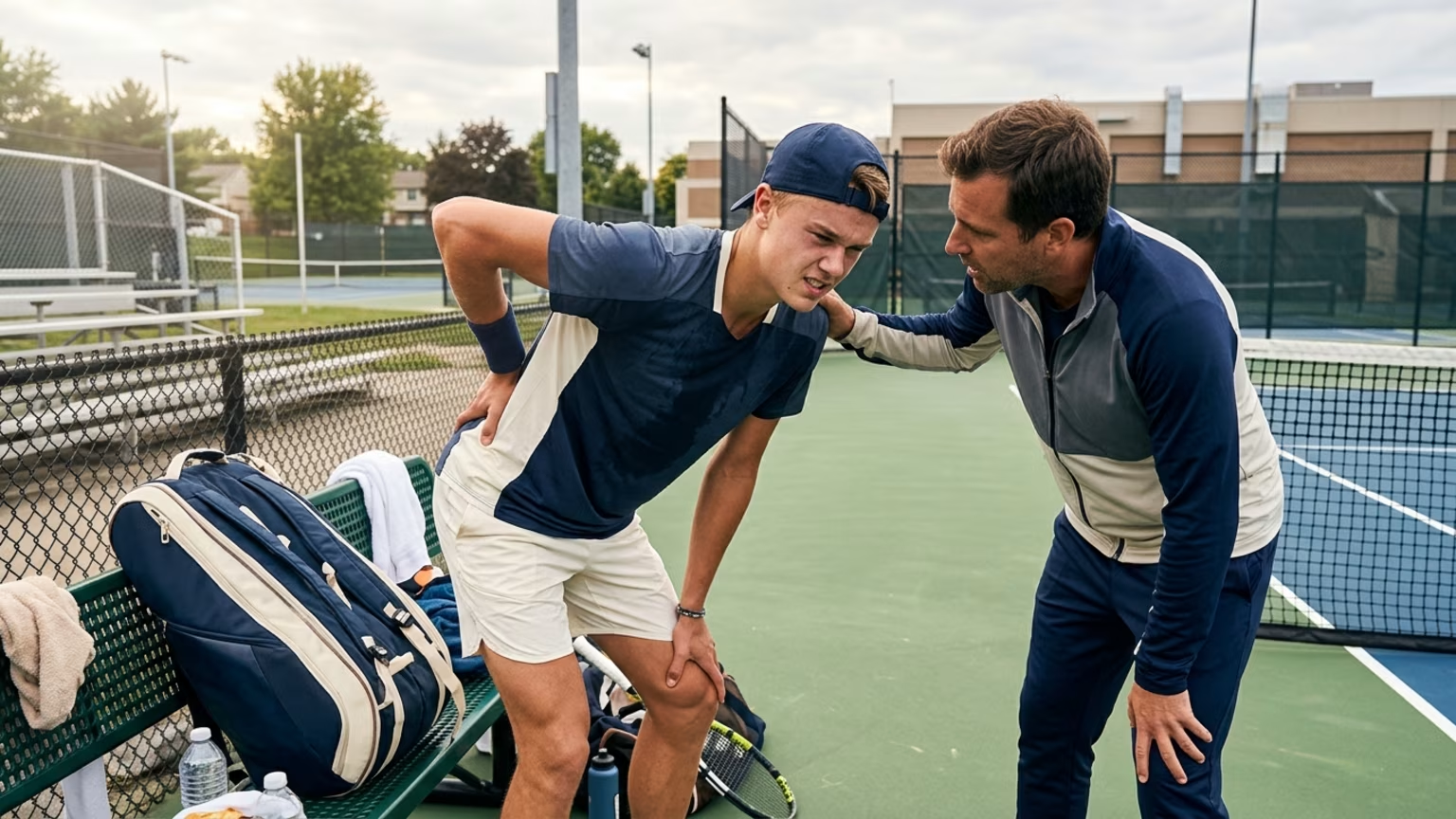
Holger Rune withdrew from the European Open with a back problem. The facts behind his decision and a grounded perspective for recreational players.

The Dink’s October 17 guide emphasizes deep returns, ball-height decisions and positioning against faster pickleball opponents.

A new report outlines padel and tennis gear trends. Learn how to assess adjustable rackets, sensor feedback and smart-court claims.
Read practical guidance for better movement, smarter preparation and a game that keeps working for you.
explore the Blog
