

Learn how to build court strength for tennis, pickleball, and padel with a sensible weekly plan that supports athletic longevity and better movement.




Court strength is the physical capacity to produce and control force while moving laterally, decelerating rapidly, and rotating through a swing. It is not about lifting the heaviest weight possible in a crowded gym. It is about preparing the lower body, trunk, and upper body to handle the unpredictable physical demands of a competitive match. Evercourts focuses on building this specific capacity to help adult players perform well and maintain their physical abilities over time.
Racquet sports force players to manage repeated explosive efforts and constant changes of direction across the court. Every single point requires you to start quickly, stop suddenly, and reach well outside your normal center of balance. An orthopedics article identifies short accelerations and sudden stops as core pickleball movements. The same article notes lateral movement, lunges, direction changes, and extended reaches.
These specific mechanics place heavy demands on the muscles and joints of the lower body. The physical toll increases because players must control their trunk and upper body while producing force simultaneously. A commercial padel training article lists lower-limb and upper-body strength as preparation priorities. The guide notes acceleration, change of direction, and core stability.
It also includes rotational power, coordination, and general conditioning. When you combine these rapid movements over a multi-set match, the workload on your joints becomes substantial. Tennis players often face long baseline rallies that require repeated lateral lunges and explosive recoveries to the middle of the court.
Pickleball demands rapid transitions near the net where quick reflexes and sudden stops are constant factors. Padel involves unique rotational forces as players track the ball off the walls and change direction rapidly. These distinct patterns explain why a general fitness routine often fails to prepare the body for specific court conditions. Preparing for these exact movement demands is essential for maintaining your physical capability.
The current evidence points to general movement preparation rather than one universal training prescription for all racquet sports. Much of the specific exercise advice comes from practitioner articles rather than controlled trials comparing different programs. This means players have the freedom to adapt their training without worrying about missing a rigid protocol. A clinical pickleball article recommends strength and balance work for older players, rest days, and avoiding overtraining.
You can organize your preparation around a few key movement patterns that translate directly to court performance. A Lancaster orthopedic article suggests strengthening the calves, hips, thighs, and trunk. They suggest practicing controlled movement patterns before play to prepare the body for intense physical efforts. These patterns include brisk walking, side steps, and calf raises.
Sit-to-stands and easy swings are also useful options. These are practical recommendations for building control rather than guaranteed medical injury prevention measures. Training frequency is a flexible planning choice that you should base on your personal schedule and current fitness level. One local health-system article recommends a strength routine two to three times weekly for pickleball players.
This specific routine names rotator-cuff endurance work, hip-abductor and glute strengthening, and eccentric calf raises. Finding the right balance ensures you build capacity without wearing yourself down before a match. It is better to be consistent with a few exercises than to attempt a perfect routine occasionally.
Different sources offer varying frequency guidelines depending on their target audience. A French pickleball association page quotes a recommendation for older adults. This guidance suggests performing functional balance and muscle strengthening at least three days a week. Secondary articles attribute similar older-adult strength and balance recommendations to the CDC.
If you want to understand how to schedule these sessions effectively, reviewing different strength training splits can help organize your week. The goal is consistent exposure rather than exhausting daily workouts.
Understanding these physical demands helps adult players stay on the court for years to come. Healthy aging in racquet sports requires a sustainable approach to physical preparation and active recovery. You do not need to follow grueling workouts to see the clear benefits of basic court preparation. A gradual approach helps your body adapt safely to the repeated stress of serving, volleying, and changing direction.
Following a minimum effective dose training plan keeps you fresh for actual match play. Proper recovery and environmental awareness also play a vital role in keeping you active as you age. A clinical health-system article recommends warming up properly and wearing court-appropriate footwear. It also advises doing strength and balance work, taking rest days, and paying attention to court conditions.
Integrating these simple habits protects your joints and maintains your ability to play consecutive days safely. Building this physical resilience is the foundation of any reliable multi-year athletic longevity plan. Rest days are just as important as the days you spend strengthening your muscles in the gym or at home. Overtraining often leads to lingering fatigue, which compromises your coordination and increases the likelihood of a misstep.
Adult players should prioritize deep sleep and proper nutrition to support their strength adaptations fully. Recognizing the immense value of recovery ensures that your physical conditioning actually translates into better movement during your matches. Ignoring rest will eventually stall your physical progress.
Muscles require adequate time between demanding matches to repair and grow stronger. Playing back-to-back heavy sessions without recovery periods increases the physical strain on your joints. Structuring your week to include lighter activity days helps promote blood flow without adding unnecessary fatigue. This disciplined approach to managing your schedule prevents burnout and supports long-term participation in the sports you enjoy.
While a sensible strength routine supports your performance, it is never a substitute for professional medical care. You should consult a qualified physio or healthcare provider if you experience sharp pain during lateral movements or sudden stops. Lingering joint stiffness that does not improve after taking scheduled rest days also warrants an expert physical evaluation. Ignoring recurring discomfort can severely limit your ability to play and reduce your overall mobility.
Pain should never be treated as a normal part of your athletic routine. A professional can help you modify basic exercises like sit-to-stands or split squats to accommodate any specific physical limitations. They can carefully assess your individual range of motion and guide you through a safe return to play if you have been sidelined. Do not attempt to diagnose yourself or rely on general internet advice when dealing with persistent aches.
An expert can design a targeted rehabilitation plan that a general strength guide simply cannot provide. Your priority should always be moving well and enjoying your time on the court safely. Working with a professional gives you clarity on exactly which movements are safe for your current physical condition. If you want to take one productive step today, start by adding a simple set of slow calf raises to your pre-match preparation.
Follow Evercourts for practical insights on tennis, pickleball and padel performance, movement, recovery and healthy ageing. Stay connected for new articles, research-led guidance and ideas to help you play well and keep playing for years.


An evidence check on sports supplements like tart cherry juice. Learn why racquet sports players should prioritize core nutrition over functional foods.
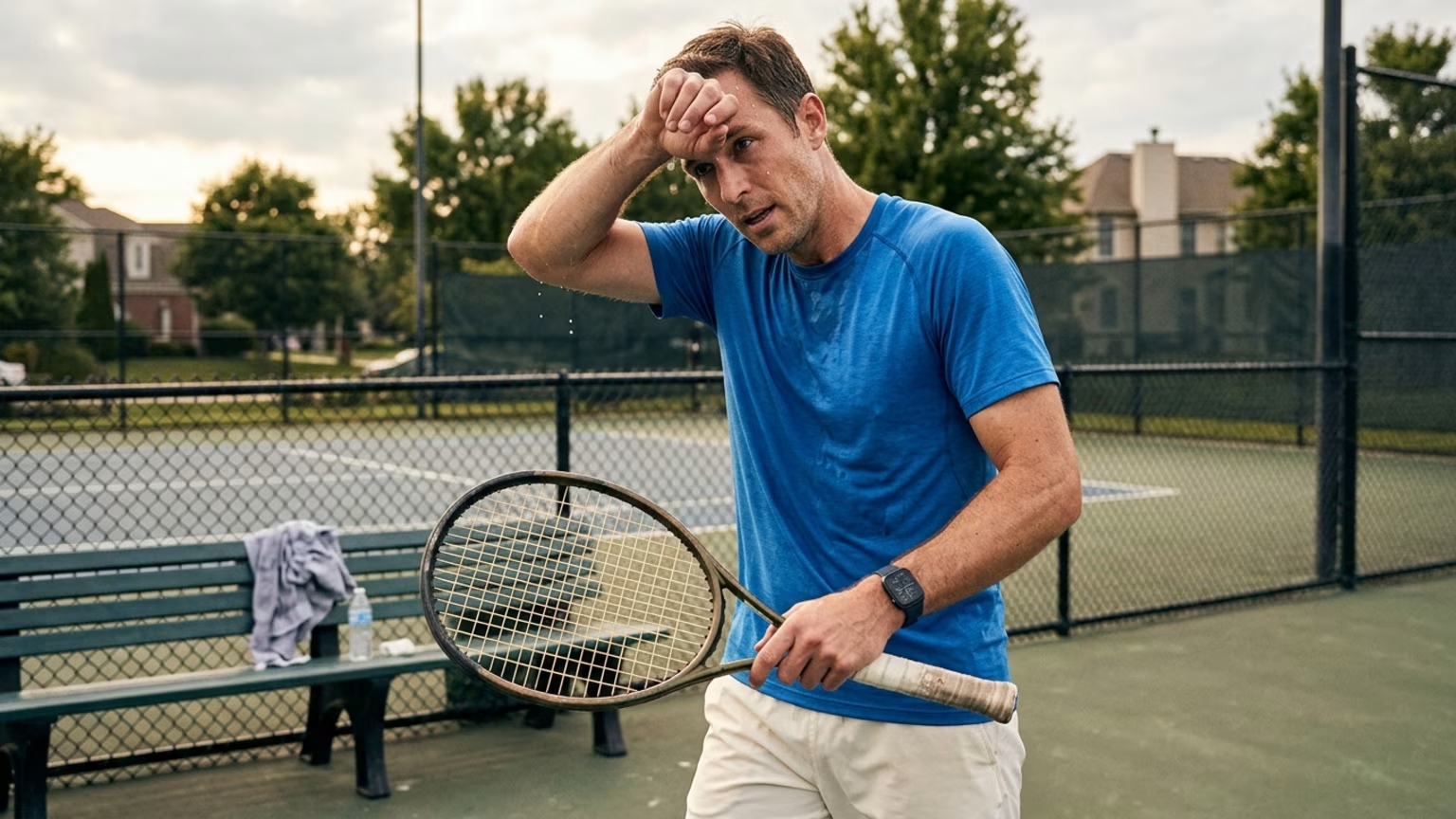
In late 2026, Oura analyzed wearable data to see how recreational tennis impacts heart health and recovery. Learn what this means for your athletic longevity.
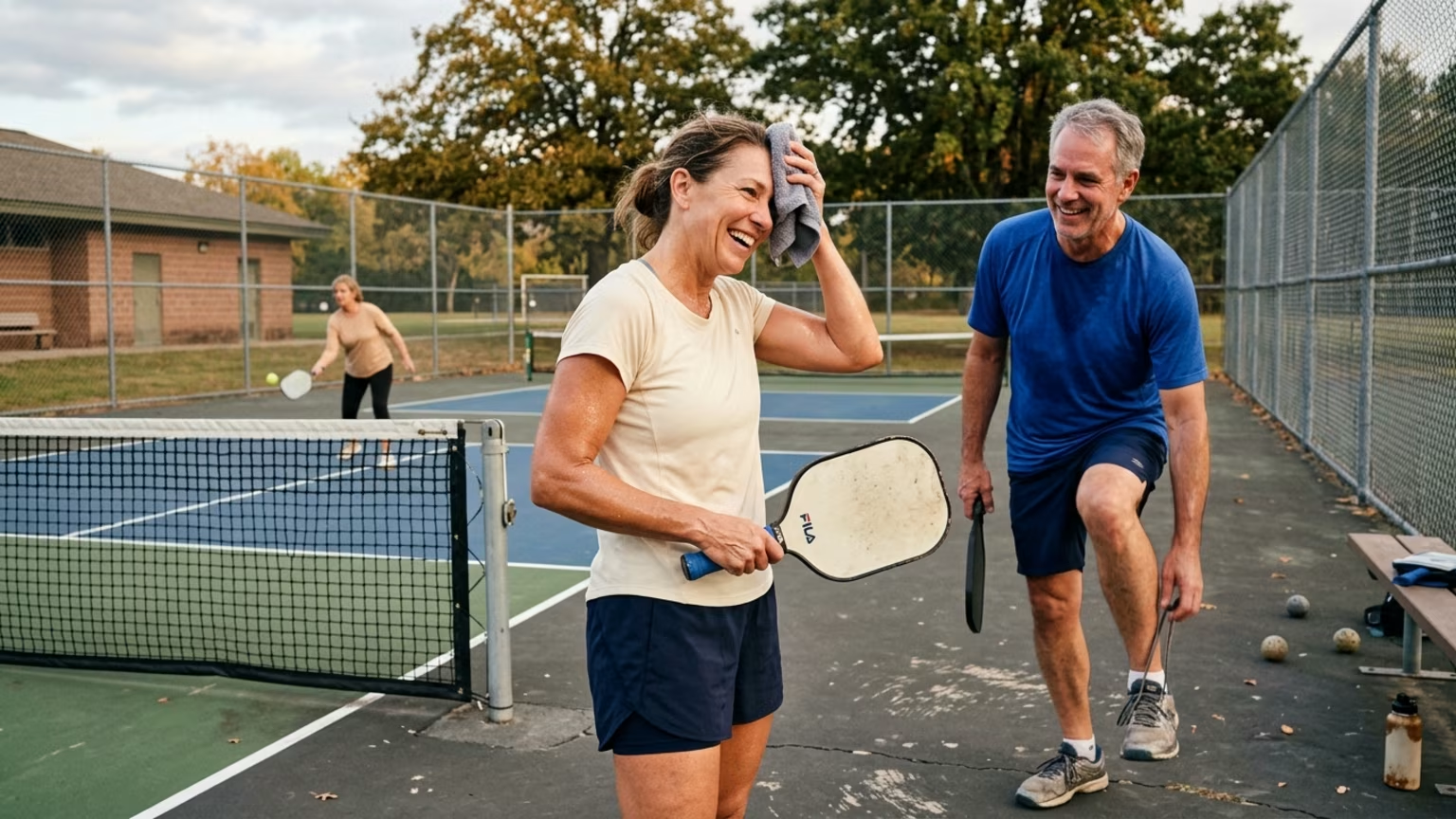
Recent guidelines emphasize gradual progression, dynamic warm-ups, and scheduled recovery to help adult racquet sports players maintain athletic longevity.
Read practical guidance for better movement, smarter preparation and a game that keeps working for you.
explore the Blog
