

A 2026 study in Frontiers in Nutrition found associations between sustainable nutrition habits and competitive athletes' perceived recovery and mental resilience.




In 2026, researchers published a new study titled "Sustainable Sport Nutrition Behaviors, Mental Resilience, and Perceived Athletic Performance in Competitive Athletes" in the journal Frontiers in Nutrition. The research team examined potential connections between specific dietary choices, recovery quality, and mental resilience. They also looked at how competitive athletes view their own performance levels. The findings highlight statistical associations between structured food routines and an athlete's perceived readiness.
The project invited 300 competitive athletes to participate in an evaluation of their eating routines. From that initial group, 230 individuals agreed to participate in the research. Ultimately, 202 athletes completed the full survey process. The researchers utilized a cross-sectional mixed-methods design that spanned an eight-week period.
This methodological approach combined self-report measures with direct conversations to gather a broader picture of athlete behaviors. Specifically, the team conducted semi-structured interviews involving 30 of the survey completers. By using both surveys and interviews, the researchers aimed to map practical dietary habits against the athletes' own perceptions of their physical state.
The study authors outlined several specific behaviors that constitute sustainable sport nutrition practices. These practical habits included plant-forward eating, prioritizing minimally processed foods, and consuming less ultra-processed food. The research framework also encompassed active meal planning and utilizing varied protein sources.
Additionally, the researchers included the selection of local and seasonal foods in their definition of these practices. Reducing food waste and maintaining consistent hydration were also key components of the evaluated sustainable behaviors. The goal was to group these routine actions together to observe their collective relationship with athlete well-being.
The semi-structured interviews provided additional context regarding how participants viewed their daily dietary choices. During these conversations, several clear interview themes emerged regarding the psychological benefits of structured habits. The themes included nutrition routines supporting mental preparation and general training discipline.
Athletes also connected their structured eating habits to better emotional regulation. Furthermore, participants expressed increased confidence about their own recovery processes. According to the researchers, these qualitative reports aligned with the positive trends seen in the broader survey data.
The findings published in Frontiers in Nutrition offer interesting insights for competitive athletes generally. However, they require careful interpretation for adult tennis, pickleball, and padel players. The available study information does not report the specific sports of the participants. There is no evidence establishing that racquet sport players were included in the survey group.
Therefore, readers should not view these results as a tested intervention specifically designed for court sports. The most defensible takeaway for a racquet sport reader centers on routine and adequacy. Evercourts focuses on healthy aging and athletic longevity by encouraging practical, sustainable routines over rigid rules.
For an adult balancing league matches and physical recovery, sufficient fueling remains the top priority. The study authors explicitly recommended that sustainable sport nutrition should emphasize adequate energy availability. They also noted that sufficient protein intake is vital, advising athletes to avoid overly restrictive dietary approaches.
This recommendation highlights the risk of adopting restrictive diets that might compromise your ability to play. Players can treat basic meal planning and varied protein choices as practical habits to consider. Building a sustainable court schedule often requires supporting your body with adequate calories and protein. Focusing on a reliable first 24 hours after match recovery plan is a practical way to apply the concept of nutritional consistency.
The researchers concluded that their findings should be interpreted purely as associations. The cross-sectional design and reliance on self-reported measures mean the study does not prove that these habits caused improved recovery. The results concern perceived athletic performance rather than a demonstrated improvement in measured competitive outcomes.
In racquet sports, perceived readiness is helpful, but actual court coverage and reaction times determine match success. Because the study only measured perceptions, players should view the results as a helpful piece of a larger puzzle. Any detailed fueling advice for a heavy tournament weekend would require a separate, sport-specific source. Players planning a busy season might read our guide on building a sustainable racquet sport tournament calendar to better manage their physical load.
Furthermore, while the paper mentions adequate energy, it lacks specific numerical guidelines for players to follow. It does not provide specific carbohydrate targets, glycogen-restoration protocols, fluid volumes, or electrolyte recommendations. Consistent hydration is defined as a sustainable behavior, but the paper does not establish how much an individual player should drink.
The eight-week survey generated specific statistical correlations between sustainable habits and athlete well-being. The researchers reported positive correlations between sustainable sport nutrition practices and mental resilience, noting a correlation of 0.47. They also found positive correlations for recovery quality at 0.43 and perceived athletic performance at 0.39. Each of these statistical associations was reported with a p-value below 0.001.
In their regression analysis, the authors identified several variables that were positively associated with mental resilience. Sustainable sport nutrition practices showed an association of 0.32, while recovery quality recorded a 0.29 association. Sustainability awareness was also positively associated with mental resilience at 0.21.
Mental resilience itself was associated with perceived athletic performance, registering a 0.36 association in the regression analysis. All of these figures carried reported p-values below 0.001, except for sustainability awareness, which recorded a p-value of 0.003. These numbers demonstrate a mathematical relationship among the surveyed athletes, though they do not confirm a direct cause and effect.
The sports science community is clearly paying closer attention to how daily habits influence mental preparation and perceived recovery. Future research will likely need to move beyond associative surveys to track actual measured performance in specific athletic disciplines. Researchers might eventually test these sustainable behaviors directly within the context of competitive racquet sports. Until those targeted studies arrive, adult players should focus on maintaining adequate energy and building consistent routines that support their weekly matches. Expect sports science to continue emphasizing basic nutritional sufficiency over highly restrictive dietary trends.
Follow Evercourts for practical insights on tennis, pickleball and padel performance, movement, recovery and healthy ageing. Stay connected for new articles, research-led guidance and ideas to help you play well and keep playing for years.


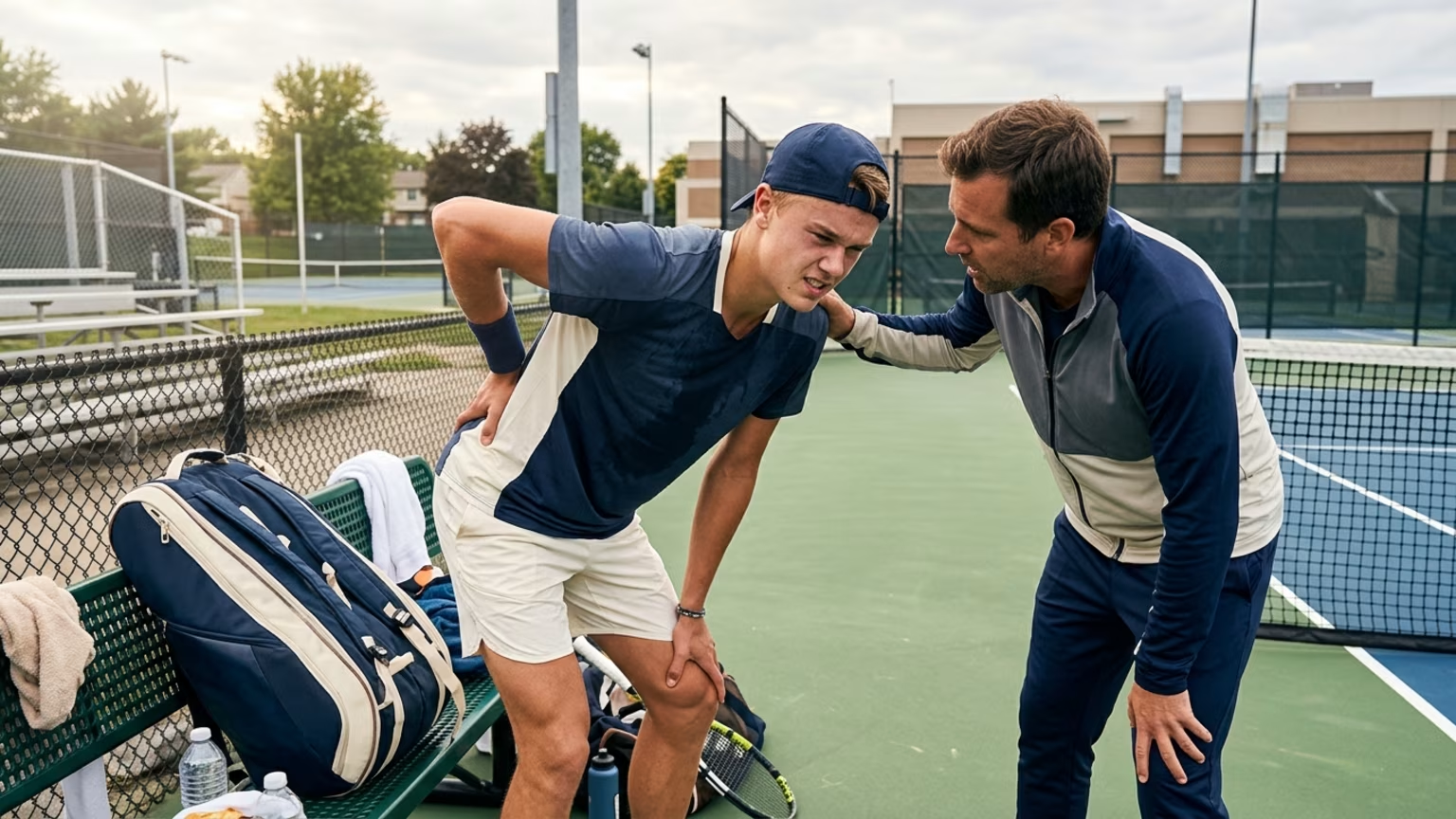
Holger Rune withdrew from the European Open with a back problem. The facts behind his decision and a grounded perspective for recreational players.

The Dink’s October 17 guide emphasizes deep returns, ball-height decisions and positioning against faster pickleball opponents.

A new report outlines padel and tennis gear trends. Learn how to assess adjustable rackets, sensor feedback and smart-court claims.
Read practical guidance for better movement, smarter preparation and a game that keeps working for you.
explore the Blog
