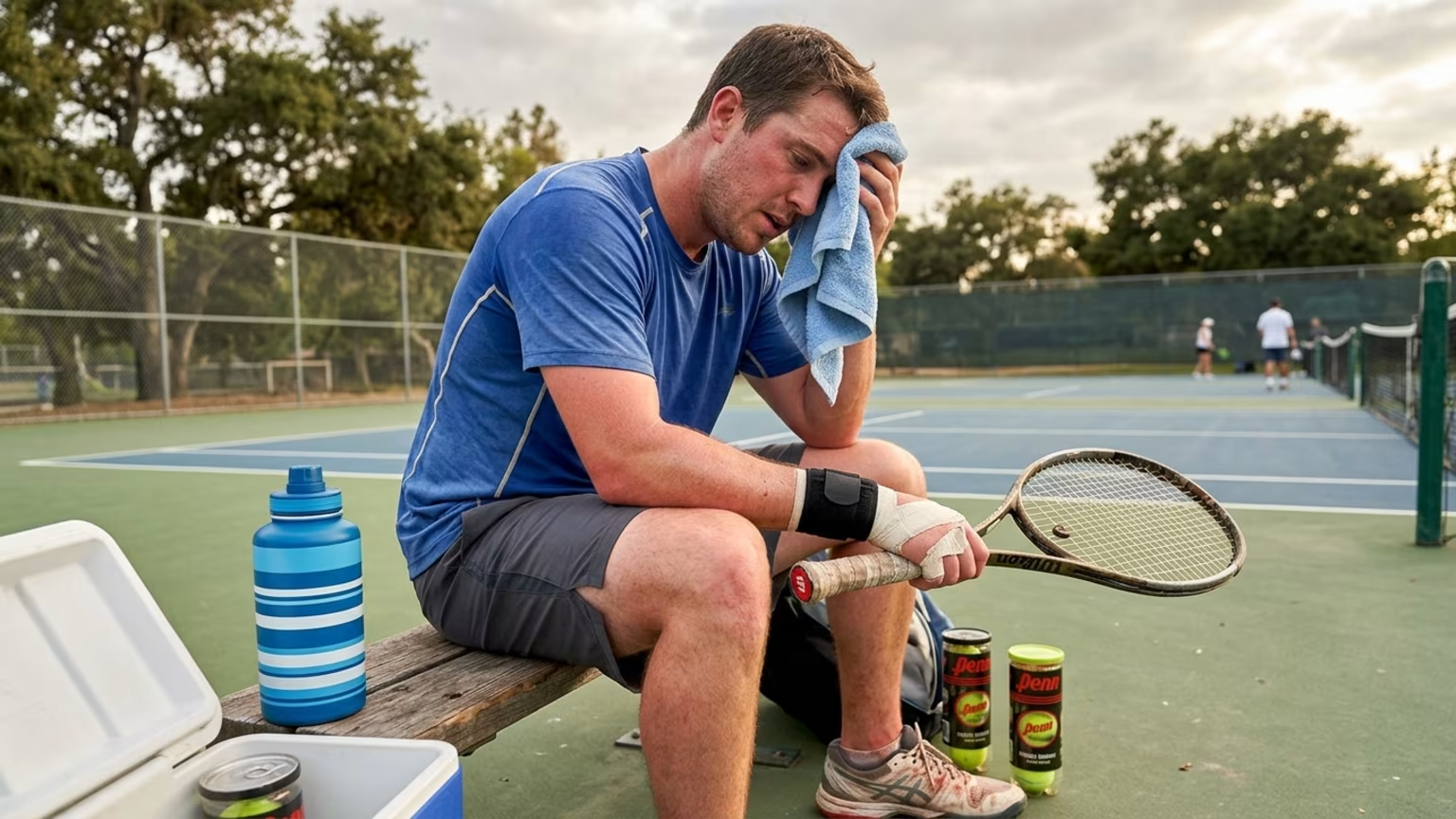

Learn how Taylor Townsend uses a quality-over-quantity training routine for tennis longevity, and how adult players can apply smart recovery to stay healthy.




More hours on the court will not automatically make you a better player. Professional athletes are actively moving away from the idea that every available minute must be filled with physical work. For Taylor Townsend, athletic longevity means stripping away unnecessary volume to focus entirely on purposeful, high-quality repetitions. Players often mistake exhaustion for progress on the practice court, but this outdated mindset assumes that every drop of sweat translates into a competitive advantage.
Quality-over-quantity training is the practice of ending a session once specific mechanical or tactical goals are met. Business Insider reports that Taylor Townsend, now 30, has shifted her preparation toward longevity as she continues competing at the highest level of tennis. Townsend said she previously felt compelled to practice hard for every scheduled minute, add extra hitting after matches, and continually "do the most." Today, she removes unnecessary wear by stopping when the required work is complete.
Tennis, pickleball, and padel are inherently taxing on the human body. These sports require repeated explosive efforts, rapid changes of direction, and continuous overhead motions. Every split step and aggressive lunge places immense braking forces on your lower body. Over the course of a two-hour match, these sudden decelerations create significant muscular fatigue.
Padel introduces a unique layer of complexity with glass rebounds and tight corner exchanges. Pickleball forces players into prolonged dinking rallies that require sustained, uncomfortable crouching. The continuous overhead serving motions require extreme shoulder flexibility and core stability. When these physical demands accumulate without proper rest, structural fatigue becomes inevitable.
Adult recreational players often try to compensate for limited schedule availability by cramming intense volume into brief weekend windows. This creates a dangerous cycle of fatigue and compromised movement. When players push past their functional limits, their mechanics naturally break down. The joints and soft tissues then bear the brunt of these sloppy, exhausted movements.
A sustainable training week requires careful management of these specific physical stressors. You cannot continually redline your energy systems without eventually paying a physical toll. A single hard match can leave the body depleted for days. Recognizing this reality is the first step toward building a lasting relationship with your chosen sport.
The sports science community increasingly points to total workload as a primary driver of physical breakdown. Michael Shilstone, a sports-performance specialist quoted by The Straits Times, argued that players cannot maintain an uninterrupted 11-month schedule and that planned recovery is necessary. The same report quoted Emory sports-medicine specialist Neeru Jayanthi as arguing that injury risk should be considered over an athlete’s entire development. This includes the cumulative wear from years of intense junior training.
The published evidence regarding long-term injury trends remains somewhat mixed. The Straits Times noted that a 2024 study of professional matches from the 1970s through 2019 found an overall increase in match retirements, while a 2016 study found no increase in Wimbledon injuries between 2003 and 2012. Furthermore, The Straits Times reported that published data on elite-tennis injury incidence remain limited.
Research on elite player workloads provides crucial context for everyday amateurs. While amateur schedules differ from professional tours, the biological limits of human soft tissue remain identical. Evaluating your racquet sports training methods through the lens of recovery is a logical safeguard. Planned rest helps the body absorb the stress of training and rebuild stronger tissues.
Ignoring this biological necessity often leads to overuse injuries and forced time away from the court.
Understanding total workload helps adult players maintain their physical capabilities and stay on the court for years to come. Townsend's current routine reportedly includes more stretching and bodywork, including regular work with a physiotherapist. Business Insider also says she uses journaling and meditation to stay mentally grounded and talks through stress with her coach and teammates. Ahead of the 2026 US Open, she prioritized listening to her body, discussing stress, and spending time with her 5-year-old son, Adyn.
Managing stress off the court is just as critical as stretching your muscles. Recovery requires a holistic approach that includes mental and emotional decompression. Townsend supports her training with uncomplicated, consistent nutrition. She carries fruit strips for a quick carbohydrate source and mentioned boiled eggs and egg salad on tomato-basil rice cakes as convenient high-protein foods.
At the previous US Open, she said peanut-butter-and-jelly sandwiches were one of her reliable foods. This practical approach provides reliable fuel without the mental burden of restrictive dieting. By avoiding overly rigid dietary rules, players can maintain their energy levels naturally. Townsend opened her 2026 US Open campaign with a 6-2, 6-3 victory over Maja Chwalińska, according to the official WTA match page.
WTA’s tournament coverage also says she had a strong practice week and felt well prepared for the event. While one match cannot completely validate a training theory, her performance clearly demonstrated the value of arriving at a tournament feeling fresh.
A few years ago, I realized my tennis serve speed was dropping, and my shoulder was constantly throbbing after matches. Instead of pushing through the pain, I took a month to rebuild my mechanics and focus on rotator cuff endurance. I stopped trying to hit flat aces and developed a much heavier kick serve. My win rate actually went up, and my shoulder stopped hurting. Sometimes longevity means outsmarting your own ego on the court.
Adopting a longevity game plan means you have to listen to your body. You can audit your week for low-value work and replace mindless hitting with focused mobility routines. Tracking your fatigue levels allows you to adapt your sessions before minor stiffness turns into a severe problem.
Journaling, meditation, and structured rest are excellent tools for managing daily training stress. However, mental decompression and a lighter practice schedule cannot fix underlying structural damage. If you experience sharp, localized pain during a swing, or if stiffness severely limits your daily movement, it is time to consult a qualified physiotherapist or sports medicine physician. Seeking timely medical advice is a core component of athletic longevity.
Persistent sleep disruption, chronic joint swelling, and a sudden inability to produce power are clear warning signs. Do not wait for a minor ache to become a chronic condition before seeking professional medical guidance. A minor issue can easily escalate if ignored during a heavy training block. A trained specialist can properly diagnose your symptoms and provide a targeted rehabilitation plan.
Taking action early keeps you in control of your physical health. The truest measure of athletic success is not how many hours you log in a single week. It is simply having the physical freedom to step onto the court again tomorrow.
Follow Evercourts for practical insights on tennis, pickleball and padel performance, movement, recovery and healthy ageing. Stay connected for new articles, research-led guidance and ideas to help you play well and keep playing for years.


Holger Rune withdrew from the European Open with a back problem. The facts behind his decision and a grounded perspective for recreational players.

The Dink’s October 17 guide emphasizes deep returns, ball-height decisions and positioning against faster pickleball opponents.

A new report outlines padel and tennis gear trends. Learn how to assess adjustable rackets, sensor feedback and smart-court claims.
Read practical guidance for better movement, smarter preparation and a game that keeps working for you.
explore the Blog
