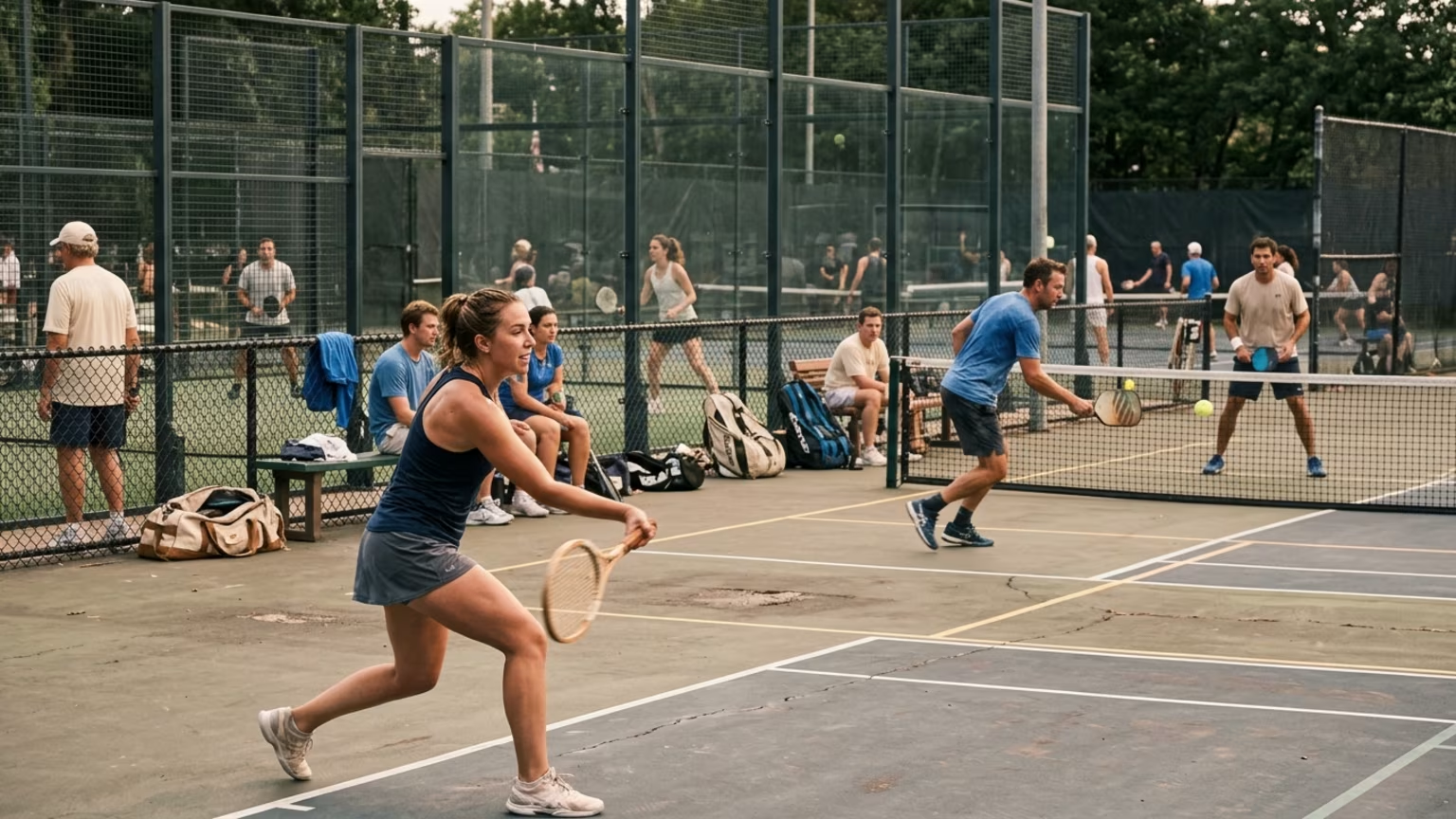

Learn how evercourts analyzes court etiquette rules to manage physical workload, athletic longevity, and fair access across tennis, pickleball, and padel facilities.




Proper court etiquette is rarely about good manners, as it is actually a rigorous system for managing the 24.3 million people who played pickleball in the United States in 2025, according to figures attributed to the Sports & Fitness Industry Association. That number represented a 22.8% year-over-year increase, overwhelming local courts. This massive growth transforms casual polite rotation into an absolute necessity for physical survival in overcrowded spaces.
The reality of sharing crowded facilities directly changes the workload your body absorbs. Congested courts mean players must maximize every minute of their scheduled session, leaving less margin for a proper on-court acclimation. The body is enduring repeated explosive efforts while athletes rush to get their games started. When players know they only have a brief window, the temptation is to launch into aggressive play immediately.
This rushed approach forces muscles and tendons to handle peak lateral loads before they are fully prepared. Rapid changes of direction require adequate blood flow to the lower extremities to function safely. If you step onto a court and begin sprinting immediately, you place unnecessary strain on cold tissues. Proper court-based conditioning drills are often sacrificed simply to squeeze in one extra set.
The musculoskeletal system requires a gradual escalation in intensity to perform complex biomechanical tasks safely. When you bypass a proper progression, the connective tissues in your knees and shoulders absorb a disproportionate amount of the impact force. Over time, this repeated shock accumulation is a primary driver of chronic joint stiffness. A commitment to athletic longevity means respecting your body's need for transition time, regardless of how long the waiting queue stretches outside the fence.
When I first started playing pickleball, I noticed how many people skipped warming up entirely. They would jump straight out of their cars and right up to the kitchen line. I tried doing that and immediately pulled a calf muscle. Pickleball requires just as much explosive lateral movement as tennis, just in a tighter space.
Since then, I always spend five minutes doing dynamic lunges and ankle rolls. It changes everything about how confident I feel pushing off the baseline. This simple routine protects against the sharp, sudden stresses of an abbreviated session. Integrating these small habits is the foundation of a sustainable weekly training plan.
The surge in active players directly explains why local facilities are enforcing rigid access systems. Tennis participation in the United States reportedly reached approximately 27.3 million players in 2025, up 1.6 million from the previous year. This massive influx of athletes requires logistical precision to prevent extensive wait times. Facilities are relying on timed rotations and strict booking rules to keep the traffic moving.
International expansion creates similar pressures on global infrastructure. Industry reporting citing the International Padel Federation’s 2025 World Padel Report says the sport has more than 35 million players and approximately 77,300 courts worldwide. The same reporting says clubs increased by 16.1% and courts by 15.2% year over year. Despite this rapid construction of new facilities, demand continues to outpace available court space during prime evening hours.
Accurate scheduling dictates the entire physical flow of an evening session. One community facility allows reservations of up to 120 minutes, prohibits consecutive time slots without approval and requires players to vacate the court at the end of the reservation. When players hold multiple time slots, it creates dead time on the courts, disrupting the continuous physical rhythm that active facilities rely upon to accommodate demand. Managing these constraints is a central part of healthy aging, as athletes must structure their physical output around strict access windows.
These numbers translate into high-pressure court management at the local level. One club permits guest bookings only four days in advance and excludes guests from certain weekday evening periods so that members retain priority. One tennis club specifically treats booking courts with players who have not consented, using substitute members to circumvent guest charges, or reserving only to hold a time as serious violations. These strict measures exist to maintain order as millions of new players enter the system.
The specific etiquette rules of these three sports create distinct physical rhythms and workloads for athletes. Tennis clubs may designate peak periods for club social play and require players to retire after a set or 30 minutes when others are waiting. This format demands a concentrated block of intense effort, forcing tennis players to maintain a high heart rate without pacing themselves over a traditional match. Managing this intensity shift requires dedicated ankle injury prevention strategies.
A public pickleball facility requires rotation after each game, creating a very different physical challenge. This constant cycling forces players into a stop-and-start physical rhythm, which requires careful attention to cooling down between short bursts of competition. Players must maintain their readiness while waiting in a paddle-rack queue, preventing their muscles from stiffening before the next match. Sitting completely still between fast-paced games often leads to sluggish movement once you finally return to the court.
Padel matches operate under arguably the strictest time constraints, demanding that athletes manage their energy precisely. Tennis and padel facilities commonly require players to leave immediately when their booked period ends rather than waiting to complete a game or tiebreak. This hard stop means players cannot taper their effort naturally, requiring them to brake hard at the exact end of their session. Navigating these differing structures requires understanding how tennis, pickleball and padel conditioning compare in real-world scenarios.
Sharing space also means regulating how you move near adjacent matches. Tennis facilities instruct players to walk around, rather than across, adjacent courts and to wait until a point ends before crossing behind the baseline. This protocol prevents sudden distractions, but it also means you will frequently stop and wait while walking to your destination. The start-and-stop nature of navigating a crowded club requires patience and steady movement.
The clear data on court scarcity points to one essential physical mandate for modern racquet sports. You must prepare your body before your reserved time actually begins. Arrive early to complete off-court mobility work, keeping your warm-up proportionate to the session once you step onto the playing surface. By handling your physical readiness on the sidelines, you avoid wasting valuable court time or risking sudden injury.
Waiting for your turn also requires conscious physical management and spatial awareness. Use the moments while waiting for a natural break to mentally transition, keeping your core temperature stable with light movement. Always respect the physical space of other players, as unpredictable interference can cause someone to land poorly during an explosive overhead.
After your session abruptly ends, you must also prioritize your physical recovery outside the fenced area. Because facilities require you to vacate the space immediately, it is easy to head straight to your car and sit down. Instead, take five minutes to perform light static stretches in the parking lot or club pavilion. Allowing your heart rate to settle gradually is just as critical as your pre-match preparation.
We adapt to the rhythms of the queue so the game can quietly continue.
Follow Evercourts for practical insights on tennis, pickleball and padel performance, movement, recovery and healthy ageing. Stay connected for new articles, research-led guidance and ideas to help you play well and keep playing for years.


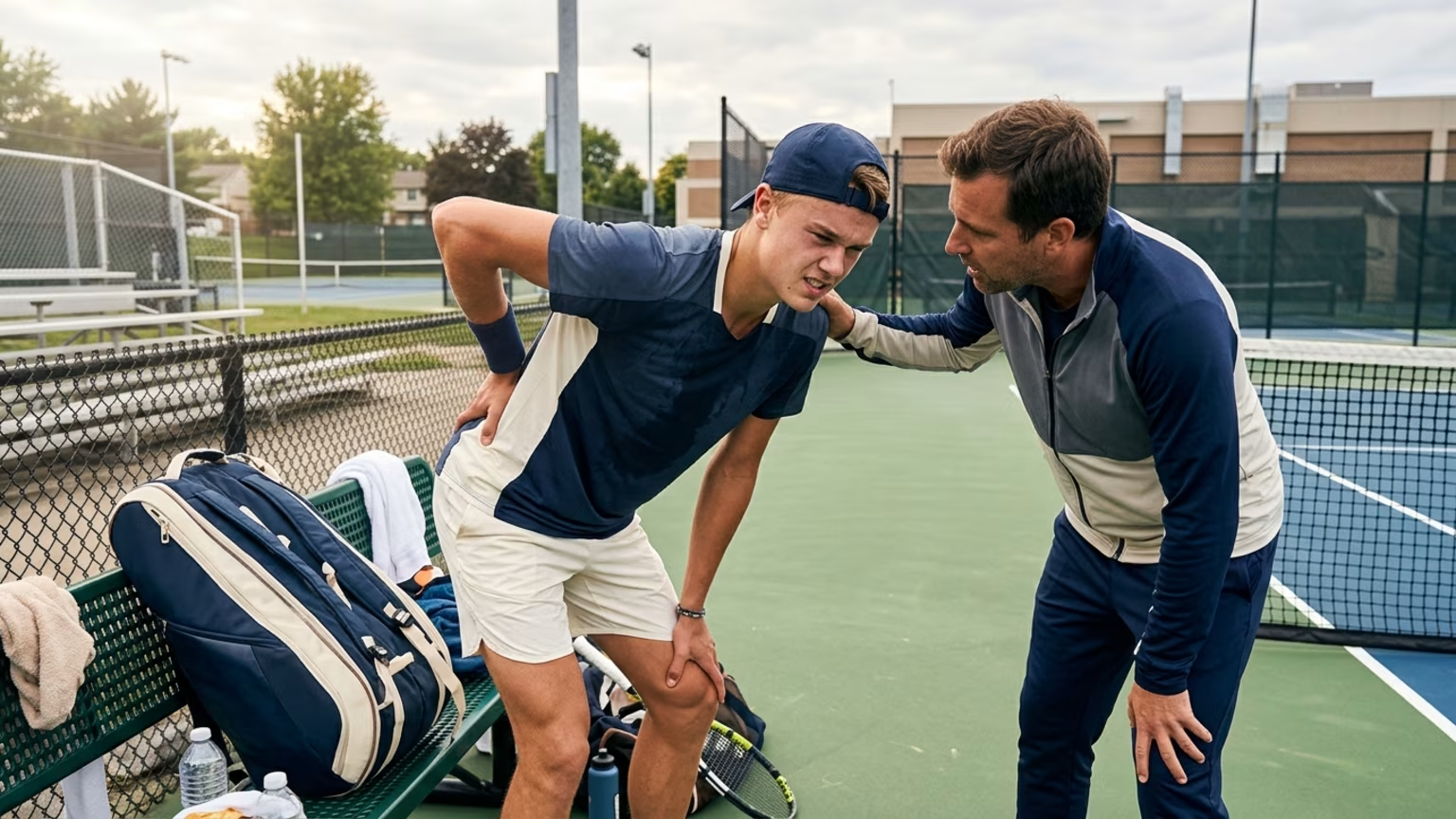
Holger Rune withdrew from the European Open with a back problem. The facts behind his decision and a grounded perspective for recreational players.

The Dink’s October 17 guide emphasizes deep returns, ball-height decisions and positioning against faster pickleball opponents.

A new report outlines padel and tennis gear trends. Learn how to assess adjustable rackets, sensor feedback and smart-court claims.
Read practical guidance for better movement, smarter preparation and a game that keeps working for you.
explore the Blog
