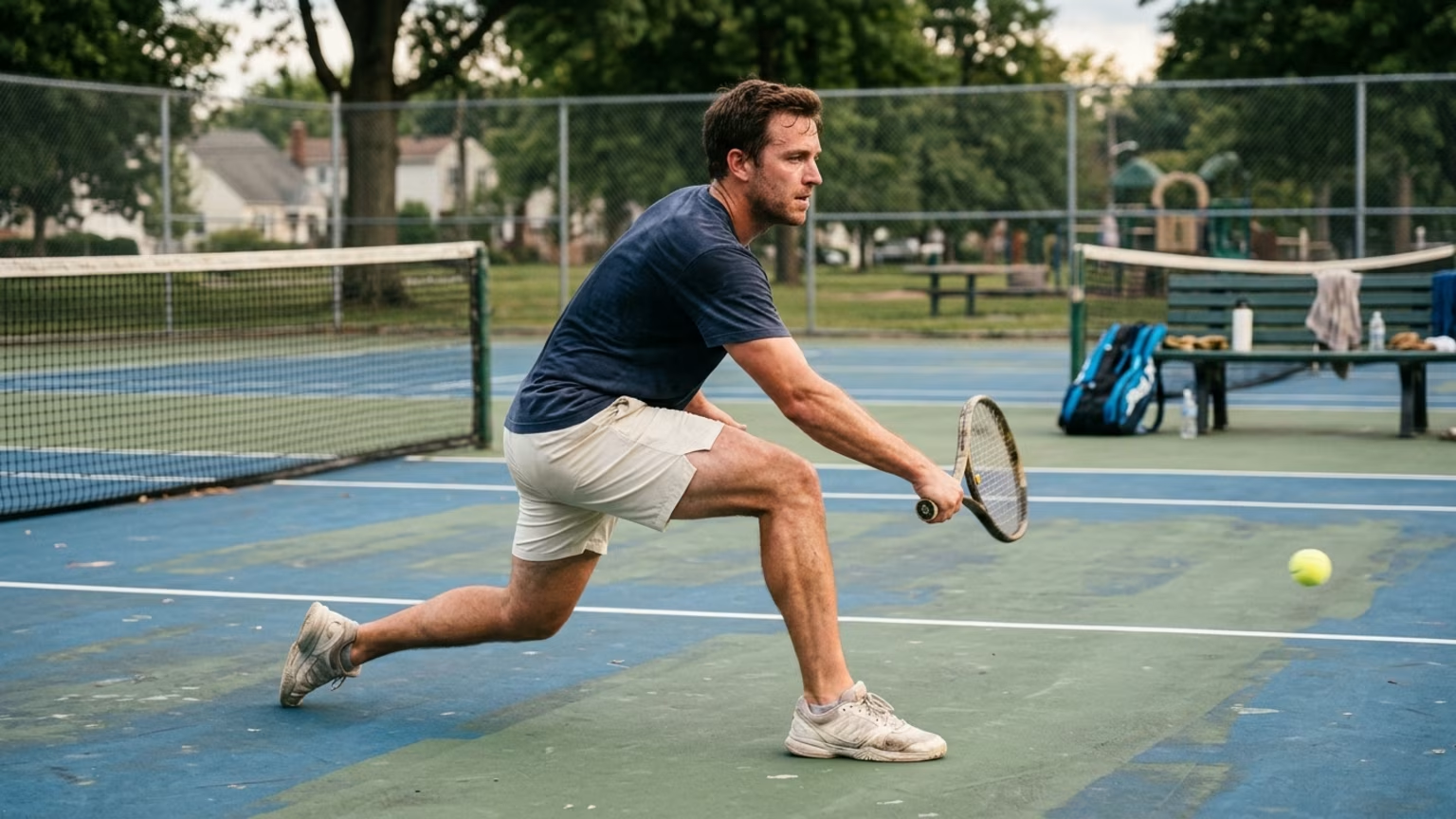

Understand single-leg control, lateral movement, rotation and braking in tennis strength training, with an illustrative week and clear evidence limits.




Tennis-specific strength is the ability to produce and control force for the movements the game asks of you. That includes pushing off one leg, moving sideways, turning and slowing down. The weight on a bar can be part of that preparation. It is not a complete description of it.
A useful way to assess strength work is to consider both load and movement quality. General lifts belong in that conversation alongside single-leg control, lateral movement, rotation and braking. The question is not simply whether an exercise is difficult. It is what that exercise contributes to the broader plan.
A practitioner guide to tennis preparation describes a game built around accelerating, braking, changing direction, pushing off one leg and recovering. These tasks explain why tennis preparation can reasonably extend beyond lifting progressively heavier weights in familiar positions.
An explosive effort asks a player to get moving. A change of direction also asks them to slow the existing movement and organize the next one. When those efforts repeat throughout play, strength is not only about starting. Control during the transition deserves attention too.
For someone who also plays pickleball or padel, the useful comparison is the movement being performed rather than the sport's label. If a session involves repeated explosive efforts and direction changes, the same planning questions apply: where are the push-offs, sideways movements and controlled stops?
That is a practical lens for examining each session. It is not a reason to treat tennis, pickleball and padel as interchangeable activities or to assume they need identical preparation.
A systematic review in European Review of Aging and Physical Activity examined racket-sport interventions in adults aged 60 and older. It included 13 trials, with 10 randomized trials involving 469 participants in its primary analysis. Outcomes included muscular strength, balance, cognition, aerobic capacity and flexibility.
The tennis evidence came from one trial of 16 men without a non-exercise control group. Tennis comparisons against control were therefore indirect. Evidence was concentrated in table tennis, and the authors concluded that the available research could not establish whether one racket sport was superior to another.
The review did not test a tennis-specific gym program. Taken together, these sources do not establish an optimal weekly schedule or progression for adult recreational players. They also do not prove that the movement qualities discussed here prevent injury or extend playing years. The exercise examples and weekly layout below are coaching-informed editorial illustrations rather than a tested prescription.
The coaching guidance nevertheless offers a useful vocabulary. The practitioner guide identifies single-leg strength, balance, rotational strength and deceleration control as priorities. A separate guide to tennis conditioning includes multidirectional movement, lower-body strength, single-leg work and rotational-core exercises. Those are coaching recommendations, distinct from findings established by controlled trials.
For adult players, athletic longevity is a planning goal: keeping physical preparation connected to the game they want to continue playing. This framework gives that goal some practical shape without reducing it to a heavier lift or a longer workout.
The useful questions become broader. Does the plan include control as well as force? Does it make room for sideways movement and stopping? How does strength work sit alongside court time?
Evercourts' approach to organizing training around continued play provides a wider editorial frame for those questions. Within that frame, the following qualities are ways to organize preparation rather than separate performance promises.
Single-leg control means managing a movement when the emphasis is on one leg rather than an evenly shared stance. Coaching guidance connects this quality with tennis tasks such as pushing off and recovering.
A split squat is one practical exercise example from the research brief. The useful planning question is what the exercise asks of strength and balance, not simply how much weight can be added. It is one option rather than a compulsory test for every player.
Lateral movement is movement to the side. Including it in the discussion keeps a strength plan from being described only through exercises performed forward and backward.
A lateral lunge is a coaching-informed example. It represents a movement direction worth considering alongside general lower-body work. It does not need to reproduce a tennis rally to have a place in the exercise menu.
Rotation is turning through the body. Both coaching sources identify rotational strength or rotational-core exercises as possible components of tennis preparation.
For planning purposes, this gives turning its own place beside pushing and pulling. It does not make every rotating exercise equally relevant. The exercise choice remains separate from the broader question of whether rotation has been considered at all.
Deceleration means slowing down. In the tennis tasks described by the practitioner source, braking sits alongside acceleration and changes of direction.
Controlled stopping is a practical example of this theme. It brings attention to how movement finishes rather than only how quickly it begins. That is a different emphasis from measuring success solely by a heavier load or a faster start.
The following example shows how the themes might sit beside court time. It is a planning sketch, not an individual training recommendation.
For a newer or returning-to-training player, the simpler illustration uses one short strength session and controlled versions of the movements. For someone already accustomed to resistance training, the example retains two sessions with gradual changes in load or complexity. These are different ways to organize the same themes, not separate standards players must reach.
The broader planning task is to keep gym work connected to court life. Our discussion of fitting strength around tennis commitments offers related context. The weekly layout is a place to organize questions, not a calendar to follow regardless of personal circumstances.
Recurring aches or stiffness that change how you play are reasons to discuss the situation with a qualified physio or healthcare provider. The same applies when discomfort repeatedly shapes your exercise choices or leaves you unsure how to approach court time. Those are personal questions rather than problems a generic weekly template can settle.
Professional guidance is also appropriate when a health concern makes the choice of exercise or progression uncertain. This article offers a framework for understanding strength qualities. It does not assess symptoms or determine an individual's training needs.
Keeping the game in your life is a longer project than adding weight to a lift.
Follow Evercourts for practical insights on tennis, pickleball and padel performance, movement, recovery and healthy ageing. Stay connected for new articles, research-led guidance and ideas to help you play well and keep playing for years.


Zheng Qinwen’s early finish to 2026 puts fatigue and recovery in focus. Here is the practical lesson for adult racquet-sport players.
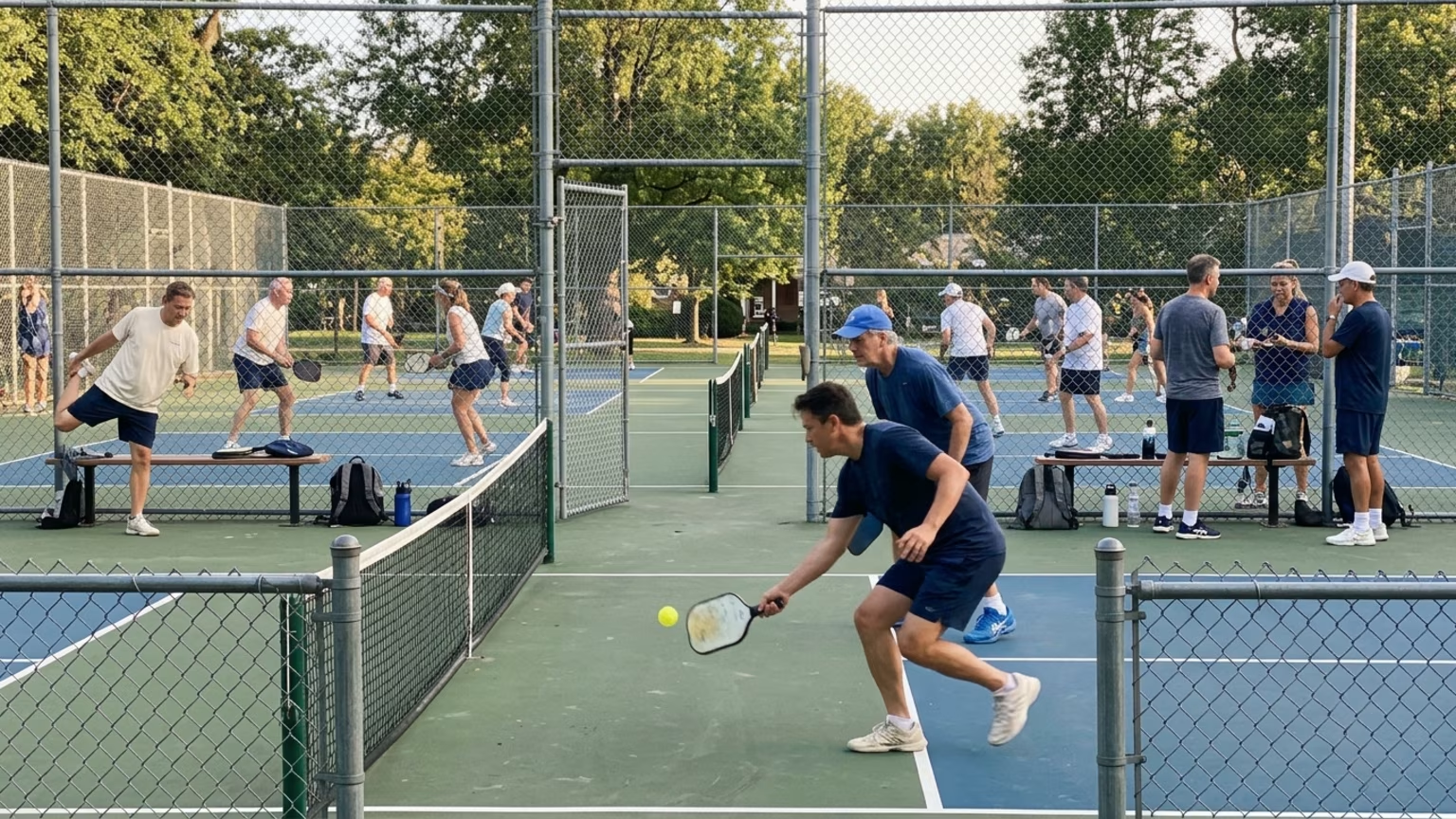
Build toward pickleball match pace with easy movement, court footwork and controlled hitting, plus a short-format option and guidance after a break.
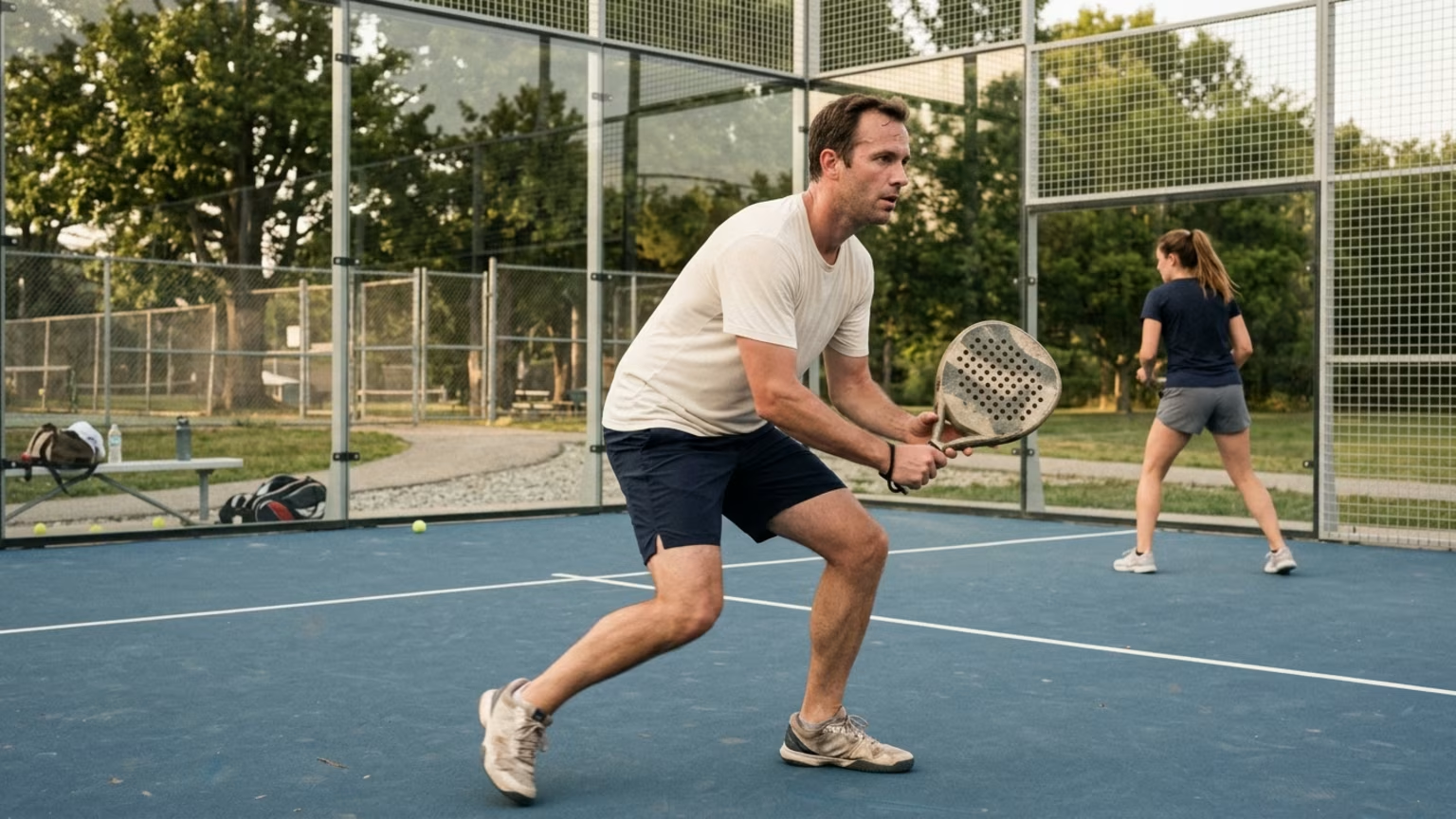
A research-led padel warm-up framework for starts, stops and turns, with adaptable movement guidance and clear limits on injury-prevention claims.
Read practical guidance for better movement, smarter preparation and a game that keeps working for you.
explore the Blog
