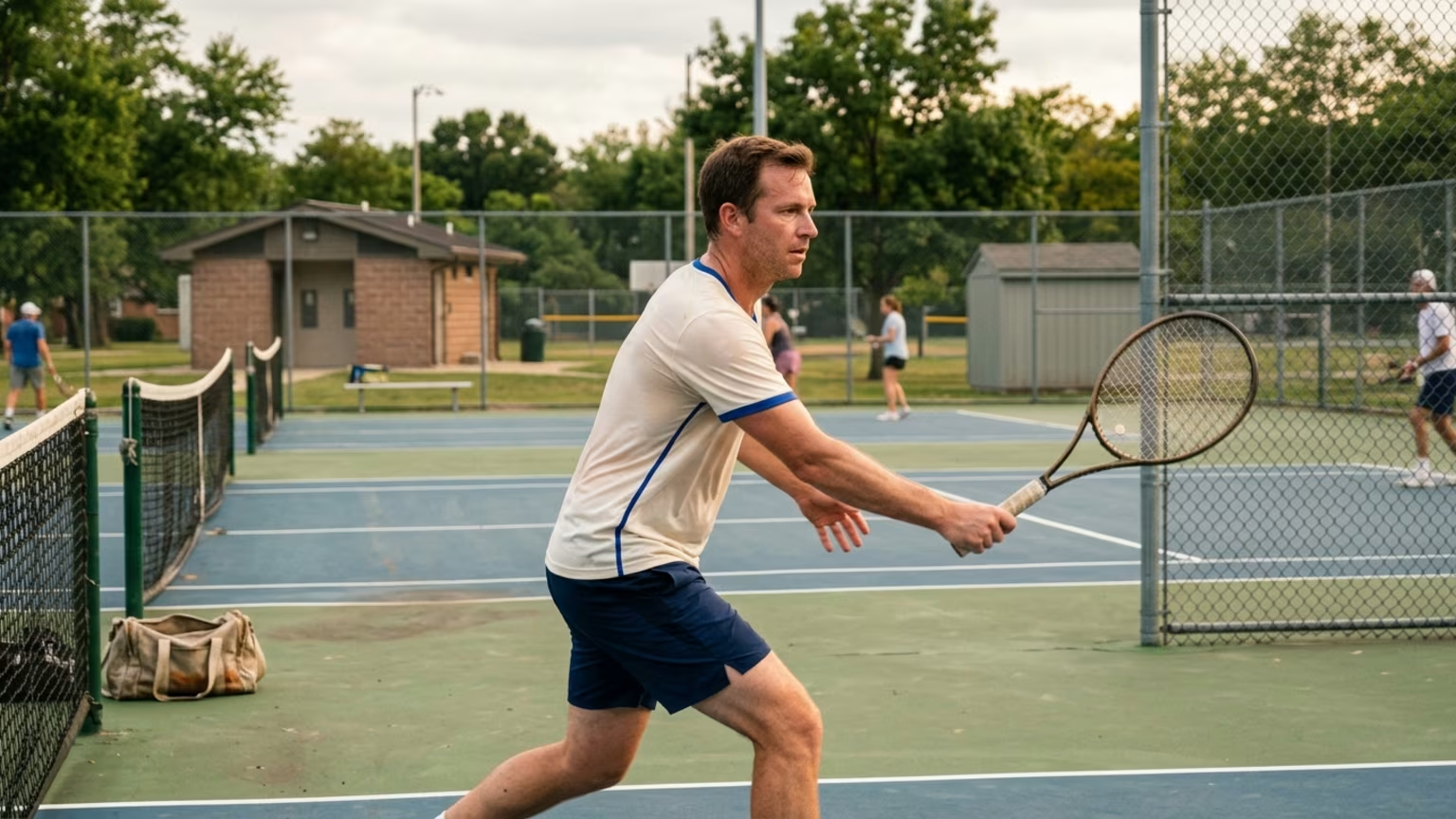

Learn how older racquet sports players can adapt Novak Djokovic's mindset and preparation approach for better athletic longevity and healthy aging on the court.




Playing more tennis does not automatically prepare you for competition. You have just finished a brutal three-setter in heavy humidity, and your joints are aching while you question if all those extra practice hours are actually helping. Most players assume that pushing through exhaustion builds endurance on the court. The reality is that blind repetition often accelerates physical decline.
This framework shifts the focus from sheer training volume to purposeful preparation for athletic longevity. It adapts elite decision-making principles to help older players maintain their physical capabilities without burning out. The goal is to build a practical routine that balances ambition with physical reality. By separating competitive goals from physical self-punishment, adult players can structure their training to stay on the court longer.
A few years ago, I realized my tennis serve speed was dropping, and my shoulder was constantly throbbing after matches. Instead of pushing through the pain, I took a month to rebuild my mechanics and focus on rotator cuff endurance. I stopped trying to hit flat aces and developed a much heavier kick serve. My win rate actually went up, and my shoulder stopped hurting. Sometimes longevity means outsmarting your own ego on the court.
Novak Djokovic entered the 2026 US Open at age 39 for his 20th appearance at the tournament. He arrived in New York pursuing a fifth US Open title and a record 25th Grand Slam singles championship. The ATP Tour reported that Djokovic owned a record of 95 wins and 15 losses at the US Open, while his most recent New York major title came in 2023. Since that 2023 victory, Reuters reported that he had reached two Grand Slam finals and six semifinals without adding another major title.
He was still seeded fourth, but reporting highlighted the physical demands of a best-of-five tournament at his age. His 2026 season included an Australian Open final and a Wimbledon semifinal loss to Jannik Sinner. His Roland Garros campaign ended in the third round. His most recent tournament ended with a three-set defeat by Thiago Agustin Tirante in Cincinnati, which was his first match since Wimbledon.
An early tournament loss or a canceled weekend match can feel like a failure. Players should treat these unexpected gaps as useful time for technical maintenance or physical rest. Reuters described the Cincinnati result as an early exit that Djokovic did not enjoy. However, he noted that the loss gave him roughly two additional weeks to prepare.
He used that extra time to get his body and mind ready for the tournament. Adult players can adopt this exact mindset when their schedules change unexpectedly. If a match is rained out, use that block for strength work or a much needed mental reset. Recreational athletes who follow a sustainable match schedule know that strategic rest is a powerful tool.
Djokovic said he still had many things he wanted to do in tennis, but his biggest current objective was to really grow. He connected that objective with the broader role tennis had played in his life. He said he was grateful to have been able to play the sport for so long. He described himself as running his own race, rather than defining his experience exclusively through comparisons with other players.
The ATP Tour reported that he would open his US Open campaign against Mariano Navone, meaning his immediate challenge was simply getting through the first round. He also noted that he used to be very critical of himself. Now, he was trying to be a little bit more kinder to himself while continuing to enjoy the journey. Adult players can apply this by separating constructive evaluation from emotional punishment.
You can remain ambitious and competitive without letting a poor practice session ruin your entire week. Recording whether a session produced better movement or cleaner contact is far more valuable than logging empty hours. A healthy mindset ensures you keep playing for years instead of burning out in months.
Your practice volume must account for the weather and the physical toll of the day. The Cincinnati defeat was notable because Djokovic reportedly struggled in hot, humid conditions. He also required medical attention during the match. Heat and humidity drain the body independently of technical form.
Adult players should adapt their rest intervals and hydration to the specific conditions of the day. A rigid training plan will fail if it ignores severe environmental stress. Adjusting your intensity on a hot afternoon is a core part of healthy aging. You cannot force your body to adapt to heat simply by refusing to rest.
Djokovic cautioned that feeling prepared in practice is not the same as proving readiness in a Grand Slam match. He noted that training and playing best-of-five sets on Arthur Ashe Stadium are two completely different things. Most players do not play best-of-five matches during their regular practice sessions. For amateur athletes, this means a high-volume practice schedule might improve technical skills without replicating actual match fatigue.
You should use practice to target specific tactical demands. Then, you can slowly build your match exposure to test how your body responds under pressure. Amateurs who follow a structured longevity game plan understand that practice sets are excellent tools. They help bridge the gap between isolated hitting drills and full tournament competition.
The core principles of this routine require specific adjustments depending on your sport of choice. Tennis players deal with larger court dimensions and heavy serving loads. Therefore, a tennis-specific approach should prioritize shoulder care and long sprint recoveries. When a tennis match is canceled, use the time to focus on rotator cuff exercises and hip mobility.
Pickleball players face a different set of biomechanical demands. The sport requires rapid lateral changes of direction and constant bending at the non-volley zone. If a pickleball tournament ends early, dedicate your new free time to knee stability and lower back recovery. Court athletes who prioritize targeted neuromuscular training often see better results in short bursts of lateral movement.
Padel combines the lateral quickness of pickleball with overhead demands similar to tennis. The glass walls demand constant twisting and deep lunging to retrieve defensive balls. A padel player should use their unexpected breaks to focus on spinal rotation and ankle mobility. Regardless of the sport, the goal is always to match your recovery work to the specific joint stresses you encounter.
The quietest victories often happen far away from the baseline, in the moments when we choose to listen to our bodies instead of our pride.
Follow Evercourts for practical insights on tennis, pickleball and padel performance, movement, recovery and healthy ageing. Stay connected for new articles, research-led guidance and ideas to help you play well and keep playing for years.


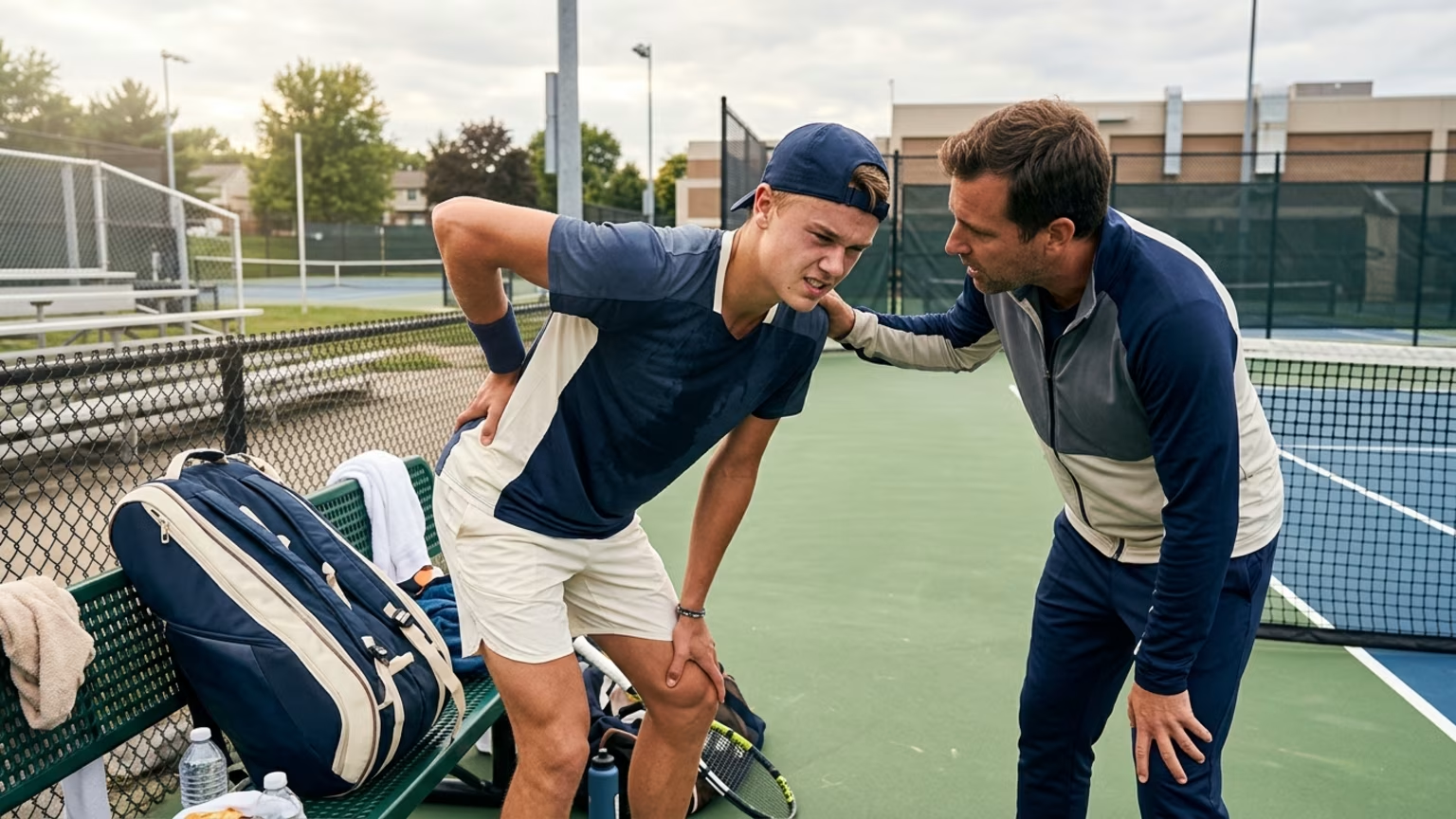
Holger Rune withdrew from the European Open with a back problem. The facts behind his decision and a grounded perspective for recreational players.

The Dink’s October 17 guide emphasizes deep returns, ball-height decisions and positioning against faster pickleball opponents.

A new report outlines padel and tennis gear trends. Learn how to assess adjustable rackets, sensor feedback and smart-court claims.
Read practical guidance for better movement, smarter preparation and a game that keeps working for you.
explore the Blog
