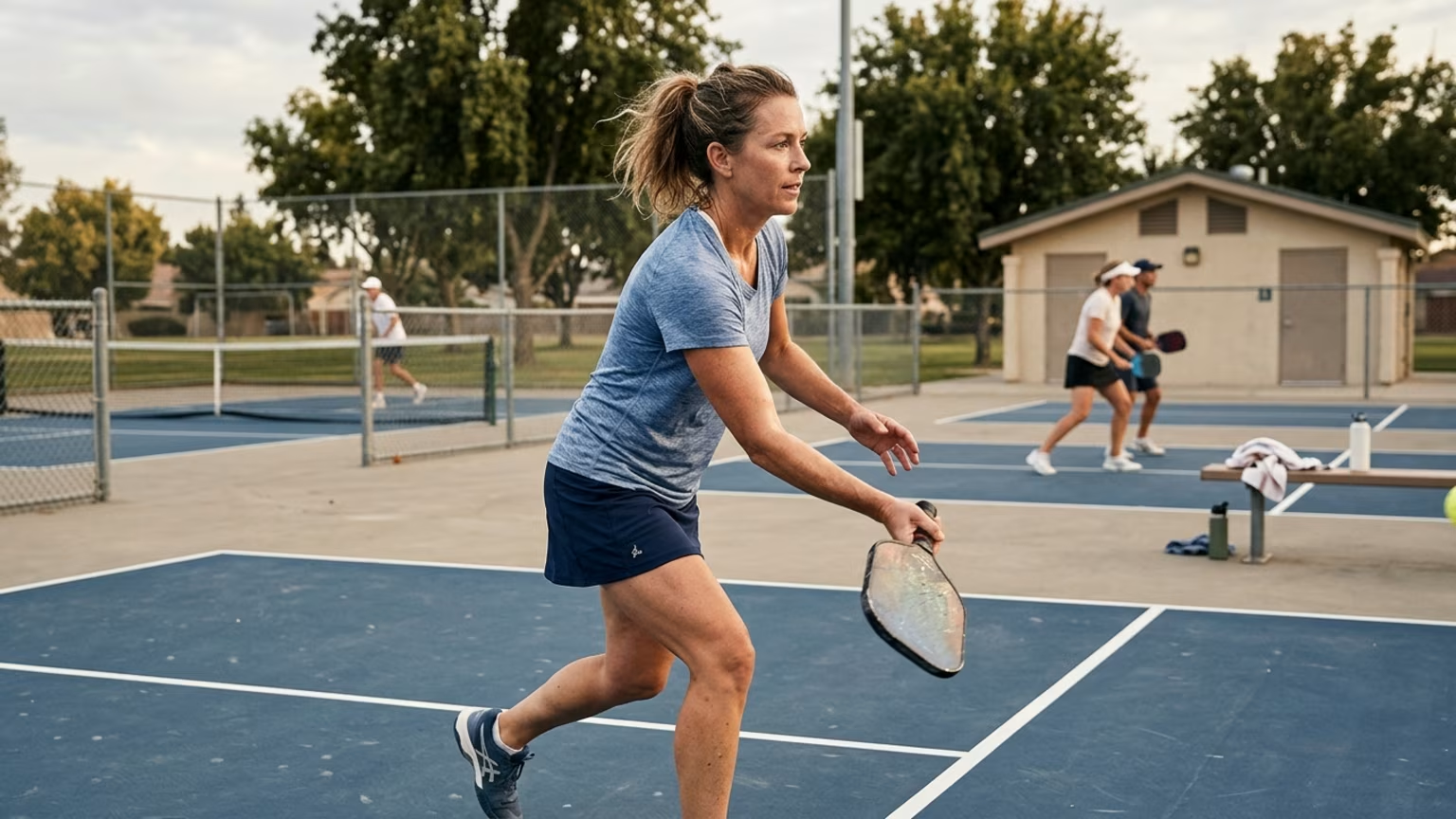

Follow a symptom-led, step-by-step progression for returning to tennis, pickleball, and padel after a layoff. Rebuild movement quality and strength safely.




This protocol provides a structured path back to competition after a physical setback or a busy period of life. Following these steps helps players restore movement quality and handle match intensity without prematurely rushing back to the court. The framework removes the guesswork from your first sessions back. It ensures your body can safely tolerate the specific demands of the game.
The objective of this progression is to support healthy aging and long-term athletic capability. It strips away the pressure of rapid timelines and focuses entirely on movement quality and symptom management. Players build the resilience required to stay on the court by restoring balance and strength before competition. This progressive approach prioritizes lasting performance over immediate but vulnerable returns.
Before returning to the court, check if normal daily activities are comfortable. Walking, using stairs, and turning should not cause meaningful pain or swelling. In a survey of 187 amateur padel players in Saudi Arabia between April 2025 and March 2026, 28 reported ankle sprains, equivalent to 14.97% of the sample. While their mean return-to-play duration was a rapid 3.36 ± 1.88 days, these players still experienced significant residual issues.
Among those 28 injured players, 75% reported functional limitation and 67.86% reported swelling. Furthermore, 60.71% perceived instability, 53.57% reported balance deficits, and 50% experienced strength deficits. Returning too soon can lead to setbacks, as 42.86% of this group reported recurrent sprains. Use your physical symptoms to guide your start date instead of relying on a calendar.
The injured players reported an average pain score of approximately 4.7 to 4.9 on a 0 to 10 scale. Notably, none of the 28 injured participants reported seeking medical attention after the ankle injury. Relying strictly on elapsed time rather than professional guidance can leave you vulnerable during match play. Always consult a qualified clinician if pain or swelling persists before starting this program.
Begin with a short, low-intensity session focused entirely on court movement. Rehearse a split-step rhythm, small lateral shuffles, and comfortable reaching positions. Avoid maximal changes of direction and full-speed transitions during this initial exposure. The aim is to restore your coordination before you introduce racket impact and ball speed.
For players recovering from an ankle problem, balance and strengthening exercises deserve special attention. In the Saudi study, injured players who performed balance and strengthening work had an average functional score of 91.30. Those who skipped these exercises averaged 83.10, showing an 8.20-point difference. Building foundational strength helps restore your confidence and stability before adding tactical decision-making.
Progress to cooperative hitting using predictable feeds from a partner. Start near the service line and focus on controlled volleys, easy lobs, and stationary strokes. The main objective is to evaluate your braking and balance into and out of each shot.
Even if you can strike the ball cleanly, your body must still tolerate the necessary court movements. Make sure you can comfortably reach the ball and recover your position after contact. If you find yourself avoiding certain steps to protect a joint, you are not ready for drills. You must achieve fluid movement without hesitation before moving to the next stage.
Increase your movement complexity while keeping the environment highly predictable. Work on partner feeds that require lateral recovery or simple two-shot combinations. Keep your court coverage at a submaximal speed to monitor your physical response safely. When reviewing strategies to safely build up your court workload, remember to separate your work intervals with generous recovery periods.
Increase only one variable at a time, such as movement speed or court coverage. Monitor your body for delayed pain or stiffness the following morning. A technically successful practice session should not be treated as equivalent to competition readiness. If symptoms flare up, reduce your exposure during the next session instead of pushing forward automatically.
Next, introduce restricted points to test your perceptual and tactical readiness. Use a fixed time limit or play only half a set to control the overall workload. Keep the intensity near a controlled training level and prohibit desperate retrievals. This specific stage will reveal if you compensate your movement under moderate pressure.
Players often move differently when reacting to an opponent rather than following a planned drill. A useful readiness check is whether you can repeatedly move, strike, and recover without favoring one side. If you are protecting a joint or losing balance under pressure, full competition is premature. You must demonstrate clean mechanics during spontaneous rallies before advancing.
Progress to a shortened competitive session with a clear cap on total playing time. A padel load study found that match play created significantly greater external load than practice. This difference in demand showed large effect sizes ranging from d = 1.41 to 2.63. Because matches demand much more from your body, your first game back must remain shorter than a normal fixture.
Ensure you can maintain your stroke mechanics and recover well between points. Test your tolerance for repeated lateral movements and sudden decelerations during live play. If you begin to limp or lose speed due to fatigue, stop the session immediately. The goal is to finish the match without experiencing significant worsening later that day.
Full competition should be the final exposure in your entire progression plan. Start with a single normal match rather than a tournament day with multiple demanding fixtures. Broader sports medicine research notes that multifactorial criteria are steadily replacing generic return timelines.
Studies frequently use combined standards, like the absence of pain and at least 90% strength symmetry, to evaluate readiness. Avoid increasing your match duration, intensity, and weekly frequency simultaneously. Players returning after a long absence should rebuild their duration first, followed by intensity, and then competitive density.
This progression applies across racquet sports, but you must adjust your focus based on specific biomechanical demands. Padel requires frequent interaction with the glass and awkward deceleration patterns. In the Saudi padel study, landing was the most common mechanism for ankle sprains, accounting for 57.14% of cases. Padel players should heavily emphasize jumping and landing control during their early movement rehearsal stage.
Tennis players manage a much larger court footprint and hit at higher sprint speeds. Your drill stage should prioritize longer lateral recoveries and progressive serving mechanics to prepare the shoulder safely. When preparing your physical comeback strategy, tennis athletes must gradually increase their sprint distances before playing partial points. Preparing for the specific distances of a tennis court is crucial for lower body resilience.
Pickleball players face unique physical demands in the transition zone and at the non-volley line. The sport requires rapid, short-step braking and constant split-step readiness. Your progression should focus on quick direction changes and controlled lunges during the drill phase. This preparation ensures your lower body can handle sudden stops before you play a competitive match.
Follow Evercourts for practical insights on tennis, pickleball and padel performance, movement, recovery and healthy ageing. Stay connected for new articles, research-led guidance and ideas to help you play well and keep playing for years.


Understand how coverage, playing format and wall rebounds shape tennis, pickleball and padel movement, with research context for long-term play.

Plan the move from league night to tournament weekend with practical answers on practice, recovery, travel, meals and match-day arrangements.

Put tennis point timings in context, track court and strength work, and compare your activity without borrowing workload targets from other sports.
Read practical guidance for better movement, smarter preparation and a game that keeps working for you.
explore the Blog
