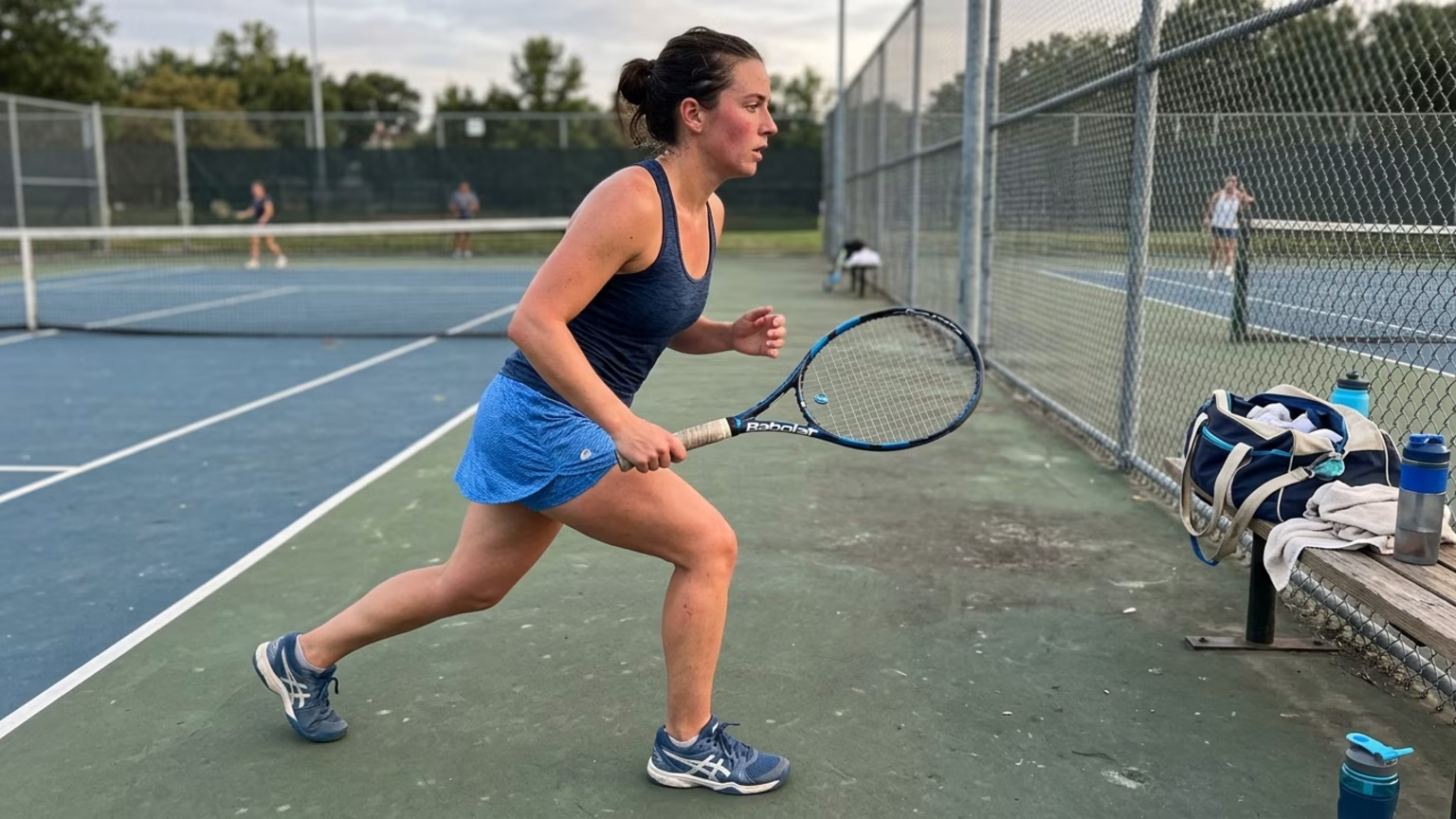

Replace vague stretching with a court-specific preparation sequence. Learn how to adapt your pre-match warm-up for singles, doubles, pickleball and padel.




You grab your bag from the trunk and walk straight to the baseline after a long commute. The court lights are humming in the evening air. You immediately try to hit a full-power forehand on the first feed. It usually takes three full games before your legs actually feel awake.
University sports-medicine physician Ahmed Ahmed explains that players should never go cold into athletic activity. Muscles can be completely unprepared in this state, and vital tendons remain stiff before proper movement occurs. Medical and sports-medicine guidance commonly places a general dynamic warm-up in the range of roughly five to 15 minutes. This active preparation is carefully designed to raise your heart rate, warm the tissues and produce mild breathlessness.
Ahmed also notes that while a full routine takes 15 minutes, recreational players can reasonably use a shorter version when time is strictly limited. The objective is not to fatigue the player, but to become warm and physically coordinated before the first competitive point. Dynamic movements like short shuttles, active skips and light hops resemble the actions used in racquet sports. Adding hip movements and arm circles will further prepare your body for the rapid acceleration, heavy deceleration and wide reaching required on the court.
A progressive warm-up should always match the specific physical demands of your upcoming game. More preparation time is naturally appropriate for higher-intensity activity, cold outdoor conditions or athletes who simply need more time to feel fully ready. By taking the time to move properly before you play, you build a sturdy foundation for better movement skills throughout the entire match.
Sports-medicine expert Swartzon highlights the significant physical risk of adults moving abruptly from a largely sedentary week into intense weekend activity. When you sit at a desk for days and then immediately ask your body to sprint, the physical contrast is severe. Swartzon describes a dynamic warm-up as an essential tool for bridging this sedentary gap safely. Active movements that specifically mimic the sport are much more effective than doing nothing before a match.
Many recreational players try to solve this problem by simply running a slow lap around the facility. However, a physical-therapy source specifically recommends preparing the wrist extensors, forearm, rotator cuff and Achilles tendon rather than relying on a generic jog. A slow jog does not rehearse the intense rotational demands of hitting a heavy topspin forehand or a powerful kick serve. You need specific targeted preparation to handle those unique physical forces safely.
Generic preparation often ignores these highly specific upper-body and lower-leg requirements completely. Relying solely on a short, straightforward jog leaves your shoulders, wrists and forearms completely unprepared for the upcoming ball impact. You need a more intelligent, progressive routine to ensure your entire body is genuinely ready to perform safely.
This specific preparation directly impacts your ability to play long-term. As one of our team members notes, "A few years ago, I realized my tennis serve speed was dropping, and my shoulder was constantly throbbing after matches. Instead of pushing through the pain, I took a month to rebuild my mechanics and focus on rotator cuff endurance."
The change in focus brought immediate physical relief. "I stopped trying to hit flat aces and developed a much heavier kick serve. My win rate actually went up, and my shoulder stopped hurting. Sometimes longevity means outsmarting your own ego on the court."
Singles play requires extensive individual court coverage and repeated, demanding lateral recovery. The warm-up should therefore include forward, backward and lateral shuffles to prime the legs properly. You should also practice split-step timing followed immediately by a short, controlled acceleration. Players benefit greatly from rehearsing controlled open-stance and crossover steps before the actual points begin.
Your final movement rehearsal should directly resemble your specific actual game style. Begin with smooth groundstrokes from the service line, and then slowly move back to the baseline. Serves should always be built gradually from half-speed up to full match intensity. Adding a few progressive recovery movements after wide forehands will complete your match readiness routine.
Positioning and partner coordination completely change the core movement problem in doubles play. A proper doubles warm-up should spend much less time on maximal corner-to-corner running. Focus instead on sharp split-step reactions at the net and short, precise lateral movements. You can shadow your tactical formation while maintaining a staggered positional setup with your partner.
Rehearse closing forward together after a serve or a return to build essential team timing. You should also practice retreating diagonally as a unit to defend against a deep lob. Spend a few productive minutes hitting volleys, half-volleys, quick reflex blocks and overheads. Two players can easily rehearse these specific actions without turning the warm-up into an exhaustive practice set.
Pickleball uses a much smaller court and places a massive premium on short acceleration. A useful warm-up should strictly emphasize small lateral shuffles rather than long, baseline sprints. You should practice crisp split steps and quick first movements to prepare for rapid kitchen exchanges. It is vital to maintain low athletic positions without forcing deep, uncomfortable knee flexion early on.
Make absolutely sure to prepare your shoulder, elbow, wrist and forearm tissues thoroughly. Practice smooth dinks, reflex blocks and resets before attempting harder drives. You should also incorporate third-shot drops and soft volleys into this physical progression. Players should avoid full-power drives early, finishing instead with progressively faster reaction exchanges at the non-volley line.
Padel preparation must thoroughly account for short court movements, frequent direction changes and unique wall rebounds. A highly realistic padel warm-up naturally includes short lateral shuffles and sharp split steps. You should practice smooth forward and backward transitions from the service line toward the net. Rehearse turning and tracking a ball cleanly after a wall rebound to prepare your spatial awareness.
Players should rehearse the back glass and low defensive volleys without immediately attempting high-speed shots. Rotational trunk and shoulder movements should be kept strictly within a comfortable physical range initially. The primary aim is to prime your reading, positioning and physical balance before the match. Developing these consistent habits aligns perfectly with a solid longevity game plan for regular play.
The dynamic, court-specific preparation sequence is the definitive winner for players focused on staying healthy. Going completely cold onto the court leaves your vulnerable tissues tight, your tendons stiff and your nervous system slow. A generic jog is only slightly better, but it completely fails to prepare your upper body and lower legs for the unique demands of racquet sports.
A structured, progressive routine of active mobility bridges the physical gap between daily life and competitive play. It respects the clear intelligence of adult players by treating match preparation as a practical, necessary step rather than an afterthought. By taking just a few focused minutes to rehearse your actual court movements, you set yourself up for a fundamentally better match.
At evercourts, our team believes that intelligent, specific preparation is the absolute foundation of sustainable court performance. Keep your pre-match warm-ups progressive, respect the unique physical demands of your specific sport and you will stay ready for every single point.
Follow Evercourts for practical insights on tennis, pickleball and padel performance, movement, recovery and healthy ageing. Stay connected for new articles, research-led guidance and ideas to help you play well and keep playing for years.


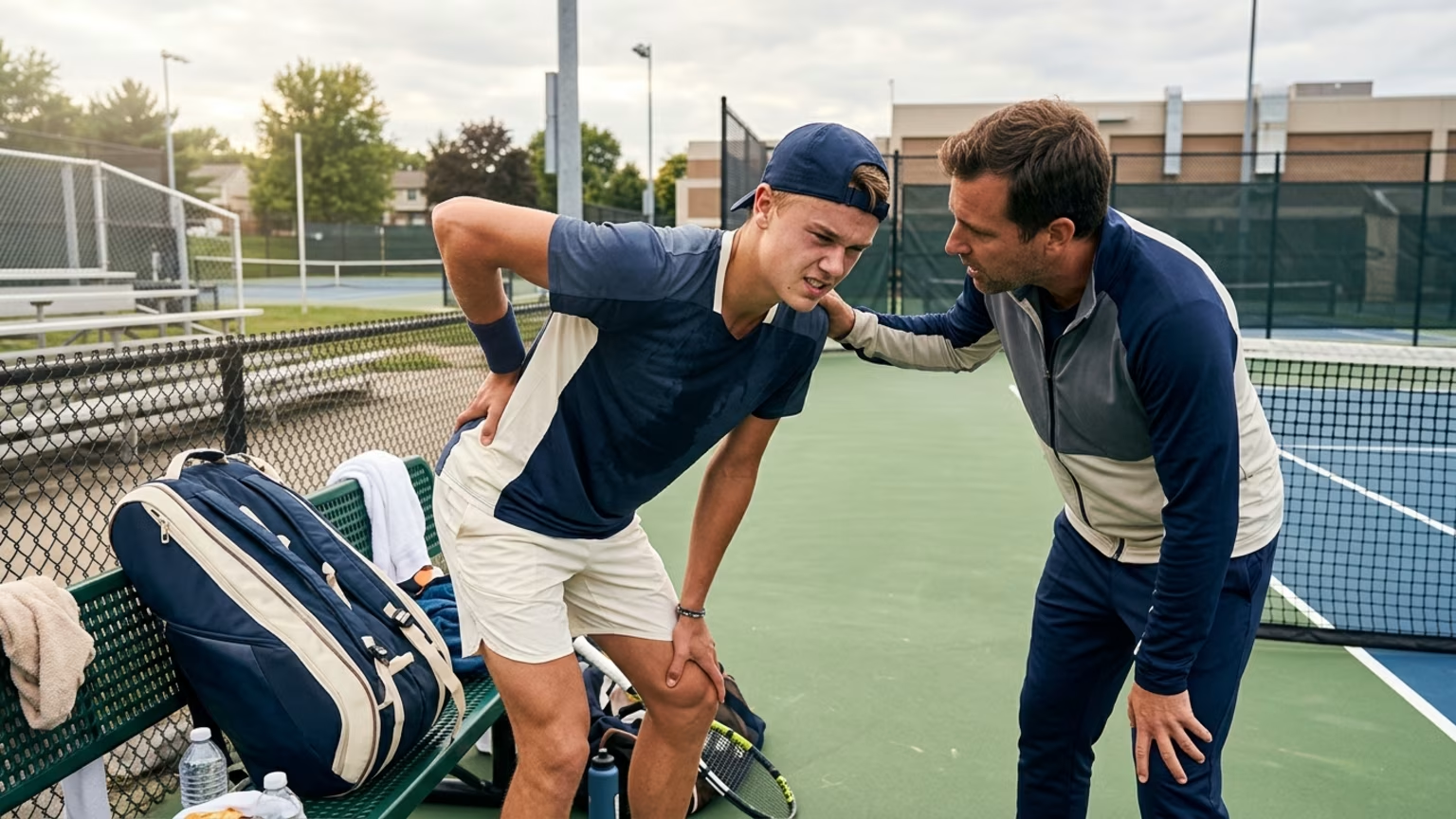
Holger Rune withdrew from the European Open with a back problem. The facts behind his decision and a grounded perspective for recreational players.

The Dink’s October 17 guide emphasizes deep returns, ball-height decisions and positioning against faster pickleball opponents.

A new report outlines padel and tennis gear trends. Learn how to assess adjustable rackets, sensor feedback and smart-court claims.
Read practical guidance for better movement, smarter preparation and a game that keeps working for you.
explore the Blog
