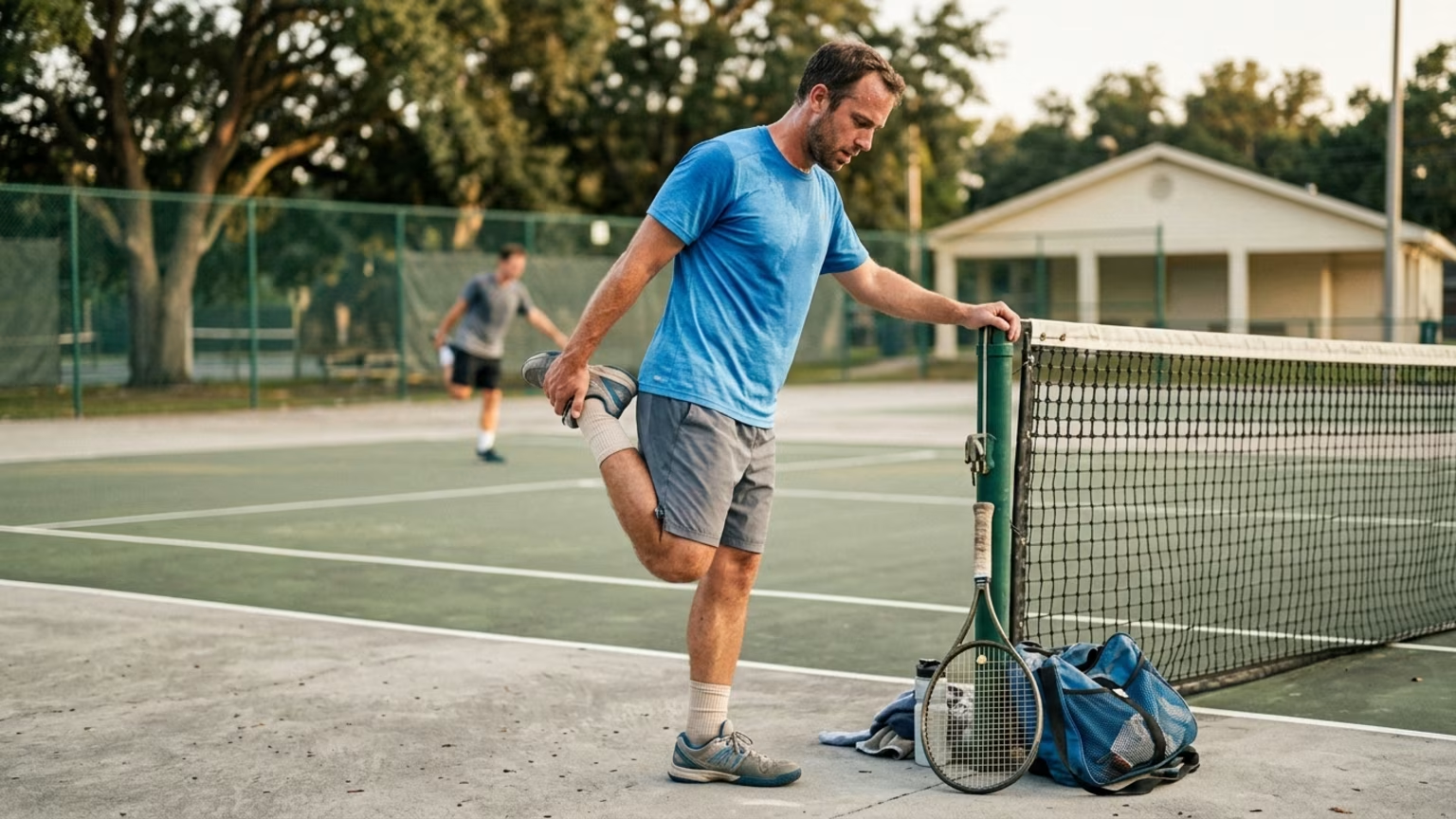

Create a repeatable 20-minute pre-match routine to prepare your body, calibrate timing, and reduce early unforced errors in tennis, pickleball, and padel.




You park the car with three minutes until your court time begins. You grab your bag, walk straight to the baseline, and immediately start swinging at full speed. How do you build a practical pre-match routine that prepares your body for play without wasting your valuable court time? You need a progressive 20-minute sequence that moves from easy general movement into dynamic mobility and finishes with sport-specific rehearsal.
Many adult players treat the first few games of a match as their physical warm-up. This approach leaves the body cold, stiff, and unprepared for the sudden demands of racquet sports. Your timing relies on your nervous system and your muscles working together smoothly. When you skip a proper transition from resting to playing, your movement quality suffers.
A structured warm-up actively prepares your body for the physical stress of competition. A systematic review and meta-analysis summarized by Clinic Directory found that warm-ups improved performance in approximately 79% of the performance measures studied. This data shows that investing time before the first serve directly impacts how well you strike the ball. You will likely see better split steps, cleaner contact, and improved early-match focus.
Preparing well also allows you to calibrate your timing before the score matters. You give your eyes time to track the ball, and your feet get used to the court surface. If you struggle with early errors, a dedicated preparation block is often the most effective solution. You can build a more reliable game simply by refusing to start cold.
Your routine should also include time to finalize your first-ball decisions. Use the final minutes of your routine to run through a quick mental checklist. Ask yourself where your safest target is when your timing is not yet perfect. Incorporating a solid pre-match protocol helps you settle into the match mentally and physically.
Many adult players grew up believing that holding static stretches was the only way to warm up. Current sports science takes a very different approach. You do not need to sit on the court and hold toe touches to prepare for competition. The goal is active preparation that raises your body temperature and lubricates your joints before you pick up a racquet.
Begin with four minutes of light cardiovascular movement to transition your body from a resting state. You can use brisk walking, light jogging, or gentle lateral shuffles. Keep your arms relaxed, and add some marching high knees to engage your hips. This block should feel easy, and it should never create fatigue before you start playing.
If you are an older adult or are returning from time off, you should extend this easy movement phase. You must raise your core temperature gradually. This ensures your muscles are pliable and ready for the demands of court play. Prioritizing movement over static holding sets a positive tone for your match.
Move directly into four minutes of dynamic mobility work once your temperature is elevated. You want movement-based drills that target your ankles, calves, hips, and shoulders. Try walking lunges, controlled calf raises, trunk rotations, and gentle leg swings. If you deal with morning stiffness, maintaining your daily range of motion is a vital part of athletic longevity.
The middle phase of your 20-minute block must address the specific movement patterns of your chosen sport. The common principle across racquet sports is to start with high control and low intensity. You slowly increase the pace until you replicate the demands of an actual point.
For tennis, you should always start with short-court mini-tennis using relaxed grips. Move gradually back toward the baseline to add full forehands and backhands with controlled targets. Tennis-specific clinical guidance recommends combining progressive movement, activation, and rally-specific hitting before harder serving. You should rehearse your volleys and overheads before hitting progressive serves.
Players often rush the serve, which places unnecessary stress on a cold shoulder. By delaying maximum effort, you allow your joints to adapt to the serving motion safely. Let your body memorize the toss, contact point, and follow-through at half speed. Never make your first serve of the day your hardest serve of the day.
Pickleball requires deliberate attention to the lower body, especially your calves and ankles. Start your hitting session with soft dinks and compact swings from the non-volley zone. Add volley exchanges and focus on finding a balanced ready position between every shot. Rehearse your lateral transitions safely before attempting aggressive offensive moves.
You want to prepare your legs for the rapid stops and starts that pickleball demands. Practice stepping back for overhead responses without retreating awkwardly on your heels. Finish with representative serves and returns to dial in your baseline timing. This focused rehearsal prevents the sloppy footwork that often causes early unforced errors.
Padel players need to warm up for the unique spatial challenges of their enclosed courts. Begin with short, controlled groundstrokes before stepping forward to practice your volleys. Take time to rehearse lobs, wall rebounds, and overhead patterns at a moderate intensity. The glass walls require sharp visual tracking, so give your eyes time to adjust.
Finish your padel warm-up with a small number of serves and first-ball offensive patterns. The common principle across all three sports is specific, controlled rehearsal. Prepare the exact joint angles and movement directions that will appear in the first games. Keep your intensity slightly below match effort until the first point begins.
A good warm-up improves your immediate readiness, but it does not guarantee total protection against injury. The evidence regarding injury prevention is actually quite mixed. The systematic review summarized by Clinic Directory noted that three of five higher-quality studies found a significant reduction in injury risk, while two did not. You should view this routine as a practical risk reduction tool rather than an absolute shield.
Long-term athletic longevity requires physical preparation that extends well beyond your scheduled match time. Clinical guidance recommends building weekly strength across your lower body, trunk, forearms, and shoulders rather than relying entirely on match-day preparation. You need ongoing strength work to handle the braking forces and explosive changes of direction common to racquet sports. Adding a structured off-court conditioning plan builds the durability you need to stay on the court.
You also must listen to your body and avoid playing through sharp, escalating pain. A 20-minute preparation sequence is never permission to ignore severe stiffness or sudden warning signs. Proper load management, adapting your rest protocols over time, and gradual increases in playing volume are equally vital for your physical health. Stop playing and seek proper advice if you experience sharp joint pain or a sudden pop.
Developing a structured pre-match routine empowers you to play your best racquet sports for years to come. Next time you play, spend your first five minutes on court simply moving and rehearsing soft contact before you ever attempt a full swing.
Follow Evercourts for practical insights on tennis, pickleball and padel performance, movement, recovery and healthy ageing. Stay connected for new articles, research-led guidance and ideas to help you play well and keep playing for years.


A recent live-play test of a silent pickleball highlights its value for practice, but standard balls still perform better for match play and power control.

An evidence check on sports supplements like tart cherry juice. Learn why racquet sports players should prioritize core nutrition over functional foods.
In late 2026, Oura analyzed wearable data to see how recreational tennis impacts heart health and recovery. Learn what this means for your athletic longevity.
Read practical guidance for better movement, smarter preparation and a game that keeps working for you.
explore the Blog
