

Learn how padel's unique movements challenge the body and how adult recreational players can monitor their workload for better athletic longevity on the court.




Padel is an intermittent racquet sport defined by short-duration, moderate-intensity efforts, rapid changes of direction, and frequent overhead actions. Understanding these physical demands is essential for adult players who want to maintain their court time. The sport combines explosive footwork with varied racquet swings inside an enclosed space. The game challenges multiple areas of the body through repeated movement patterns, which requires players to build a solid foundation of physical readiness.
Recognizing how these mechanics impact your joints can help you adjust your conditioning routine and stay healthy. Many recreational players transition from other sports without fully appreciating the unique loads that padel introduces. Taking the time to learn about these specific challenges is the best way to support your athletic longevity.
The specific nature of court movement requires athletes to constantly accelerate, decelerate, and pivot. Unlike continuous endurance exercises, padel demands sudden bursts of power that rely heavily on agility. The repeated explosive efforts and rapid directional shifts place distinct loads on both the upper and lower body. Understanding these specific loads is a crucial step for players who want to protect their joints.
Pivots and lunges place significant loads on the lower limbs during a standard match. Every time a player rushes the net or tracks back for a lob, the hips, knees, and ankles absorb the force. The constant braking required to stay balanced during these short sprints demands strong eccentric muscle control. Over the course of a competitive game, these repeated lower body efforts add up quickly.
Without proper court shoes and a good warm-up, the lower body is forced to handle these sudden stops at a disadvantage. Strengthening the legs helps players maintain their agility and reduces the overall strain on the lower joints.
While the legs handle the court coverage, the upper body manages the constant striking of the ball. Repeated overhead shots, forceful volleys, and groundstrokes require high output from the shoulder and arm. The repetitive racquet swings also directly involve the forearm and elbow upon ball contact. Because players must frequently generate power from compromised positions, the upper kinetic chain works incredibly hard.
The shorter racquet used in padel alters the leverage compared to tennis, which changes how force travels through the arm. Managing your swing volume is critical for keeping the upper body resilient during a busy playing season.
Padel also introduces the distinct feature of glass walls, which require unique spatial awareness and reaction times. Wall impact is a distinctive hazard on the court that sets the sport apart from tennis and pickleball. Players often have to twist suddenly or lunge awkwardly to return a ball rebounding off the glass. This specific environmental factor adds an extra layer of complexity to the physical demands of the game.
Navigating the enclosed space means players are constantly adjusting their posture and footing at the last second. Mastering these wall returns requires a balance of mobility and stability to prevent awkward overextensions.
Current research provides a helpful baseline for understanding common wear and tear without predicting your personal future on the court. A 2023 systematic review summarized in padel reporting evaluated eight studies and 2,022 players. According to this review, there are an estimated three injuries per 1,000 training hours and eight per 1,000 matches.
Additionally, a clinical review notes that the elbow is the most frequently injured body part in the literature, followed by the lower back, knee, and shoulder. These numbers offer a broad perspective on the physical toll of the game across a wide population.
It is crucial to remember that these figures are population-level averages, not a personal prognosis. The available research actually has limitations, including differences among injury studies and a shortage of holistic match-analysis data. The data shows that findings differ with age and gender, reinforcing the need to interpret these averages in context.
These statistics simply describe what has been observed across broad groups of participants over time. They do not mean that every person who picks up a racquet will eventually face an elbow or back issue.
None of this data proves that injuries are inevitable for recreational players. Instead, it highlights the importance of managing your energy and recognizing fatigue before it compromises your mechanics. Learning how to monitor this kind of fatigue is exactly why recreational players should thoughtfully assess their physical limits before scheduling back-to-back matches.
A proactive approach always beats waiting for a minor ache to become a major issue. By understanding the science, players can make informed choices about their recovery and training routines.
Using these broad findings as a monitoring framework helps players support their athletic longevity and stay on the court for years. Rather than worrying about population statistics, adult players should focus on recognizing changes in their own movement and comfort. Developing a habit of self-monitoring ensures that you can adjust your play schedule before minor stiffness becomes a lasting issue. Here is a practical framework to help you evaluate your body's response to the game.
The first step in protecting your physical capacity is paying attention to recent workload spikes. Notice whether your playing time, match frequency, or overall intensity has recently increased. If a new court schedule coincides with noticeable discomfort, consider whether the change in volume is relevant. Gradually increasing your time on the court helps you build a solid strength base for adult racquet sports.
Many players make the mistake of playing multiple hard matches in a single weekend without adequate preparation. Tracking your weekly hours can reveal patterns that explain sudden onset stiffness or fatigue.
Players should also notice if basic turns, lunges, overhead strokes, or wall plays have become uncomfortable. Sometimes, you might find yourself altering your natural swing simply to get through a match. Changing how you move or strike the ball to avoid discomfort often places undue stress on other joints. Understanding the specific movement profile of padel can help you recognize when your mechanics start to break down.
If a specific shot consistently causes a twinge, it is worth analyzing your footwork and court positioning. Addressing these small technique compensations early can prevent them from developing into ingrained habits.
It is highly effective to track whether minor discomfort settles, persists, worsens, or returns when you play. A normal amount of muscle soreness usually fades within a day or two of a hard session. However, you should pay close attention if the stiffness affects your ordinary movement or daily use of the affected area. A proactive approach to tracking these sensations allows you to make smart decisions about when to take a rest day.
Listening to your body does not mean stopping play entirely at the first sign of fatigue. It simply means adjusting your intensity to match what your body can reasonably handle on any given day.
Even with excellent workload management, there are clear times to step off the court and seek qualified clinical advice. This monitoring framework is not a diagnostic test, nor is it a substitute for an individual medical assessment. General sports-injury guidance advises medical evaluation for severe or worsening pain, substantial swelling, major movement restriction, or an inability to bear weight.
A medical professional should also evaluate any symptoms that persistently recur or interfere with your normal daily function. Ignoring these warning signs often leads to longer periods away from the game.
Getting prompt advice for these specific warning signs helps you manage the situation responsibly. Evercourts recommends consulting a credentialed physiotherapist or doctor to get an accurate evaluation rather than relying on generalized rest protocols. Proper clinical guidance ensures you understand exactly what your body needs to recover properly. Taking these steps will help you resolve issues effectively, keep you moving well, and ensure you can continue enjoying the game safely.
See you on the court,
Evercourts
Follow Evercourts for practical insights on tennis, pickleball and padel performance, movement, recovery and healthy ageing. Stay connected for new articles, research-led guidance and ideas to help you play well and keep playing for years.


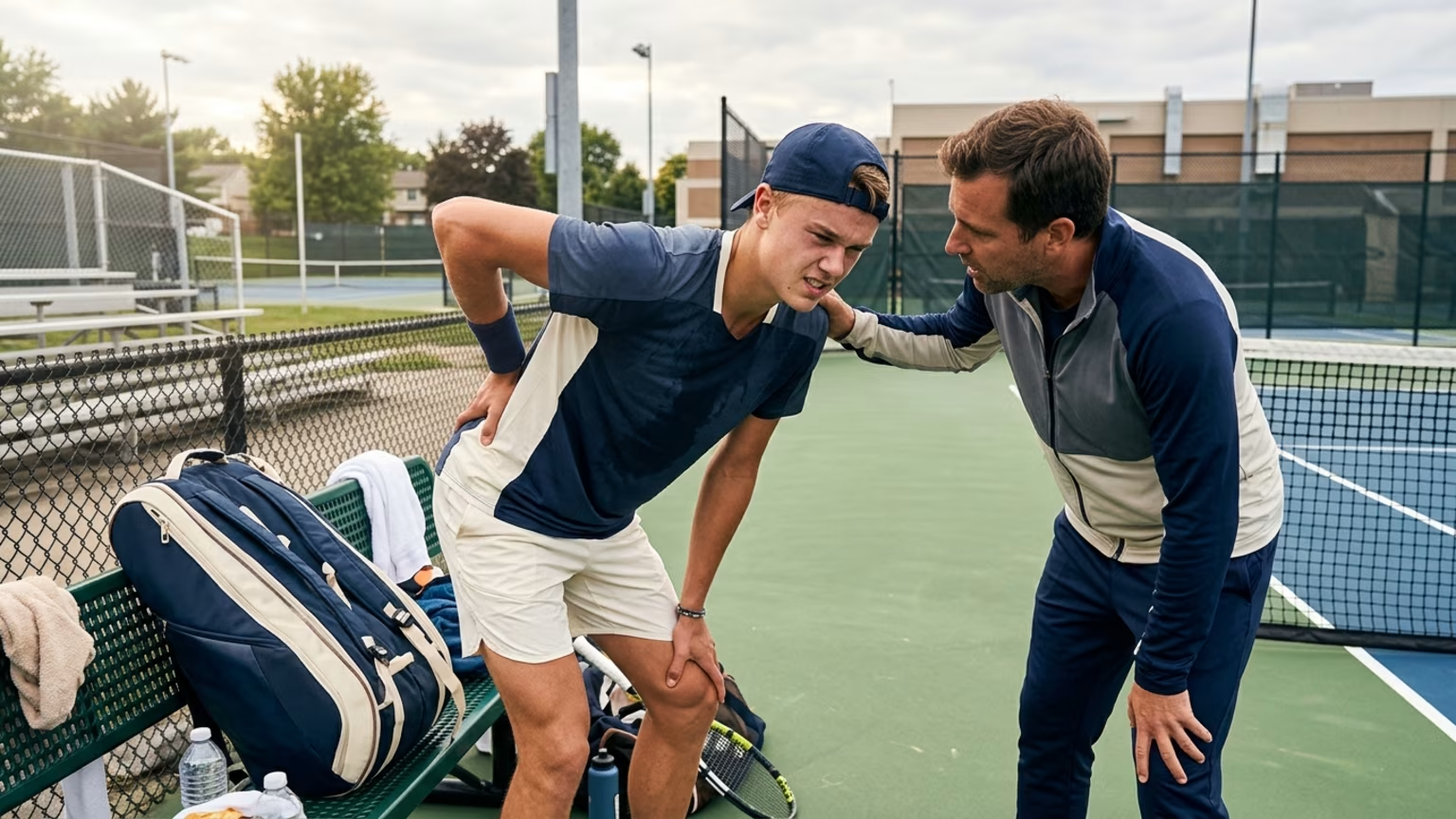
Holger Rune withdrew from the European Open with a back problem. The facts behind his decision and a grounded perspective for recreational players.

The Dink’s October 17 guide emphasizes deep returns, ball-height decisions and positioning against faster pickleball opponents.

A new report outlines padel and tennis gear trends. Learn how to assess adjustable rackets, sensor feedback and smart-court claims.
Read practical guidance for better movement, smarter preparation and a game that keeps working for you.
explore the Blog
