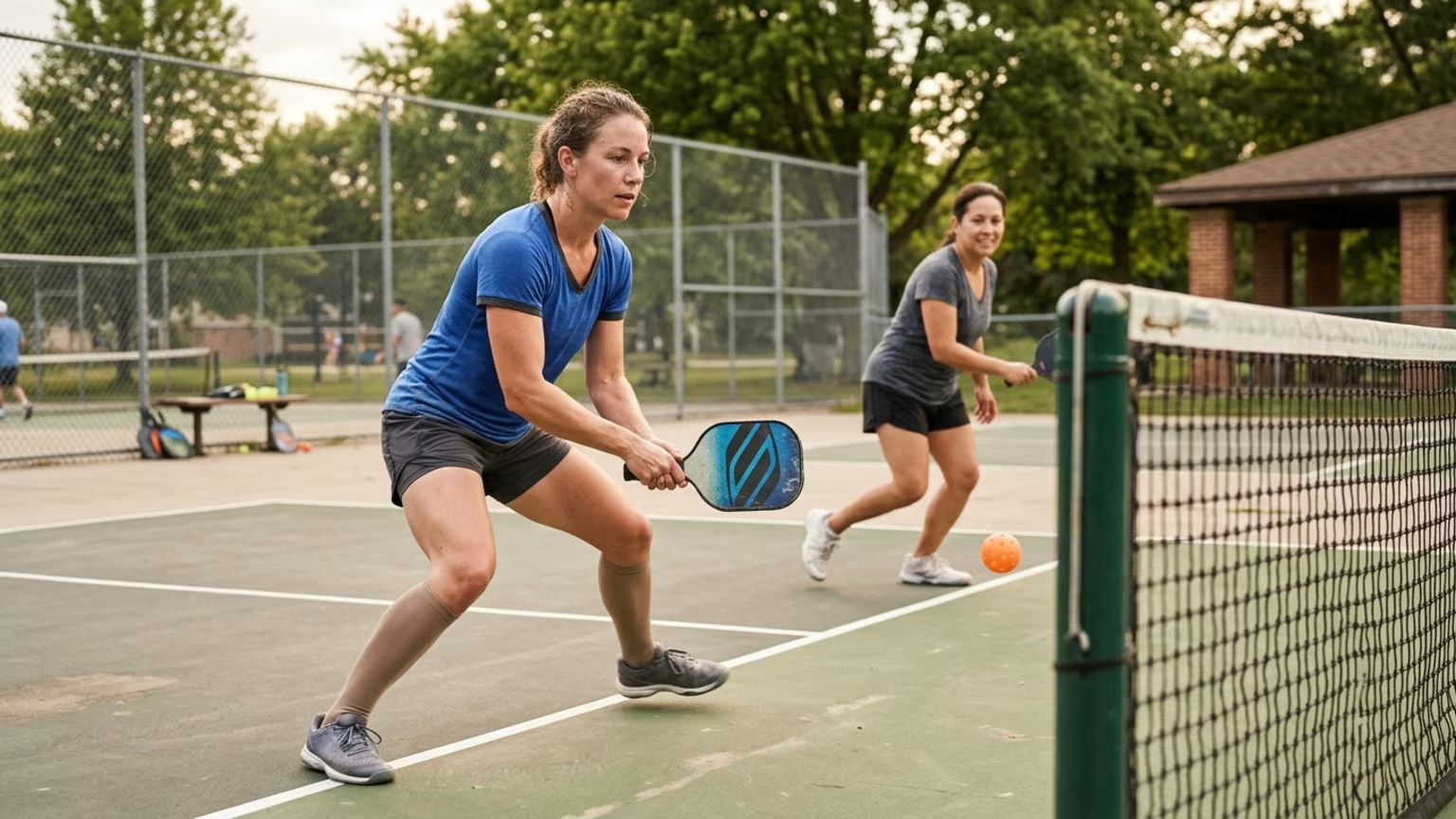

Learn how to build deceleration control for pickleball. We cover practical clinical guidance on safe balance exercises, warm-up movement, and court pacing.




Deceleration is the physical ability to absorb your body weight and safely stop your momentum. Many players focus entirely on the initial sprint to the ball. However, the force required to halt that sprint places a significant demand on your lower body. Training this braking system prepares your tissues to control sudden stops without placing excessive stress on your joints.
The geometry of court sports requires constant shifts in direction. Pickleball features a highly compact court compared to traditional layouts. This smaller space makes quick stops, lateral shuffles, and forward lunges much more frequent than sustained running. Tennis demands longer sprints followed by heavy braking near the baseline.
Padel requires rapid physical adjustments to track the ball off the glass. Across all three sports, your lower body must repeatedly absorb high forces to change direction efficiently. If you cannot decelerate well, you will likely struggle to establish a stable hitting base. Developing the ability to control your momentum safely allows you to position yourself properly for every return.
Every time you stop, your shoes grip the court surface to halt your momentum. The friction from the court sends energy directly up through your ankles, knees, and hips. Your muscles act as shock absorbers to disperse that energy safely throughout your kinetic chain. Failing to train these shock absorbers leaves the joints vulnerable to taking the brunt of the impact.
When I first started playing pickleball, I noticed how many people skipped warming up entirely. They would jump straight out of their cars and right up to the kitchen line. I tried doing that and immediately pulled a calf muscle. Pickleball requires just as much explosive lateral movement as tennis, just in a tighter space.
Since then, I always spend five minutes doing dynamic lunges and ankle rolls. It changes everything about how confident I feel pushing off the baseline. Managing these court forces requires proper physical preparation. The muscles responsible for stopping must be primed before competition begins.
I used to think a tough conditioning block was the only way to improve my court endurance. Then I started tracking my sleep. I noticed that on days I slept poorly, my reaction time at the net was noticeably sluggish. Prioritizing consistent rest did more for my late match stamina than any extra sprints ever did.
Recovery is the true foundation of performance. A rested nervous system coordinates complex stopping mechanics much better. Maintaining this focus on recovery helps support your ability to move well across different court sports. Sleep directly impacts your physical control and coordination on the court.
Lancaster Orthopedic Group recommends specific exercises to help build the force and control needed to stop and redirect. Their clinical guidance suggests incorporating calf raises, sit-to-stands, step-ups, and side steps. The focus remains on building general lower-body capacity rather than rushing into high-speed movement drills. Establishing base strength provides a safer environment for your joints during match play.
Hip-strengthening exercises are also included in the recommendations from Lancaster Orthopedic Group. Strong hips play a vital role in keeping the knees aligned when you lunge for a wide ball. When your glutes and hips lack endurance, your knees tend to absorb the lateral stress instead. Conditioning the muscles around the hips provides better support for the entire lower body during deceleration.
The available clinical information does not provide a validated week-by-week schedule, specific sets and repetitions, or exact resistance targets. These recommendations serve as practical preparation rather than a rigid protocol proven to prevent pickleball injuries. The goal is to build basic structural strength before testing it in a competitive environment. Players must interpret this guidance based on their current physical conditioning.
For pre-play preparation, Lancaster Orthopedic Group suggests several minutes of brisk walking and side-to-side movement. They also recommend controlled calf raises, sit-to-stands, and easy swings before competitive rallies. The clinical advice explicitly states that static stretching alone does not prepare the body for acceleration and change of direction. Preparing the tissues with dynamic movement ensures they are ready to handle sudden stops.
The article also recommends single-leg balance near a stable support, tandem walking, and controlled reaching. It cautions that balance work should be challenging without creating a fall risk. Building this foundation helps players handle the start-and-stop nature of racquet sports with greater overall stability. Better balance naturally improves your ability to stop quickly on the court.
Supporting healthy aging requires a smart approach to building your weekly court exposure. Lancaster Orthopedic Group advises starting with shorter sessions and recovery days to safely increase court time. Players should increase frequency, duration, or intensity one at a time. Taking on multiple leagues or tournament-length play immediately can overload your tendons before they have adapted.
The clinical guidance supports beginning with controlled movement and building court exposure gradually. It does not prescribe a specific speed progression. This measured approach helps adult players maintain their physical capabilities and continue enjoying racquet sports for years. Recognizing how court geometry changes the physical toll on your body can also inform your weekly schedule.
By treating stops and lateral shifts as trainable skills, players can build resilience and protect their joints over time. Rushing back into high volumes of play often leads to fatigue and poor stopping mechanics. Managing your play volume allows the body to adapt to the specific physical demands of the sport. Consistent and moderate exposure builds long-term athletic capacity.
Not every physical challenge can be managed independently through general exercises. Lancaster Orthopedic Group advises players with arthritis or a prior injury to seek clinician guidance on modifying strengthening exercises. If balance exercises feel unsafe or create a risk of falling, you should stop and consult a professional immediately. Pushing through instability only increases the chance of an adverse event on the court.
Pain during basic movements is a clear signal to get an expert evaluation. A qualified physiotherapist can tailor a routine to your specific structural needs and medical history. They can identify weakness in specific muscle groups that might be hindering your ability to decelerate. Taking the time to understand your body ensures the game remains a lifelong pursuit.
Follow Evercourts for practical insights on tennis, pickleball and padel performance, movement, recovery and healthy ageing. Stay connected for new articles, research-led guidance and ideas to help you play well and keep playing for years.


An evidence check on sports supplements like tart cherry juice. Learn why racquet sports players should prioritize core nutrition over functional foods.
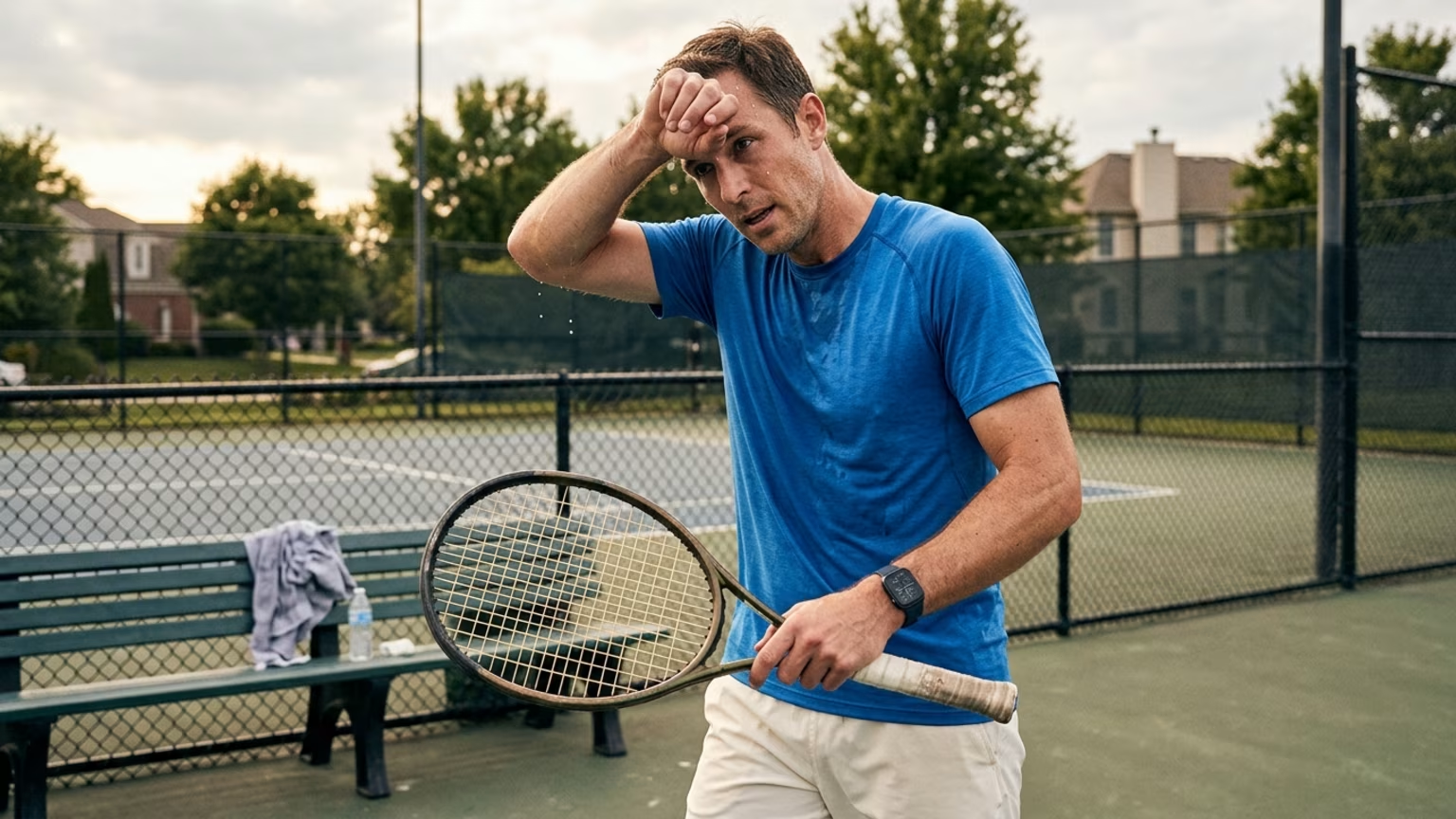
In late 2026, Oura analyzed wearable data to see how recreational tennis impacts heart health and recovery. Learn what this means for your athletic longevity.
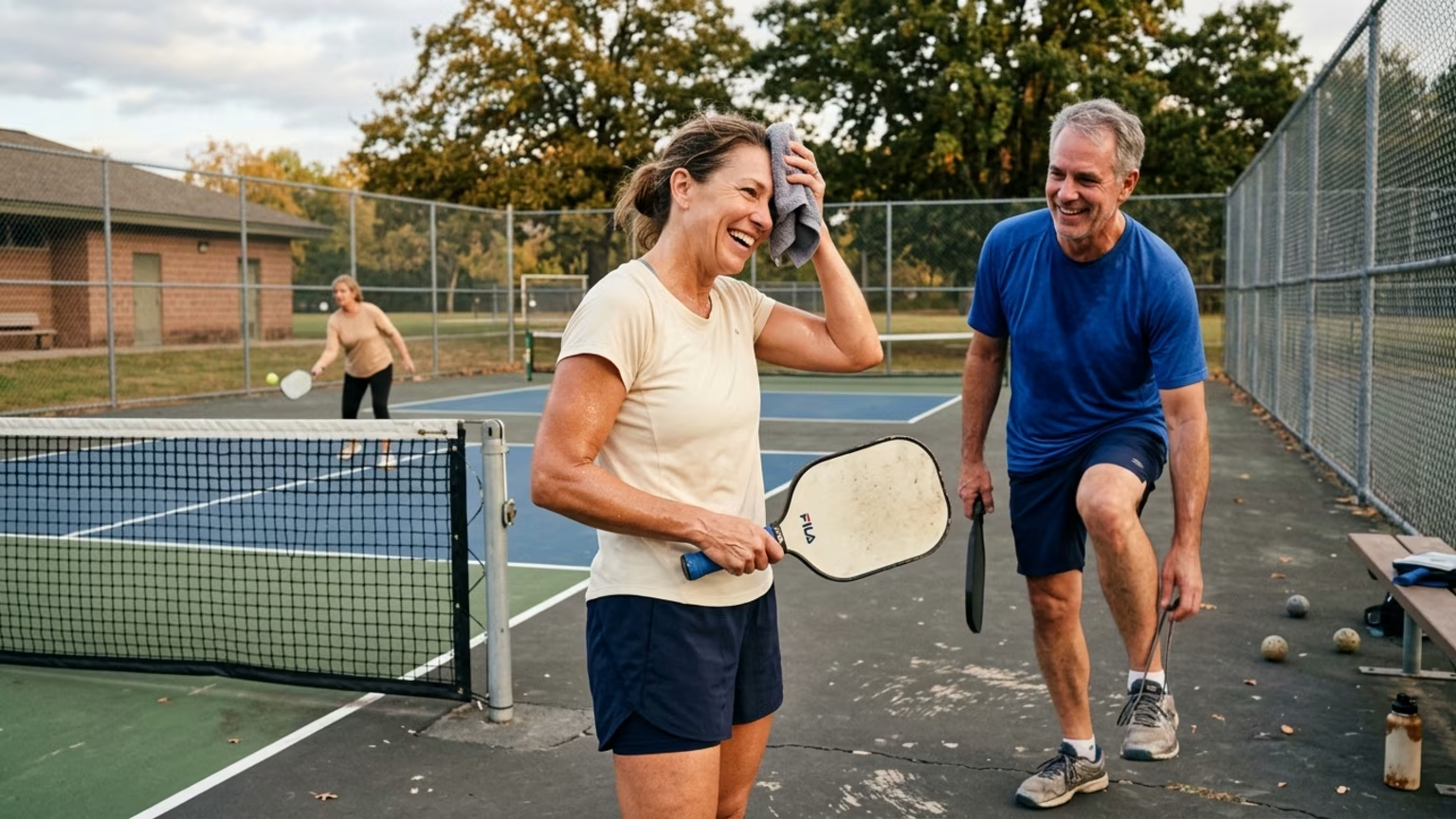
Recent guidelines emphasize gradual progression, dynamic warm-ups, and scheduled recovery to help adult racquet sports players maintain athletic longevity.
Read practical guidance for better movement, smarter preparation and a game that keeps working for you.
explore the Blog
