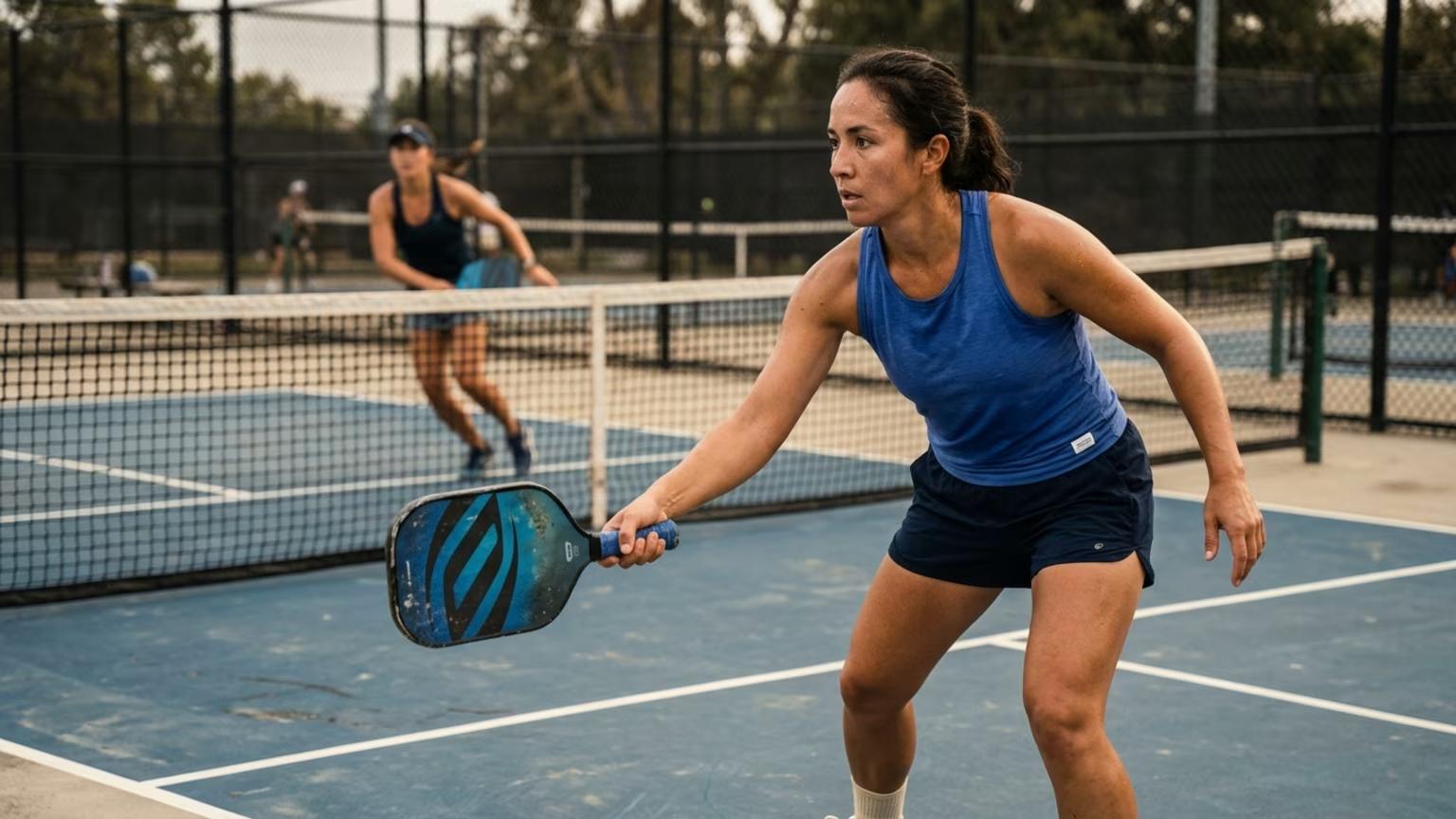

Learn why reacting quickly depends on reading the opponent and anticipating contact. Improve your court speed without just relying on raw physical reflexes.




Having fast feet will not save you if your brain processes the play too late. In racquet sports, the ball often moves too quickly for a player to wait until its direction is obvious. Moving well on court is ultimately a perception-action problem. You must identify a likely direction, organize your body, and select a useful first movement before accelerating.
Simple reaction time involves responding only after a clear visual stimulus appears. A player who reacts late often needs several emergency steps, a large crossover, or a desperate physical stretch. Relying purely on physical speed means you are constantly playing catch-up against the ball. This is why coaching older players to just move their feet faster is incomplete advice.
Faster feet cannot fully compensate for a late read, a poor starting position, or a badly timed preparation step. When you wait to track the ball until it crosses the net, you force your body to work overtime. Overreacting to a late cue can be incredibly taxing on your knees and ankles. This purely reactive approach makes it difficult to maintain healthy aging on the court over multiple decades.
Many players try to improve simple reaction time by running generic sprints or using flashing light systems. While these tools look impressive, they rarely translate perfectly to chaotic match conditions. Your brain is simply learning to respond to an isolated color or generic sound. This completely skips the crucial step of reading an actual human opponent before contact.
Choice reaction time requires you to identify early visual cues, select a response, and execute it efficiently. This approach focuses on gathering tactical information from the opponent before they strike the ball. Expert racquet-sport athletes have been found to use more effective visual-search strategies, react more quickly, and process relevant information more efficiently than novices. Stronger spatial working memory is also associated with more advanced gaze behavior during tactical anticipation tasks.
Research discussed in Scientific American describes the visual system as processing the ball's speed and direction through motion-sensitive area MT/V5 before passing that information into the brain's "where" pathway, which combines the ball's position with the player's own body position. Your brain is constantly running probabilities based on opponent posture, weight distribution, and racquet face orientation. By reading the game earlier, you can use a significantly smaller first step. You then arrive with more time for balance and clean shot preparation.
Training this specific skill requires separating your decision from the physical movement pattern. One practical drill is to pause opponent footage before contact, make a prediction, and then reveal the outcome. This type of structured video anticipation is specifically recommended in coaching material as a way to practice identifying available cues before the outcome is revealed. You can practice this away from the court to build better recognition habits.
On the court, you can build anticipation by calling out the shot direction before the hitter makes contact. Have a training partner use exaggerated preparation movements while you train the first step without sprinting fully to the ball. The key is to time your split step so you are fully balanced when the opponent makes contact. The split step is the vital bridge between visual information and efficient directional movement.
Different court sports require you to prioritize completely different visual cues from your opponents. In tennis, the most valuable reading moments occur during the opponent's unit turn, shoulder rotation, and racquet preparation. The receiver should combine those cues with the server's toss, body alignment, and contact position rather than staring only at the ball after it has left the racquet. A short ball requires a forward response rather than a purely lateral one.
Pickleball gives players significantly less time at the kitchen line to make a tactical decision. This makes compact preparation and early shot recognition particularly important for competitive success. Players should carefully watch the opponent's paddle preparation, contact height, body balance, and paddle face. At close range, the correct response is a small split step followed by a short lateral adjustment.
Padel adds complex wall rebounds, high lobs, and constantly changing court geometry to the movement equation. Padel coaching guidance commonly recommends reading shoulder position, backswing, weight transfer, and the developing wall rebound. Padel players should avoid treating the first visible ball trajectory as the entire physical problem. The initial read must include whether the ball will stay in front of you or move aggressively toward the glass.
When comparing pure physical reactions to intelligent anticipation, reading the game earlier is the definitive winner for your body. The correct tactical goal is early preparation combined with late physical adjustment. A recent meta-analysis found an improvement in cognitive-motor dual-task walking speed, while finding no significant improvement in single-task walking speed, functional mobility, or balance. This means cognitive anticipation tasks should always be paired with dedicated physical balance training.
A few years ago, I realized my tennis serve speed was dropping, and my shoulder was constantly throbbing after matches. Instead of pushing through the pain, I took a month to rebuild my mechanics and focus on rotator cuff endurance. I stopped trying to hit flat aces and developed a much heavier kick serve. My win rate actually went up, and my shoulder stopped hurting. Sometimes longevity means outsmarting your own ego on the court.
For healthy aging, reaction drills should sit alongside aerobic, strength, and balance-focused activity. Anticipation allows you to reach the ball with less joint stress, fewer panicked lunges, and far better posture. You eventually stop relying on raw athleticism to survive difficult baseline rallies. The best court movement looks completely effortless because the player solved the geometric problem before the ball was even hit.
Follow Evercourts for practical insights on tennis, pickleball and padel performance, movement, recovery and healthy ageing. Stay connected for new articles, research-led guidance and ideas to help you play well and keep playing for years.


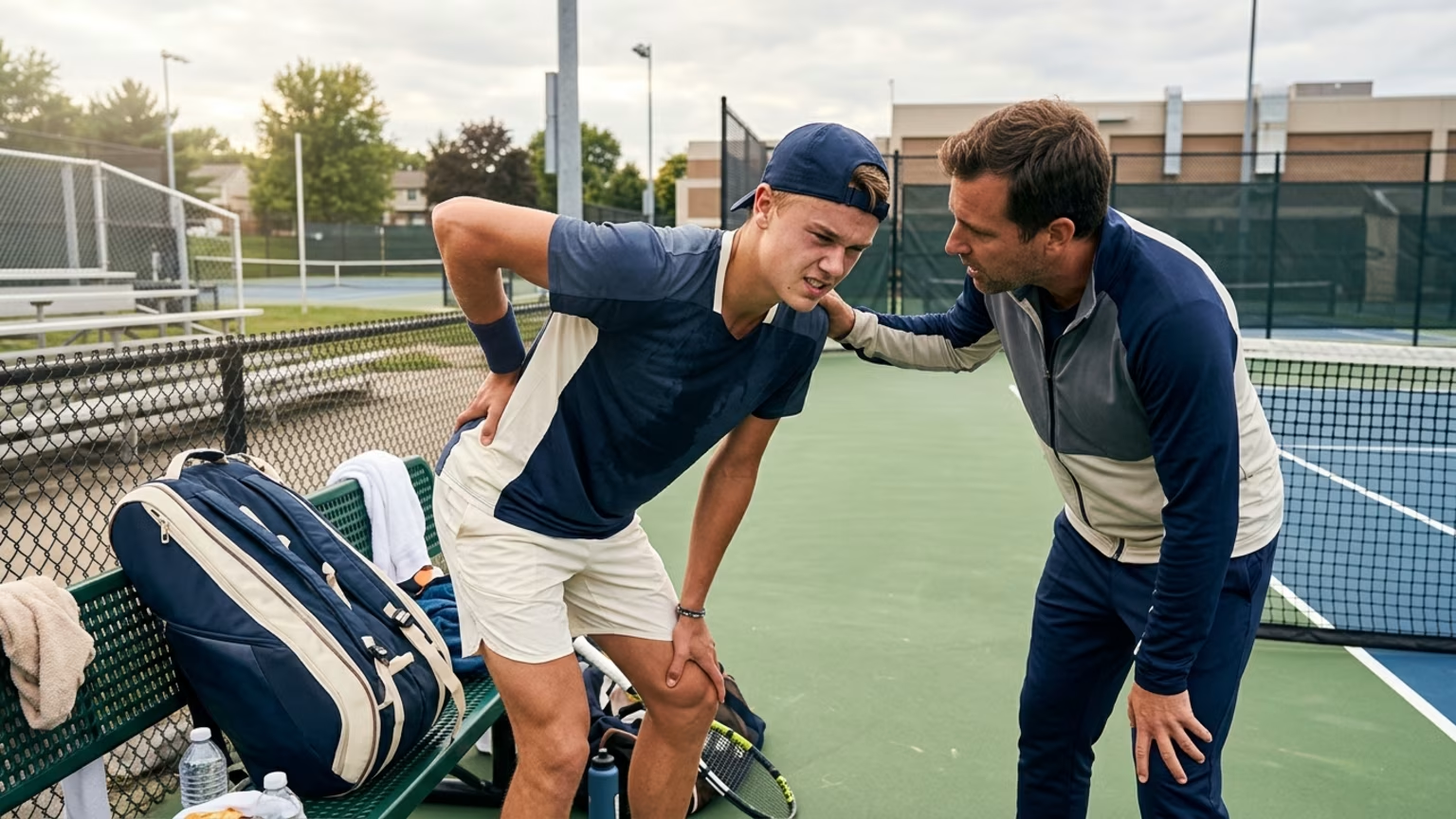
Holger Rune withdrew from the European Open with a back problem. The facts behind his decision and a grounded perspective for recreational players.

The Dink’s October 17 guide emphasizes deep returns, ball-height decisions and positioning against faster pickleball opponents.

A new report outlines padel and tennis gear trends. Learn how to assess adjustable rackets, sensor feedback and smart-court claims.
Read practical guidance for better movement, smarter preparation and a game that keeps working for you.
explore the Blog
