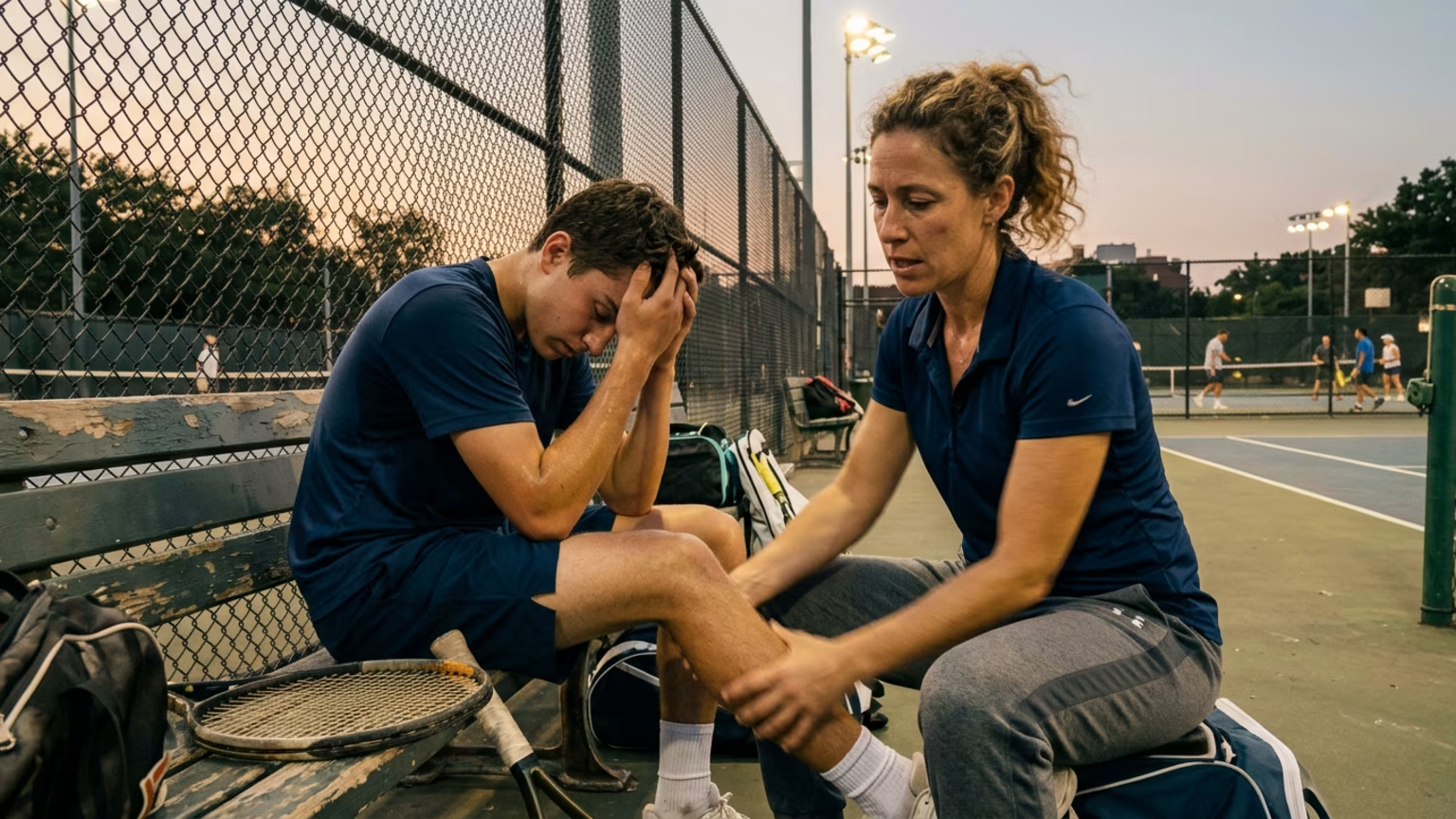

Alberto Lledó criticized extreme late night US Open scheduling. Learn how adult racquet sports players can manage delayed matches and protect their recovery.




During the recent US Open quarterfinals, Carlos Alcaraz lost a grueling five set match to Ben Shelton. The match began after 11 p.m. and finally concluded at approximately 3:33 a.m. local time. Shortly after the final point, Alberto Lledó criticized the extreme tournament schedule. The physical trainer for Alcaraz published an Instagram story stating that starting a five set match at 11 p.m. is not healthy for an athlete.
This quarterfinal clash officially became the latest finishing match in US Open history. The event surpassed the previous tournament record of 2:50 a.m. set two years earlier. That prior record occurred when Alcaraz defeated Jannik Sinner in a similar five set marathon.
The extreme delay this year happened because multiple earlier matches on the Arthur Ashe court extended into deciding sets. The tournament usually places a men's and women's singles match in the night session. This practice means a delay in the first match inevitably pushes the second match deep into the night. If the first match features long baseline rallies or medical timeouts, the second match cannot begin on time.
Lledó has served as the physical trainer for Alcaraz since the player first emerged on the professional tour. He acknowledged that professional players must adapt to difficult and unpredictable circumstances. However, he stressed that performance is not synonymous with health. The timing was particularly notable because Alcaraz was competing in his first tournament after a four month injury layoff.
Shelton advanced to his first US Open semifinal appearance since 2023. According to ANI, the victory improved the record for Shelton during the North American hard court swing to 13 wins and 2 losses. Both players had to sustain elite physical and mental performance deep into the early morning.
Professional athletes benefit from extensive medical supervision and specialized recovery resources to handle unusual competition hours. Following the match, The Times reported that Shelton entered an immediate 48 hour recovery race. His structured protocol included eating food around 4 a.m., taking specific naps, and utilizing cupping therapy. Recreational tennis, pickleball, and padel players lack these specialized support systems.
When adult league matches run late into the evening, players need practical strategies to support their athletic longevity. Adult players should treat an advertised match time as an estimate rather than a strict guarantee. If your local tournament uses a sequential court schedule, long matches early in the day will naturally push your start time back. Bring extra fuel and plenty of hydration so you are physically prepared to wait.
You can manage this uncertainty by balancing high intensity matches with modified court sessions leading up to a chaotic tournament weekend. Protect your schedule the day after a late night competition. Avoid planning a heavy training session, a long drive, or another demanding match immediately following a delayed finish.
Proper rest is essential for maintaining your joint health and nervous system recovery. If you struggle with planning this downtime, you should review the benefits of active recovery versus complete rest for racquet athletes. Plan a simple post match routine before you ever leave the house for the courts. Have fluids and a familiar recovery snack ready in your sports bag.
Sleep disruption is a primary concern following any late night physical activity. When you finish a challenging tennis or padel match at midnight, your core body temperature remains elevated for hours. This physiological state makes immediate sleep nearly impossible, which drastically cuts into your vital recovery window. Lacking sufficient rest can decrease your reaction time and reduce your joint stability during your next time on the court.
If your delayed match extends into the early morning hours, you must adjust your energy output. Employing smart pacing protocols for long racquet sports matches can help you survive a grueling third set tiebreak. Take your full allotted time between points, sit down during every changeover, and avoid rushing your service motion when you feel fatigued. If you do find yourself stuck in a delayed tournament bracket, focus strictly on what you can control.
Avoid consuming large meals immediately after walking off the court. Instead, prioritize simple carbohydrates and electrolytes to replenish your energy stores quickly. The professional strategy of eating at 4 a.m. is a specific adaptation for an athlete who must race against a 48 hour clock to play another Grand Slam match. For the weekend league player, a light snack and immediate hydration is a much more practical and effective approach.
Finishing a late match does not mean the conditions were ideal for your body. Adult club formats are usually shorter than professional best of five matches. However, long match tiebreaks and court backlogs can still keep you on the court much later than planned. The warning from Lledó applies directly to adult players making decisions about their competitive calendars.
Adapting to a poor schedule might help you win a local tournament, but it does not automatically support your physical well being. Adjust your match intensity based on your age, your current health status, and your individual injury history. Players should use the expected match format to judge the risk of a late finish before registering for an event. A professional match can easily last more than four hours.
While adult league matches rarely stretch that long, delays compound quickly when multiple three set matches happen in sequence. Evercourts recommends checking the tournament structure to see if organizers use strict time limits. If you recently recovered from an injury, you should be especially cautious about entering events known for severe schedule delays.
The data from this specific US Open quarterfinal highlights the extreme physical demands placed on the professional players. The total match duration was approximately four hours and 28 minutes. The start time of 11 p.m. left almost no margin for a reasonable finish hour. This scheduling cascade created a massive recovery deficit for the advancing player.
The previous late finish record of 2:50 a.m. stood for two years before this 3:33 a.m. finish broke it. The recent record of 13 wins and 2 losses on the North American hard court swing shows Shelton entered the match with significant momentum. Meanwhile, Alcaraz was managing his physical workload after a four month injury layoff.
While these statistics outline a remarkable professional event, they do not prove that late scheduling caused the loss for Alcaraz. Returning to peak physical condition requires a highly structured progression of training loads. Competing for four hours and 28 minutes in the middle of the night represents a massive spike in physical demand. While the available reporting does not establish that the late scheduling caused an injury risk in this specific match, sports science principles suggest that sudden spikes in workload can complicate a healthy return to play.
The public reaction from Lledó signals growing resistance from performance teams regarding extreme match scheduling. Over the next season, expect top coaching staffs to heavily scrutinize tournament contingency plans before committing to events. Grand Slam tournaments may face increasing pressure to adjust their night session formats to prevent matches from starting after 11 p.m.
Professional tours might implement strict curfews to protect the recovery windows of advancing athletes. The conversation sparked by this match will likely influence how smaller tournaments approach their own scheduling software. Directors of local tennis and padel leagues might start building more buffer time between matches to avoid catastrophic evening delays. Until systemic changes occur at the professional level, players at all levels will need to prioritize flexible preparation and highly disciplined recovery routines.
Follow Evercourts for practical insights on tennis, pickleball and padel performance, movement, recovery and healthy ageing. Stay connected for new articles, research-led guidance and ideas to help you play well and keep playing for years.


A practical strength framework for tennis, pickleball and padel, with movement-based exercise options, evidence limits and guidance on seeking help.
Why a specialist urges assessment for persistent pain, and how guided tendon rehabilitation differs from resting or playing through symptoms.

Compare scheduled leagues with flexible club play, using tennis, pickleball and padel examples to judge commitments, partner arrangements and fit.
Read practical guidance for better movement, smarter preparation and a game that keeps working for you.
explore the Blog
