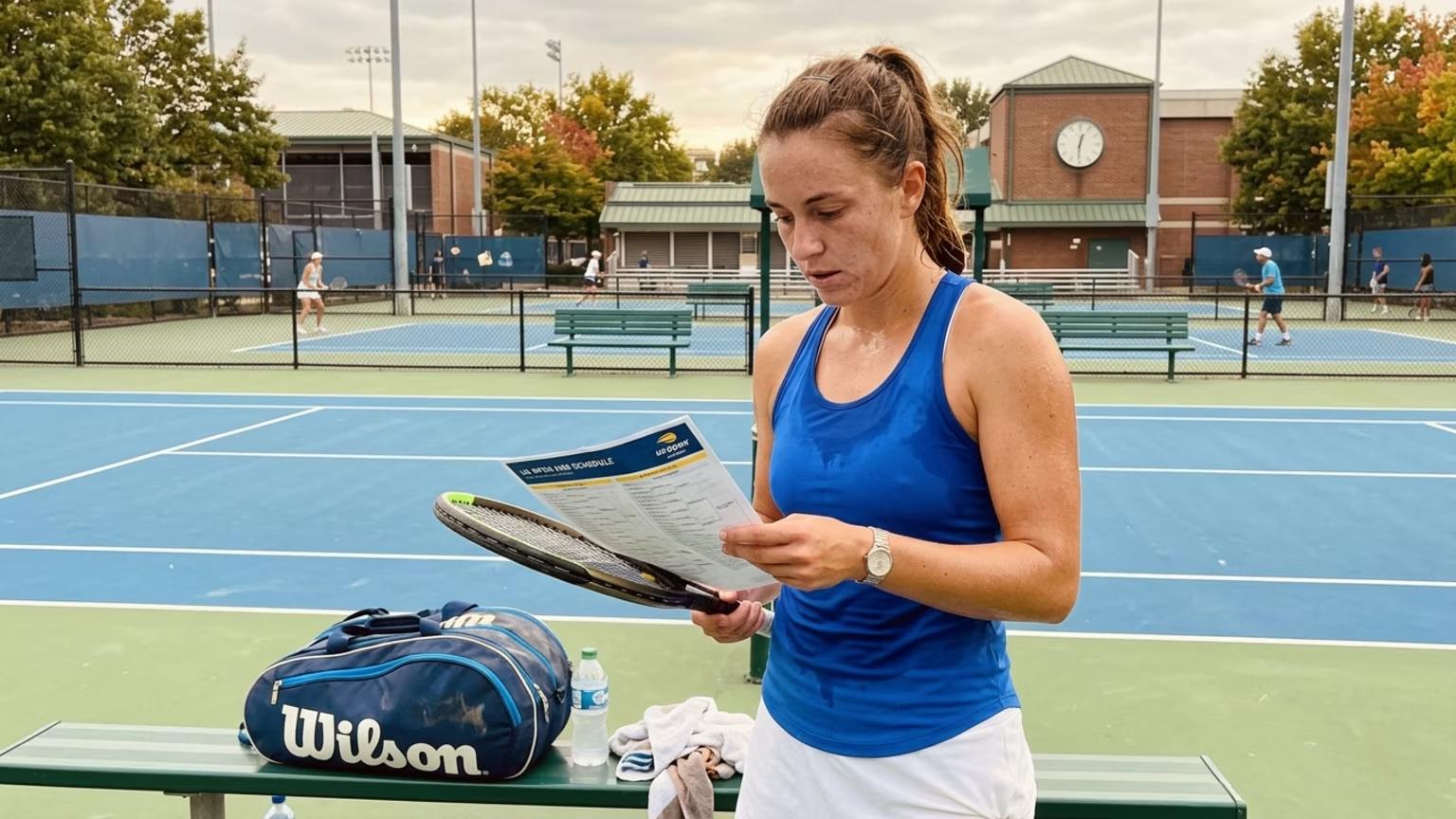

Learn how the 2026 US Open schedule provides a practical blueprint for adult tennis, pickleball and padel players to manage hard-court workload and recovery.




An adult player scans a weekend tournament bracket on a Tuesday morning. Two matches sit back to back on unforgiving hard courts. The immediate instinct is to power through both sessions at full intensity. That approach usually leads to heavy legs and an abruptly shortened season.
Cumulative match load is the total physical stress your body absorbs from repeated explosive movements on rigid surfaces over a set period. Every time a player steps onto the court, they add to a physical tally that requires intentional management. This concept becomes highly visible when looking at major event calendars. Sky Sports' rolling US Open coverage is built around live scores, results, news and updates from Flushing Meadows.
The tournament is scheduled to run from August 30 through September 13, 2026. The 2026 tournament's main-draw singles competition begins on August 30. The men's final is scheduled for September 13. The women's singles final is scheduled for September 12.
Observing this timeline provides a clear model for how athletes manage physical output over a two-week period. It highlights the importance of pacing. Most recreational athletes do not consider how consecutive days on court impact their overall readiness. Understanding this foundational concept helps you structure a more sustainable season.
Tennis, pickleball and padel require constant explosive movements. Players are constantly starting, stopping and changing direction to track down the ball. When these actions happen on rigid hard courts, the lower body absorbs significant impact forces. This repeated stress taxes the leg muscles, joints and tendons heavily.
Overlapping different racquet sports also increases this physical toll. A player who schedules tennis on Tuesday, pickleball on Wednesday and padel on Thursday has not necessarily programmed an easy week. The physical demands compound quickly. Without careful pacing, this accumulation leads to noticeable fatigue and a drop in court performance.
Amateurs often make the mistake of treating consecutive tournament days as one long sprint. They fail to adjust their effort levels based on the surface. Hard courts do not offer the sliding forgiveness of clay. Every hard plant of the foot sends shockwaves up through the kinetic chain.
This environment forces the muscular system to work overtime to decelerate the body. When muscles fatigue, they lose their ability to absorb those forces effectively. That shifting burden then falls directly onto your joints. This is exactly why proper seasonal recovery planning remains absolutely essential for dedicated athletes.
A close look at a professional calendar shows that events are broken into distinct, manageable phases. The published tournament calendar places the singles qualifying competition from August 24 through August 27. The men's and women's singles draws are scheduled to be made on August 27. This structure creates a specific buildup period before the main draw even begins.
The qualifying draw consists of four days of competition. During this phase, 16 men and 16 women are expected to emerge into the 128-player singles main draws. They must achieve this after winning three qualifying matches. This creates a severe testing ground before the primary tournament even begins.
Players do not treat the event as one continuous block of high-intensity matches. The schedule allows for strategic rest and recovery intervals. This spacing gives athletes time to manage their physical condition between competitive appearances. Doubles events are also layered thoughtfully into the overall timeline.
The 2026 women's doubles event is scheduled for September 3 through September 11. The men's doubles event is scheduled for September 4 through September 12. This overlap shows that players balance different types of court time as the event progresses. Rather than maintaining maximum intensity every single day, the volume fluctuates.
A recreational player can learn a lot by studying this staged approach. You can build your own phases of preparation, competition and active recovery. For example, developing a sustainable tournament calendar involves recognizing that rest is just as important as court time. You should treat the professional calendar as an observational framework rather than a volume prescription.
The public schedule shows when matches are planned. It does not reveal each athlete's private recovery work, treatment, sleep or nutrition. Watching a player compete on consecutive days does not mean a club player should copy that exact volume. Instead, you should mirror the intentional organization of the workload.
Applying a structured schedule helps adult players maintain their physical capabilities and stay active for years. When you divide a hard-court block into distinct phases, your body has time to adapt. You can start with technical sessions and moderate conditioning before shifting into match play. During the competition phase, you should reduce any supplementary gym workouts.
This prevents your energy systems from being completely drained. After demanding matches, your recovery phase might include lighter hitting, mobility work or complete rest. This progression allows you to protect your joints without sacrificing court time. It is also a critical time to test your footwear thoroughly.
You should trial hard-court shoes during ordinary practice sessions before wearing them for a competitive match. Look for heel security, lateral stability and comfort after an hour of play. If a shoe causes pain in your feet, calves or knees, it is not the right choice for your season. Players should also distinguish between tennis shoes and footwear designed specifically for pickleball or padel.
Proper footwear management directly impacts your athletic longevity. Maintaining manageable strength exercises for your legs, hips and trunk also supports your ability to handle rigid surfaces. Consistent strength work keeps your body prepared for sudden changes in direction. Integrating these habits forms a strong foundation for healthy aging in racquet sports.
Building a personal match-day routine is a practical way to manage cumulative stress. You can use published start times as prompts to test different preparation strategies. A sample routine might include a normal meal several hours before play. You should then complete a short, progressive warm-up rather than an exhausting pre-match workout.
Following your session, execute a brief cooldown and hydration routine. The goal is to leave yourself able to play well again two days later. You cannot judge hard-court footwear requirements from watching television broadcasts alone. You must test your own gear under real practice conditions.
Even with a carefully planned schedule, adult players must pay attention to physical warning signs. Understanding when to adapt or rest for a court day is a critical part of the process. Persistent joint pain that does not improve with rest is a signal to stop playing. You should never attempt to push through sharp pain in your knees, hips or shoulders.
Doing so often turns a minor irritation into a long-term setback. Cardiovascular symptoms, joint swelling or pain that alters your walking stride require immediate attention. If you experience these symptoms, you should step away from the court entirely. You must then consult a qualified physiotherapist or sports medicine doctor.
A professional can assess your specific movement mechanics. They will provide an individualized treatment plan to address the root cause of the discomfort. They can also guide you on how to rebuild your strength safely. Taking this responsible approach ensures you can eventually return to the sport you love.
Ignoring warning signs will only compromise your future court time. A good medical provider understands the specific physical demands of racquet sports. They will help you modify your tournament schedule during the rehabilitation process. Relying on professional advice is always smarter than guessing about your own physical limits.
Sit down today and map out your next two weeks of court time, ensuring you schedule at least one dedicated day of complete rest following your heaviest match day.
Follow Evercourts for practical insights on tennis, pickleball and padel performance, movement, recovery and healthy ageing. Stay connected for new articles, research-led guidance and ideas to help you play well and keep playing for years.


Holger Rune withdrew from the European Open with a back problem. The facts behind his decision and a grounded perspective for recreational players.

The Dink’s October 17 guide emphasizes deep returns, ball-height decisions and positioning against faster pickleball opponents.

A new report outlines padel and tennis gear trends. Learn how to assess adjustable rackets, sensor feedback and smart-court claims.
Read practical guidance for better movement, smarter preparation and a game that keeps working for you.
explore the Blog
