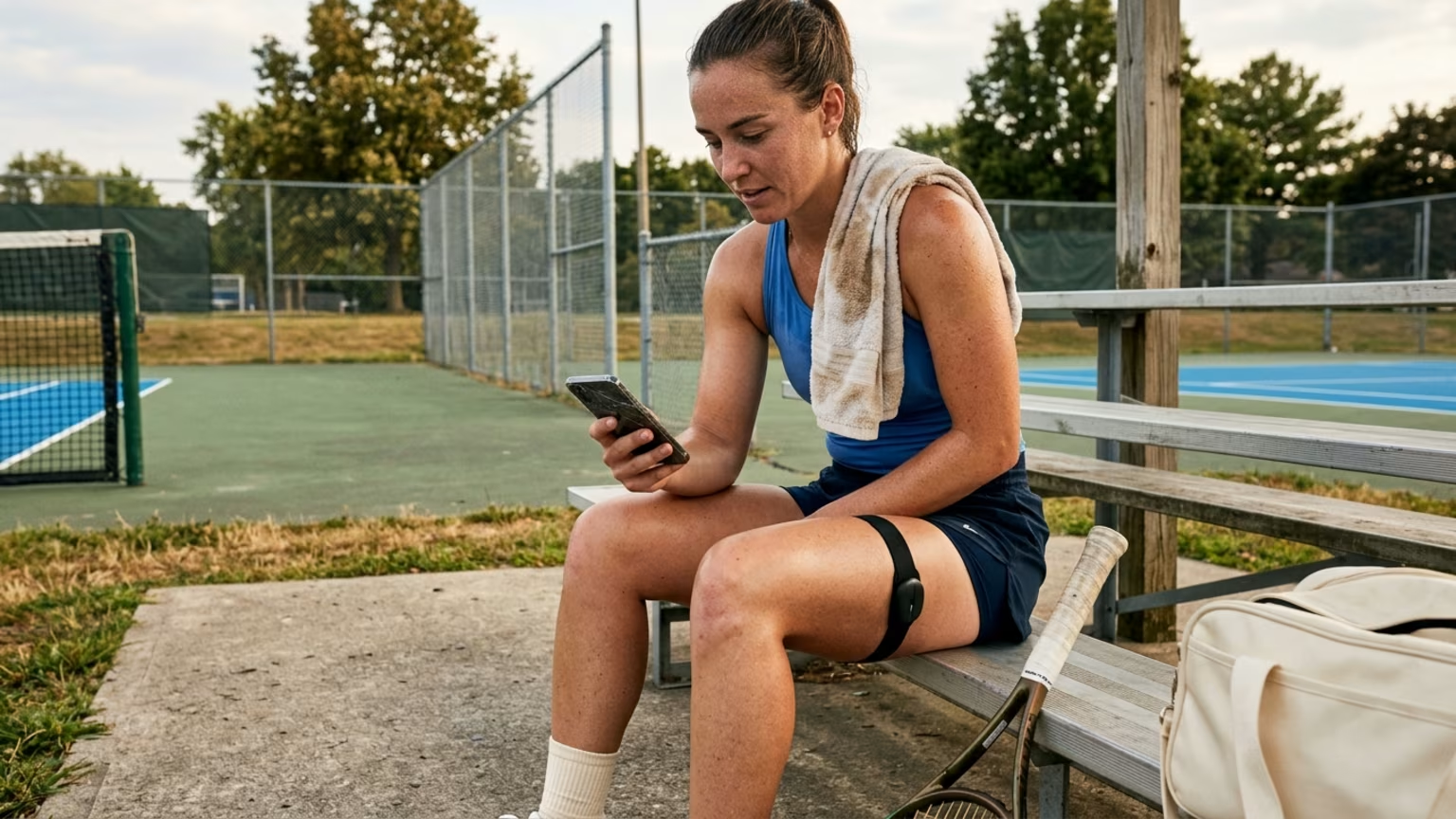

Learn how tennis professionals use wearable tech for recovery at the US Open, and discover how adult players can apply sleep and HRV metrics to maintain fitness.




Wearable recovery tracking uses digital sensors to measure physiological stress and rest patterns. A recreational player wakes up early and stares at a flashing red recovery score on their wrist. They feel completely fine, but the screen tells them they need total rest. They must quickly choose whether to trust the algorithm or their own body.
These devices collect data on resting heart rate, sleep stages and daily activity levels. The goal is to provide a picture of how well a person handles physical strain. At the professional level, athletes use this data to adjust their training intensity. For adult recreational players, the technology offers a way to monitor hidden fatigue.
Tennis, pickleball and padel demand intense bursts of movement followed by very short rests. This start-and-stop nature heavily taxes both the aerobic and anaerobic energy systems. Players frequently change direction, sprint to the net and react to unpredictable bounces. These explosive actions create significant muscle fatigue and central nervous system stress.
Proper preparation is essential before putting this kind of load on the body. When I first started playing pickleball, I noticed how many people skipped warming up entirely. They would jump straight out of their cars and right up to the kitchen line. I tried doing that and immediately pulled a calf muscle.
Pickleball requires just as much explosive lateral movement as tennis, just in a tighter space. Since then, I always spend five minutes doing dynamic lunges and ankle rolls. It changes everything about how confident I feel pushing off the baseline. Without proper recovery, these repeated explosive efforts accumulate over a busy week.
A wearable device attempts to measure the physiological cost of these court sessions. It tracks metrics like heart-rate variability to estimate how the nervous system is coping. The professional tennis world is currently testing how these devices fit into competition. Sports Illustrated reports that health wearables were recently permitted on a trial basis at Grand Slam events.
Players were previously required to remove devices like WHOOP bands at the Australian Open. Carlos Alcaraz and Aryna Sabalenka were among those asked to remove their bands during that tournament. Roland Garros then became the first major to allow the technology on a trial basis. Similar trials followed in Paris and London before reaching the 2026 US Open.
The 2026 US Open serves as a highly visible test case for wearable technology. Sports Illustrated notes that Oura has entered a five-year partnership with the USTA and US Open. Oura is now an official sponsor and wearable-fitness-device partner for the event. Taylor Fritz recently partnered with Oura and joined Coco Gauff as an ambassador.
Fritz told Sports Illustrated that he examines practice calories, post-session sleep and heart-rate variability. He finds objective data useful for reviewing his training load because matches affect him differently than practice. Fritz noted that match play introduces higher intensity and pressure. He also noted that the Oura Ring 5 was comfortable and did not interfere with his play.
While his experience is positive, it reflects one professional player rather than an independent equipment test. It is crucial to understand the limitations of commercial sleep tracking. A 2025 laboratory comparison summarized by Tech Times tested six commercial wrist devices on 62 adults. The devices were compared alongside polysomnography, which is the clinical reference method for sleep measurement.
The results showed varying levels of accuracy across different consumer models. The Apple Watch Series 8 scored a Cohen’s kappa of 0.53 for overall agreement with polysomnography. The Fitbit Charge 5 scored 0.41 in the same laboratory comparison. The Garmin Vivosmart 4 had a Cohen’s kappa of 0.21 for overall agreement.
The report noted that the Garmin device correctly identified only 29.39% of epochs that polysomnography classified as wakefulness. It also classified 46.35% of those wake epochs as light sleep. The cited validation tested the Garmin Vivosmart 4 rather than the Garmin vívoactive 5. This variability highlights why adult players must treat sleep data with reasonable caution.
Understanding the true demands of racquet sports helps adults maintain their physical capabilities over time. Players who want to stay on the court for years must balance match play with adequate rest. Tracking sleep and resting heart rate provides a baseline for how your body normally operates. This information makes understanding the exact recovery demands of racquet sports much easier.
The most practical approach is looking for repeated personal trends rather than obsessing over a single score. Start by wearing the device consistently during ordinary weeks before interpreting an unusually low or high score. A personal baseline is always more useful than comparing your daily number with another player. Adult players should track their daily training alongside their recovery data.
It helps to record session duration, general intensity, match length and any lingering soreness. This mirrors how Fritz approaches his data by using practice and match information as completely separate contexts. Players must prioritize good sleep behavior over trying to achieve a perfect sleep score. Consistent bedtimes and adequate time in bed are far more actionable than worrying about tracking sleep stages.
You can adjust your next session based on trends rather than simply abandoning your training entirely. A low-readiness trend might justify some technical work, light mobility drills or an easy hitting session. The device should help shape the session rather than make the final decision for you. Always validate the device against your own real-world experience and physical sensations.
If the device repeatedly reports poor sleep while you feel normal, treat that mismatch as a reason to review the data critically. The goal for adult players is to build awareness of accumulated load, smart travel recovery practices and sleep disruption. Sports Illustrated framed the Oura partnership within a broader discussion about long-term player health. The report cited long-term injury concerns involving Jack Draper and Holger Rune.
This awareness helps protect long-term participation in racquet sports. Applying interpreting standard wearable wellness metrics correctly is just one part of a balanced training plan. Wearable technology records proxies for recovery rather than directly measuring muscle damage or joint irritation. A digital device cannot diagnose an injury or determine your true readiness to compete.
Calories burned are estimates rather than precise measurements of training quality or required rest. If you experience persistent fatigue or lingering soreness, a digital ring cannot replace an evaluation by a qualified professional. Players should consult a physiotherapist or healthcare provider when they experience sharp pain, illness or dizziness. Do not use a device score to override obvious physical symptoms or justify playing through an injury.
If a device repeatedly reports poor recovery while you feel perfectly fine, discuss your training load with a coach. A medical professional can help you interpret physiological stress without relying entirely on a consumer gadget. These tools work best when they complement traditional coaching and basic common sense. Track your baseline sleep for two normal weeks before changing your court routine based on a digital score.
Follow Evercourts for practical insights on tennis, pickleball and padel performance, movement, recovery and healthy ageing. Stay connected for new articles, research-led guidance and ideas to help you play well and keep playing for years.


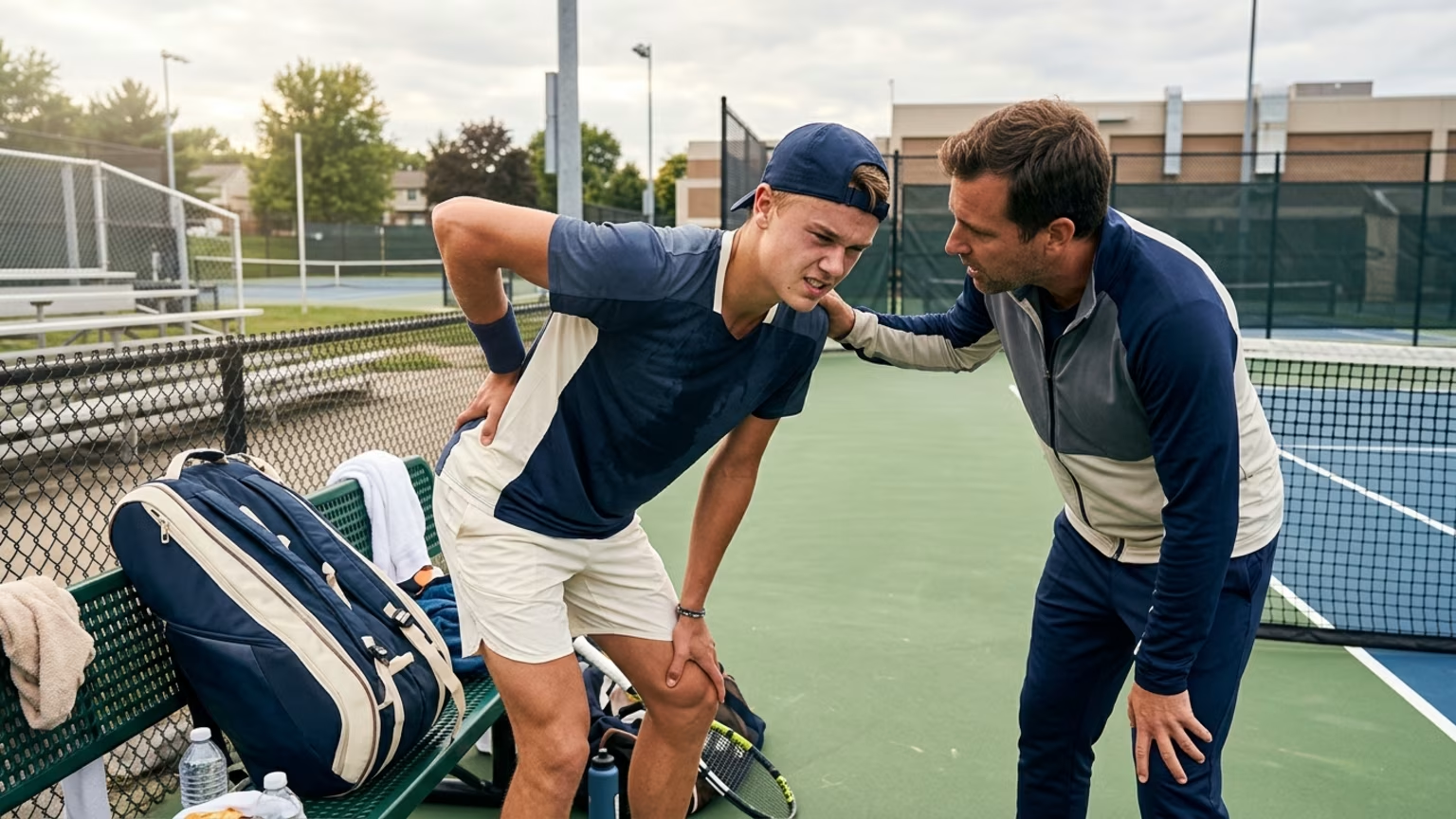
Holger Rune withdrew from the European Open with a back problem. The facts behind his decision and a grounded perspective for recreational players.

The Dink’s October 17 guide emphasizes deep returns, ball-height decisions and positioning against faster pickleball opponents.

A new report outlines padel and tennis gear trends. Learn how to assess adjustable rackets, sensor feedback and smart-court claims.
Read practical guidance for better movement, smarter preparation and a game that keeps working for you.
explore the Blog
