

Victoria Mboko's season-ending injury offers adult racquet sports players a practical lesson in resetting goals, structured recovery and athletic longevity.




On June 10, 2026, Victoria Mboko's tennis season officially ended after she suffered a left-knee injury at the Queen's Club Championships in London. The injury forced an immediate withdrawal from the grass-court tournament and initiated a long-term recovery period for the Canadian player.
Mboko had entered the women's doubles draw with a wild card alongside Serena Williams. The pair successfully navigated their early matches and reached the quarterfinals. However, Mboko's left-knee injury forced them to withdraw from the competition before they could advance further. This grass-court event was particularly notable because it marked Williams's first professional competition since the 2022 US Open.
Following the withdrawal, Mboko engaged in detailed discussions with Williams about navigating the physical setback. According to PEOPLE, Williams described injury as a normal part of the professional tennis experience. She encouraged her younger doubles partner to view the lay-off as a valuable opportunity. Rather than just waiting to heal, Williams suggested using the time away to assess weaknesses and make concrete improvements.
Mboko stated that this specific advice fundamentally changed her perspective on the recovery process. She told PEOPLE that she tries not to view the situation as just a setback. Instead, she sees it as a practical way to prepare for bigger things to come in her career. The Canadian player noted she has many new goals and wants to address multiple physical areas before returning to competition.
Coverage confirms that this knee injury required significant time off the court. It kept Mboko out of Wimbledon and all subsequent North American hard-court events. Recent reports from the WTA also verify that she was absent from the 2026 China Open field.
Professional players operate with dedicated medical teams, physiotherapists and continuous coaching support. Adult recreational players must manage their own recovery protocols with far fewer resources. Despite this difference, Mboko's approach offers a highly effective mental framework for anyone facing a prolonged absence from racquet sports. A forced pause creates time to reassess goals, rebuild physical capacity and address lifestyle factors.
In our experience at Evercourts, taking a step back to audit your physical preparation changes how you perform over the long term. I remember finishing a tough two hour padel match on a cold Tuesday night and waking up the next morning feeling like my lower back was locked in concrete. For a long time, I just accepted this as the price of playing hard in my forties. A break from continuous play finally gave me the space to audit my habits. But once I started spending just ten minutes on targeted hip mobility before heading to the club, the stiffness almost completely vanished. It taught me that we do not have to accept pain as a default state of aging. A forced lay-off is the perfect time to build these protective routines.
When adult players map out their return, the focus should remain on process-based milestones rather than immediate match results. Working through a complete guide to returning to court after an injury-related layoff helps manage expectations effectively. Tennis Canada recommends gradual progression when increasing activity duration, frequency or intensity. This measured approach gives the body time to adapt and prevents minor issues from becoming chronic problems.
Rather than setting an immediate return date, adult players should separate their recovery goals from their competition goals. This means focusing on clinician-approved milestones to rebuild strength and tolerate progressively higher workloads. Tennis Canada suggests that players should increase one major variable at a time when returning to the court. Adjusting session length, intensity, frequency or movement demand individually allows players to monitor their physical response safely.
A successful return requires building durability into the recovery plan itself. Tennis Canada guidance emphasizes resistance training for muscles, bones and balance. They also highlight the importance of warm-ups, proper sleep, hydration and nutrition. Players are strongly advised to avoid repeatedly pushing through persistent pain. Early assessment by a clinical professional can keep a minor discomfort from turning into a severe limitation. Rebuilding a consistent routine for movement confidence ensures your physical foundation is secure before returning to full-speed competitive matches.
Mboko's decision to pause and rebuild follows a period of rapid professional advancement. According to PEOPLE, she won the 2025 National Bank Open in Montreal at age 18. During that impressive title run, she defeated four Grand Slam champions. Those prominent victories included matches against Coco Gauff, Elena Rybakina, Sofia Kenin and Naomi Osaka.
Her strong performance in Montreal and other international events helped her break into the WTA Top 10 at age 19. This statistical context is important because a season-ending injury interrupts significant professional momentum. The choice to step back fully rather than rush a return reflects a commitment to long-term career durability. Navigating a season-ending injury involves lost ranking points, missed tournaments and significant emotional stress. However, focusing on structured rebuilding can mitigate the long-term impact of these setbacks.
We expect to see more professional and recreational players adopting structured audits during injury lay-offs over the next season. The traditional athletic model of rushing back to the court to preserve tournament points or weekend league status is shifting. Players are increasingly recognizing that targeted physical adjustments require dedicated time away from continuous competition.
As athletes prioritize long-term durability, the lines between injury recovery and baseline strength conditioning will continue to blur. For adult racquet sports players, this means taking a much longer view of their competitive seasons. The focus will move from quick fixes toward sustainable, year-round physical management. Understanding how to design a racquet-sports week for the long term will become the standard for maintaining court readiness.
Follow Evercourts for practical insights on tennis, pickleball and padel performance, movement, recovery and healthy ageing. Stay connected for new articles, research-led guidance and ideas to help you play well and keep playing for years.


An evidence check on sports supplements like tart cherry juice. Learn why racquet sports players should prioritize core nutrition over functional foods.
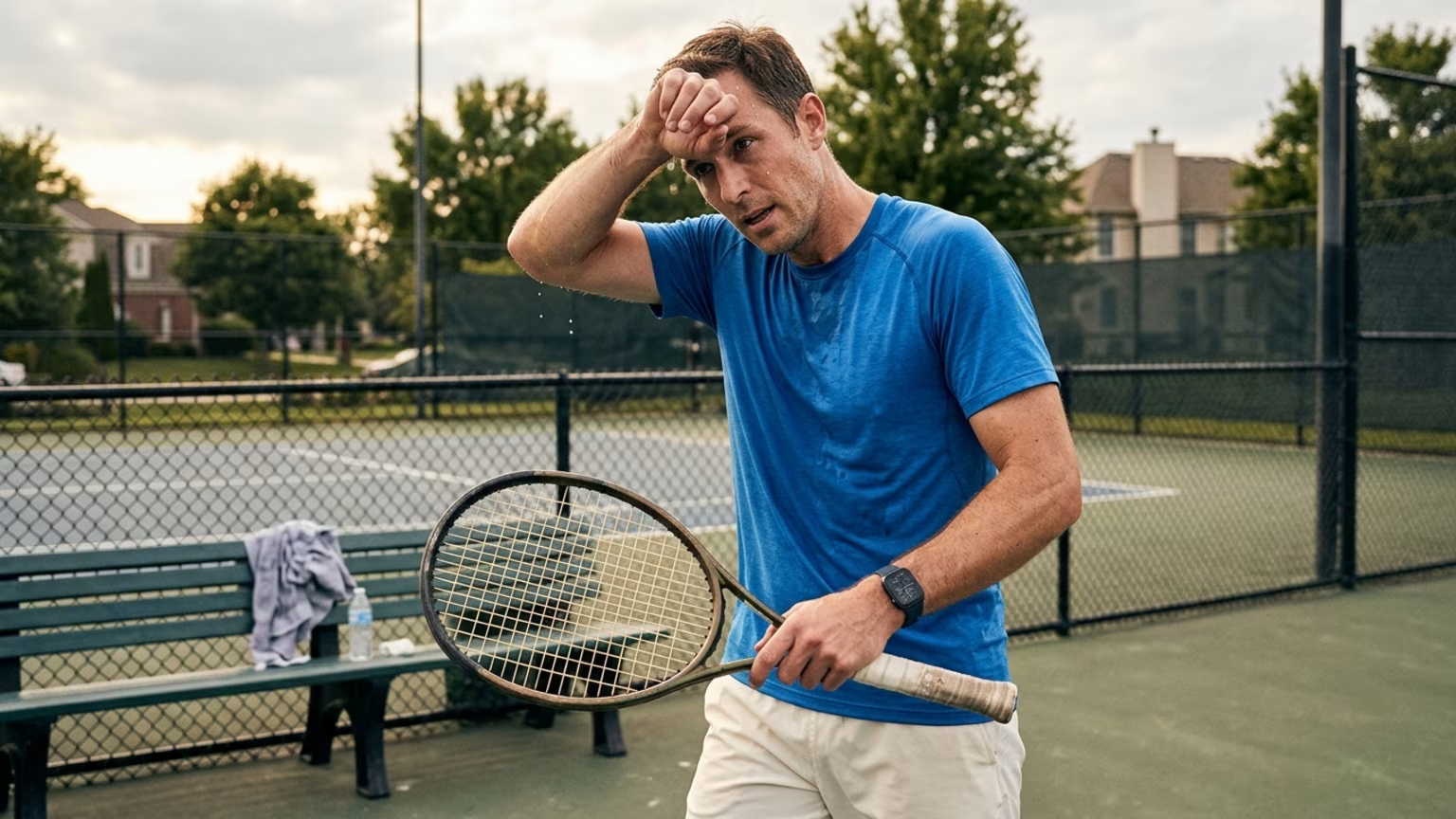
In late 2026, Oura analyzed wearable data to see how recreational tennis impacts heart health and recovery. Learn what this means for your athletic longevity.
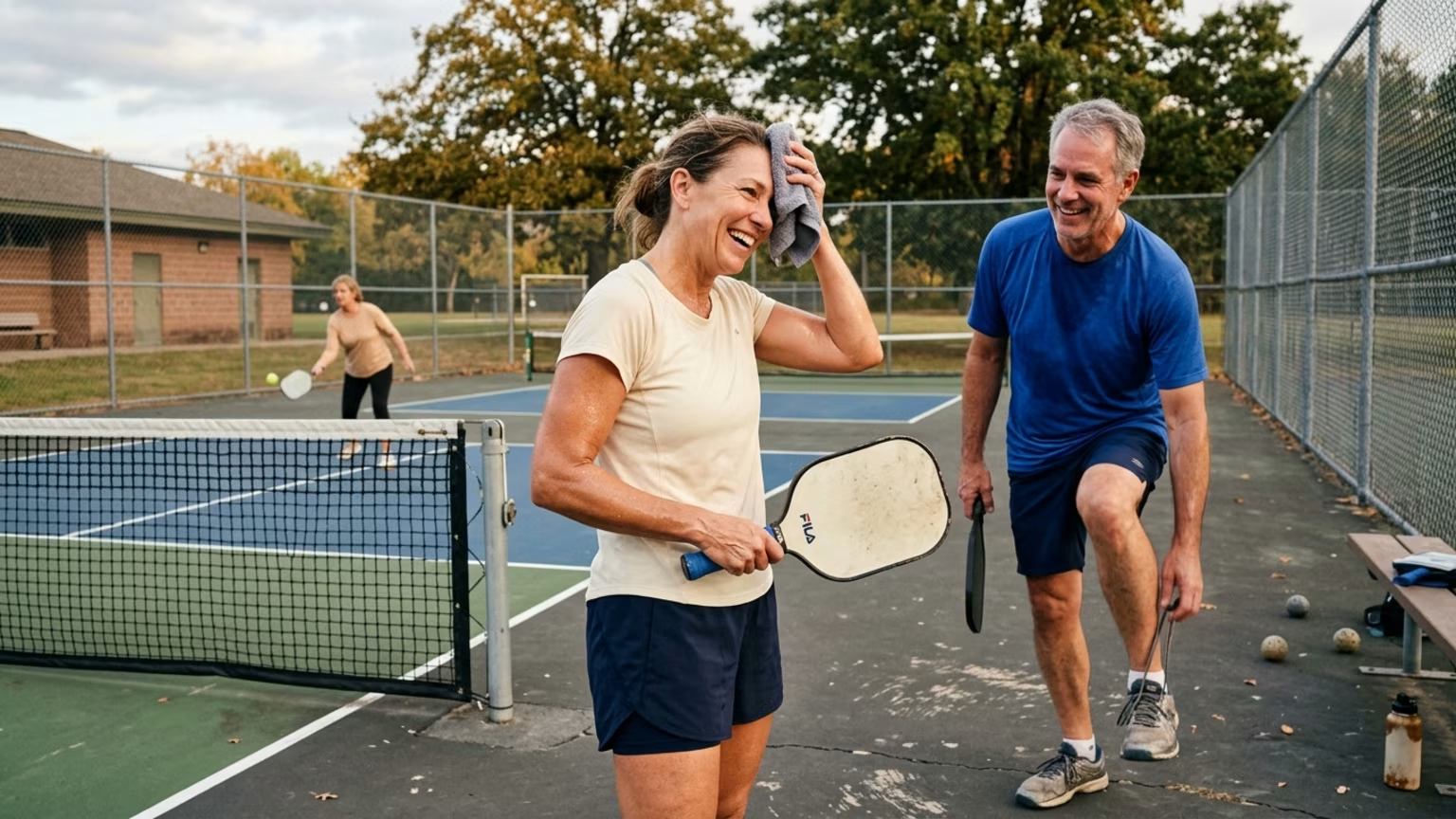
Recent guidelines emphasize gradual progression, dynamic warm-ups, and scheduled recovery to help adult racquet sports players maintain athletic longevity.
Read practical guidance for better movement, smarter preparation and a game that keeps working for you.
explore the Blog
