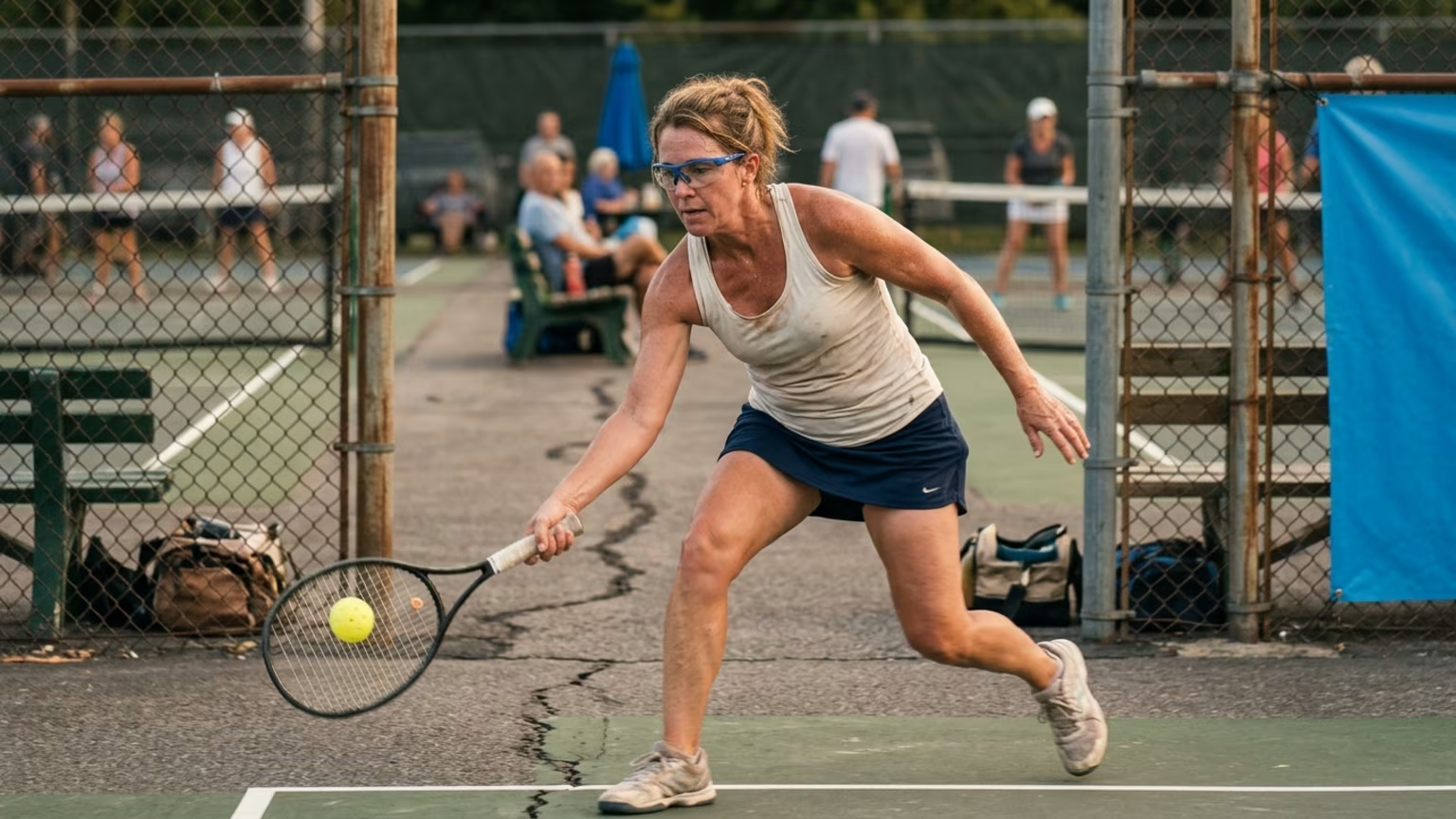

Prevent Blindness has declared September Sports Eye Safety Month. Learn why standard prescription glasses fail to protect racquet sports players from impact.




Many players step onto the court wearing their usual prescription glasses or favorite polarized sunglasses. These tools certainly help athletes track a lob or read a spin. However, clear sight is only half the equation for healthy aging. Prevent Blindness explicitly states that prescription glasses, sunglasses, contact lenses, and occupational safety glasses do not provide adequate protection as sports eyewear.
Standard frames are simply not built to withstand blunt force. When a ball or paddle strikes a regular lens, the material can easily fail. This introduces a completely new set of physical hazards to the delicate tissues of the eye. A player wearing basic sunglasses remains exposed to a corneal abrasion, which Prevent Blindness describes as a scratch to the eye surface caused by the edge of a ball.
The risks compound significantly for players with preexisting visual conditions. Prevent Blindness cited a specific warning from the American Academy of Ophthalmology regarding this exact issue. Players with myopia or a history of eye surgery may be more likely to experience an eye injury with more serious consequences. Relying solely on everyday lenses leaves these vulnerable structures completely unprotected during competitive play.
Much like choosing racquet sports shoes built for lateral movement, selecting eye protection requires understanding the demands of the sport. Regular running shoes lack the stability needed for tennis, just as regular glasses lack the strength needed for impact. Players who want to maintain their healthy aging journey must recognize this fundamental difference in equipment design. Clear vision through contact lenses will do nothing to stop a deflected ball.
True athletic eyewear functions quite differently from your daily reading glasses. This category of equipment is designed specifically to intercept and disperse kinetic energy safely. Prevent Blindness recommends that sports eye protection meet the sport-specific standards of ASTM. This organization was formerly known as the American Society for Testing and Materials.
ASTM-compliant gear undergoes rigorous testing to survive high-velocity impacts without shattering. Stephanie Marioneaux, MD, is a Prevent Blindness board member and president-elect of the American Academy of Ophthalmology. She said that proper eye protection should be treated as part of an athlete uniform. She advised players to consult an eye doctor to identify protection appropriate for both their sport and their ability.
Dr. Marioneaux also recommended selecting lenses with UV protection. It is important to note that UV protection and impact protection are separate considerations. A lens might block sunlight perfectly while still failing a basic impact test. Therefore, players must prioritize ASTM compliance alongside any UV-blocking features.
Prevent Blindness is positioning its September campaign as a broad prevention initiative. The campaign offers free sports-eye-safety information, a dedicated webpage, fact sheets, and shareable graphics. They also announced a new episode of their Focus on Eye Health Expert Series featuring Dr. Marioneaux. Additionally, a September Focus on Eye Health podcast will feature Shanyn A. Toulouse.
Toulouse is identified as holding DNP, MEd, RN, and NCSN credentials. She will be discussing sports-eye protection for children and related topics on the podcast. Prevent Blindness emphasizes that hazards vary widely across different activities. For example, the organization reported that basketball had the highest rate of eye injuries among people aged 15 and older.
Meanwhile, pool and water sports, including swimming, had the most injuries among those aged 14 and younger. Because risk profiles vary so much by activity, athletes cannot assume that one generic safety goggle works everywhere. Players need gear designed specifically for the distinct forces they will face on their respective courts.
Every court sport creates a unique environment for potential eye trauma. Pickleball introduces a distinct set of variables due to its compact court and hard plastic ball. Prevent Blindness noted that as pickleball participation grows, the number of related eye injuries is also increasing. The announcement identifies three specific pickleball injury mechanisms: a direct hit from the ball, impact from a paddle, and falls.
When adapting to different court conditions, players must account for the specific geometry of their chosen game. A padel ball travels off glass walls at strange angles. Tennis balls carry heavy topspin and significant mass. A pickleball striking the eye directly can cause a retinal tear or detachment, according to Prevent Blindness.
Another possible injury listed in the announcement is Berlin's edema. This condition involves damage to the retina outer layers. It can cause reduced vision in the affected eye for several hours, according to the announcement. These distinct court dynamics explain why standard safety glasses from a hardware store fall short.
The updated sports-eye-protector listing from Prevent Blindness specifically includes recommendations for pickleball. Players must verify that their chosen eyewear meets the ASTM standard for their exact discipline. Proper eye safety requires matching the defensive tool to the specific offensive threat.
While eyewear guards against direct strikes, collision and fall prevention remains equally critical. Prevent Blindness identifies falls as a primary injury mechanism on the pickleball court. The organization also notes that some sports may require additional facial or head protection. Certain activities might demand helmet-mounted face guards, face shields, or face cages depending on local rules.
When it comes to maintaining your physical capabilities over decades of play, sport-specific eyewear is the clear winner. Standard prescription lenses might correct your vision perfectly for a baseline rally. However, they simply cannot handle the kinetic energy of a deflected ball or a partner swinging a paddle. By choosing gear that meets appropriate ASTM standards, you actively protect your most vulnerable sensory asset.
Athletic longevity requires an honest assessment of the tools you bring to the game. Evercourts encourages athletes to treat proper eye protection as a non-negotiable part of their equipment bag. Upgrading to proper eyewear allows you to step onto the court with quiet confidence. You can focus entirely on your movement and technique without fearing an accidental strike.
Players can use September as a practical equipment audit prompt. Before the busy fall playing season begins, athletes should inspect their current protective eyewear for proper fit, secure coverage, and any signs of damage. They can then follow up by confirming any prescription changes or eye health questions with their eye doctor. Protecting your vision today simply means preserving your ability to watch the ball tomorrow.
Follow Evercourts for practical insights on tennis, pickleball and padel performance, movement, recovery and healthy ageing. Stay connected for new articles, research-led guidance and ideas to help you play well and keep playing for years.


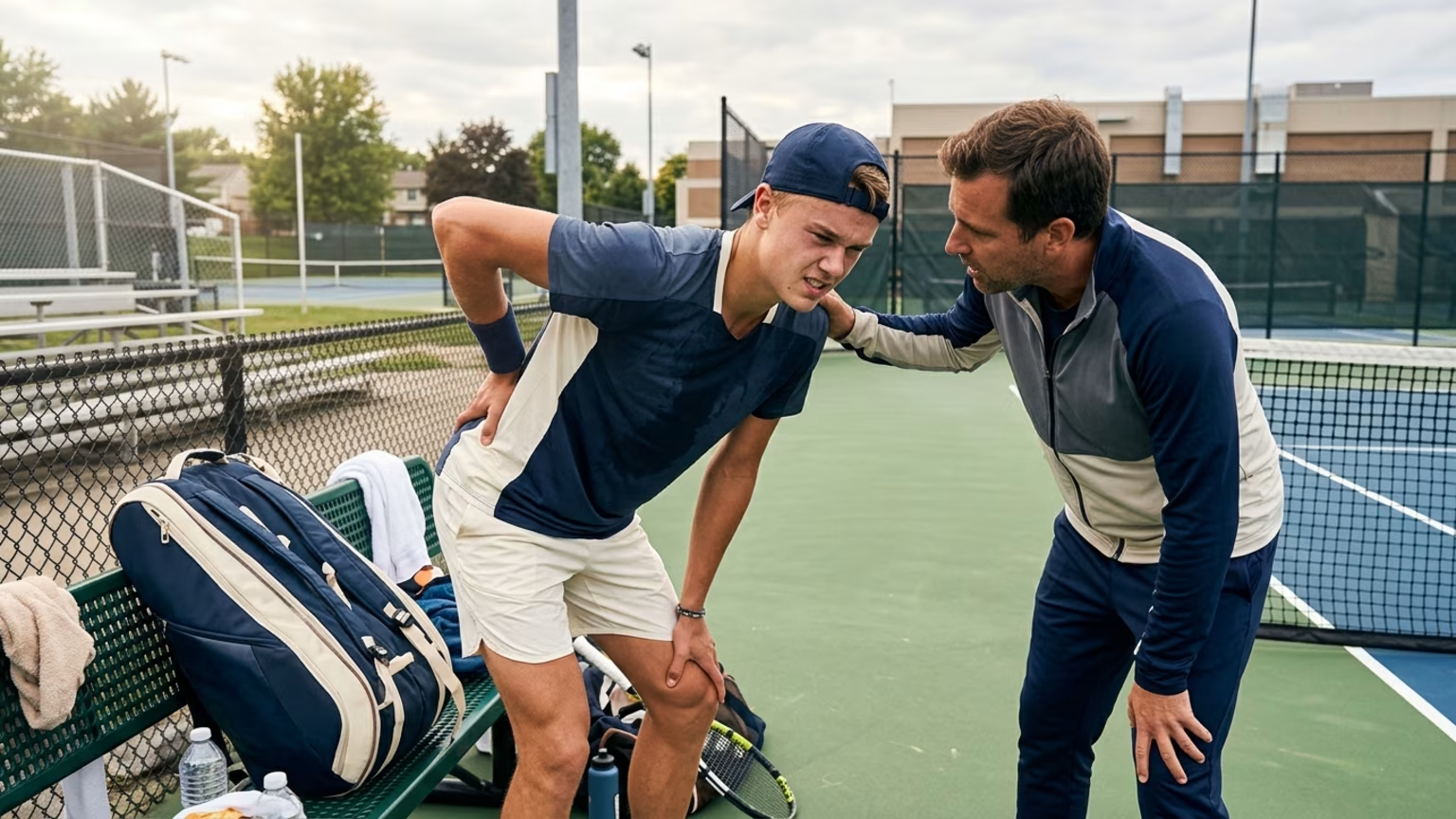
Holger Rune withdrew from the European Open with a back problem. The facts behind his decision and a grounded perspective for recreational players.

The Dink’s October 17 guide emphasizes deep returns, ball-height decisions and positioning against faster pickleball opponents.

A new report outlines padel and tennis gear trends. Learn how to assess adjustable rackets, sensor feedback and smart-court claims.
Read practical guidance for better movement, smarter preparation and a game that keeps working for you.
explore the Blog
