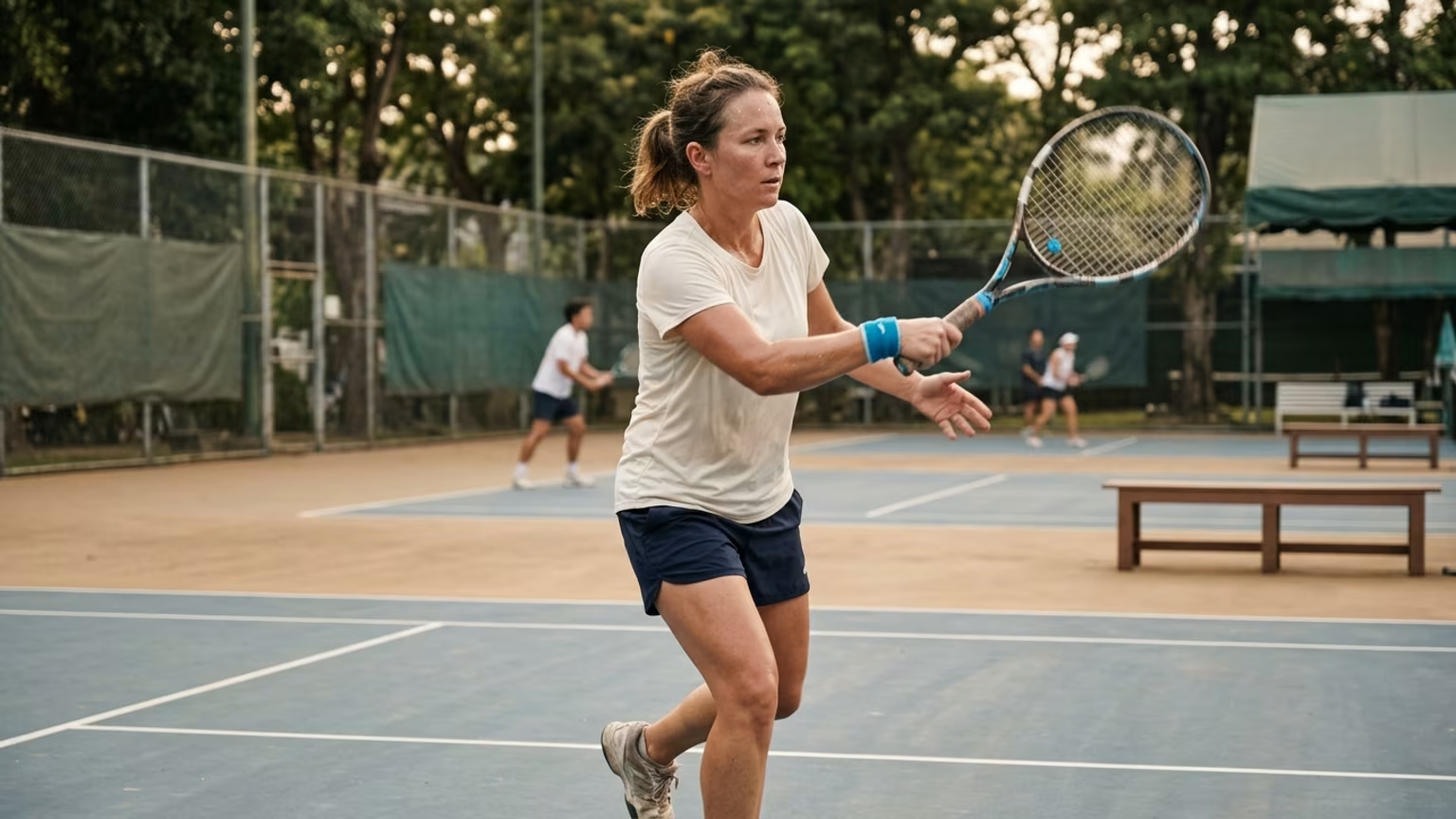

Discover the hidden physical costs of racquet clubs. Learn how predictable court access impacts your joint health, recovery, and athletic longevity.




Morning frost covers the unreserved neighborhood courts. Securing a reliable place to play involves more than just comparing monthly dues against hourly municipal fees. Facility access directly dictates the health of your musculoskeletal recovery system. This biological system handles the ongoing process of tissue repair and energy restoration required to keep you active on the court.
Tennis, pickleball, and padel are inherently demanding on the human body. These sports require repeated explosive efforts and immediate changes of direction on hard surfaces. Every sprint to the baseline and sudden stop at the non-volley zone forces your tendons to absorb massive kinetic loads. Your musculoskeletal system relies on a steady cycle of stress and recovery to build resilience against these forces.
The hidden physical cost of a racquet facility lies in how it influences this recovery cycle. Unpredictable court availability often leads to erratic playing schedules. When players rely on first-come municipal facilities, they frequently condense their activity into intense bursts. You might sit idle for five days and then play three rigorous matches on a Saturday just because a net finally opened.
This uneven pattern severely taxes your biological recovery mechanisms. Soft tissues like the Achilles tendon and patellar tendon require consistent loading to remain healthy. Rapid spikes in court time outpace your body's ability to repair micro-tears in the muscle fibers. Instead of adapting and growing stronger, your joints become increasingly inflamed and vulnerable to acute breakdown.
Facility access rules also dictate how you manage match volume. Strict hourly limits at popular public parks might force you to skip your warmup entirely. Conversely, securing an elusive weekend reservation might pressure you to play through fatigue simply to maximize your time. The environment where you play actively shapes the physical stress your body must endure.
Understanding the true price of court time requires looking past the initial marketing claims. The raw data highlights a vast divide between free municipal access and structured private scheduling. The cost you pay is often measured in time, predictability, and physical routine rather than just dollars. Municipal systems provide essential affordability but often transfer the burden onto the player's schedule.
Raleigh in North Carolina lists 20 locations where tennis can be played free of charge. Reserved courts in that same system cost $5 per hour. Palm Beach County also offers public recreational tennis at no charge at several locations. These spaces operate generally on a first-come, first-served basis.
Corpus Christi in Texas offers free pickleball at four neighborhood parks. These specific municipal courts are first-come and first-served. They cannot be reserved in advance, and players must bring their own nets. When courts require physical queues, players often sit cold for an hour before suddenly launching into intense competitive play.
Structured municipal booking systems remove the physical queue but introduce administrative hurdles. Manhattan Beach charges $12 per hour for residents and $16 for nonresidents. Online reservations are required there, featuring advance booking windows of four days for residents and three days for nonresidents. Miami Beach lists tennis court fees of $11 per hour for residents and $19 for nonresidents.
An $8 lighting fee is also applied in Miami Beach, and those charges are assessed per person per hour. In denser urban environments, the financial layers become even more complex. The city public tennis system in New York requires permits during the tennis season. Single-play permits are listed at $15, and full-season adult permits sit at $100.
Comparing these municipal options reveals a spectrum of physical investment. Unreserved parks in places like Corpus Christi demand intense flexibility from your body when crowds surge. Mid-tier reservation systems in Manhattan Beach offer scheduling sanity but strict time limits. Meanwhile, premium public options secure court access for a higher seasonal commitment.
Multi-sport venues present a different financial and physical calculation for adult athletes. Singapore's ActiveSG system lists peak monthly gym access at $30 for adults and $18 for students or seniors. Annual peak access costs $300 for adults and $180 for students or seniors. It also lists hourly court rates across several sports, including tennis and pickleball.
Peak outdoor pickleball is priced at $12.50 per hour for standard-rate users. Access to complementary fitness equipment helps players manage the physical toll of racquet sports. These varied options allow you to substitute heavy court sessions with lighter recovery workouts. Financial choices directly dictate your ability to maintain a balanced weekly exercise routine.
Selecting the right racquet environment is a critical component of healthy aging. Adult players must view their club or park selection through the lens of physical sustainability. A reliable booking system allows you to carefully manage court workload across the entire month. Spreading your matches evenly prevents the dangerous fatigue spikes that often precede soft tissue injuries.
Paying for predictable access effectively purchases the ability to rest. When you know your Thursday evening court is guaranteed, you feel less pressure to overexert yourself on Tuesday. Consistent routines make it easier to incorporate proper preparation into your schedule. Following structured stretching and mobility routines is simpler when you are not rushing to beat a crowd.
The variety offered by multi-sport facilities also protects your joints over the long term. Having access to gym equipment means you can easily substitute a heavy hard-court session with low-impact recovery work. This flexibility ensures you maintain cardiovascular fitness without compounding joint stress on sore days. Active adults rely on these racquet sports recovery methods to stay resilient season after season.
Ultimately, the goal is to keep playing tennis, pickleball, and padel for decades. Many veterans find that selecting a club for athletic longevity involves prioritizing physical consistency over superficial amenities. The true value of a facility is its ability to support a sustainable, injury-free lifestyle. Your venue should adapt to your aging body, not force your body to adapt to chaotic schedules.
Even with perfect scheduling and a premium facility, the physical toll of racquet sports can accumulate. Adult players must remain vigilant about the signals their bodies send during and after play. You should consult a qualified physiotherapist if you experience sharp, localized pain during routine directional changes. Discomfort that forces you to alter your natural swing mechanics is a clear warning sign.
Persistent morning stiffness in your knees or Achilles tendons requires professional medical evaluation. If joint aches do not resolve after a thorough warmup, your tissues are likely struggling to recover. A healthcare provider can accurately assess whether your playing frequency is exceeding your biological capacity. They will help separate normal muscle soreness from early-stage tendinopathy or joint degeneration.
Never attempt to self-diagnose chronic pain or push through sharp joint limitations. Early professional intervention often prevents minor overuse issues from developing into severe physical limitations. A physical therapist provides targeted strengthening protocols to build resilience against the specific demands of the court. Protecting your health ensures you can continue enjoying the community at your chosen facility.
Court availability shapes your playing habits, and your habits shape your health. Choose a venue that supports your physical consistency.
Follow Evercourts for practical insights on tennis, pickleball and padel performance, movement, recovery and healthy ageing. Stay connected for new articles, research-led guidance and ideas to help you play well and keep playing for years.


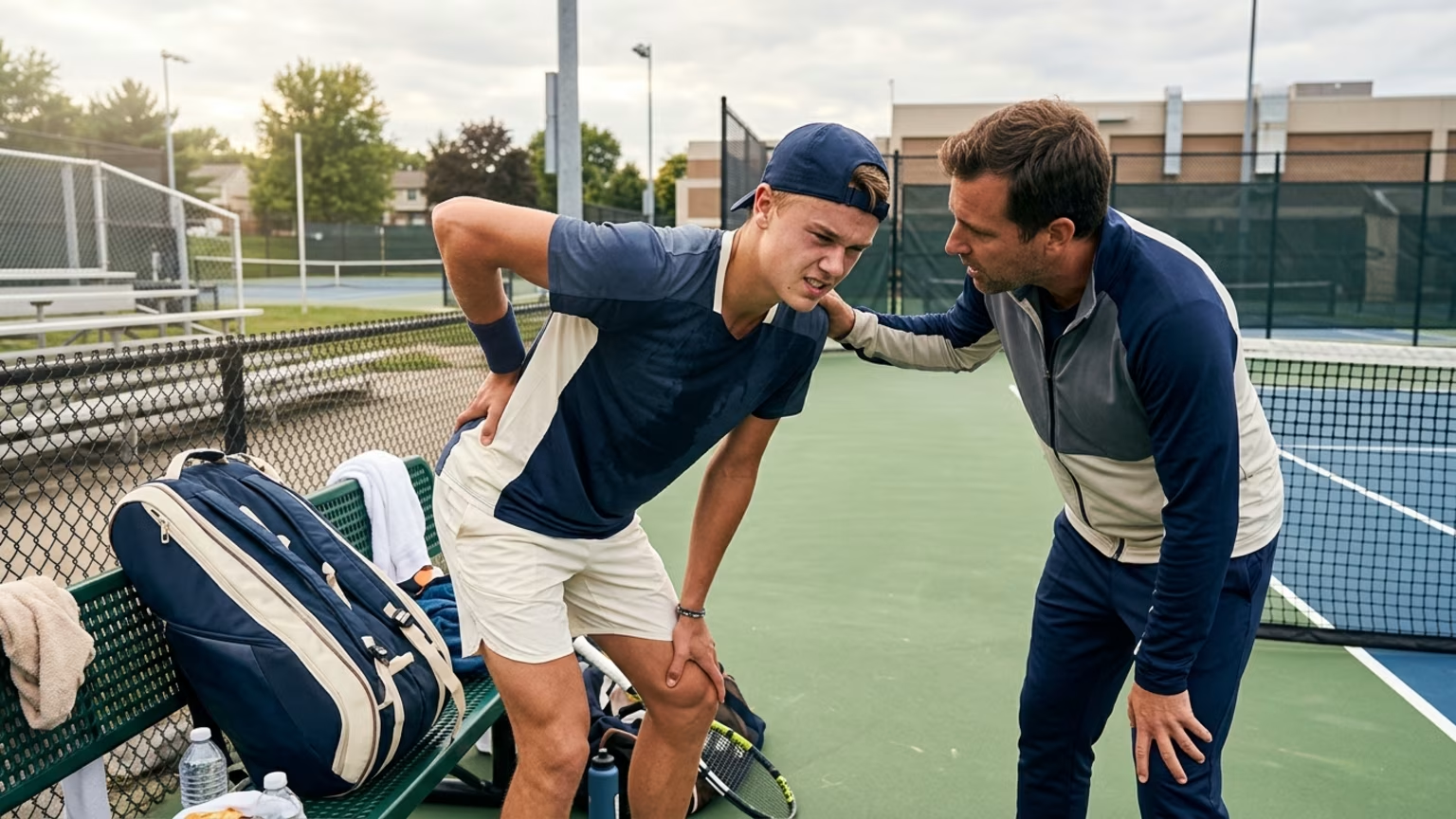
Holger Rune withdrew from the European Open with a back problem. The facts behind his decision and a grounded perspective for recreational players.

The Dink’s October 17 guide emphasizes deep returns, ball-height decisions and positioning against faster pickleball opponents.

A new report outlines padel and tennis gear trends. Learn how to assess adjustable rackets, sensor feedback and smart-court claims.
Read practical guidance for better movement, smarter preparation and a game that keeps working for you.
explore the Blog
