

Compare tennis, pickleball and padel court layouts, scoring and session planning to find a format that fits your preferences and current capacity.




How do tennis, pickleball and padel differ to play, and which one fits my preferences and current capacity? They offer different court environments and scoring rhythms, but the best fit depends on the format and pace you enjoy and can comfortably repeat.
Start with the environment rather than an effort ranking. Court dimensions describe the space available for play. Your experience also depends on whether you play singles or doubles and how the session unfolds.
Tennis gives you a longer playing rectangle. A published tennis court guide lists a regulation court as 23.77 m long and 8.23 m wide for singles. The width expands to 10.97 m for doubles. Choosing between those formats therefore changes both the playing boundaries and how coverage is shared.
Pickleball keeps the same court dimensions for both formats. A pickleball dimensions guide gives a playing area of 13.41 by 6.10 m for singles and doubles. The rectangle stays the same, but the number of players sharing it changes. That makes format an important part of any comparison.
Padel adds an enclosed environment. A padel court guide describes a court measuring 20 by 10 m with surrounding walls and mesh. The walls remain part of play. For someone considering padel, that is a feature to assess in its own right rather than simply noticing that the court is shorter than a tennis court.
These differences offer a useful starting point for choosing what to try. Think about whether you enjoy the longer tennis rectangle or prefer pickleball's compact layout. With padel, consider whether the enclosed playing environment appeals to you.
It also helps to treat singles and doubles as different playing experiences, rather than assuming the sport's name tells the whole story.
Separate the scoring format from the time commitment. The evidence here does not establish a reliable standard recreational session length for each sport. A court booking, actual playing time and total time on site are different things.
Scoring gives you a sense of how play is organised. A general comparison guide describes tennis and padel using the sequence of 15, 30, 40 and game. It also describes padel sets played to six games with a tiebreak when the score reaches six games each.
For pickleball, a general rules guide describes games to 11 points with a two-point winning margin. That is a useful reference point, not a universal promise about every event. The applicable competition rules determine the format being used.
Neither scoring system provides a dependable finishing time by itself. For practical planning, distinguish:
Before agreeing to a session, clarify whether play stops at a booked finish time or follows a match format. Also establish whether the plan involves singles or doubles and how breaks will fit into the visit. These details make the commitment clearer without assigning an unsupported duration to an entire sport.
This distinction matters when comparing competition formats: understanding how a score progresses is different from knowing when you will leave.
Not necessarily. Court size is one part of the experience, while format and pace also matter. A compact playing area should not become shorthand for a session that will suit every player's capacity.
A club article reporting recreational pickleball research gives average counts of 3,322 steps per hour in singles and 2,791 in doubles. Those figures make a useful point about considering format alongside the sport itself.
The averages describe a particular study group rather than a personal target. They are not matched measurements against tennis and padel. Court dimensions also do not establish an individual's distance covered or prove that one sport is easier or safer.
The practical approach is to compare sessions with the main variables kept as consistent as possible. Consider singles or doubles alongside effort, breaks and time played. Notice how you feel during the session and afterward rather than using a court measurement as your workload estimate.
The emphasis can differ by sport:
For your own comparison, a brief note about the format and time played can be more useful than a verdict based on the sport's reputation. Add a description of the pace and how you felt afterward. That keeps the comparison connected to the session you actually experienced.
Evercourts's approach to comparing the load of different court sessions keeps the focus on playing conditions rather than choosing a winner by court size.
Separate your enjoyment of the sport from the particular session you just played. Format, pace and breaks are worth considering before treating the sport's name as the answer. A useful choice might involve a different version of a familiar game or trying another court environment at a pace and duration that fit your present capacity.
If pain or a health condition affects that decision, a qualified clinician can help you consider your individual situation. A comparison article is a starting point for understanding the options, not personal clearance to play through a problem.
The best fit is a game you enjoy in a format you can comfortably repeat, leaving room for your preferences and capacity to change. A useful step today is to note the format, playing time and how you felt after your latest session as a starting point for your next choice.
Follow Evercourts for practical insights on tennis, pickleball and padel performance, movement, recovery and healthy ageing. Stay connected for new articles, research-led guidance and ideas to help you play well and keep playing for years.


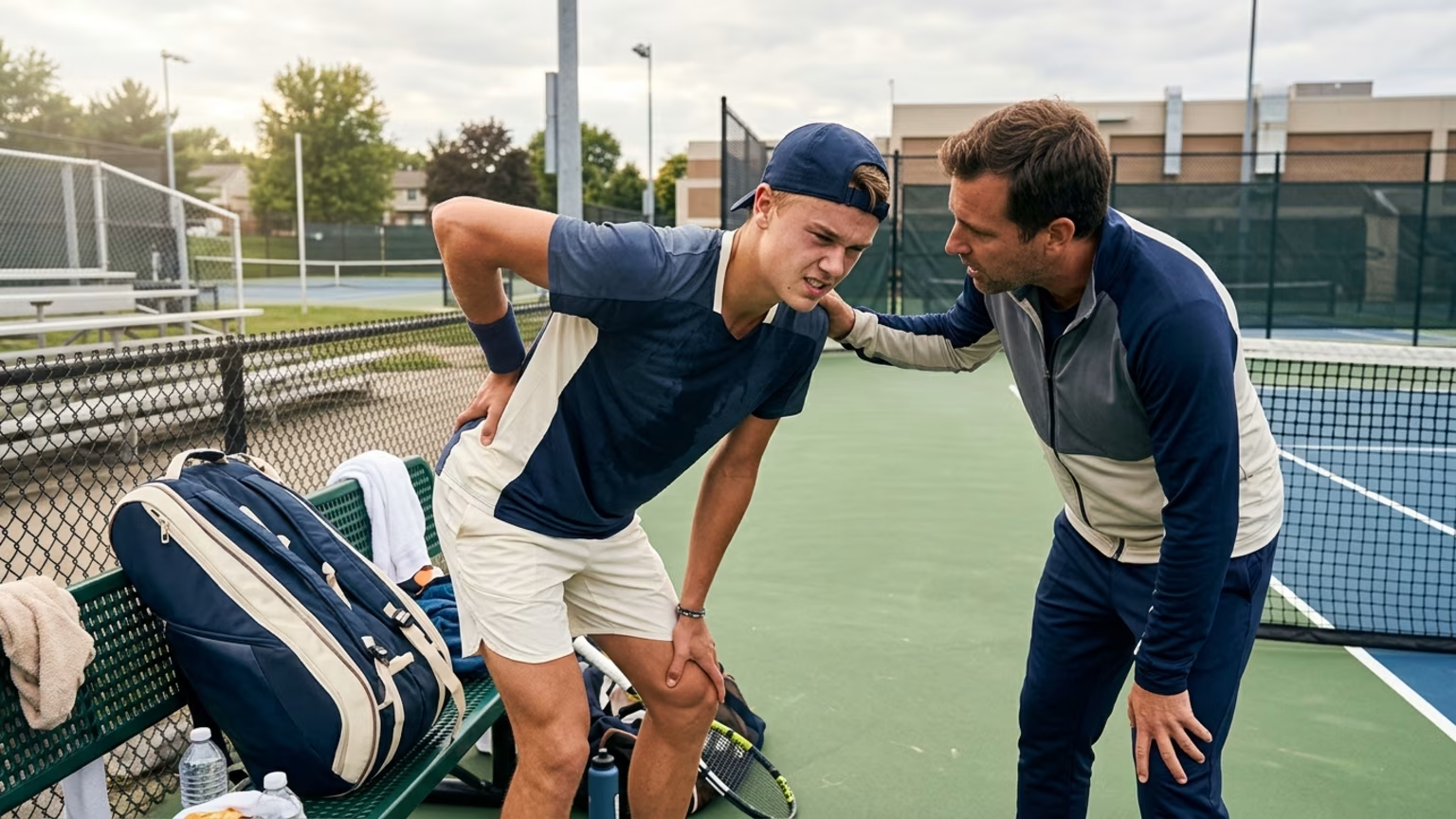
Holger Rune withdrew from the European Open with a back problem. The facts behind his decision and a grounded perspective for recreational players.

The Dink’s October 17 guide emphasizes deep returns, ball-height decisions and positioning against faster pickleball opponents.

A new report outlines padel and tennis gear trends. Learn how to assess adjustable rackets, sensor feedback and smart-court claims.
Read practical guidance for better movement, smarter preparation and a game that keeps working for you.
explore the Blog
