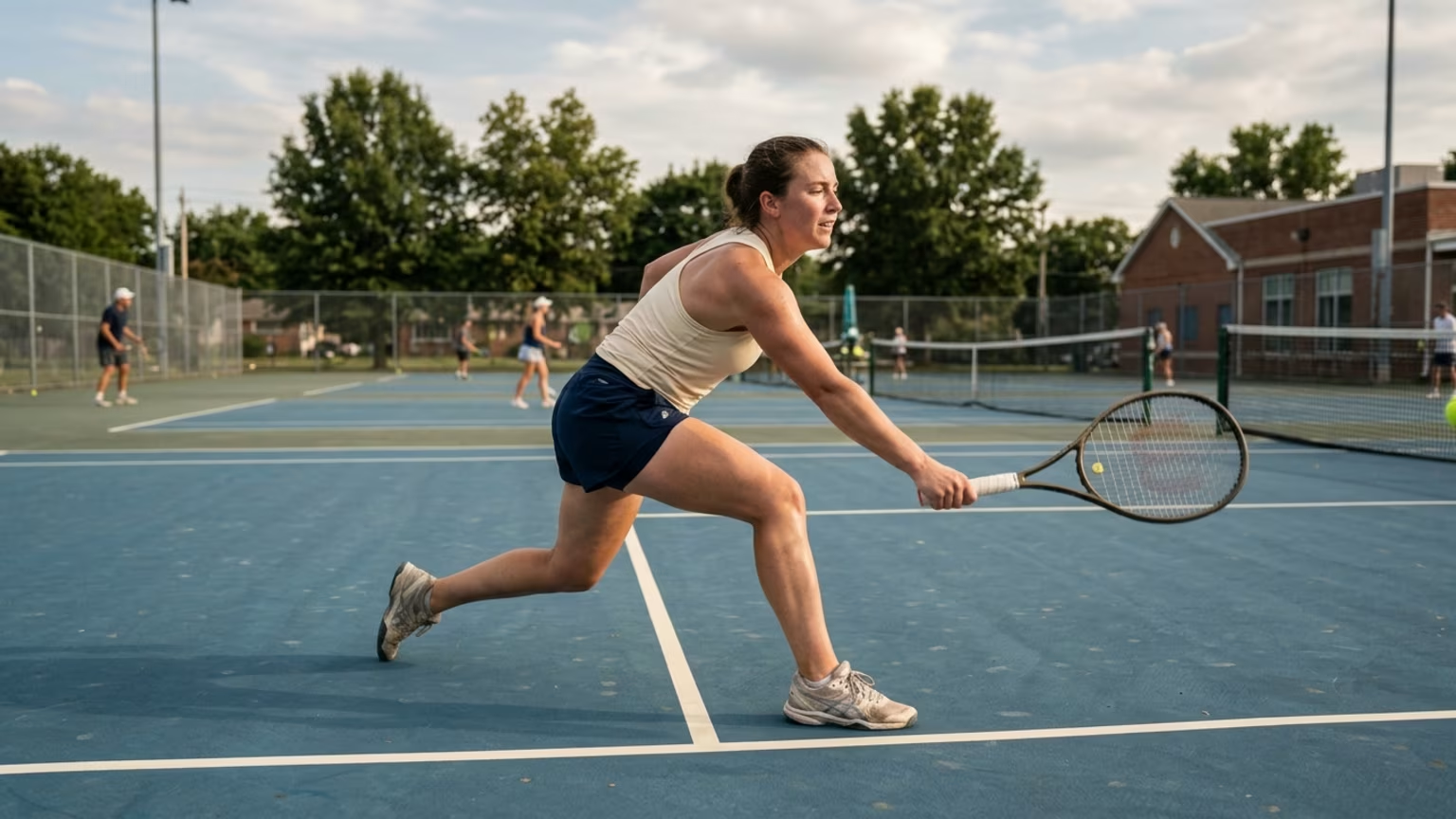

Learn how court surfaces, dimensions, and equipment alter racquet sports demands. Master practical ways to adapt to clay, hard courts, padel, and pickleball.




A tennis court is never a neutral stage. The International Tennis Federation modifies youth programs with balls that are estimated to be 75%, 50% and 25% slower than a standard yellow ball. This proves a fundamental point about racquet sports. The venue dimensions and equipment shape exactly how every session feels.
The ground beneath your feet dictates how your muscles and joints absorb force. The International Tennis Federation describes clay as the slowest major surface. Clay absorbs the pace of the ball and is associated with longer rallies. Players must tolerate higher contact points and frequent sliding. This surface asks the lower body to endure extended periods of tension and wide recovery steps.
Hard courts provide a more predictable bounce than grass or clay, although their pace can vary considerably from venue to venue. However, this firm surface transfers impact directly to the legs and back. You need reliable timing and clean directional changes to succeed on acrylic surfaces. The physical demand comes from repeated braking and rapid acceleration.
Grass produces a fast and sometimes unpredictable bounce. The ball loses very little speed upon impact with the turf. This forces players to use compact preparation and rapid first steps. The body must stay exceptionally low to handle the reduced reaction time.
Playing indoors removes wind and much of the weather variability. The climate is controlled when venues close their roofs. This creates a highly repeatable environment for practice and competition. However, players must still adapt to artificial lighting and background contrast.
Footwear choices significantly alter how these physical loads are distributed. Tennis shoes must match the actual surface and the specific movement pattern. On a surface that permits sliding, excessive grip may feel restrictive. Conversely, insufficient traction on a firm surface can undermine a player's confidence.
Court dimensions heavily influence your overall movement volume. FIP rules summaries describe a regulation padel court as an enclosed rectangle measuring 10 by 20 metres internally. This specific space includes end walls approximately 4 metres high. These structures normally consist of a 3-metre rebound wall and a 1-metre metal-mesh section.
The standard marked pickleball court is significantly smaller. It measures exactly 20 feet by 44 feet, or approximately 6.10 by 13.41 metres, for both singles and doubles. This compact footprint severely limits the space available for full sprints. Instead, the layout forces a massive volume of short lateral movements.
The equipment specifications further define the physical requirements of the sport. Approved pickleballs are molded plastic balls with holes. One published association specification lists 26 to 40 evenly spaced holes. These approved balls weigh 22.1 to 26.5 grams and measure 73 to 75 millimetres in diameter.
Environmental measurements also shape the internal workload. Heat-management policies at major events measure more than just air temperature. Wimbledon uses a heat-stress index that incorporates air temperature, humidity and surface temperature. This composite measurement acknowledges that the playing environment is complex.
Tennis requires players to cover significant ground with a heavy ball. The varying speeds of clay and grass demand total movement adaptability. Players must constantly adjust their split step to match the surface speed. Safely moving between different court surfaces requires deliberate warm-up routines.
Pickleball places a massive premium on short reactions and precise positioning. The compressed court forces players to control exchanges around the non-volley zone. This requires constant crouching and fast hands rather than full-sprint endurance. The joints take the brunt of rapid weight transfers and repetitive bending.
Padel adds rebound surfaces directly into the tactical equation. The enclosed space means players must read the first bounce and the wall simultaneously. The physical toll involves twisting and rotating to track these complex rebounds. This multi-directional tracking stresses the core and hips intensely.
Indoor tennis environments provide a stark contrast to outdoor pickleball and padel. The climate-controlled setting allows players to groove their strokes without wind interference. However, this repetition can lead to localized muscle fatigue. Outdoor sports require constant micro-adjustments that naturally vary the physical strain.
Recognizing these unique demands is essential for athletic longevity. Understanding environmental factors like heat and humidity helps players pace their matches appropriately. Every sport taxes the cardiovascular system differently. Adapting expectations to the specific venue prevents unnecessary fatigue and frustration.
Adapting to different venues requires a strategic approach to rest and preparation. I used to think a tough conditioning block was the only way to improve my court endurance. Then I started tracking my sleep. I noticed that on days I slept less than six hours, my reaction time at the net was noticeably sluggish, and I felt gassed by the second set.
Prioritizing consistent rest did more for my late match stamina than any extra sprints ever did. Recovery is the true foundation of performance. When transitioning between hard courts and clay, fatigue management dictates your success. The body simply cannot perform heavy braking safely when exhausted.
Players should use the first few minutes of court time to test their footing. Checking how your shoes grip or slide dictates your movement strategy for the day. Properly preparing joints for firm surfaces ensures you can sustain a consistent playing schedule. Adaptation begins by observing the environment before striking the ball with full power.
Warming up should involve watching how far the ball travels after the bounce. You must notice if the bounce is low, high or irregular before starting competitive play. This approach is especially useful for older recreational players. It treats adaptation as a skill rather than interpreting unfamiliar timing as declining ability.
A quiet court holds all the variables of the match before the first serve is struck. The surface dictates the bounce, the walls shape the angles, and the air holds the pace. Recognizing these elements shifts the focus from fighting the environment to simply moving within it.
Follow Evercourts for practical insights on tennis, pickleball and padel performance, movement, recovery and healthy ageing. Stay connected for new articles, research-led guidance and ideas to help you play well and keep playing for years.


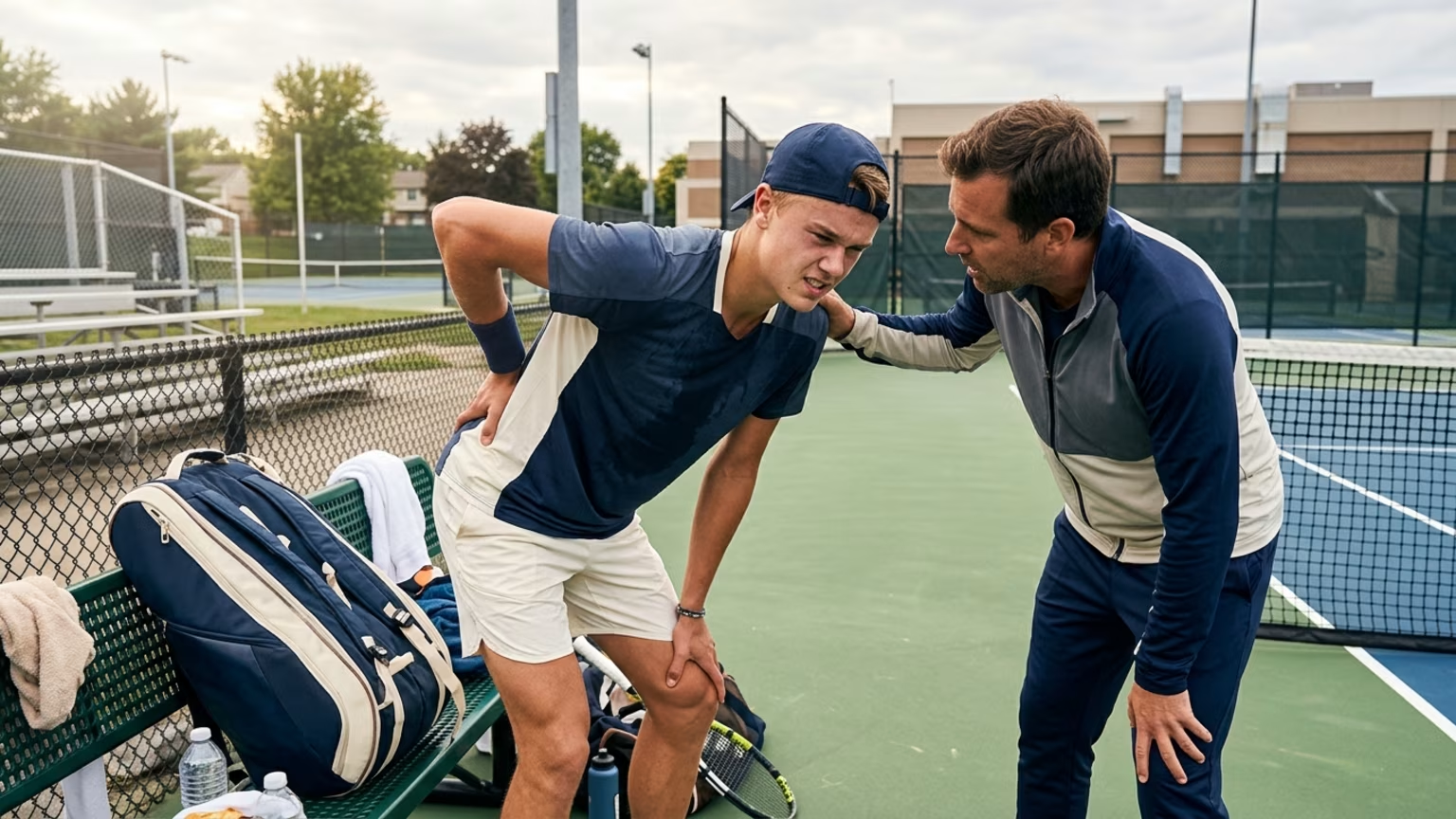
Holger Rune withdrew from the European Open with a back problem. The facts behind his decision and a grounded perspective for recreational players.

The Dink’s October 17 guide emphasizes deep returns, ball-height decisions and positioning against faster pickleball opponents.

A new report outlines padel and tennis gear trends. Learn how to assess adjustable rackets, sensor feedback and smart-court claims.
Read practical guidance for better movement, smarter preparation and a game that keeps working for you.
explore the Blog
