

Learn why active neck and shoulder recovery is essential for adult pickleball players, featuring practical mobility strategies and recent injury statistics.




At the 'Cùng con đi tiếp cuộc đời' pickleball tournament in Ho Chi Minh City on August 22 and 23, players stepped off the court and directly into neck and shoulder recovery assessments. On August 28, 2026, Thanh Niên published an article detailing the exact neuromuscular activation protocol used by Dr.88 Cổ Vai Gáy at the event. The recovery approach focused entirely on shoulder mobility, active range of motion, and thoracic decompression. The publication highlighted how this targeted physical preparation helps players handle the specific biomechanical demands of repetitive paddle strikes.
The Thanh Niên article presents the thoracic spine and shoulder complex as important coordination points in the movement chain of pickleball. The sport requires fluid motion that transfers force from the ground up through the trunk and finally into the arm. Repeated trunk rotation requires healthy thoracic extension and rotation during every single rally. When the thoracic region is stiff, the body often compensates by asking the cervical and lumbar spine to move beyond their normal roles.
This compensation forces the neck muscles to stabilize the head during chaotic, high speed movements. To counteract this stiffness, the publication recommends a five to 10 minute preparation phase. This phase centers on neuromuscular activation and active range of motion instead of relying solely on passive stretching. The routine includes specific activities to increase circulation, warm the joint capsules, and improve fascial elasticity before stepping onto the court.
Players then move through targeted thoracic decompression, rotator cuff activation, and posterior muscular chain movements. Proper execution of these steps helps the shoulder blade glide smoothly during aggressive overhead swings. The event in Ho Chi Minh City served as a practical demonstration of these crucial movement principles. The article divides the active recovery process into three distinct stages to protect the shoulder and neck.
Before play, athletes must activate stabilizing muscles and open the thoracic range. During play, maintaining sound posture helps reduce compensatory movements that strain the neck extensors. After play, the focus shifts to addressing tight trigger points and restoring normal muscle length gradually. These sensible risk management principles ensure that players remain capable and confident throughout long tournament weekends.
The primary article focuses heavily on the rhomboids, trapezius, and serratus anterior. These muscles are absolutely vital for stabilizing the shoulder blade during fast overhead strikes and baseline volleys. The neck extensors and levator scapulae also work continuously to maintain head position while tracking a fast moving ball. For a professional athlete, conditioning these specific muscles is just a standard part of their daily job.
For a recreational player, these exact same muscles are often chronically fatigued from long hours spent hunched over a computer keyboard. This daily physical deficit is why jumping straight into a match without preparation is so incredibly risky. In our experience, skipping this preparation leads directly to early injuries. "When I first started playing pickleball, I noticed how many people skipped warming up entirely."
"They would jump straight out of their cars and right up to the kitchen line. I tried doing that and immediately pulled a calf muscle. Pickleball requires just as much explosive lateral movement as tennis, just in a tighter space." This highlights exactly why amateurs must approach the court with a dedicated plan for their physical readiness.
"Since then, I always spend five minutes doing dynamic lunges and ankle rolls. It changes everything about how confident I feel pushing off the baseline." Adult amateurs need a realistic approach that directly addresses their specific lifestyle factors and physical limitations. Implementing a sustainable training week means scheduling mandatory rest days and active mobility sessions between your competitive matches.
While this specific recovery protocol was applied at a pickleball event, the underlying movement chain message is highly relevant across all court activities. Repeated rotation, rapid reaching, sudden deceleration, and overhead strokes place immense demands on the trunk and scapula. Whether you are hitting a heavy tennis serve or a delicate padel bandeja, your shoulder must stabilize the arm dynamically. The exact exercises and overall workload should always be individualized to the specific sport and the player's personal medical history.
Recognizing these shared demands helps adult players view their body as a complete system rather than isolated parts. When a tennis player experiences neck pain, the root cause might actually be a lack of thoracic rotation during their groundstrokes. Addressing the entire kinetic chain is much more effective than simply massaging the spot that currently hurts. Treating your recovery proactively allows you to maintain the technical skills you have worked so hard to build.
The end of a hard match should never be an abrupt stop for your muscles and joints. Players should use light movement and targeted post match stretching to gradually cool the body down. The available sources support gentle movement and symptom aware recovery rather than a broad aggressive treatment protocol. Finding the right physical balance keeps you on the court longer and prevents minor stiffness from becoming a major issue.
While neck and shoulder stiffness are common complaints, the broader injury data points to serious risks for older adult players. KCUR, citing a ValuePenguin analysis, reported an estimated 125,000 pickleball related emergency room visits among adults 50 and older from 2018 through 2025. This group represented more than four out of five visits in that particular analysis. Players aged 65 and older accounted for half of those emergency room visits.
These numbers highlight the physical vulnerability of older adults entering the sport without proper conditioning. A University of Texas Health San Antonio summary of research adds vital detail to this growing injury landscape. The summary reported that falls caused about seven in 10 injuries in a 2013 to 2022 dataset. It also noted that fractures comprised about one in three diagnoses in that same period.
The summary says most injuries occurred among players aged 65 to 80. Furthermore, fractures were particularly common among women over 60 and most often affected the arm and wrist. These specific injury patterns highlight why a comprehensive approach to court health is absolutely necessary for healthy aging. While shoulder mobility improves stroke mechanics and comfort, falls and upper extremity trauma represent a major component of the broader injury burden.
Sports physicians quoted by The Kansas City Star caution that older beginners may be at greater risk when they increase playing time too quickly. Rapidly moving from little daily activity to several hours of play multiple times per week can easily overwhelm unconditioned tissues. These injury statistics reinforce the idea that recovery cannot compensate for an inherently excessive playing workload. A player who continues increasing their match volume while relying entirely on stretching will likely still exceed their current tissue capacity.
KCUR reports that the most common clinical problems seen in its local coverage were relatively minor soreness and overuse complaints. However, medical providers also noted flare ups of arthritis or plantar fasciitis alongside more severe Achilles and rotator cuff issues. Taking the time to monitor wearables and recovery metrics can help adults recognize when their bodies need a break before these minor complaints escalate. Comprehensive conditioning protects the athlete against both acute traumatic events and chronic overuse syndromes.
The conversation around racquet sports is permanently shifting from simple participation to sustainable physical maintenance and injury prevention. As older adults continue flocking to local courts, we expect to see more integration of structured physical preparation. Tournaments will likely begin offering more on site mobility and physiological support for amateur brackets. Relying solely on passive treatments after an injury occurs is no longer a viable strategy for active aging.
The most successful recreational players will be those who adopt proactive mobility habits early in their playing journey. Emphasizing thoracic rotation and shoulder health will protect the neck from unnecessary wear and tear over time. Players are realizing that an extra ten minutes of preparation can completely transform how they feel the following morning. Taking ownership of your body mechanics is a practical requirement for enjoying racquet sports for decades to come.
Incorporating effective cool downs into your weekly schedule ensures that your joints recover properly after intense rallies. Building a resilient body takes patience and consistency, but the reward is years of healthy competition on the court. Stay proactive with your mobility work, and your shoulders will thank you during every match. We look forward to seeing more players treat their recovery with the exact same focus as their forehand technique.
Follow Evercourts for practical insights on tennis, pickleball and padel performance, movement, recovery and healthy ageing. Stay connected for new articles, research-led guidance and ideas to help you play well and keep playing for years.


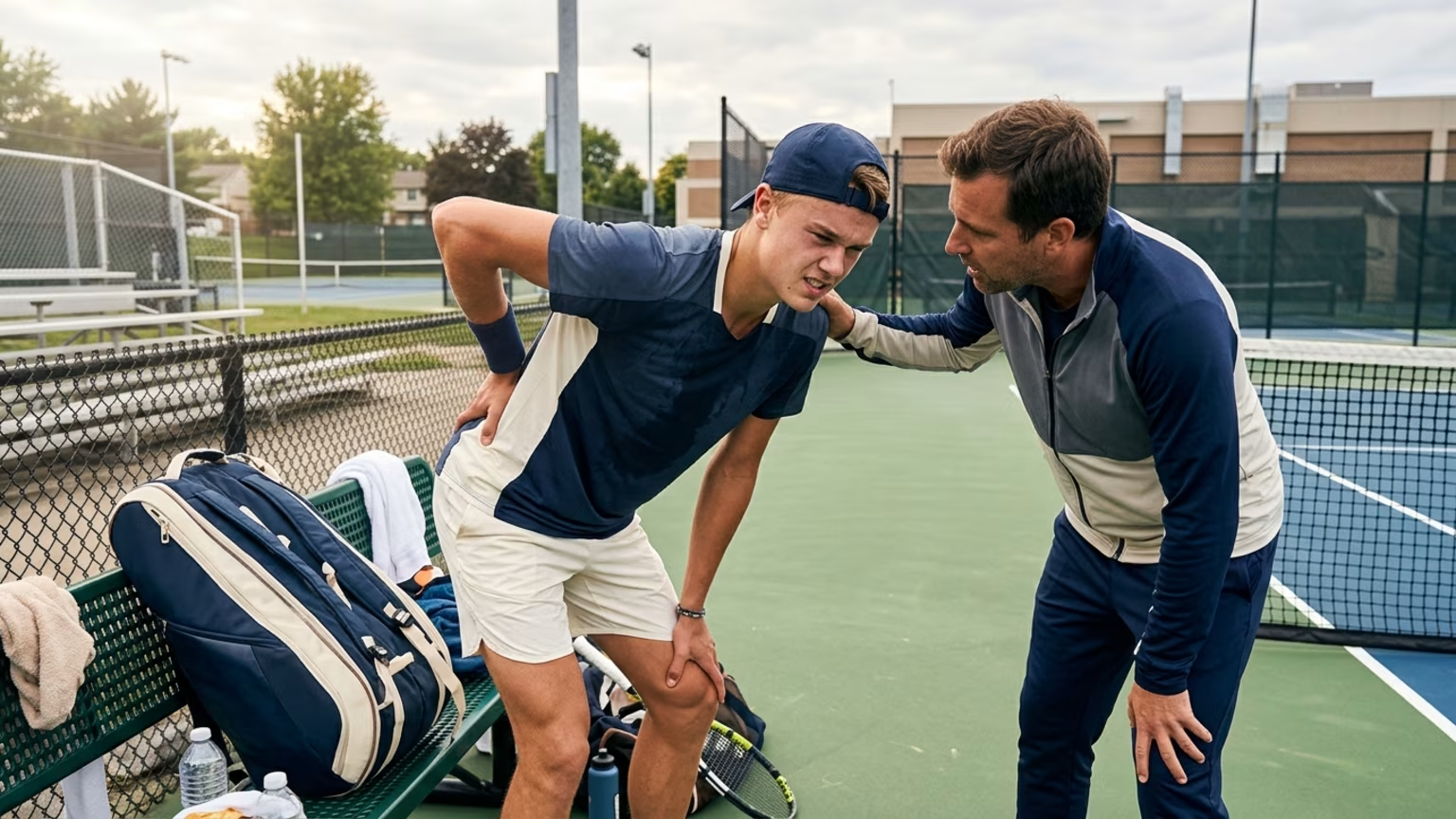
Holger Rune withdrew from the European Open with a back problem. The facts behind his decision and a grounded perspective for recreational players.

The Dink’s October 17 guide emphasizes deep returns, ball-height decisions and positioning against faster pickleball opponents.

A new report outlines padel and tennis gear trends. Learn how to assess adjustable rackets, sensor feedback and smart-court claims.
Read practical guidance for better movement, smarter preparation and a game that keeps working for you.
explore the Blog
