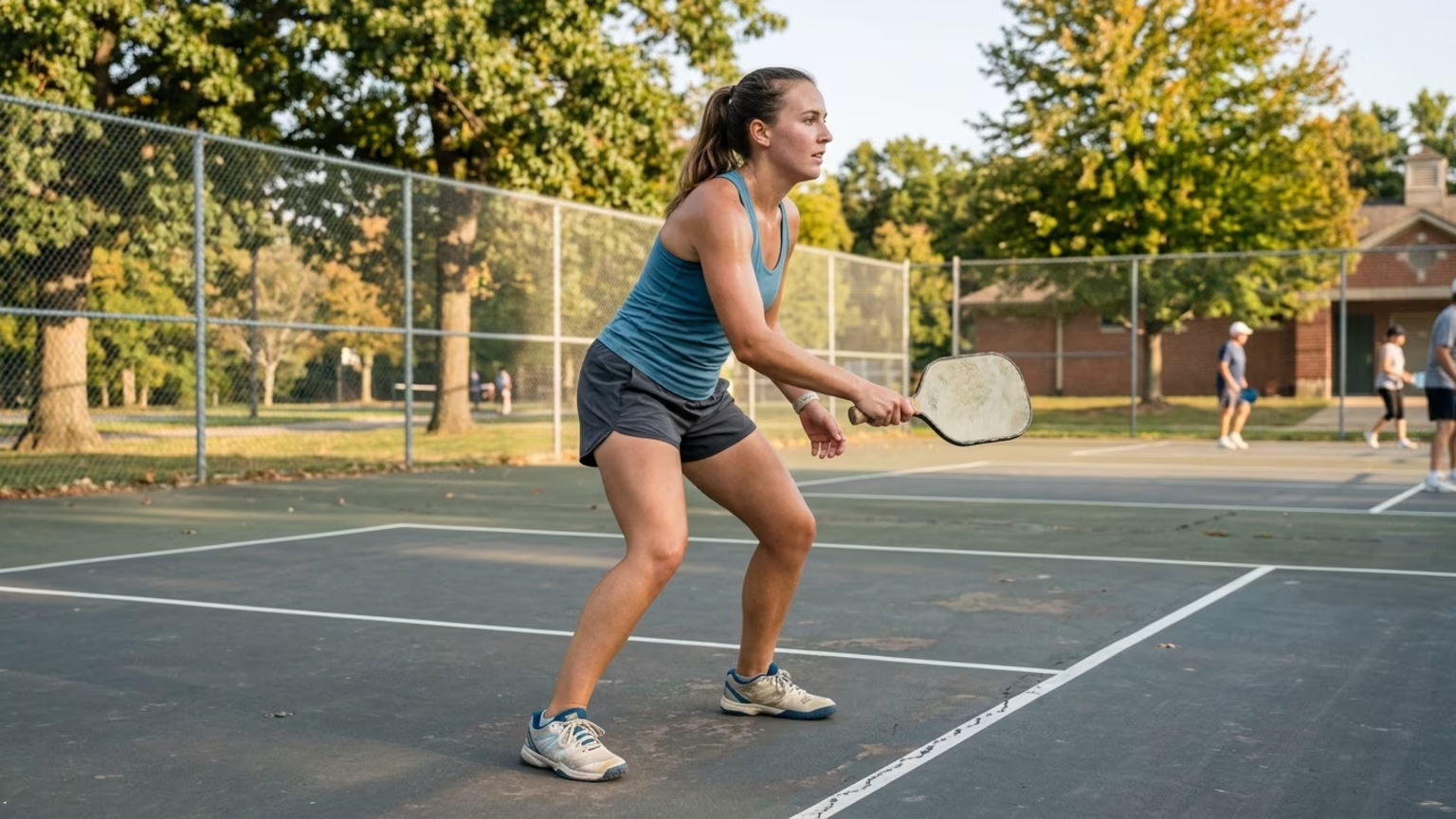

Women's Health tested the best pickleball shoes of 2026 to help players reduce injury risk. Learn why court-specific footwear is vital for healthy longevity.




You stretch wide for a dink at the kitchen line and your running shoe catches the gritty court surface. The resulting awkward twist sends a sharp warning up your leg. That split-second loss of stability is a familiar dread for many recreational players. This tension is exactly why Women's Health now tests dedicated pickleball footwear.
The primary goal of selecting proper footwear is maintaining athletic longevity and keeping you on the court. On August 28, 2026, the editors at Women's Health released an updated guide to the best pickleball shoes. They tested more than 20 pairs over a two-year period to identify safer options for the sport. The underlying focus of this editorial test is risk reduction for active players.
Equipment choices matter deeply in a sport that now attracts an estimated 24.3 million Americans. Reporting based on Sports & Fitness Industry Association data shows 7.48 million core players hit the courts at least eight times in 2025. This massive growth brings a corresponding increase in pickleball injury risk. Estimated pickleball-related injuries treated in emergency departments rose from about 8,300 in 2018 to more than 31,000 in 2025.
A University of Texas Health Science Center at San Antonio summary noted 66,350 pickleball-related injuries from 2013 through 2022. Falls caused approximately seven out of ten of those injuries among a predominantly older player base. Fractures represented about one-third of diagnosed injuries in that dataset. Proper footwear cannot guarantee you will never roll an ankle or suffer a fall.
Adults aged 50 and older accounted for an estimated 125,000 emergency-room visits from 2018 through 2025. The same analysis reported that falls, trips, and slips accounted for nearly half of the injuries. Choosing court-specific footwear helps players avoid these common slipping hazards on abrasive surfaces. Proper footwear is an essential component of a broader strategy for physical health.
Playing safely allows older adults to reap significant physical benefits. A Hong Kong study summarized by Chinese University of Hong Kong researchers examined an eight-week pickleball program. The university summary reported that 42% of participants in the pickleball group moved from pre-frailty to non-frailty. Only 8% in the control group achieved that same physical transition.
The Women's Health test consulted three pickleball experts and Men's Health gear contributor John Thompson. The finalists featured the ASICS Gel-Renma alongside the New Balance FuelCell 996v6. The team also selected the Skechers Pickleball Viper Court Pro 2.0 and the K-Swiss Pickleball Supreme. The K-Swiss Express Light and Nike Vapor Pro 3 completed the final list.
The testing criteria evaluated comfort alongside material quality and durability. The editors also judged each shoe on its support level, style, fit, and overall stability. You can apply these exact criteria when building your complete injury prevention framework from the ground up.
Support helps keep your foot stable inside the shoe during sudden pivots and lunges. Melissa Alexicko is the head tennis coach and pickleball professional at Canyon Ranch Lenox. She told Women's Health that support is the most important aspect to consider. Pickleball requires incredibly fast footwork and sharp changes of direction.
Physical therapist Kristen Lettenberger of Bespoke Treatments noted that rubber outsoles are incredibly grippy. Traction is a major selection criterion because the shoe must grip the court during sudden stops. The guide explicitly contrasts court footwear with running shoes. Running shoes feature tread designed for forward movement and aggressive ridges that interfere with side-to-side agility.
Alexicko offered the strongest warning in the article regarding shoe choice. She noted that wearing running shoes for pickleball would be fundamentally unsafe. The aggressive grip and tread patterns of running shoes do not permit necessary agility. They grab the court surface when you need to slide laterally.
Your shoe should offer a secure fit that does not feel overly restrictive. The Women's Health test identified the Skechers Viper Court Pro 2.0 as the most supportive model. This shoe stood out due to its snug fit, reinforced sides, and grippy outsole. Responsive cushioning absorbs shock without making the shoe feel bulky during rapid directional changes.
The editors pointed to the lower-profile cushioning of the K-Swiss Express Light for a more grounded feel. Conversely, they noted the Zoom Air units in the Nike Vapor Pro 3 provide a springier ride. There is no single ideal cushioning level for every single athlete. Players who prefer court feel may like a lower-profile design over maximum padding.
Lettenberger recommends that shoes should allow approximately 60 hours of play per pair. The editors equated this timeframe to roughly three or four months of regular use. This is a practical practitioner recommendation rather than a strict expiration date for every player. Your replacement schedule will vary based on your body weight, movement style, and court surface.
While all court sports require lateral stability, the specific surface dynamics vary significantly. Understanding these differences is key when analyzing injury risks and prevention strategies. Finding the correct shoe for your specific sport is the foundation of healthy movement.
Pickleball involves continuous, abrupt stops and rapid shuffling along the non-volley zone line. Players require lightweight agility and excellent grip on hard, abrasive surfaces. The editors selected the K-Swiss Pickleball Supreme Shoe as the most durable option. They also identified the K-Swiss Express Light Pickleball Shoe as an Amazon Bestseller.
Tennis players generally take longer strides and generate higher impact forces during aggressive baseline sprints. Hard-court tennis shoes require exceptionally durable outsoles to withstand the friction of hard stops. Clay-court shoes feature a specialized herringbone tread pattern that allows controlled sliding without sudden sticking. A durable toe box is also crucial for tennis players who drag their trailing foot on serves.
Padel is typically played on artificial grass courts heavily dressed with sand. This unique surface requires a shoe with a deep tread pattern to prevent slipping. The constant jumping and twisting in a confined space places massive rotational stress on the lower body. Proper padel footwear helps manage this stress while preventing ankle injuries during rapid transitions off the glass walls.
Before you step onto the court, take a moment to evaluate your current footwear. A simple routine can help you identify worn equipment before it contributes to a fall. Replacing worn shoes is a simple step to help manage injury risk.
Toss your worn court shoes the moment the tread flattens to maintain your lateral grip safely.
Follow Evercourts for practical insights on tennis, pickleball and padel performance, movement, recovery and healthy ageing. Stay connected for new articles, research-led guidance and ideas to help you play well and keep playing for years.


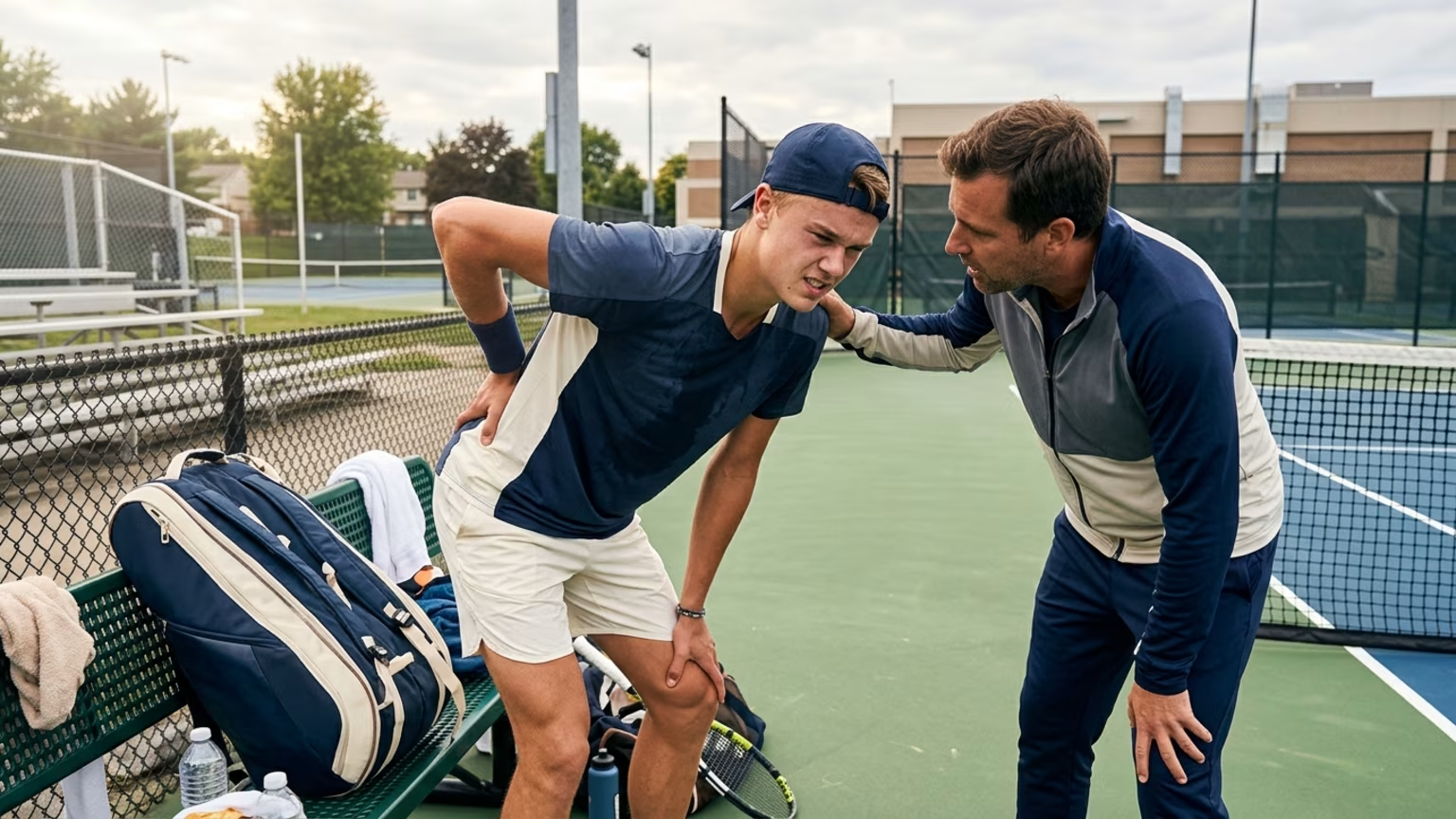
Holger Rune withdrew from the European Open with a back problem. The facts behind his decision and a grounded perspective for recreational players.

The Dink’s October 17 guide emphasizes deep returns, ball-height decisions and positioning against faster pickleball opponents.

A new report outlines padel and tennis gear trends. Learn how to assess adjustable rackets, sensor feedback and smart-court claims.
Read practical guidance for better movement, smarter preparation and a game that keeps working for you.
explore the Blog
