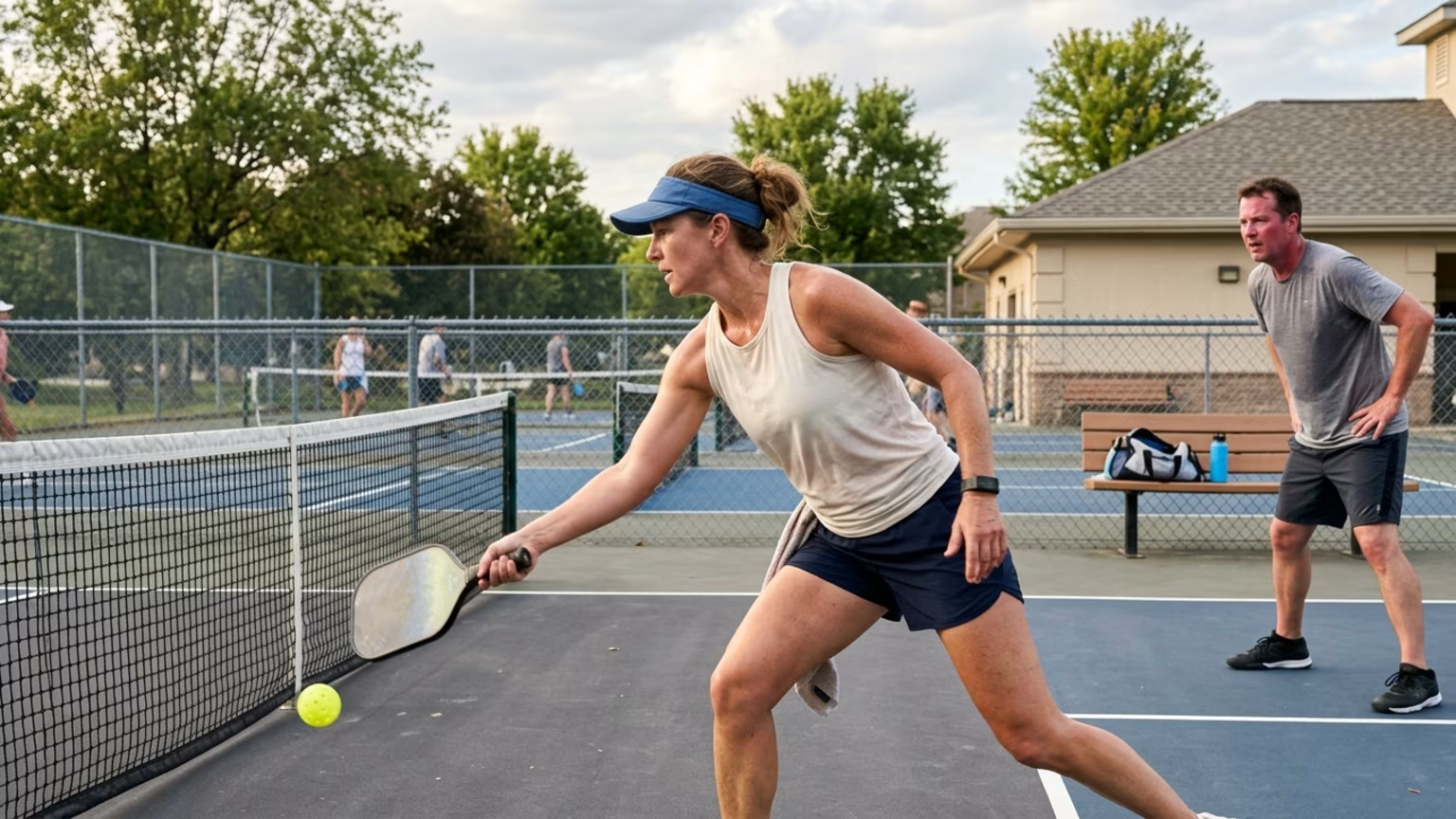

Compare the professional tennis high-volume workload approach with planned recovery strategies to help adult tennis, pickleball and padel players stay healthy.




The professional volume modality treats match play as a constant requirement. The top-level tennis circuit operates for nearly 11 months of the year. This demanding schedule includes four Grand Slam tournaments and numerous mandatory ATP Masters 1000 events. Players are expected to maintain peak physical condition throughout the entire season.
This unrelenting schedule has created visible physical consequences recently. Injuries prevented a potential meeting between Carlos Alcaraz and Jannik Sinner at three of the four Grand Slam tournaments this season. Alcaraz missed the French Open and Wimbledon because of a right wrist injury. Meanwhile, Sinner withdrew from the US Open because of a knee problem.
The physical toll extends far beyond two top players. Sinner’s absence was particularly notable because he entered the tournament as the world’s No. 1 men’s player. The injury list also included Lorenzo Musetti, Arthur Fils, Victoria Mboko and Jack Draper. Furthermore, Casper Ruud withdrew with a back injury as the tournament began.
The tournament also featured a major return outside the usual singles narrative. Serena Williams competed in doubles and mixed doubles rather than singles. She made this choice after a nearly four-year absence from the singles circuit. Her return to doubles offered a different way to participate without the extreme physical demands of singles play.
The modern game demands more from athletes than in previous eras. Fitness consultant Mackie Shilstone, who worked with Serena Williams for 14 years, noted that players have become larger, faster and stronger. This increased pace places greater stress on the body during acceleration, deceleration and directional changes. Despite improvements in sports medicine and nutrition, tennis-medicine specialist Neeru Jayanthi warned that the sport may be losing ground overall regarding player health.
The planned recovery modality directly counters the pressure of an uninterrupted calendar. It relies on strategic rest periods rather than playing through persistent discomfort. Northwell Health hand and wrist surgeon Remy Rabinovich views the increasing willingness to rest as a positive development. This behavioral shift is intended to extend playing careers instead of risking severe joint damage.
Alcaraz demonstrated this careful approach before his recent return. The defending champion returned to New York after approximately four months away from singles competition. Some coverage reported this absence as nearly five months. Alcaraz chose to stay away until he felt ready to return, and he noted that demanding practice sessions had increased his confidence in his physical readiness.
Research offers a complex view of how workload impacts professional longevity. A 2024 study in the European Journal of Sport Science examined professional matches from the 1970s through 2019. The research reported an overall increase in match retirements over that historical period. This trend suggests that cumulative physical stress may be catching up with modern competitors despite advances in injury-detection technology.
However, the evidence regarding professional injury rates remains incomplete. A 2016 study found no increase in injuries at Wimbledon between 2003 and 2012. That same study noted that published data on injury incidence in elite tennis remained limited. Despite these data gaps, Jayanthi warned that cumulative wear from years of junior competition contributes to major injuries, suggesting a clear need to reconsider youth training methods.
The physical demands of racquet sports vary significantly by the court type. Tennis players face extreme travel and five-set matches that test their explosive stamina. Adult recreational players should monitor their total court exposure instead of directly copying the professional calendar. A safe return to court requires careful progression for tennis athletes navigating these explosive athletic demands.
Pickleball players deal with a very different type of physical stress. The stop-start nature of the game places unique demands on the knees and ankles. While the court is smaller, the rapid transitional movements require excellent lower-body conditioning. Managing these short bursts of speed is essential for maintaining joint health over a long playing career.
Padel introduces complex multidirectional movement into the athletic equation. Players must react to balls rebounding off glass walls while navigating a confined space. This requires sharp rotational strength and robust joint stability. Across all three sports, modifying a session when pain alters movement mechanics is crucial for long-term participation.
Proper load management requires counting more than just competitive matches. Players should track singles, doubles, drilling, ball-machine sessions and strength training as part of their total workload. The relevant question is how many high-intensity court sessions are stacked together without adequate recovery time.
The shift in professional physical limits is closely tied to gear choices. Modern racquet technology has fundamentally changed how players strike the ball. The prevailing use of extreme topspin contributes heavily to the growing physical demands placed on players. Rabinovich noted that extreme topspin is associated with an increasing frequency of wrist injuries at all levels of tennis.
These equipment demands affect athletes playing locally just as much as touring professionals. A heavier racquet or increased string tension alters the force transferred to the arm. Adult players who adopt a more aggressive topspin swing should make those changes progressively. Sudden increases in power production with new gear can easily overwhelm the connective tissue in the wrist and forearm.
The contrast between these two approaches reveals a clear winner for the adult competitor. The high-volume professional model is designed for a completely different athletic environment. Since Roger Federer’s retirement, many Masters 1000 tournaments have shifted toward two-week events with 96-player draws. Federer noted that avoiding overplaying is easier said than done in that demanding professional system.
Professional tennis faces significant commercial incentives that encourage players to remain active. The newly announced Grand Slam Player Advisory Council is expected to consider injury prevention as part of its future remit. Fortunately, recreational players do not share these institutional pressures to compete through pain. Adopting a planned recovery modality preserves the ability to practice and compete over many healthy seasons.
There are concrete examples of success when load management is prioritized. Novak Djokovic remained a major contender at age 39 despite experiencing injuries in recent years. His continued presence highlights the strong relationship between injury management and career longevity. A well-structured weekly routine balances match play with dedicated recovery days.
A single season of excessive match play is rarely worth a chronic physical setback. Seeing Sinner undergoing new knee checks serves as a potent reminder of the toll high volume takes on elite athletes. True athletic success is measured by the ability to keep returning to the baseline year after year. The court remains a quiet constant for those who learn to rest.
Follow Evercourts for practical insights on tennis, pickleball and padel performance, movement, recovery and healthy ageing. Stay connected for new articles, research-led guidance and ideas to help you play well and keep playing for years.


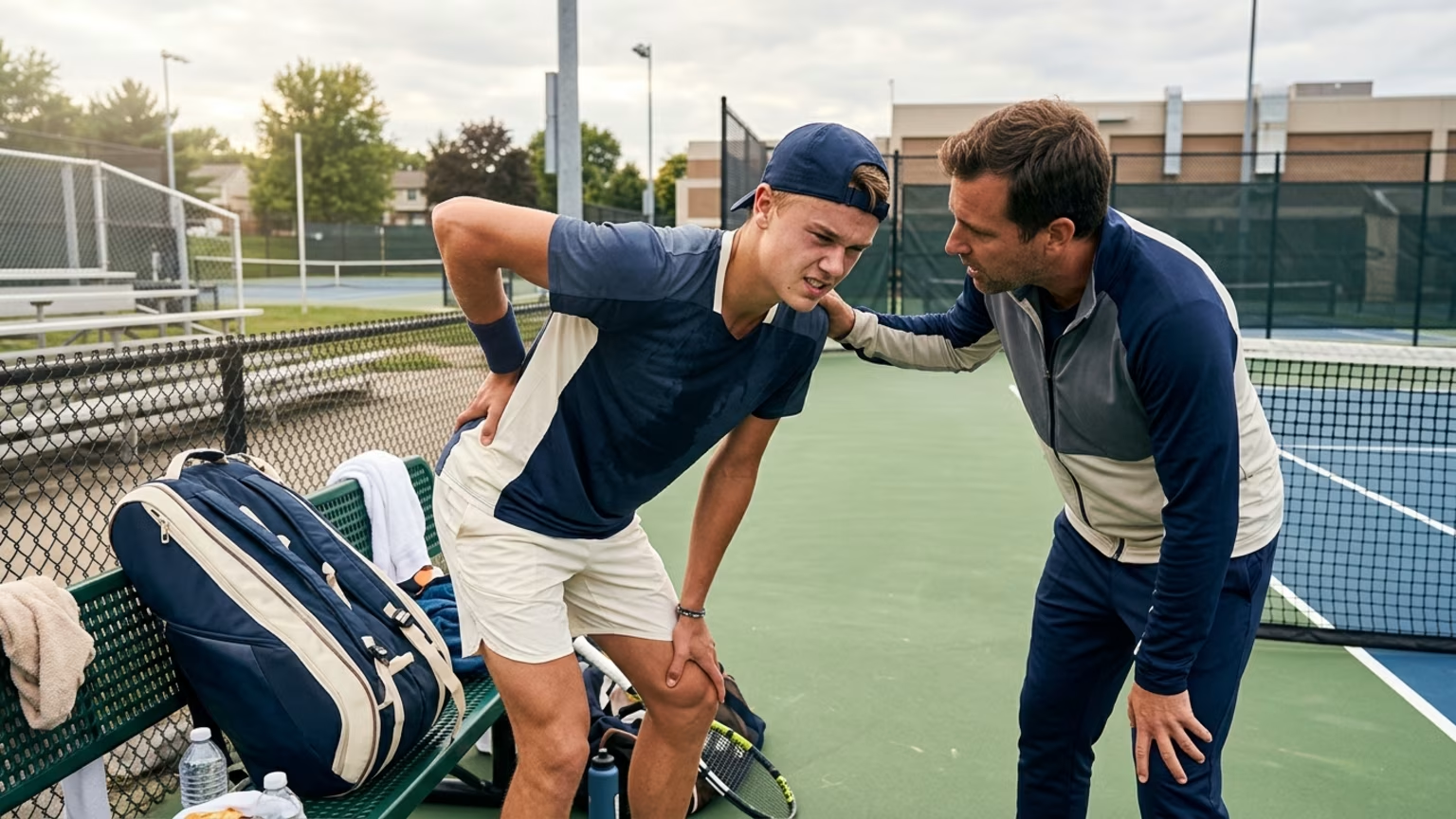
Holger Rune withdrew from the European Open with a back problem. The facts behind his decision and a grounded perspective for recreational players.

The Dink’s October 17 guide emphasizes deep returns, ball-height decisions and positioning against faster pickleball opponents.

A new report outlines padel and tennis gear trends. Learn how to assess adjustable rackets, sensor feedback and smart-court claims.
Read practical guidance for better movement, smarter preparation and a game that keeps working for you.
explore the Blog
