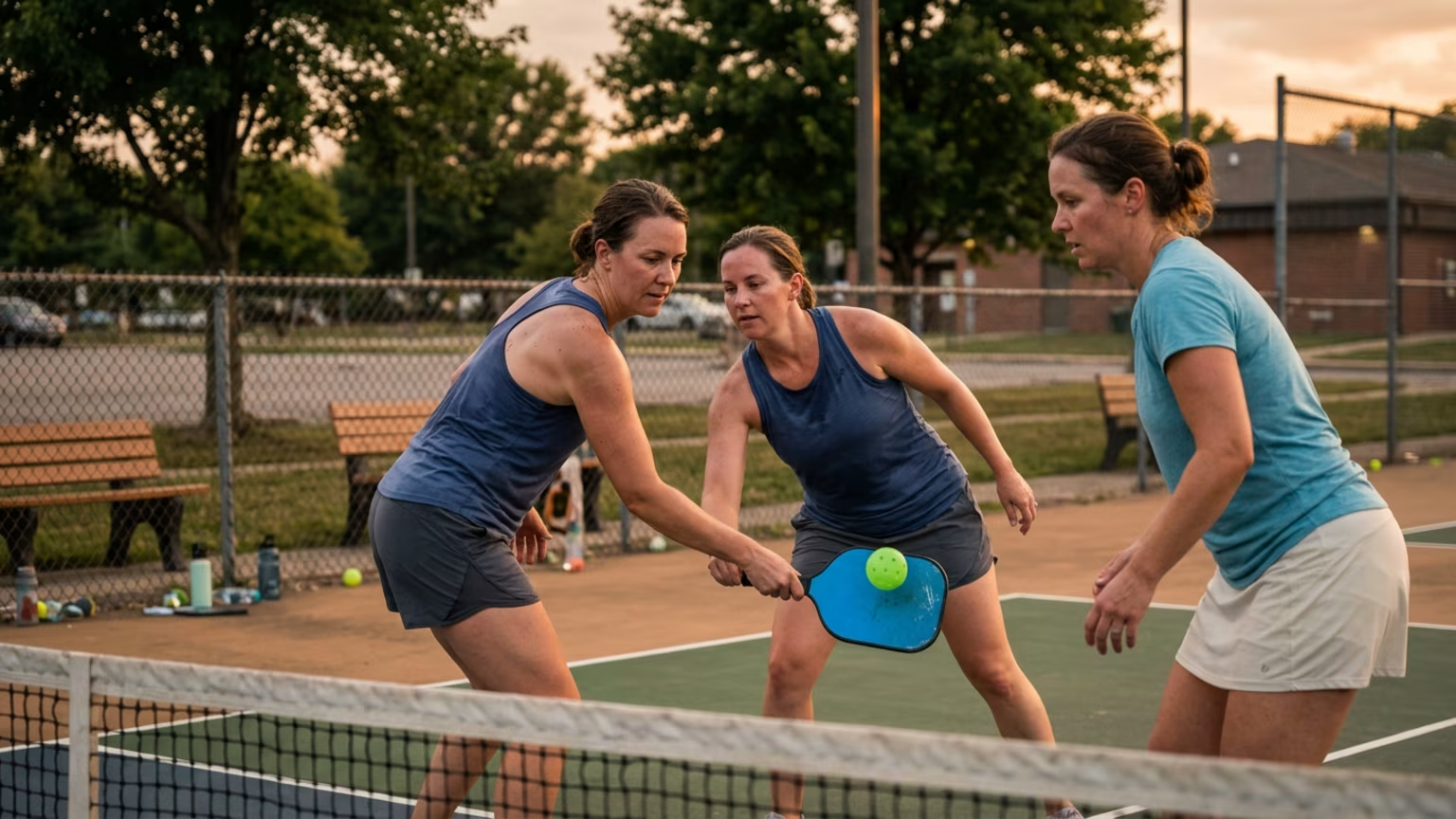

Learn why winning familiar recreational games can mask a lack of skill development, and how to use a targeted development scoreboard to improve your performance.




On October 1, 2026, The Dink published a coaching article titled "The 4.0 Pickleball Trap: You're Winning, But Are You Getting Better?" by FLiK Pickleball founder Fred Robinson. The piece addresses a common issue where intermediate players stall in their overall progression. Robinson argues that consistently winning familiar recreational games often masks a lack of genuine skill development. Players at this level tend to rely on comfortable patterns and actively avoid practicing shots that expose their weaknesses.
This announcement highlights a significant shift in how recreational players approach their limited court time. The article focuses specifically on players who have reached a competent level but struggle to advance further. It notes that leaning on reliable, safe shots can easily secure wins against familiar local opponents. However, this exact habit prevents players from acquiring the advanced tools needed for much tougher situations.
The central recommendation from Robinson is to choose one specific developmental objective before starting a play session. He strongly advises against trying to rebuild a player's entire game all at once. Instead, players should make their objective highly observable and exceptionally specific. Broad goals like trying to play better are far less effective than clear, measurable actions on the court.
For example, a player might aim to attempt a third-shot drop during each service rotation or hold the kitchen line to practice counters. Other targeted objectives include using the backhand whenever appropriate or playing on the less-comfortable side of the court. A player might even choose to deliberately direct balls toward a stronger opponent to test their defensive responses. These observable goals remove ambiguity from the practice session.
The article proposes tracking both the conventional match score and a secondary development scoreboard. This secondary metric tracks attempts at the specific skills the player wants to build during the game. By separating these two outcomes, a player can objectively evaluate their targeted practice efforts.
The article provides illustrative scores and practice examples to demonstrate this dual-tracking method clearly. For instance, a player might lose a match 11 to 8 while attempting ten purposeful third-shot drops. These figures are strictly illustrative examples rather than reported study results or measured performance outcomes. The piece supplies no formal citations, study references, methodology, or independent evidence for its coaching recommendations.
After play concludes, the article suggests engaging in a structured, honest reflection process. Players should reflect on whether they actually entered the intended pattern and what happened during those specific moments. They need to identify which tactical decisions caused trouble and decide which skill deserves attention next. This post-game review creates a continuous loop of targeted practice and deliberate evaluation for the athlete.
This coaching framework highlights a practical distinction between performance mode and development mode on the court. Performance mode focuses entirely on winning the current point and securing the immediate match victory. Development mode focuses intensely on building specific skills for future play and sustained athletic longevity. The article suggests choosing the appropriate mode based on the stakes of the match and the available learning opportunity.
For an adult recreational player, this means accepting that not every casual weekend game requires a ruthless, win-at-all-costs mentality. When the match result truly matters, the advice provided is clear and straightforward. Players should rely on the proven patterns that give them the absolute best chance to win. However, recreational sessions often provide the necessary room to experiment, fail, and grow without tournament pressure.
The article advises treating lower-stakes play as a valuable opportunity to focus on targeted skill development. A separate publication from The Dink reinforces a similar, highly disciplined approach for long-term skill acquisition. That piece recommends diagnosing a single weakness, drilling it for two to three weeks, and then testing it in live games. These recommendations translate into a simple, actionable routine for any regular player hitting the local courts.
You select one specific decision or stroke to practice before you even step onto the playing surface. After the session, you review whether you attempted the pattern and what physical result actually occurred. Keep the match score and the development goal entirely separate in your post-match evaluation. A win does not prove a targeted skill improved, and a match loss does not mean the practice session failed.
Players should view this as a practical framework rather than a guaranteed route to a rating increase. The primary article is an opinionated coaching piece by a pickleball business founder. It does not provide a numerical definition of a 4.0 rating or evidence that players at that level generally stop improving. There is no controlled comparison or measured improvement directly attributable to this specific, targeted method.
It serves as a helpful mental model rather than a substitute for qualified instruction or structured training load management. Integrating this mindset requires discipline, especially when playing against familiar recreational opponents in local leagues. It is tempting to revert to comfortable habits when a match gets close or competitive banter begins. However, prioritizing development mode during casual play builds the resilient techniques needed for higher-level competition.
This approach pairs extremely well with resources like our 12-minute court-ready warm-up to ensure your body is prepared for new movement patterns. Targeted practice requires physical readiness just as much as mental focus, helping players stop faster and recover better during intense rallies.
The conversation around skill plateaus signals a maturing training culture within recreational racquet sports today. As more players look to sustain their involvement and improve their capabilities, casual play will increasingly resemble structured practice. The heavy reliance on purely playing matches for improvement will likely shift toward more intentional, objective-driven court sessions. This evolution perfectly mirrors the established training routines and coaching philosophies seen in competitive tennis and padel communities.
Expect to see a growing emphasis on deliberate practice frameworks across local courts and regional club programs. Players will continue to separate their casual, skill-building sessions from their competitive, highly result-oriented tournament matches. This clear distinction helps players maintain their physical capabilities and athletic longevity without burning out on constant competitive stress. The shift toward mindful practice ensures players can keep enjoying the sport, refining their mechanics, and performing well for years to come.
Follow Evercourts for practical insights on tennis, pickleball and padel performance, movement, recovery and healthy ageing. Stay connected for new articles, research-led guidance and ideas to help you play well and keep playing for years.


An evidence check on sports supplements like tart cherry juice. Learn why racquet sports players should prioritize core nutrition over functional foods.
In late 2026, Oura analyzed wearable data to see how recreational tennis impacts heart health and recovery. Learn what this means for your athletic longevity.
Recent guidelines emphasize gradual progression, dynamic warm-ups, and scheduled recovery to help adult racquet sports players maintain athletic longevity.
Read practical guidance for better movement, smarter preparation and a game that keeps working for you.
explore the Blog
