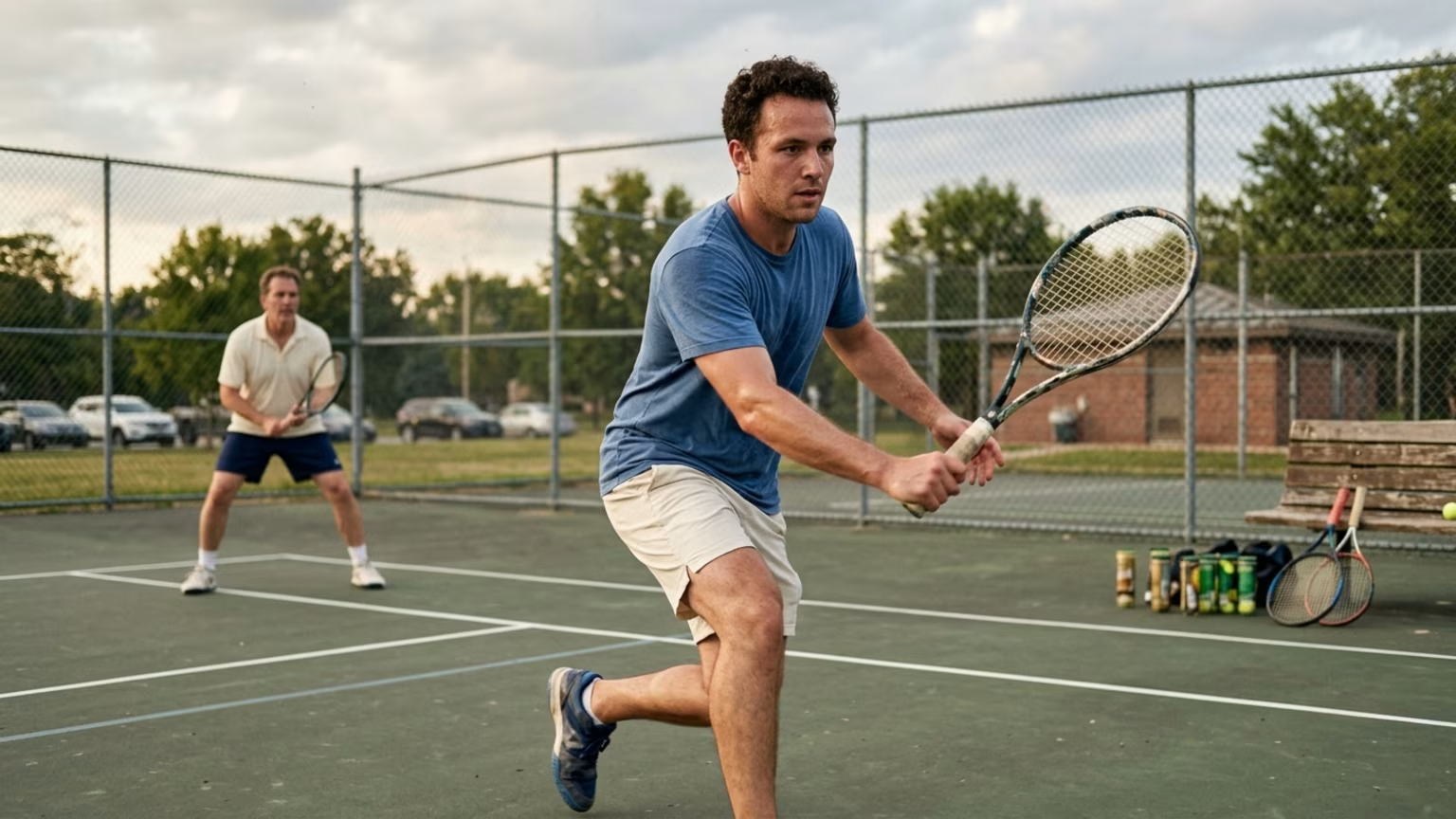

Compare the volume and structured budgeting modalities for tennis, pickleball, and padel. Learn why a planned financial approach supports athletic longevity.




The volume-first financial approach is highly common in growing racquet sports. Players using this method try to squeeze as many hours on court as their schedule allows. They often skip professional instruction, avoid premium club fees, and rely heavily on open community play. The primary goal is finding the cheapest hourly rate to play four or five times a week without calculating the long-term impact on their joints.
From a physical standpoint, this relentless pursuit of court time frequently backfires. When players maximize their playing volume without investing in technique or recovery, they accumulate significant physical stress. Unstructured open play encourages jumping straight into competitive points without a proper physical transition. This lack of pacing often results in repetitive strain that forces players off the court completely.
When I first started playing pickleball, I noticed how many people skipped warming up entirely. They would jump straight out of their cars and right up to the kitchen line. I tried doing that and immediately pulled a calf muscle.
Pickleball requires just as much explosive lateral movement as tennis, just in a tighter space. Since then, I always spend five minutes doing dynamic lunges and ankle rolls. It changes everything about how confident I feel pushing off the baseline.
That physical preparation is precisely what the volume approach tends to ignore. Players rush to maximize their paid hourly slot, skipping the necessary physical transitions. Spending a few moments on a structured court warm-up protects your joints for the long haul.
The structured budgeting modality treats a racquet sports habit as a comprehensive lifestyle investment. Instead of buying as many hours as possible, players allocate their budget toward annual club memberships, tactical coaching, and essential equipment. This method deliberately moderates court volume in favor of predictable, high-quality sessions. Financially, this means calculating the value of a membership based on off-peak pacing and discounted lesson rates.
Physically, the structured approach pays massive dividends over an athletic lifespan. By paying for occasional professional instruction, players refine their movement mechanics and avoid compensating for poor technique. A structured budget inherently builds in rest and recovery because players are not chasing every available free hour. Knowing your court time is secured allows you to listen to your body instead of forcing a session just because the public courts are empty.
I used to think a tough conditioning block was the only way to improve my court endurance. Then I started tracking my sleep. I noticed that on days I slept less than six hours, my reaction time at the net was noticeably sluggish, and I felt gassed by the second set.
Prioritizing consistent rest did more for my late match stamina than any extra sprints ever did. Recovery is the true foundation of performance. Structured budgeting supports this mindset by treating rest days as valuable parts of the routine. You avoid the financial guilt of missing a day because your membership absorbs the cost over an entire year.
The explosive demands of tennis make the structured budgeting approach almost essential. A player navigating the heavy serves and wide baseline sprints of tennis needs proper technical grounding to protect their shoulders and knees. Setting aside budget for regular string replacement and periodic coaching is vital for sustaining power safely. Spending exclusively on raw court volume in tennis often accelerates joint fatigue.
Pickleball features a pronounced stop-start nature that creates a different set of physical challenges. With figures attributed to SFIA showing participation reached 24.3 million U.S. players in 2025, up from 4.2 million in 2020, volume-heavy open play dominates the culture. However, players who select the right competition for their season rather than playing daily open sessions manage the tight, repetitive braking forces much better. A structured routine ensures your knees get the rest they require.
Padel introduces complex, multidirectional movement involving glass walls and unique court geometries. SFIA estimates showed 1.073 million U.S. players in 2025. Because padel relies so heavily on reading rebounds and rotating through the hips, structured access is critical. A structured budget that includes dedicated off-peak club time allows padel players to practice these specific movements without the chaotic pressure of constant match play.
Evaluating these two approaches requires looking at actual facility prices and equipment costs. Facility access models illustrate why chasing free options can be deceiving in the long run. Victory Pickleball lists individual annual memberships of $498 for Gold and $174 for Silver, while its Bronze option is free. However, posted court-reservation prices range from $22 to $48 per court per hour for Bronze members.
Gold members pay $8 to $24 per court per hour. This highlights the hidden trap of the volume approach. Playing frequently on a free tier quickly outpaces the cost of a structured annual membership. Tennis facilities follow similar tiered pricing models to balance court utilization and reward consistent commitment.
Farmers Bank Fieldhouse lists an annual tennis membership at $250. This membership reduces standard court rental from $32 to $24 per court per hour. Weekday daytime rental is offered at $10 per court per hour. Structured players use these off-peak rates to pace their physical workload across the week.
Padel pricing is frequently structured around per-person rates rather than per-court rentals. Charlotte Padel Club lists member court rental at $10 per person per hour off-peak and $15 during peak periods. The same club lists open play at $25 for a 90 to 120 minute session. Paying for structured club access often limits chaotic open play and lowers the risk of acute injury.
Equipment and competition fees also dictate where your budget goes. HEAD lists a pickleball backpack at $79. This represents just one initial accessory cost before adding paddles and shoes. Players must also budget for consumable gear like balls, apparel, grips, and protective equipment.
Tournament entries quickly compound for competitive players. A 2026 adult tennis tournament in Maryland listed singles entries at $55 and doubles entries at $30. Meanwhile, a national-level grass-court event in Rhode Island listed a $155 entry fee per event. These expenses demonstrate why a structured budget is necessary.
When the goal is playing consistently for decades, the structured budgeting approach is the definitive winner. Treating your sports budget as an investment in quality rather than a simple hourly expense changes how your body responds to the game. It encourages players to build a sustainable longevity game plan that values proper recovery and technical instruction.
Players who allocate funds toward off-peak memberships, appropriate footwear, and strategic coaching experience fewer overuse issues. Maximizing sheer court volume inevitably ignores the physical cost of repetitive stress. By adopting a structured financial approach, you ensure your body remains just as ready for the court as your wallet.
Follow Evercourts for practical insights on tennis, pickleball and padel performance, movement, recovery and healthy ageing. Stay connected for new articles, research-led guidance and ideas to help you play well and keep playing for years.


An evidence check on sports supplements like tart cherry juice. Learn why racquet sports players should prioritize core nutrition over functional foods.
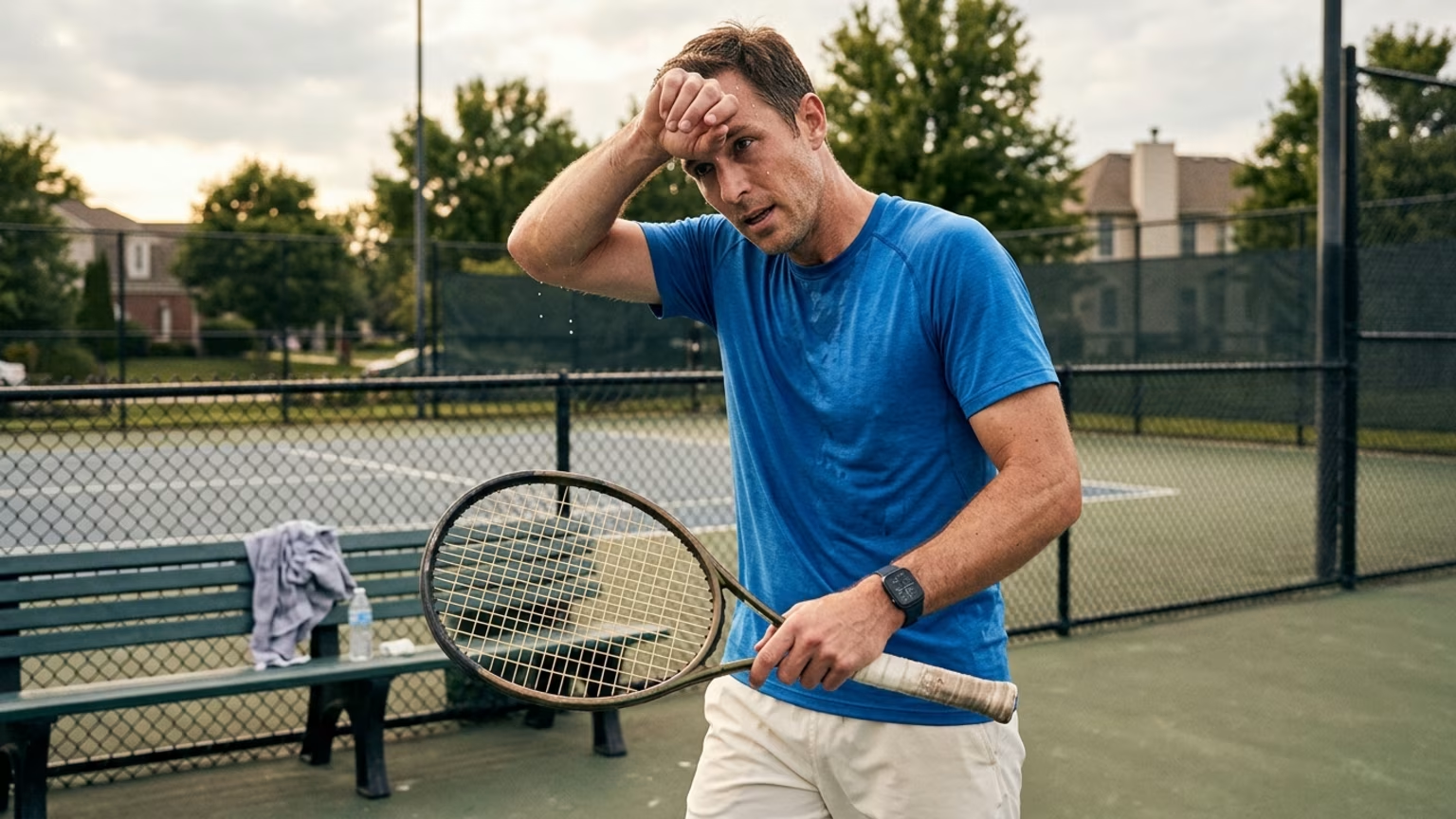
In late 2026, Oura analyzed wearable data to see how recreational tennis impacts heart health and recovery. Learn what this means for your athletic longevity.
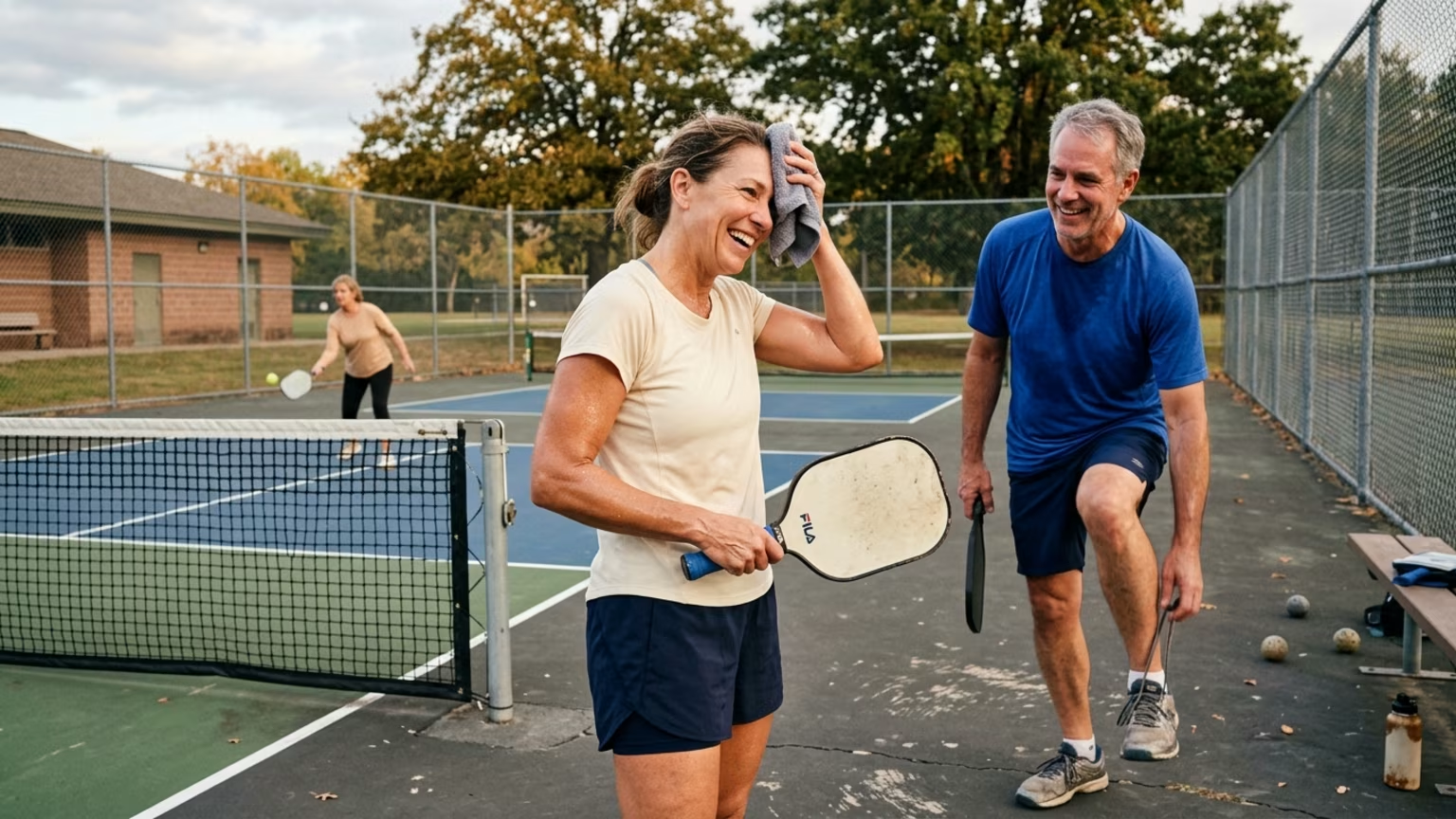
Recent guidelines emphasize gradual progression, dynamic warm-ups, and scheduled recovery to help adult racquet sports players maintain athletic longevity.
Read practical guidance for better movement, smarter preparation and a game that keeps working for you.
explore the Blog
