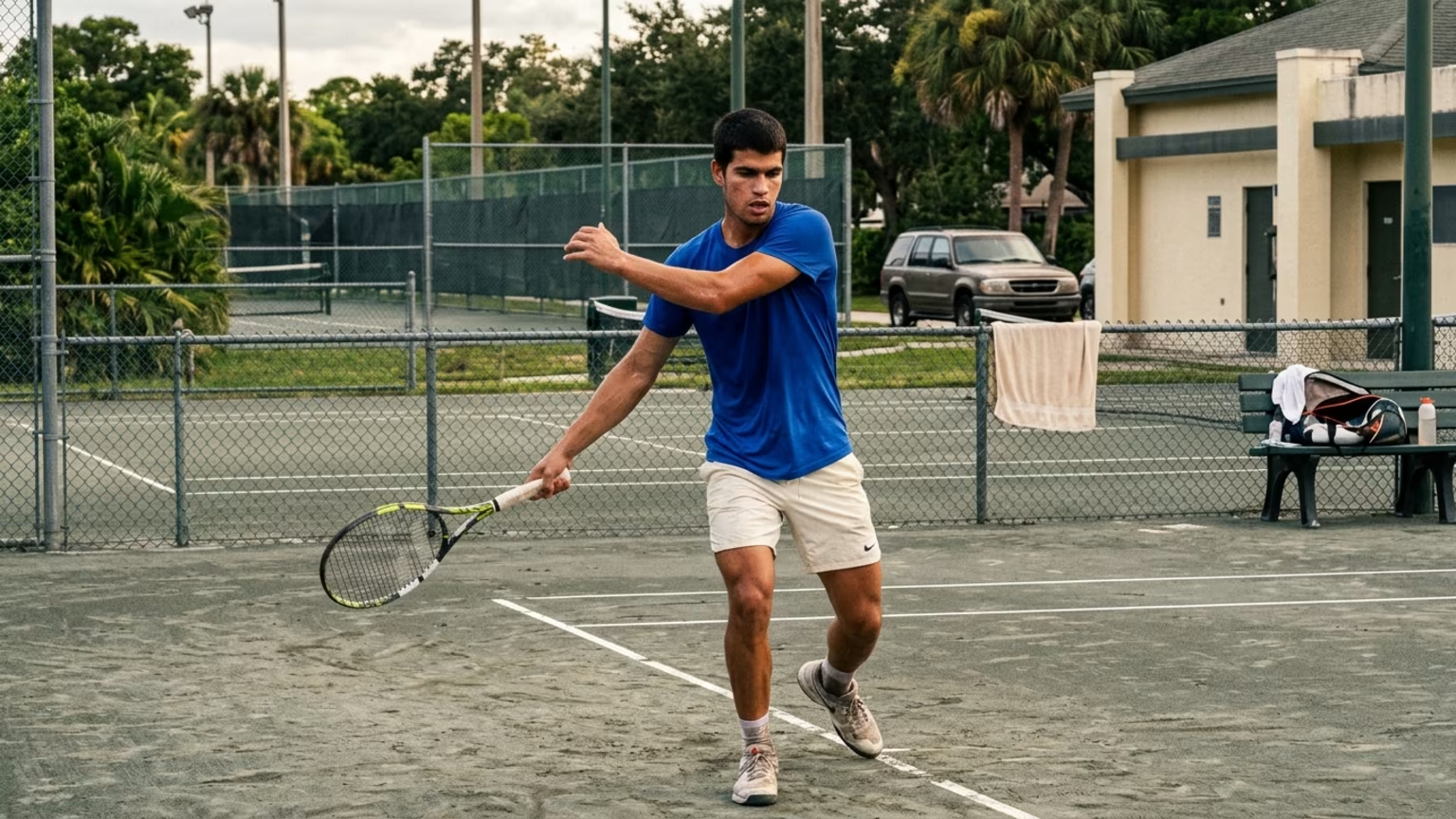

Carlos Alcaraz plans to extend his tennis career by prioritizing recovery and scheduled breaks. See how adult players can apply these simple workload habits.




On September 7, 2026, Carlos Alcaraz announced his intention to extend his professional tennis career for the next 10 to 15 years through a renewed focus on recovery and healthy off-court habits. In a published interview, the 23-year-old defending U.S. Open champion stated that he wants to protect both his mental health and his body. He explained that taking care of his physical and mental well-being is essential if he is to sustain a long career on the professional tour.
The Spanish player detailed how he has been highly focused on recovery with his team. He emphasized the importance of maintaining a healthy lifestyle away from the court so that he is consistently ready for the next round. His goal of playing for another 10 to 15 years is a personal aspiration, rather than a medical prediction that any specific routine guarantees a longer career.
The recent comments from Alcaraz came after a four-month absence caused by a right-wrist injury. An Associated Press report noted that he had not played since April and had withdrawn during the Barcelona Open. His return to the court at the 2026 U.S. Open proved successful. Alcaraz defeated Wu Yibing with scores of 6 to 3, 6 to 4, and 6 to 1 to advance to the fourth round of the tournament.
Following his return, Alcaraz said he felt better than expected and had experienced no setbacks after his matches. He admitted he was surprised by how well his body was recovering. Despite this positive outcome, he plans to take more breaks during future seasons. He indicated he will potentially miss tournaments and take deliberate breaks of one or two months rather than trying to play the entire calendar year.
He emphasized that these future breaks would not necessarily mean he had been overplaying. The Associated Press reported that he explicitly stated the recent wrist injury was not caused by playing too much. Instead, his stated rationale for taking strategic time off includes dedicated mental preparation, general physical well-being, and preserving his enjoyment of competition.
Alcaraz noted that he does not need to play a large number of tournaments. His primary goal is to feel mentally and physically healthy when competing at major events and Masters 1000 tournaments. His decision illustrates the difference between rehabilitation from a specific injury and general workload management across a demanding season.
The professional environment differs substantially from the reality of adult recreational players. The Associated Press reported that Alcaraz played 80 matches in the previous year and finished with a record of 22 wins and 3 losses in that period. Adult club players do not face those extreme volume demands, nor do they possess a dedicated professional medical team. However, amateurs can still learn from his commitment to managing training, competition, and rest as one complete system.
Tennis has been associated with physical, social, and mental-health benefits in material cited by the United States Tennis Association. While that promotional source does not establish that every player will experience identical outcomes, it highlights the immense value of staying active on the court. Achieving this athletic longevity requires treating recovery as a central part of the training process itself. A practical recovery guide recommends monitoring fatigue, pain, mood, and performance to gauge your physical readiness.
For adult players, the goal is not to copy a professional workload. Instead, players should prioritize consistent sleep and fundamental recovery habits. Recent sports-recovery reviews describe sleep as central to physical and mental recovery, adaptation, and performance. These clinical reviews characterize other recovery methods as complementary rather than substitutes for adequate sleep. Inadequate sleep is directly associated with greater fatigue and an increased risk of injury. Taking time to map out balancing match play and recovery in adult tennis is a foundational step for healthy aging.
A recent review of elite-athlete mental health summarized guidance for improving sleep and circadian health. Approaches include sleep education, regular screening, schedule modification, and adaptation to travel. Managing racquet sports workloads and recovery while traveling is particularly relevant when competing in weekend tournaments. These principles highlight that mental freshness is just as important as physical readiness for long-term participation.
Adult players should schedule easier days when accumulated fatigue suggests the body is not absorbing additional workload. Building reliable meals and hydration into the plan around matches is another simple, effective habit. Players should keep strength and conditioning in their routine, but they should not use physical training to compensate for inadequate recovery. The defensible message from professional examples is balance, rather than simply replacing all training with rest days.
It is also critical to remember that Alcaraz’s successful wrist rehabilitation was managed in a highly controlled environment. Adult players should clearly distinguish ordinary post-match fatigue from persistent pain, repeated night pain, or a loss of function. Those specific symptoms require assessment by a qualified medical professional. Returning gradually after an injury, much like Sinner’s knee recovery prioritizes gradual loading, ensures a safer and more sustainable transition back to competitive play.
The scheduling adjustments planned by Alcaraz reflect an ongoing discussion in professional tennis about the physical demands of a long season. The Professional Tennis Players Association recently stated that the professional calendar was reducing available recovery time. The PTPA said it had analyzed injury data from more than 30,000 professional matches across eight years to reach this conclusion.
According to the players organization, reported upper-body injuries were 42 percent higher in the first quarter of 2026 than in the same period of 2025. Furthermore, the PTPA reported that arm injuries were 112 percent higher than the 2025 seasonal average. While these figures represent statements from the PTPA rather than an independently adjudicated consensus, they highlight the intense debate regarding workload and player health.
The PTPA argued that reduced recovery time was contributing to injuries occurring earlier in the season and becoming more serious. The association's analysis provides important context for why elite players are increasingly vocal about protecting their bodies. Even if a specific injury is not caused directly by overplaying, the compounding stress of a dense competitive calendar requires proactive management.
The upcoming tennis calendar will likely see more top-ranked players adopting highly selective schedules to preserve their physical capabilities. Strategic tournament withdrawals and dedicated preparation blocks of one or two months will become standard practice for athletes targeting peak performance at major events. This shift demonstrates that elite professionals are viewing scheduled rest as an active performance strategy rather than a passive necessity. As the tour moves forward, Evercourts expects disciplined workload management to become just as prominent as tactical skill in discussions about sustainable success on the court.
Follow Evercourts for practical insights on tennis, pickleball and padel performance, movement, recovery and healthy ageing. Stay connected for new articles, research-led guidance and ideas to help you play well and keep playing for years.


Understand how coverage, playing format and wall rebounds shape tennis, pickleball and padel movement, with research context for long-term play.

Plan the move from league night to tournament weekend with practical answers on practice, recovery, travel, meals and match-day arrangements.

Put tennis point timings in context, track court and strength work, and compare your activity without borrowing workload targets from other sports.
Read practical guidance for better movement, smarter preparation and a game that keeps working for you.
explore the Blog
