

An $80 million proposal aims to redesign Miami's Crandon Park, shifting its racquet sports mix to include 27 tennis courts and 16 pickleball and padel courts.




On October 2, 2026, reports revealed a proposed $80 million redevelopment plan for Miami's Crandon Park that would fundamentally shift its historic racquet facilities. The proposal remains in the planning stage, with private organizers actively meeting with government officials to build necessary support. If approved, the sweeping plan would replace the park's 37 existing tennis courts with a newly configured mix of 27 tennis courts, eight pickleball courts and eight padel courts. This structural change aims to update a prominent local venue while introducing a multi-sport model.
The racquet sports plan would consolidate the currently divided courts into one centralized footprint featuring a small clubhouse. Right now, the tennis courts are split across two separate areas, with one section uniquely surrounded by the local golf course. Bringing the facilities together creates a more unified racquet complex for athletes. This physical consolidation reduces the total tennis footprint by 10 courts while introducing 16 dedicated courts for pickleball and padel combined.
The wider $80 million proposal also targets necessary environmental and structural updates across the property. Plans include rebuilding and elevating the existing golf course to directly address persistent surge flooding. Organizers have also proposed a three-story clubhouse that would feature a restaurant, a bar, locker rooms and an observation deck. These upgrades suggest a major shift toward premium public amenities, though the timeline for these changes remains unconfirmed.
Under the proposed model, Miami-Dade County would continue to manage both the golf and racquet facilities. However, a private entity would handle the golf course maintenance through a separate arrangement funded by course revenue, according to reporting from the Miami Herald and World Red Eye. Organizers told the Miami Herald that the upgrade is intended strictly for public enjoyment. They stated that donors would not receive special access in exchange for their financial gifts.
Despite these public access assurances, the World Red Eye report notes that a higher-priced patron program could potentially offer earlier tee-time reservations for golfers. For racquet players, the exact details regarding membership fees and court booking rules are completely unresolved. The available reporting does not specify whether similar priority booking structures might apply to the tennis, pickleball or padel courts.
For decades, Crandon Park was firmly established as a site of professional tennis prestige. The venue famously hosted the Miami Open until the tournament officially relocated to Hard Rock Stadium in 2019. Under this new proposal, the redesign would completely remove the 14,000-seat stadium that once defined the park's global identity. While purists might mourn the loss of historic tennis infrastructure, adult recreational players operate in a very different reality.
Massive professional stadiums often sit unused for most of the calendar year, providing zero practical value for amateur athletes trying to maintain their weekly playing habits. Removing an aging 14,000-seat stadium to build active, accessible courts makes logical sense for a community focused on daily athletic longevity. A towering grandstand does not help a weekend league player secure a Tuesday night match or find a reliable practice wall. The true value of a facility lies in its daily utility, not its past professional glory.
The introduction of pickleball and padel reflects a necessary modernization of community spaces to match current player interests. However, new sport options do not automatically establish equal access or guarantee court availability for casual play. Local players evaluating this plan should focus heavily on how court time will be allocated among the three distinct sports. Transitioning from a sprawling professional layout to a mixed-use amateur hub can drastically improve the community experience if the final pricing supports regular play.
For athletes managing a busy schedule, predictable facility access is the foundation of a successful routine. Players trying to follow a sustainable weekly training plan need venues that prioritize reliable booking over exclusivity. The proposed mix at Crandon Park signals a modernized approach, but the execution of its public access model will determine its true worth to the amateur athlete.
The proposed reallocation of 10 tennis courts to create a combined 16 pickleball and padel courts highlights a growing regional demand for varied racquet sports. A September 2026 report from PadelBrowser counted about 214 open padel courts spread across 38 clubs in eight Miami-Dade cities. That same industry database identified six additional projects in the region that would add 45 more courts if completed.
These numbers provide vital context for why an $80 million public park proposal would sacrifice traditional tennis inventory for alternative courts. Consolidating 16 non-tennis courts into a prominent county facility validates the permanent presence of padel and pickleball in the Miami market. While these specific figures explain the organizers' proposed court ratios, they do not forecast whether the remaining 27 tennis courts will adequately serve existing local demand.
Count comparisons alone cannot determine if this new supply will relieve local booking pressures across the county. The available event coverage does not measure the proposal's potential effects on participation rates or physical performance metrics for the community. For adults hoping to stay active, the primary relevance of this proposal is about facility choice rather than a demonstrated health outcome. Consistent access is what allows athletes to implement a proper aerobic base for racquet sports over time.
Because this $80 million plan remains strictly in the early planning stages, local players should expect extensive public discussions before any construction begins. The core issue to monitor over the next year is not just the final court count, but rather the operational rules that will dictate daily public access. Organizers have repeatedly stressed that the facility will remain open to the public, yet the specifics of reservation fees and programming allocations are still missing.
If the proposal eventually gains full government approval, the execution of the new patron program will set a lasting precedent. It will demonstrate how public and private funding models can effectively share community recreational spaces without alienating casual players. Until a final agreement explicitly details the booking terms and operating hours, the practical effect on daily racquet sports availability remains completely uncertain.
Ultimately, the evolution of Crandon Park will test whether shifting from a pure tennis facility to a multi-sport model benefits the everyday athlete. As the local market continues to add padel and pickleball inventory, players must wait to see if this high-profile park delivers functional, affordable access. Preparing an effective weekly recovery plan for racquet sports requires regular playing time. The final terms established at Crandon Park will directly dictate how easily Miami residents can maintain their active routines.
Follow Evercourts for practical insights on tennis, pickleball and padel performance, movement, recovery and healthy ageing. Stay connected for new articles, research-led guidance and ideas to help you play well and keep playing for years.


An evidence check on sports supplements like tart cherry juice. Learn why racquet sports players should prioritize core nutrition over functional foods.
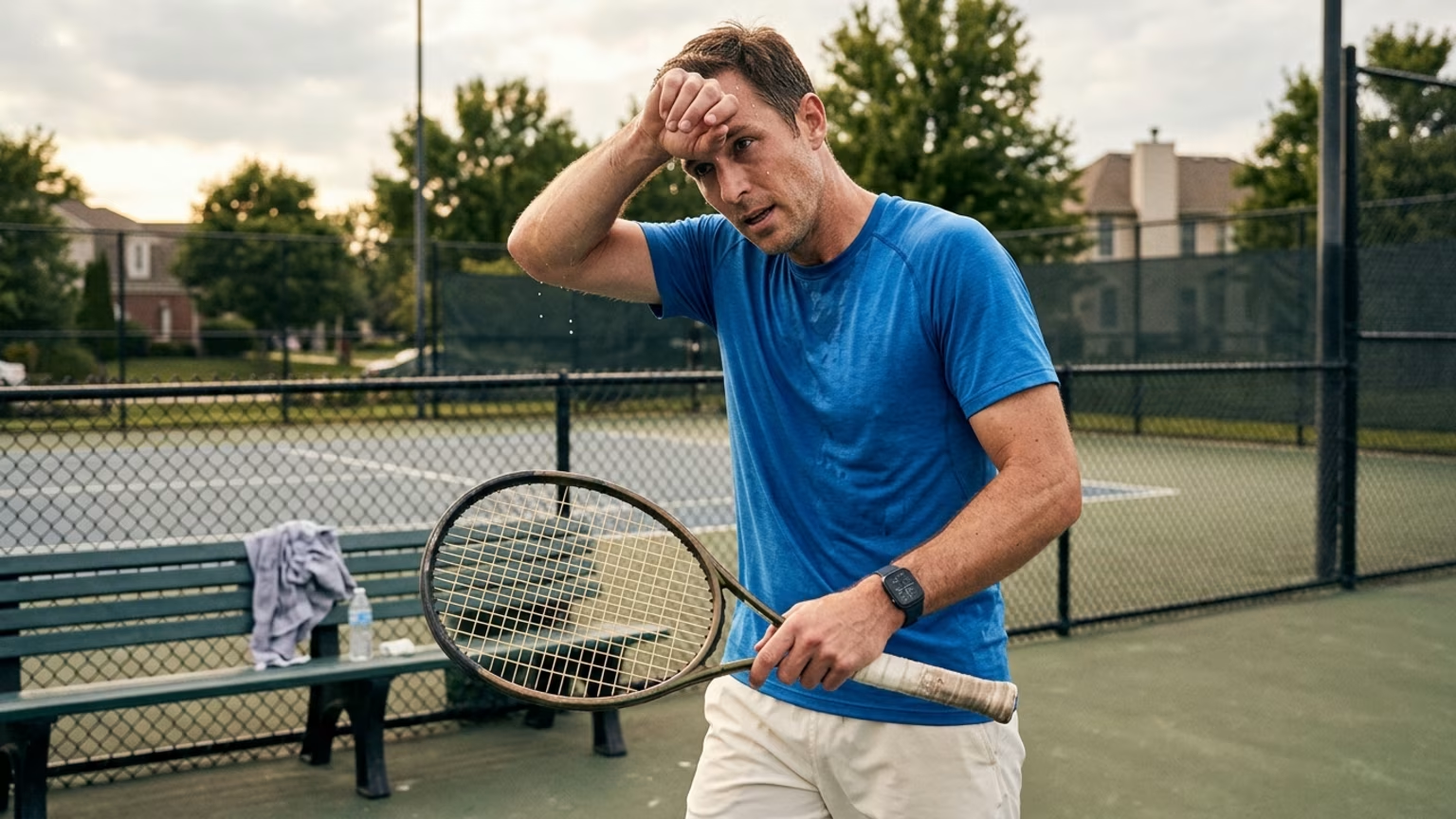
In late 2026, Oura analyzed wearable data to see how recreational tennis impacts heart health and recovery. Learn what this means for your athletic longevity.
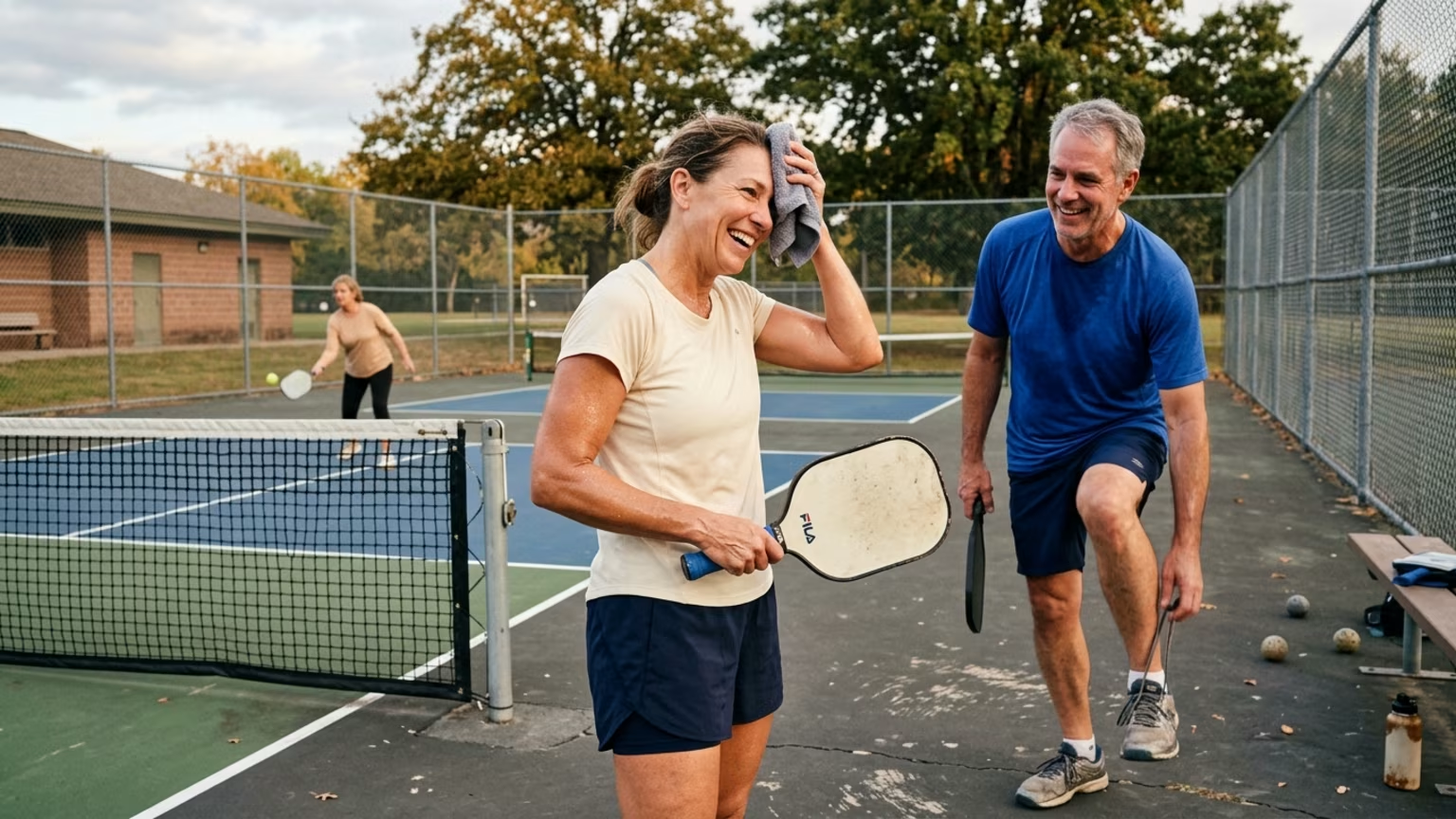
Recent guidelines emphasize gradual progression, dynamic warm-ups, and scheduled recovery to help adult racquet sports players maintain athletic longevity.
Read practical guidance for better movement, smarter preparation and a game that keeps working for you.
explore the Blog
