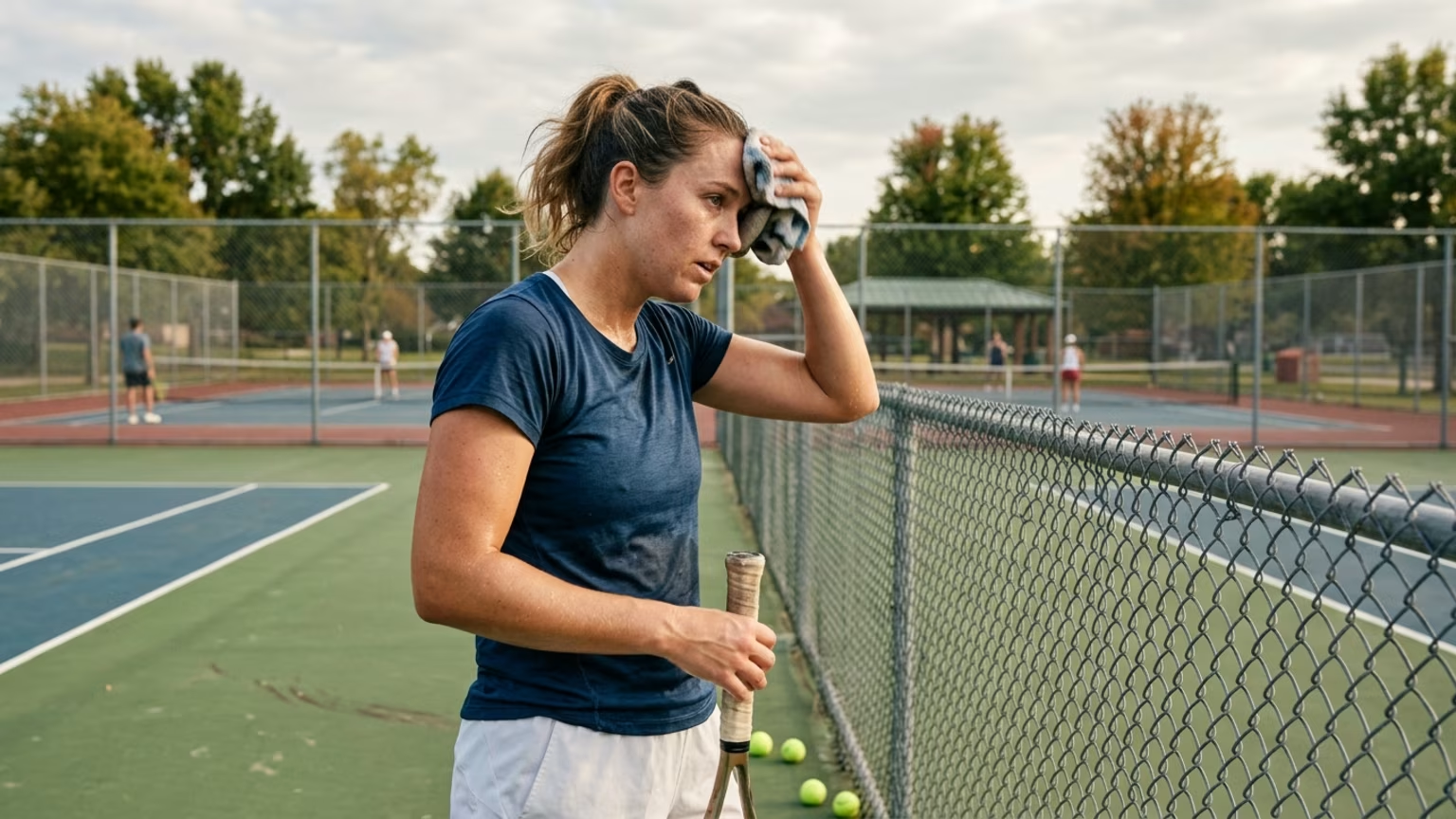

A September 2026 feature details safe creatine use for adult racquet athletes. We review the evidence on dosage, safety, and physical performance benefits.




On September 14, 2026, the Daily Maverick published a feature examining what creatine monohydrate can and cannot do for athletes. The report separates well supported exercise benefits from speculative claims regarding cognitive function, cardiovascular protection, and healthy aging. The article identifies tennis and squash as sports where repeated explosive efforts make the supplement highly relevant. This distinction provides clear parameters for players seeking reliable sports nutrition guidance without unnecessary fitness hype.
The feature outlines exactly how creatine functions during high intensity exercise. Increased muscle creatine and phosphocreatine stores help regenerate adenosine triphosphate. This molecule acts as the immediate energy source used during intense muscular work. This process potentially allows an athlete to repeat hard efforts with less performance drop off over a long match.
Sports and exercise medicine physician Dr Lervasen Pillay states that the evidence for improving performance in these explosive bursts is well established. He clarifies that the key factor is the type of effort rather than the specific sport label. Creatine is most relevant to activities involving repeated short duration power efforts.
The article emphasizes a highly practical daily dose of 3 to 5 grams of creatine monohydrate. An optional loading phase of 20 grams daily is also described in the feature. This protocol involves dividing the amount into four daily doses for five to seven days. However, the feature makes it clear that this intensive loading phase is not strictly necessary for eventual success.
Consistency matters far more than taking a dose immediately before a match or workout. The article recommends taking it daily to build up muscle stores gradually. Taking large single doses on an empty stomach may cause unwanted digestive discomfort. Taking creatine with a meal or after training may make adherence easier for busy adults.
Registered dietitian Marie MacGregor notes that creatine monohydrate holds a strong safety record at recommended doses for healthy adults. She adds that it is one of the most extensively studied sports supplements available today. The monohydrate format is presented as the simplest option because it is used in most research. It is also generally less expensive than alternative formulations on the market.
Professional athletes often view supplementation through the lens of massive training volumes. South African sprinter Akani Simbine takes approximately 5 grams daily to support his explosive training. However, he also notes that the associated water weight gain can be unsuitable for certain performance demands. Former Springbok prop CJ van der Linde experienced weight gain and cramps before discontinuing his use.
These accounts illustrate that individual responses and sport specific priorities differ heavily among athletes. For the adult recreational player, these professional experiences offer a critical reality check. Creatine is not an instant performance enhancer that you take right before walking onto the court. It requires consistent daily use over three to four weeks to assess any noticeable benefit.
A weekend tennis player must evaluate if feeling slightly heavier impacts their court coverage and agility. The extra mass might help a professional manage heavy lifting blocks, but amateur players often prioritize movement economy. Runner Nick Bester reports faster track session times and greater strength after beginning creatine supplementation. Simbine similarly reports better training quality and improved workout volume.
These remain individual experiences rather than proof of a uniform effect for every tennis or padel player. Dietitian Nicki de Villiers emphasizes that supplements cannot compensate for poor nutrition or inadequate sleep. Bester similarly points out that supplementation only produces value when combined with appropriate eating and hard training. A weekend league player should focus on consistent fundamentals before worrying about supplement timing.
I remember when I first started playing pickleball and noticed how many people skipped warming up entirely. They would jump straight out of their cars and right up to the kitchen line. I tried doing that and immediately pulled a calf muscle during a quick return. Pickleball requires just as much explosive lateral movement as tennis does in a much tighter space.
Since then, I always spend five minutes doing dynamic lunges and ankle rolls before a match. It changes everything about how confident I feel pushing off the baseline during competitive points. That same explosive demand makes muscle stores relevant, but they only work alongside a sustainable training week. Consistent physical preparation will always outrank finding the perfect supplement dose.
The evidence base provides specific parameters for older adults looking to maintain their athletic longevity. A 2026 meta analysis of 11 randomized controlled trials evaluated creatine combined with resistance training in generally healthy older adults. The review found a small but statistically significant improvement in overall muscle strength. However, the pooled effects on muscle mass and physical function were not statistically significant.
The findings for broad physical function improvements carried low or very low certainty among the reviewed studies. This data suggests the supplement should be viewed strictly as an adjunct to sustainable strength programs. It is not a standalone solution for preserving muscle or athletic capability as we age. The article explicitly separates established strength benefits from unproven claims about Alzheimer disease or cancer treatments.
Early weight gain is generally described as water associated with increased muscle creatine storage. It is typically not an immediate increase in body fat or pure muscle fiber. Subsequent resistance training may contribute to actual lean mass gain over time. Players should monitor their court movement over several weeks to ensure this extra mass does not hinder agility.
Safety and compliance require careful attention from competitive adult athletes testing new supplements. The article recommends checking that any specific batch has been rigorously tested for prohibited substances. Certifications like Informed Sport help reduce the risk of accidental contamination from undeclared ingredients. MacGregor sees little reason to continue use if no measurable benefit is apparent after four weeks.
Players must also pay attention to regular fluid intake during hot weather and demanding training sessions. This aligns perfectly with smart pacing protocols to avoid fatigue, though excessive water consumption is not advised. Hydration advice should remain proportionate to the actual exertion level on the court. Finally, people with existing kidney disease must consult a clinician before starting any supplementation.
Expect sports nutrition discussions in racquet sports to become increasingly conservative and evidence based over the next season. As older adults seek to maintain their physical capabilities, the focus will shift toward pairing supplements directly with structured resistance training. Players will likely abandon the search for quick fixes in favor of consistent physical preparation. The conversation will move past general supplementation and focus strictly on supporting the specific explosive demands of court movement.
Follow Evercourts for practical insights on tennis, pickleball and padel performance, movement, recovery and healthy ageing. Stay connected for new articles, research-led guidance and ideas to help you play well and keep playing for years.


A recent live-play test of a silent pickleball highlights its value for practice, but standard balls still perform better for match play and power control.

An evidence check on sports supplements like tart cherry juice. Learn why racquet sports players should prioritize core nutrition over functional foods.
In late 2026, Oura analyzed wearable data to see how recreational tennis impacts heart health and recovery. Learn what this means for your athletic longevity.
Read practical guidance for better movement, smarter preparation and a game that keeps working for you.
explore the Blog
