

Learn why returning to racquet sports requires more than symptom relief. Restored movement quality and controlled practice determine true match readiness.




On September 29, 2026, Tennis Grandstand published a comprehensive feature detailing how injured tennis players should progress from initial recovery toward active competition. The article addresses a frequent operational tension in sports rehabilitation by clearly separating basic tissue healing from genuine match readiness. It clarifies that resolving initial pain is merely the first milestone in a much longer functional process. Returning to professional competition requires an intentional progression that moves well beyond basic symptom relief.
The publication explicitly rejects the concept of a rigid calendar timeline for clearing an athlete to play. Instead, the focus rests squarely on verifiable physical capacity and careful observation during the transition period. This detailed approach provides a practical framework for evaluating when a player is truly prepared to handle the unpredictable stresses of competitive racquet sports. It acknowledges that healing rates vary significantly from person to person.
According to the Tennis Grandstand feature, feeling better does not automatically mean an athlete is ready to compete. After a player successfully addresses the primary source of their physical discomfort, a significant rehabilitation gap remains. The athlete must systematically rebuild their functional capacity and restore their baseline fitness before facing competitive stress. This crucial rebuilding phase focuses specifically on restoring normal movement range and overall physical fluidity on the court.
The article outlines a gradual progression that transitions players directly from clinical therapy into active functional training. This methodical protocol eventually introduces practice matches within a highly controlled environment. During these carefully managed sessions, players can safely test their physical boundaries without the intense pressure of a professional tournament. These practice sets serve as an essential bridge between controlled rehabilitation exercises and completely unpredictable match play.
At this critical practice-match stage, the Tennis Grandstand article strongly recommends utilizing a collaborative team approach. Medical experts and tennis professionals should monitor the player closely during the session to observe their movement mechanics. After the practice concludes, these professionals must follow up to check for any residual pain or emerging physical symptoms. This ongoing assessment ensures the player is not quietly compensating for an underlying weakness.
The publication stresses that the final clearance decision must remain highly individualized for every single athlete. This final evaluation must carefully consider the player's specific age, their historical injury profile, and the exact nature of their current physical issue. A blanket clearance protocol simply cannot account for these vital personal variables. Because every injury responds differently to stress, the timeline for returning to full match play will always vary between individual players.
Professional tennis players benefit from dedicated support teams that manage their rehabilitation timelines and monitor every single practice set. Adult recreational players almost always navigate this critical transition period entirely on their own. This lack of daily professional oversight frequently leads amateur players to misinterpret a lack of resting pain as full clearance for competitive matches. In reality, a successful return to racquet sports demands deliberate physical load management to support lasting athletic longevity.
For the weekend league player, symptom improvement is just one small component of overall match readiness. Jumping straight from a physical therapy clinic into an unrestricted league match often triggers a frustrating and recurring injury cycle. Instead, amateur players must intentionally rebuild their physical capacity through structured training and heavily controlled play. Implementing a pragmatic return-to-play framework allows players to safely test their court coverage capabilities before committing to a full tournament schedule.
Recreational athletes must become highly observant of how their bodies respond long after a hitting session concludes. The Tennis Grandstand feature specifically highlights the critical importance of checking for residual pain following practice matches. If a light hitting session results in lingering soreness the following day, the player must adjust their recovery timeline accordingly. Ignoring this delayed physical feedback often transforms a minor, manageable setback into a chronic physical issue that requires extended time away from the sport.
Developing a dependable routine is essential for a safe and sustainable transition back to competitive play. A progressive court warmup strategy gives players a structured way to evaluate their movement quality before they increase their intensity. This allows the player to continuously assess their joint stability and muscular control in a safe, low-stakes environment. If any functional deficits appear during the initial warmup, the player can safely reduce their intended workload for that specific day without forfeiting a competitive match.
The physical demands of racquet sports vary wildly based on the specific format and the size of the court being played. The intense requirements of singles versus doubles movement dictate completely different physiological loads on a recovering body. Pickleball demands rapid lateral deceleration at the kitchen line, while padel requires complex rotational strength for playing off the glass. Tennis requires explosive baseline sprints and sudden changes of direction, which place unique stress on the lower body.
Adult amateur leagues often schedule matches without regard for a player's physical recovery status. This scheduling pressure frequently tempts players to rush their rehabilitation timeline to support their local team. Rushing back for a single league match often compromises an entire season of play. Implementing a disciplined, individualized return strategy ensures that players can safely sustain their health and keep enjoying the court for years.
The broader conversation surrounding injury recovery in racquet sports is steadily moving away from arbitrary calendar timelines. Over the upcoming season, sports science guidance will likely place a much heavier emphasis on functional movement quality and individualized progression. The traditional model of resting until the pain stops is being rapidly replaced by active, carefully monitored physical rebuilding. Coaches and medical professionals will increasingly prioritize gradual training progressions over basic, generalized symptom checklists.
This evolving standard represents a highly positive shift for adult competitive players focused on healthy aging. By focusing on restored function and utilizing closely monitored practice sessions, players can better protect their joints during unpredictable rallies. The integration of careful post-match symptom checks will likely become a standard, non-negotiable practice for dedicated amateur players. Ultimately, this comprehensive and patient approach will help active adults maintain their physical capabilities and safely manage their long-term participation in racquet sports.
Follow Evercourts for practical insights on tennis, pickleball and padel performance, movement, recovery and healthy ageing. Stay connected for new articles, research-led guidance and ideas to help you play well and keep playing for years.


An evidence check on sports supplements like tart cherry juice. Learn why racquet sports players should prioritize core nutrition over functional foods.
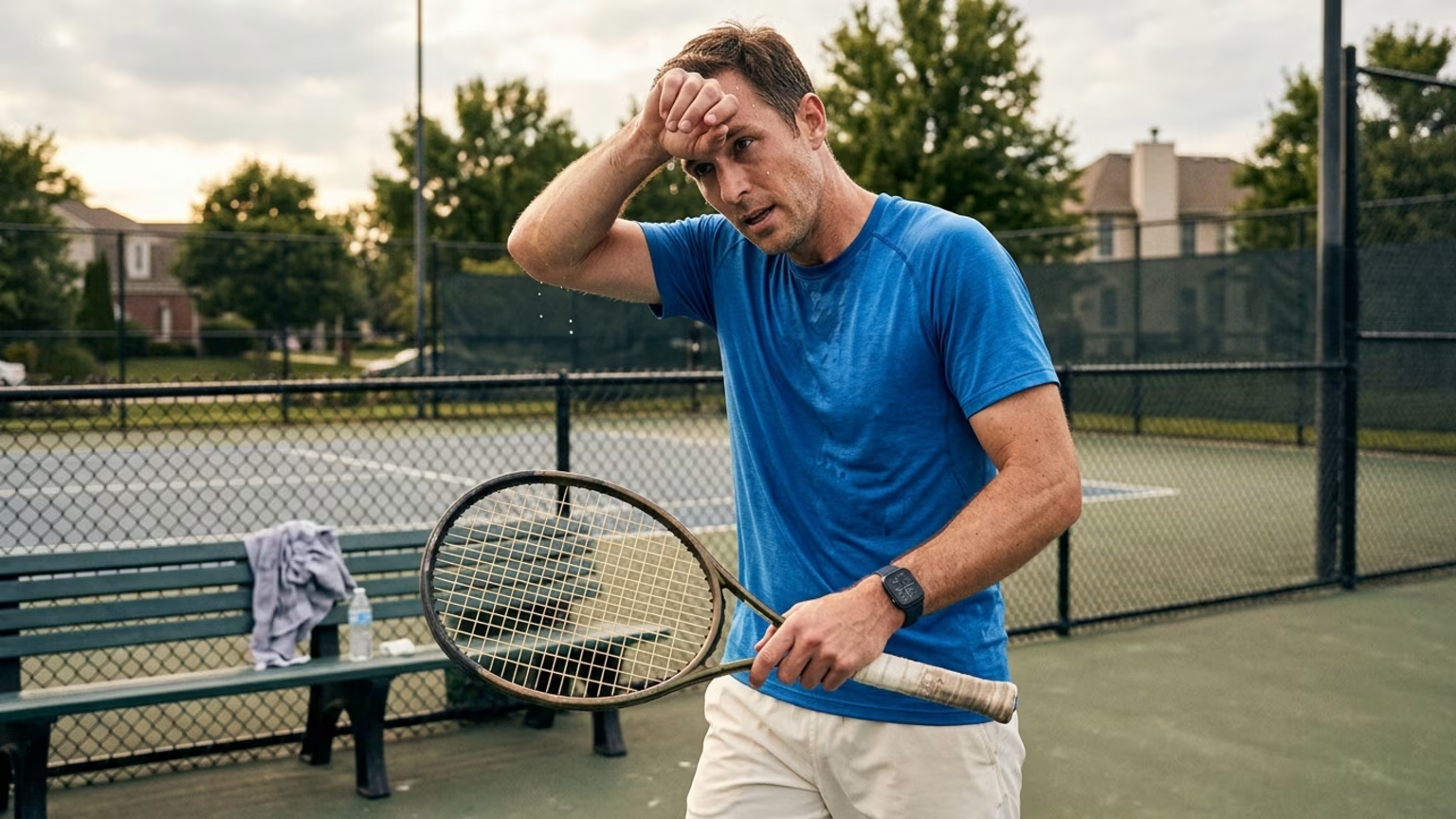
In late 2026, Oura analyzed wearable data to see how recreational tennis impacts heart health and recovery. Learn what this means for your athletic longevity.
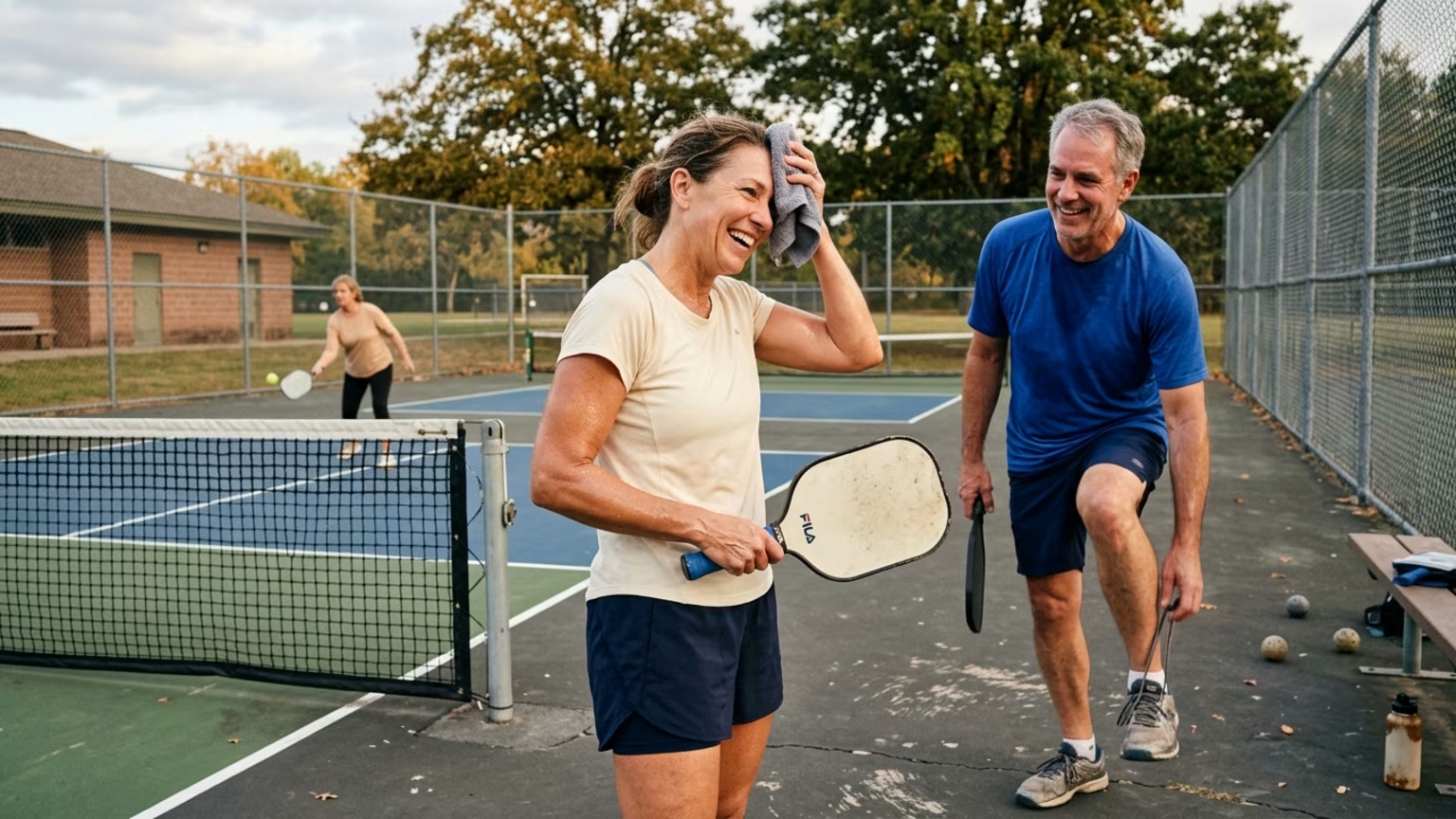
Recent guidelines emphasize gradual progression, dynamic warm-ups, and scheduled recovery to help adult racquet sports players maintain athletic longevity.
Read practical guidance for better movement, smarter preparation and a game that keeps working for you.
explore the Blog
