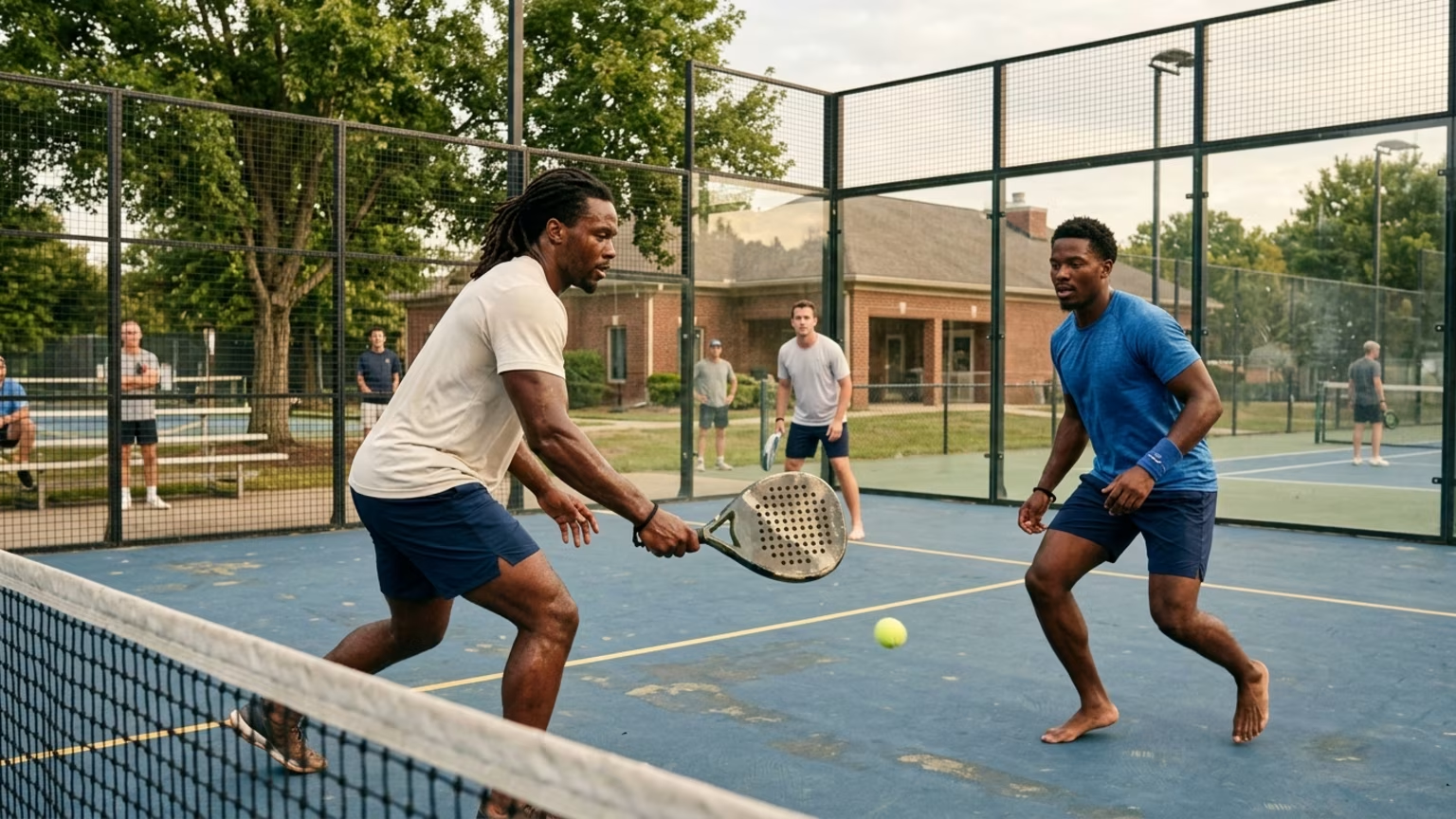

Elite footballers are turning to padel for competitive cross-training. Learn how recreational players can safely use padel for movement variety and longevity.




On September 15, 2026, an IOL report detailed the growing appeal of padel among professional and former footballers. The publication highlighted players like Cristiano Ronaldo and Arjen Robben as prominent supporters of the sport. Ronaldo has invested in padel and spoken publicly about his enthusiasm for the game. According to IOL, Robben even progressed to competing on the professional FIP Tour after retiring from football.
The trend extends across the globe and includes numerous high-profile athletes. The IOL report linked Neymar, Zinedine Zidane, and Iker Casillas to padel. South African players such as Themba Zwane, Ronwen Williams, Khuliso Mudau, and Oswin Appollis are also involved. Other South African footballers like Linda Mntambo and Vincent Pule participate in the sport as well.
Teko Modise has remained connected to the Johannesburg padel scene since his 2019 retirement from football. The transition of these high-profile athletes into padel highlights a broader shift in off-court training habits. Footballers are seeking ways to extend their athletic longevity without sacrificing the thrill of a tough match. Padel offers an ideal environment for this exact combination.
According to the IOL report, the technical overlap between the two sports is significant. Footballers heavily utilize anticipation, reaction speed, and overall movement on the court. They also benefit from the spatial awareness and rapid decision-making that padel requires. Crucially, it delivers this stimulation without the tackles and repeated sprints of a 90-minute football match.
The intersection of football and padel is also driving international infrastructure. A 2026 Fédération Internationale de Padel event report noted a significant tournament in Portugal. The FIP Silver Lisboa Padel Racket Centre by Ava CR7 took place at Cristiano Ronaldo’s Lisbon club. Pretoria also hosted South Africa’s first professional Premier Padel tournament in July 2026.
Organized competitive pathways now extend well beyond the elite professional tour. These developments place padel firmly within a visible international competition structure rather than treating it merely as a social activity. The growing infrastructure allows players of all ages to engage with the sport in a structured format.
For professional footballers, padel represents a deliberate break from intense physical battles. They can maintain competitive stimulation while fundamentally changing their physical stress profile. The doubles format provides a social environment alongside the required competitive decision-making. This technical overlap allows players to practice spatial awareness and rapid movement safely.
For adult recreational racquet athletes, the practical lesson requires a more nuanced approach. Rotating in padel sessions can preserve your competitive instinct and footwork practice. However, treating a new sport as an automatic recovery day can lead to problems. A padel session after a heavy running week can still be quite physically strenuous.
I remember finishing a tough two hour padel match on a cold Tuesday night and waking up the next morning feeling like my lower back was locked in concrete. At the time, I had assumed playing a smaller court sport would be a light recovery session after a heavy tennis week. That morning proved that padel requires genuine physical preparation. Once I started spending just ten minutes on targeted hip mobility before heading to the club, the stiffness almost completely vanished.
Padel still involves repeated lunges, rapid changes of direction, and significant rotational loading. Recreational players should match the intensity of play to their current physical conditioning. Choosing cooperative games or shorter sessions can help when your primary goal is movement variety. Anyone looking to balance these demands should consider a structured approach to training load management for tennis, pickleball and padel players.
The movement patterns in padel are not entirely interchangeable with tennis or pickleball. The presence of walls, the doubles format, and the shorter court change the timing and positioning requirements. You must respect these differences to avoid overloading unfamiliar muscle groups. Proper preparation remains the best strategy for long-term athletic longevity.
Adult players must distinguish between substituting one hard session for another and genuinely reducing their weekly load. If you are already fatigued from a heavy tennis block, adding a competitive padel match might increase your total stress. Padel demands a unique physical effort that your body must adapt to over several weeks. A gradual introduction allows your tendons and muscles to adjust to the specific angles of the smaller court.
Managing your weekly energy expenditure is critical when mixing different sports. You cannot simply add a high-intensity padel match to a week already filled with heavy tennis drills without adjusting your recovery time. The goal is to build physical resilience, not to accumulate fatigue.
It is important to remember that lower impact is a relative description rather than a medical guarantee. The IOL article contrasts padel with football sprints but does not establish that padel produces lower injury rates than tennis. The strongest publicly surfaced injury evidence comes from a 2023 systematic review. This review was recently summarized by industry publications including PadelFormat and Actu-Padel.
The review covered eight studies and analyzed 2,022 padel participants. The evidence base remains limited, but the findings offer clear guidance for healthy aging on the court. The summaries report approximately three injuries per 1,000 training hours. They also note roughly eight injuries per 1,000 matches.
The elbow was reported as the most frequently affected location in that review. The knee, shoulder, and lower back followed closely behind. These numbers complicate the promotional idea that padel is inherently gentle or entirely free of injury risks. Repeated racket swings, deceleration, and rotational loading take a toll on the joints over time.
These statistics provide a valuable baseline for understanding the physical demands of the sport. While padel might not require the long-distance running of a football match, it places a concentrated load on specific joints. Taking the time to properly warm up those areas can significantly reduce your risk of unexpected strains.
The data clearly shows that rotational loading and repetitive deceleration create a measurable injury risk. The elbow takes significant stress from the heavier racket and the need to generate power over shorter distances. Meanwhile, the knee and lower back absorb the impact of rapid directional changes and low lunges. Understanding these specific risks allows players to incorporate targeted strengthening exercises into their weekly routines.
The reported injury rates highlight the need for careful weekly load management. Players who are unaccustomed to overhead strokes and repeated accelerations face real physical demands. When adding padel to a tennis or fitness routine, you should change only one factor at a time. This conservative strategy helps you identify delayed soreness more clearly before it becomes a chronic issue.
Padel can be a brilliant tool for cross-training across courts when used appropriately. However, playing a new sport does not replace progressive strength training or sport-specific technical preparation. Persistent elbow or knee pain always warrants reducing your playing volume and seeking qualified clinical advice. You should always treat pain as vital information rather than a challenge to overcome.
The visibility of elite athletes playing padel will likely encourage more players to rethink their off-season routines. We expect to see more structured cross-training programs emerging across the racquet sports landscape over the next season. Players will increasingly use padel to train reaction speeds and spatial awareness outside of their primary sport. This shift will emphasize the importance of adapting your movement to singles and doubles across different court sizes.
We also anticipate a rise in specialized conditioning programs designed explicitly for adult racquet athletes. These programs will likely blend the reactive drills seen in elite football training with court-specific mobility routines. This comprehensive approach will help weekend warriors stay agile and competitive throughout the entire calendar year.
Using multiple racquet sports to vary your physical loading will become a standard strategy for recreational players. As long as players respect the unique demands of the glass walls, padel will serve as an excellent competitive outlet. The focus will remain on playing smarter and managing weekly exertion with clear intent. The ultimate goal is to keep competing and enjoying the court for years to come.
Follow Evercourts for practical insights on tennis, pickleball and padel performance, movement, recovery and healthy ageing. Stay connected for new articles, research-led guidance and ideas to help you play well and keep playing for years.


An evidence check on sports supplements like tart cherry juice. Learn why racquet sports players should prioritize core nutrition over functional foods.
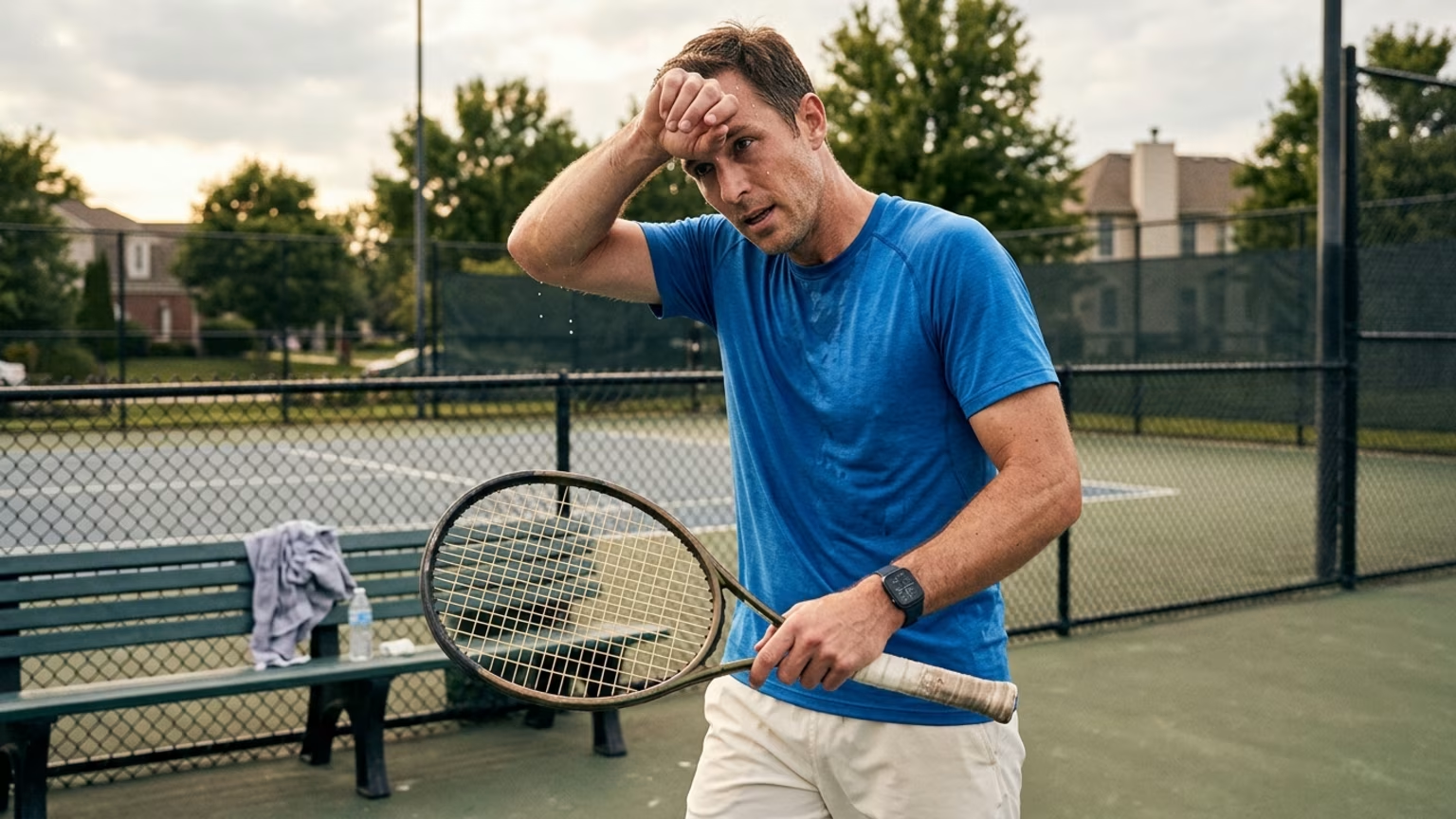
In late 2026, Oura analyzed wearable data to see how recreational tennis impacts heart health and recovery. Learn what this means for your athletic longevity.
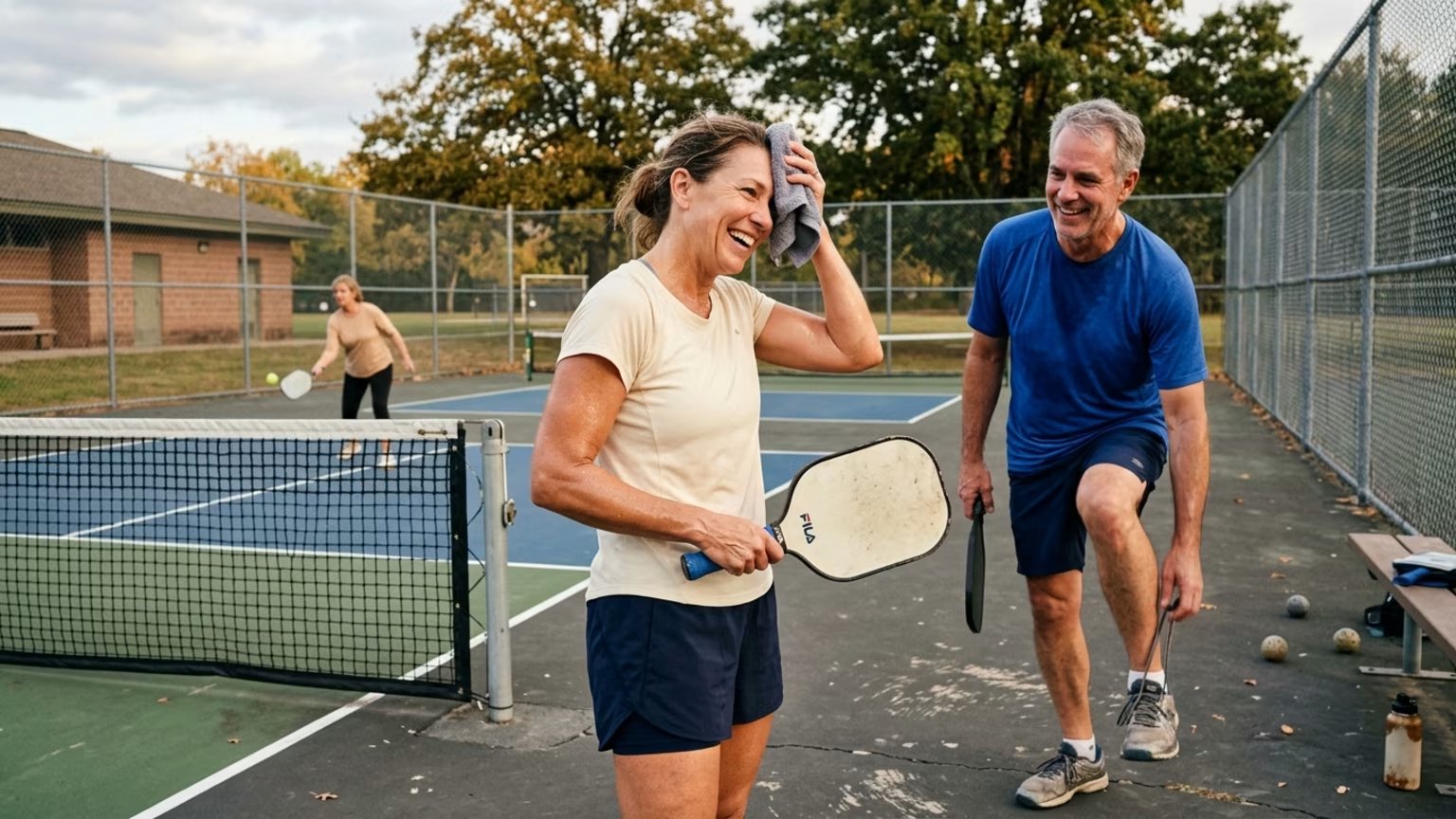
Recent guidelines emphasize gradual progression, dynamic warm-ups, and scheduled recovery to help adult racquet sports players maintain athletic longevity.
Read practical guidance for better movement, smarter preparation and a game that keeps working for you.
explore the Blog
