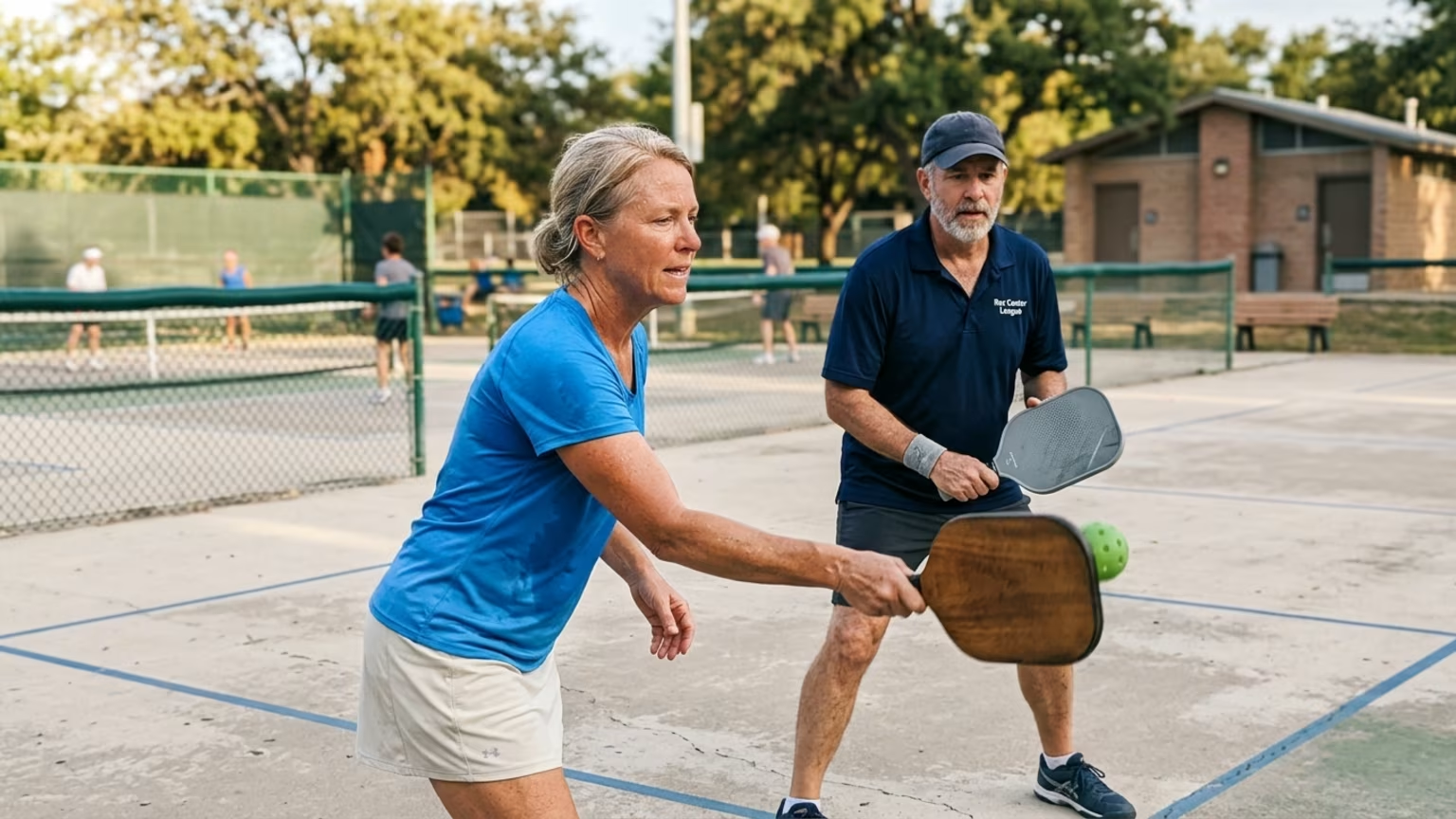

The 1984 invention of the composite pickleball paddle cut equipment weight in half. Learn how this design shift improved accessibility for older adults.




On December 21, 1984, the first composite pickleball paddle prototype was produced using a honeycomb core and fiberglass facings. Arlen Paranto adapted this core design directly from Boeing aircraft-floor-panel technology. The new paddles weighed roughly 6 to 7 ounces. This marked a dramatic drop from the approximately 13-ounce wooden paddles that preceded them.
Pickleball originally began in July 1965 on Bainbridge Island, Washington. Joel Pritchard and Bill Bell improvised their first games using paddleball paddles, badminton racquets, and undersized ping-pong paddles. When the community realized the sport required dedicated gear, the first purpose-built paddles were cut directly from scrap plywood. These early models had no built-up handle, paint, grip, or decorative design.
Equipment developers quickly realized that materials dictated playability on the court. Barney McCallum spent considerable time testing different plywood thicknesses to optimize performance. He ultimately settled on marine five-ply plywood measuring three eighths of an inch. His testing revealed that quarter-inch wood was too flimsy, while half-inch wood was simply too heavy and lacked necessary touch.
By the late 1960s, these wooden paddles had gained gloss paint, built-up handles, and proper grips. A 1978 description of pickleball equipment set specific dimensional limits for wooden paddles. The maximum length was capped at 15.5 inches, with a maximum head width of 8 inches and a maximum weight of 15 ounces. Despite this maximum limit, most players considered 10 to 12 ounces ideal.
Manufacturers continued to experiment with dimensions to suit different demographics. In 1979, the Master paddle was introduced with a smaller handle intended specifically for women and younger players. Concurrently, the Pro model was heavily marketed toward more competitive participants. These targeted designs proved that equipment could be successfully tailored for specific user groups.
The introduction of the composite paddle in 1984 brought immediate changes to how the equipment performed. Steve Paranto described the older, heavy wooden paddle as a fundamental mismatch relative to the ball. He said the first composite paddle felt as if the ball came off the face much faster. He famously characterized the experience as a "light bulb going off."
These new materials provided clear technical upgrades for the sport. Arlen Paranto noted that the composite paddle was more responsive and accurate than wood. Randy Bither pointed out that the composite paddles moved faster, produced more action, and behaved much more consistently on off-center hits. Arlen Paranto subsequently developed the Magnum paddle, which featured a larger face and a bigger sweet spot.
This larger face design fundamentally shifted equipment standards. The primary historical account notes that virtually all modern paddles are at least roughly the size of that original Magnum paddle. Early composite paddles also helped establish several features that are now standard in modern equipment. The 1984 prototype successfully introduced honeycomb cores, edge guards, and composite facings to the market.
Foam handle overlays and end caps also became standard components for players. These grip improvements allowed players to hold the paddle securely without excessive squeezing. A relaxed grip directly reduces forearm tension during a match. These historical innovations formed the baseline for modern paddle construction and comfort.
The sharp reduction in paddle weight carried different implications depending on the player. Elite athletes found that lighter paddles allowed faster hand movement, which helped turn pickleball into a quicker-response game. Professional players utilized this speed to develop aggressive net tactics. The composite technology fundamentally increased the pace of competitive play.
For adult recreational players, the lower static weight offered a more fundamental benefit. Steve Paranto stated that seniors and children could play much more easily with lighter paddles. He observed that many older players changed their equipment specifically for that improved accessibility. The 6-ounce composite models were simply easier to swing over a two-hour session than older wooden boards.
For an older player with diminishing wrist strength, this weight reduction was deeply significant. It allowed them to play longer matches and maintain better form during late-game rallies. The physical barrier to entry was permanently lowered by this material innovation.
However, a lighter paddle is not automatically the perfect choice for every older player. Reducing static weight can make a paddle easier to maneuver, but power, stability, and control also depend on balance and core construction. Players who want to learn how to decide when to upgrade their tennis racquet or pickleball paddle should treat lower weight as just one factor. Comfort requires a broader equipment assessment.
A paddle that is too light might force a player to swing harder, which can inadvertently increase arm strain. Our team at Evercourts advises players to compare several paddles during actual swings and short rallies. It is important to pay attention to whether the paddle feels controllable late in a session. Judging a paddle solely by its specification sheet often leads to poor choices.
Better equipment design supports participation, but it does not replace the need for physical conditioning. The search for athletic longevity through racquet sports requires a balanced approach to bodily health. We frequently see players rely entirely on their gear to prevent injury. This overreliance on equipment often leads to predictable physical setbacks.
When I first started playing pickleball, I noticed how many people skipped warming up entirely. They would jump straight out of their cars and right up to the kitchen line. Many players assumed their lightweight gear would automatically protect their joints. I tried doing that and immediately pulled a calf muscle.
Pickleball requires just as much explosive lateral movement as tennis, just in a tighter space. Since then, I always spend five minutes doing dynamic lunges and ankle rolls. It changes everything about how confident I feel pushing off the baseline. Proper physical readiness requires a comprehensive injury prevention framework tailored to racquet sports.
The transition from wooden boards to modern composites represented a massive shift in equipment specifications. Prior to 1984, the standard wooden paddle weighed approximately 13 ounces. The physical demand of swinging a 13-ounce board repeatedly over a long match placed significant stress on the wrist and elbow. This heavy static load served as a barrier for many older adults.
The earliest composite paddles dropped that weight to approximately 6 to 7 ounces. This represented roughly half the weight of the traditional wooden models they replaced. By cutting the static weight in half, paddle manufacturers removed a major physical obstacle for aging players. This data point highlights exactly how technological innovation directly supported healthier participation for adult recreational players.
As modern players continue seeking the perfect balance of weight and power, governing bodies are heavily monitoring equipment modifications. On July 3, 2026, USA Pickleball issued a notice addressing the use of aftermarket paddle weights and grip aids. This indicates that equipment modifications will continue to have strict rules implications for competitive players.
Over the next season, we expect tournament directors to heavily scrutinize added lead tape and custom handles. Older players will need to navigate these regulations carefully to optimize their gear without violating official standards. This scrutiny will likely force recreational athletes to find factory paddles that deliver both lightweight maneuverability and stable performance right out of the box. Proper training load management will remain just as critical as finding the perfect, rule-compliant paddle.
Follow Evercourts for practical insights on tennis, pickleball and padel performance, movement, recovery and healthy ageing. Stay connected for new articles, research-led guidance and ideas to help you play well and keep playing for years.


An evidence check on sports supplements like tart cherry juice. Learn why racquet sports players should prioritize core nutrition over functional foods.

In late 2026, Oura analyzed wearable data to see how recreational tennis impacts heart health and recovery. Learn what this means for your athletic longevity.

Recent guidelines emphasize gradual progression, dynamic warm-ups, and scheduled recovery to help adult racquet sports players maintain athletic longevity.
Read practical guidance for better movement, smarter preparation and a game that keeps working for you.
explore the Blog
