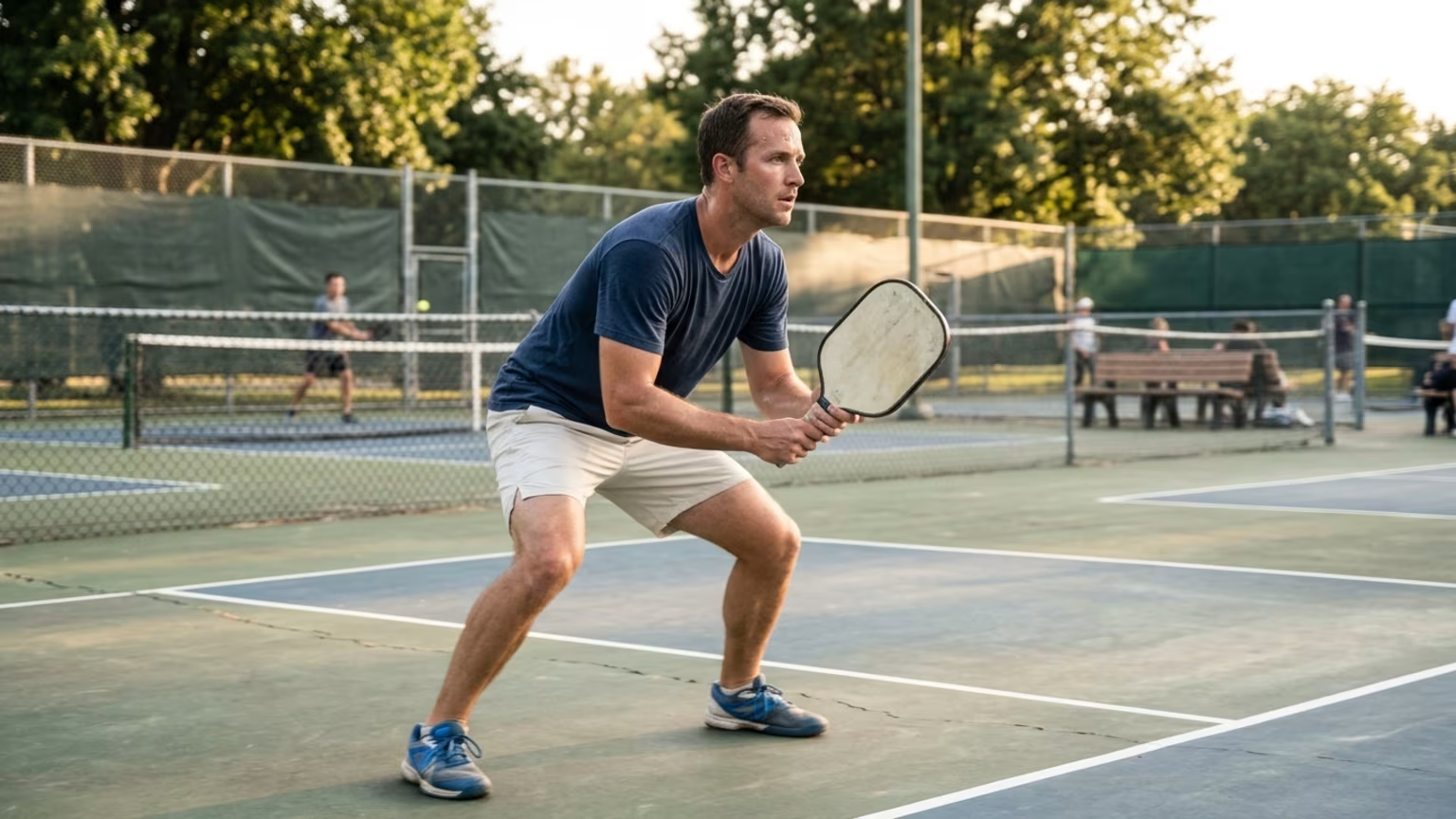

Adult tennis, pickleball, and padel players can improve court reactions through early preparation and anticipation, rather than relying on raw reflex speed.




Reaction time in racquet sports is the combined ability to see visual cues, process information, and initiate movement before making contact with the ball. Many players mistakenly define it as simply having fast hands at the net. In reality, a quick response relies heavily on early anticipation and reading the opponent's posture.
When a fast rally breaks out, successful players do not just wait for the ball to cross the net. They prepare their paddle or racquet early based on subtle positional cues. Understanding how this sequence works can completely change how adult players approach their practice sessions.
Tennis, pickleball, and padel constantly test a player's ability to manage rapid changes in speed and direction. The physical mechanics of a fast volley exchange force the brain and body to work together under strict time constraints. A hard-hit ball travels the short distance of a pickleball court or the width of a tennis court in fractions of a second. Players must track the ball, adjust their stance, and swing with precision almost simultaneously.
The specific demands vary slightly across different courts, though the underlying need for fast processing remains identical. In tennis, a player might have more time while a baseline groundstroke travels, but the sheer speed of a first serve condenses that window dramatically. Pickleball creates intense, rapid-fire scenarios at the non-volley zone where the physical distance between players is remarkably short. Padel introduces the added complexity of the glass walls, requiring players to track a ball that might rebound from unexpected angles. Each environment forces the nervous system to make split-second decisions about footwork and paddle placement.
This repeated cycle of explosive effort and sudden directional shifts heavily taxes the nervous system. Reacting to an opponent requires constant visual attention and immediate physical contraction. As the match progresses, mental fatigue can slow down these processing speeds significantly. When players tire, their ability to read early cues diminishes, leading to late preparation and rushed swings.
Recognizing these specific physical demands highlights why anticipation often beats raw speed. Efficient movement sequences and early preparation help players cover the court better without moving faster.
The sports science community carefully separates measured physiological differences from practical coaching claims. A September 2026 study hosted by Oxford Academic looked directly at how racquet sports relate to these cognitive skills. The researchers found that table-tennis players demonstrated faster visuomotor reaction times than healthy controls, with a significant statistical difference (p < 0.001). They also reported stronger spatial suppression in the players (p = 0.007).
However, players should view these findings objectively. This observational finding simply highlights a difference between the two groups. It does not prove that training directly caused the faster times. It also does not guarantee that the results transfer perfectly to adult recreational pickleball or tennis.
There is no single validated standard for racquet-sport reaction training. While the table-tennis data provides interesting context about visuomotor performance, it does not prescribe a specific training method for adult recreational players. Sensational claims about drills that magically speed up the nervous system lack rigorous scientific backing.
To manage fast exchanges as the game speeds up, players can focus on actionable court habits instead of trying to force quicker reflexes. Relying entirely on sudden, reactive hand movements often leads to erratic contact. Instead, the focus should remain on tracking the opponent's preparation before the ball is even struck. Noticing a dropped shoulder or a specific paddle angle gives a receiving player critical extra milliseconds.
Adult recreational players often benefit from isolating their court movement from their hand preparation during practice. Trying to improve footwork speed and visual tracking at the exact same time can overwhelm the nervous system. A pragmatic approach involves establishing a strong, stable base before focusing on the incoming shot. When the lower body is balanced, the eyes can remain level and track the ball more effectively. This stability allows the brain to process positional cues without the added interference of a bouncing or unsteady posture.
Practicing these tracking skills requires deliberate focus during routine rallies. Players can intentionally watch their practice partner's swing path rather than solely locking their eyes on the ball in flight. This cognitive shift forces the player to read specific physical cues rather than simply guessing where the next shot will land.
While isolated hand-speed drills are popular, they often fail to replicate the complex visual tracking required on a real court. Real preparation involves setting the feet correctly and preparing the paddle face early. By focusing on paddle position and anticipation, players can build a better start in the first ten minutes of a match.
Shifting the focus from pure reflex speed to smart anticipation plays a major role in healthy aging for athletes. Older adults often find that their raw reaction times naturally slow down over the years. By reading cues early and preparing properly, players reduce how often they need to scramble, stretch, or lunge awkwardly. This tactical discipline helps adult players maintain their physical capabilities and stay active on the court for years to come.
Adding new physical demands to improve performance requires a carefully measured approach. Starting any new sport or conditioning program gradually is a fundamental principle of athletic longevity. Players should increase their court activity slowly in both duration and intensity. Rushing into high-speed volleys or complex movement drills before the body adapts can lead to unnecessary physical strain.
Consistent, gradual practice allows the body to build capacity safely over time. This patient approach is a foundational element of long-term racquet sports participation. Thoughtful conditioning allows players to safely test new skills, whether they are focused on baseline rallies or cross-training across courts.
Players should remain aware of their physical limits when adding fast-paced reaction practice to their routine. If a player experiences sharp joint pain, recurring stiffness, or balance issues during quick exchanges, it is time to seek professional advice. Struggling to change direction without discomfort is a clear sign that physical mechanics need evaluation.
A qualified physiotherapist or sports medicine professional can assess movement mechanics safely. They can identify underlying weaknesses that might be hindering a player's ability to react and change direction comfortably. Consulting a healthcare provider ensures that players receive individualized care rather than relying entirely on general coaching tips. Addressing physical discomfort early is the most reliable way to keep enjoying tennis, pickleball, and padel.
When that next fast exchange breaks out at the net, success will not depend on sudden bursts of panic or unnaturally fast hands. It relies entirely on the subtle preparation and visual tracking that began before the opponent even made contact.
Follow Evercourts for practical insights on tennis, pickleball and padel performance, movement, recovery and healthy ageing. Stay connected for new articles, research-led guidance and ideas to help you play well and keep playing for years.


Learn how to choose racquet sports shoes based on your court surface and movement needs. Discover practical tests for fit, lateral support, and visible wear.
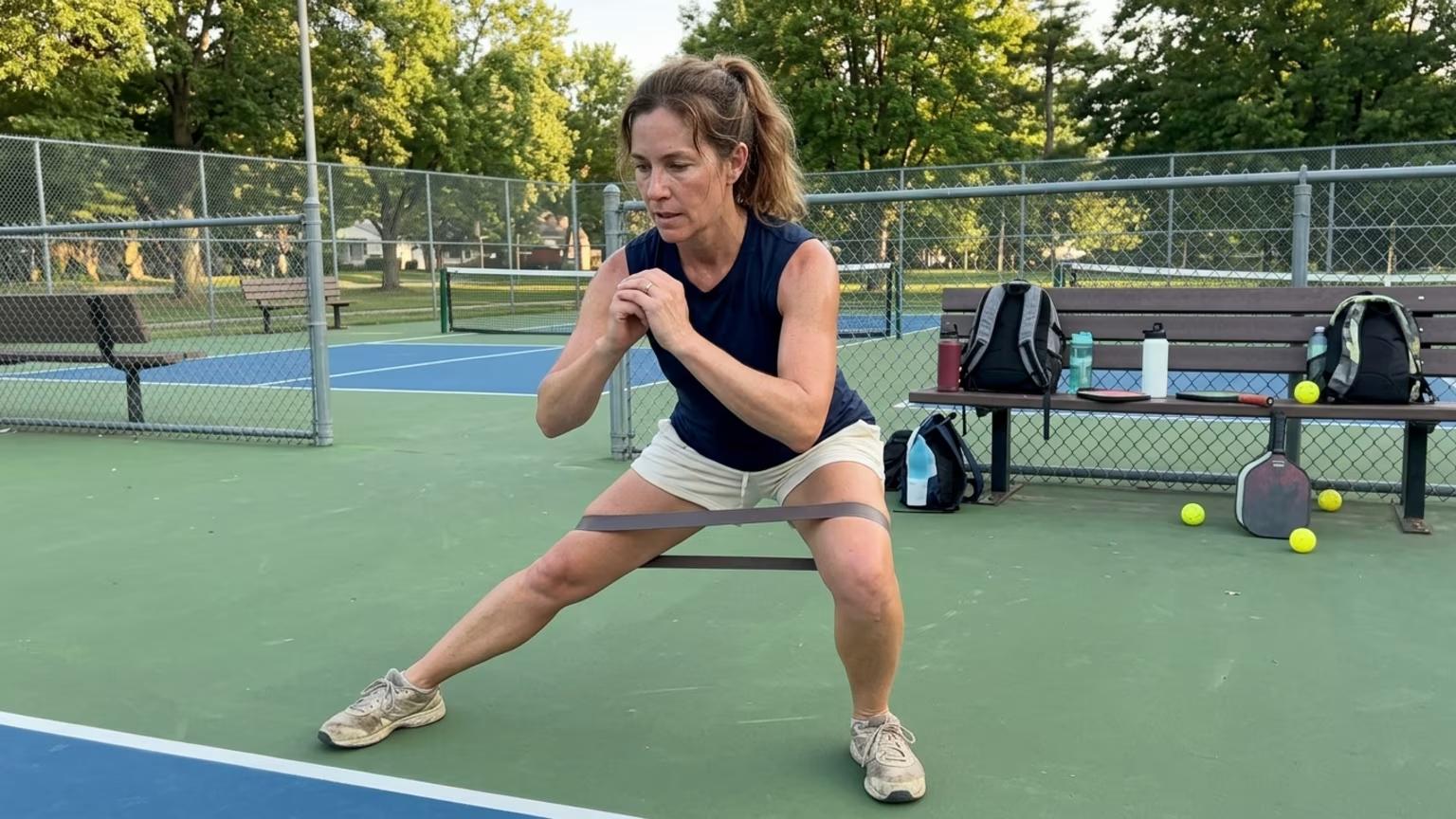
Learn how targeted lower-body strength and balance exercises can support your movement in pickleball and promote athletic longevity on the court.
The Yeongnam Sports Medicine Research Society reviewed training-load limits and tissue adaptation. Learn how adult racquet players can safely return to play.
Read practical guidance for better movement, smarter preparation and a game that keeps working for you.
explore the Blog
