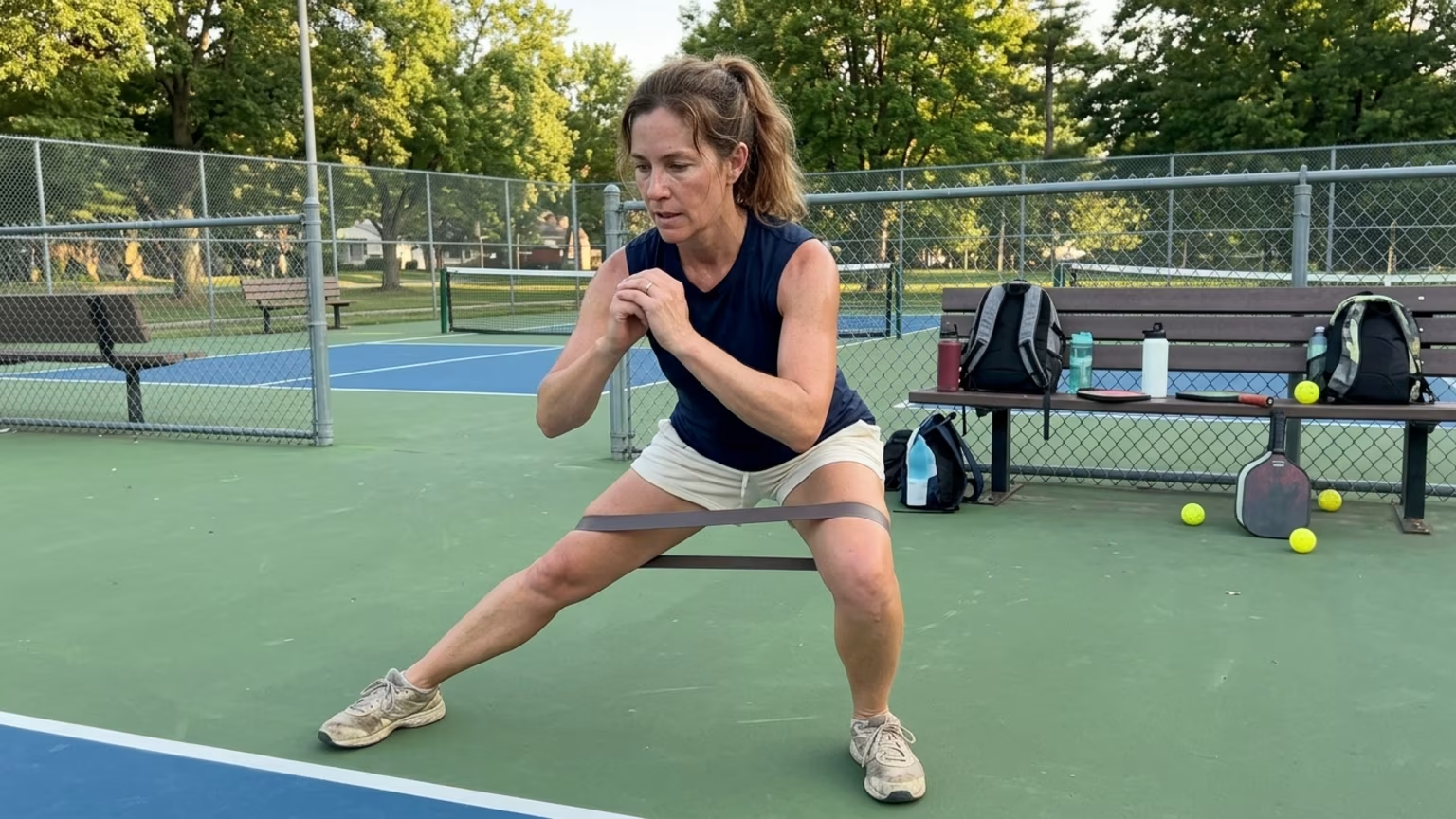

Learn how targeted lower-body strength and balance exercises can support your movement in pickleball and promote athletic longevity on the court.




Strength training for pickleball means using targeted exercises to build the specific leg force and balance required to stop, redirect, and recover during a point. It is not about lifting the heaviest weights possible or following complex fitness routines. Instead, it involves regular movements that support the precise physical demands of playing. Adult players often notice the physical toll of matches after just a few hard games.
By focusing on foundational lower-body and stability work, players can handle the demands of the sport much better. Racquet sports demand a unique blend of stability and responsiveness from the body. Implementing a simple strength routine helps bridge the gap between technical ability and physical endurance. A stronger lower body allows players to execute their shots with greater consistency and control.
Pickleball requires players to perform repeated explosive efforts in relatively small spaces. A standard point involves quick split steps, sudden lunges, and rapid changes of direction. These sudden stops and starts place a heavy load on the legs and hips. When a player moves out wide for a difficult shot, the lower body must absorb the force of that movement.
The legs then need enough power to push the player back to the center of the court immediately. Racquet sports challenge the lower body intensely because the ball dictates your movement entirely. You cannot plan your steps perfectly in advance. You must react to the opponent, decelerate rapidly, and hold your position firmly.
This constant starting and stopping challenges the calf muscles, thighs, and hips continuously throughout a match. Without sufficient capacity in these muscle groups, the legs fatigue faster during long rallies. Fatigue often leads to slower reaction times and less precise footwork. When the legs tire, players tend to reach for the ball rather than moving their feet into proper position.
Building targeted strength gives the lower body the resilience it needs to handle these repetitive demands. This physical preparation helps prevent the balance issues that occur when a player is completely exhausted.
Current medical guidance focuses on building capacity for these specific court demands. Lancaster Orthopedic Group recommends exercises such as calf raises, sit-to-stands, step-ups, and side steps to build force and control for stopping and redirecting on court. These basic movements mimic the exact actions players perform during a tough match. Sit-to-stands build the fundamental leg strength needed to stay low at the kitchen line.
Step-ups and side steps develop the lateral stability required to cover the court efficiently. Balance is another essential component of court readiness for any racquet sport. Lancaster Orthopedic Group suggests supported single-leg balance, tandem walking, and controlled reaching as useful balance exercises. These movements help players maintain their footing when a shot pulls them outside their normal base of support.
You do not need a complicated gym setup to perform these simple drills. Consistent practice helps the body learn to stabilize itself during awkward, off-balance reaches. The available medical guidance does not prescribe a universal number of sets, repetitions, or a formal exercise progression. It simply presents these movements as practical ways to build the physical traits necessary for court sports.
Players who build a basic foundation of leg strength are much better equipped to handle a busy weekly playing schedule. A proper warm-up also prepares the body for these explosive on-court demands. Lancaster Orthopedic Group recommends warming up with brisk walking, side-to-side movement, controlled calf raises, and sit-to-stands. Players should follow this routine with easy swings before starting competitive rallies.
Understanding how to condition the body properly directly supports healthy aging for adult players. Many recreational players want to stay on the court for decades without being sidelined by nagging aches. Strength training provides the physical buffer that allows the body to recover from challenging matches. It ensures that the muscles, rather than the joints, absorb the harsh impact of hard stops and aggressive pivots.
This thoughtful approach is especially important for players who have taken a long break from the sport. Lancaster Orthopedic Group advises returning players to begin with shorter sessions and scheduled recovery days. They suggest changing only one aspect of playing load at a time, such as frequency, duration or intensity. This cautious progression helps the body adapt to the specific stress of racquet sports safely.
When you pace your return and support it with basic exercises, you protect your physical capacity. Maintaining a reasonable schedule allows players to enjoy the game consistently without overwhelming their bodies. You can read more about structuring your training and playing days to avoid doing too much too soon. Building strength off the court translates directly to sustained participation on the court.
While basic strength and balance exercises are highly beneficial, they are not a substitute for individualized medical care. The orthopedic guidance notes that a physical therapist or clinician can modify exercises around arthritis or a prior injury. Every player brings a completely unique medical history to the court. Exercises that work perfectly for one person might cause discomfort for another.
It is vital to recognize when to consult a qualified medical professional. You should seek advice if you experience sharp pain during routine movements, or if joint swelling persists long after playing. Lancaster Orthopedic Group cautions that balance work should be challenging without creating a fall risk. If you feel unsteady or fear falling during simple balance drills, a physical therapist can help.
Professional guidance ensures you are training the right areas without causing unnecessary harm or strain. Seeking targeted advice for a stubborn physical issue helps you build usable range and strength safely. Over time, physical capabilities change, and adjusting your approach with expert input becomes part of being a lifelong athlete.
The court remains a place for strategy, movement, and quiet enjoyment long after the physical peak of youth passes. Playing well for years simply requires paying close attention to what the body needs between matches.
Follow Evercourts for practical insights on tennis, pickleball and padel performance, movement, recovery and healthy ageing. Stay connected for new articles, research-led guidance and ideas to help you play well and keep playing for years.


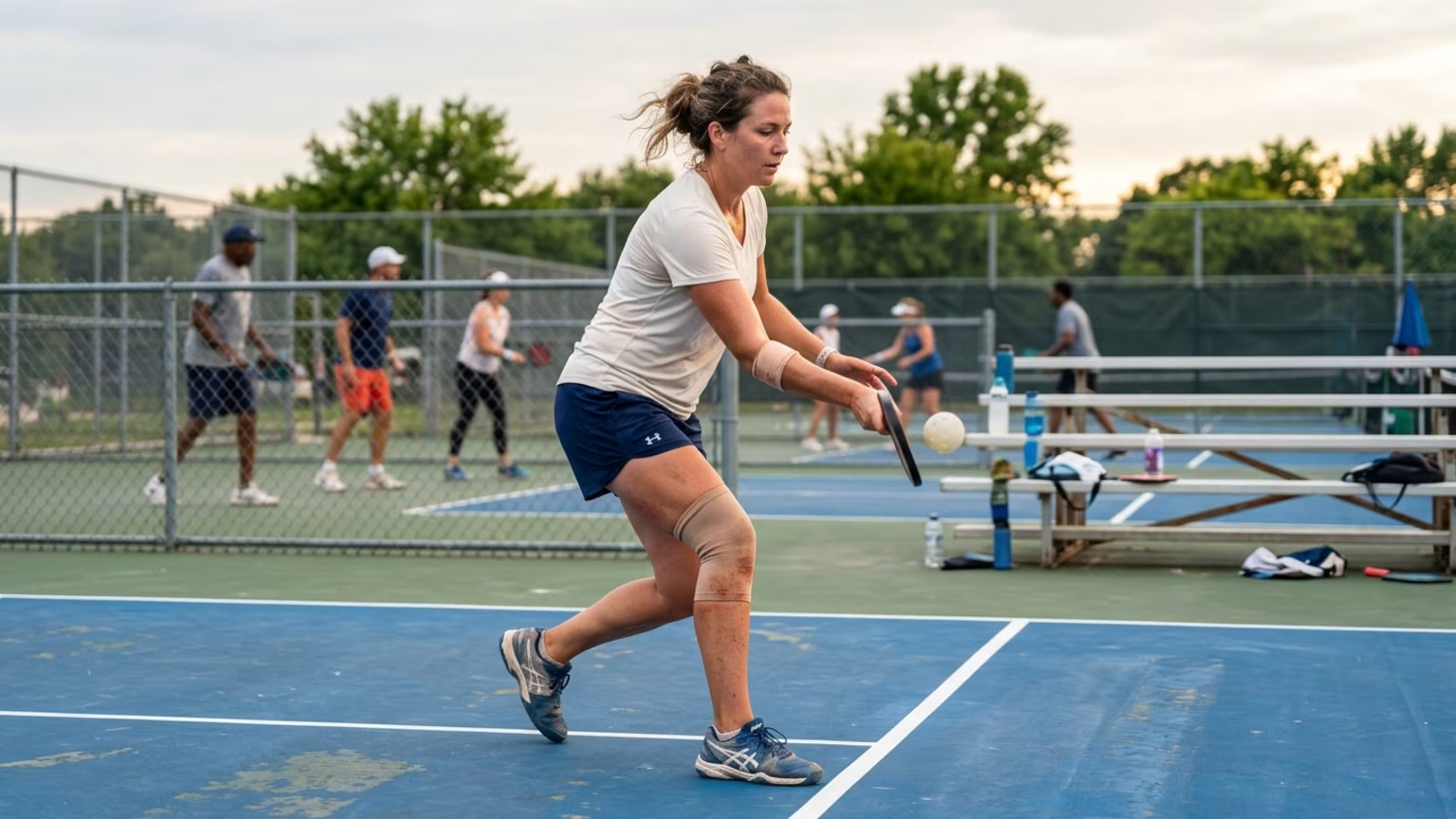
The Yeongnam Sports Medicine Research Society reviewed training-load limits and tissue adaptation. Learn how adult racquet players can safely return to play.

Learn why racquet sports demand specialized strength and how to build a practical, movement-based foundation to support your athletic longevity on the court.
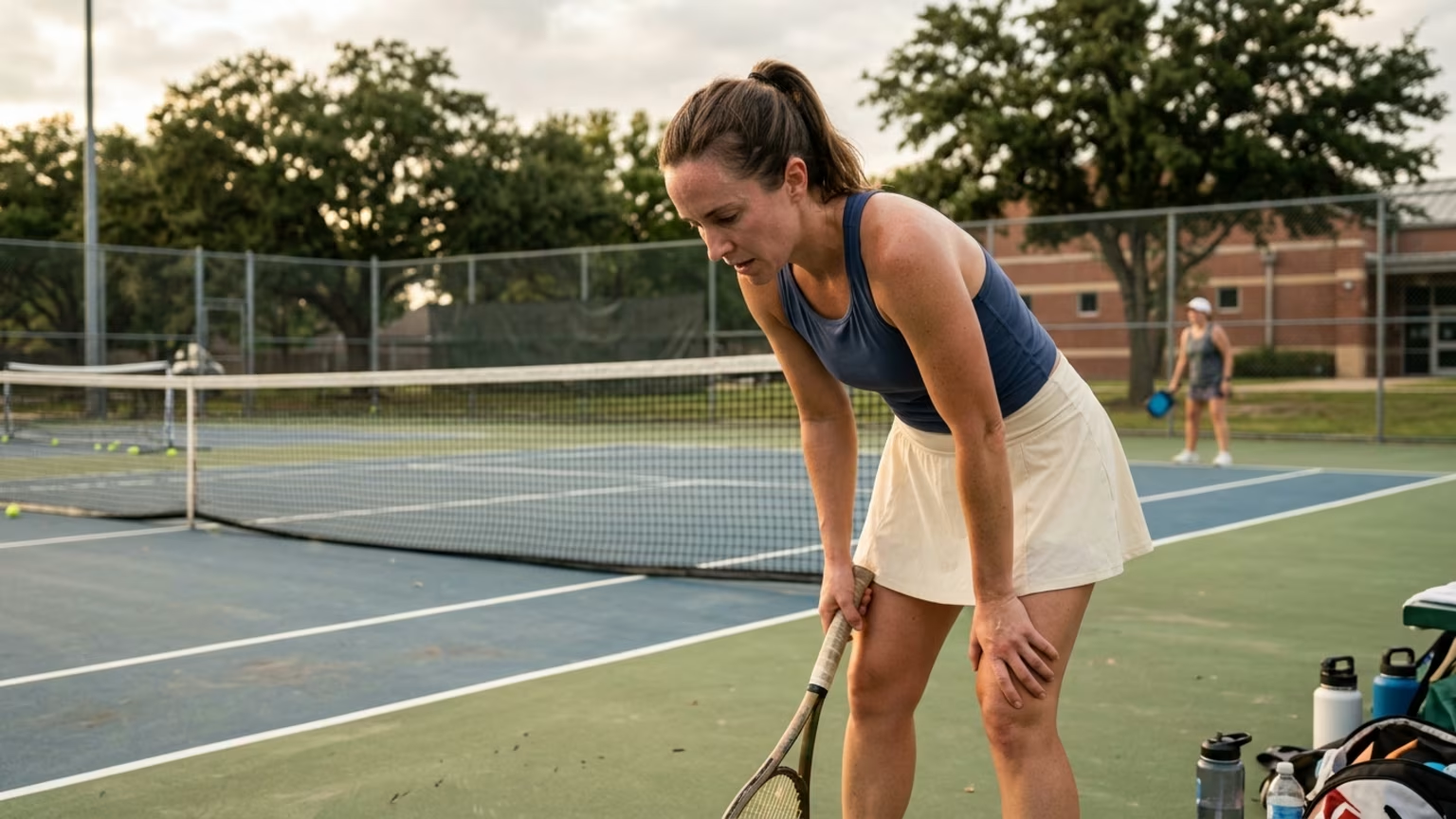
Tennis, pickleball, and padel challenge your body with different movement patterns and physical loads. Learn to scale your play for athletic longevity.
Read practical guidance for better movement, smarter preparation and a game that keeps working for you.
explore the Blog
