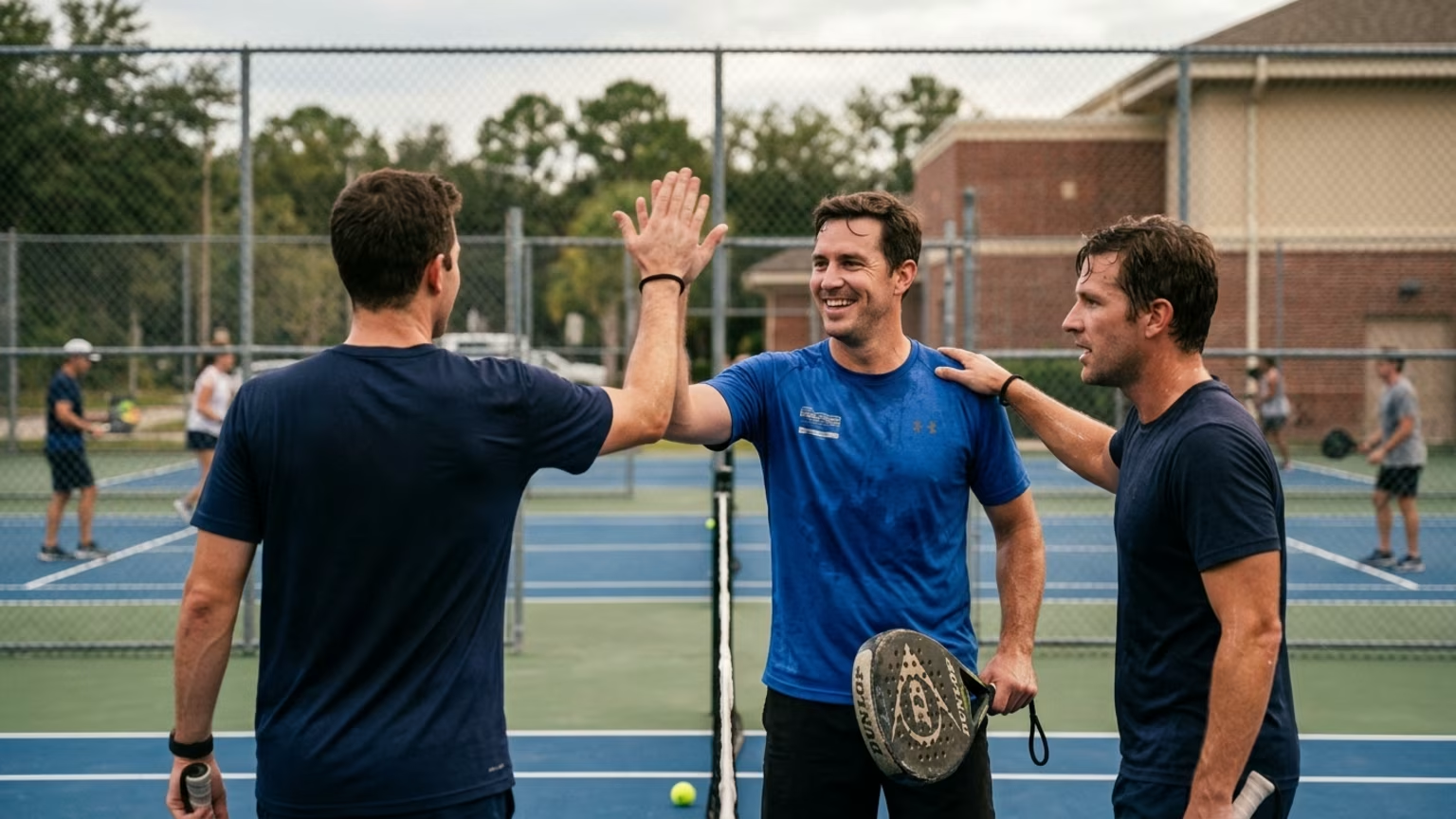

Timeo Fonteny and Nacho Moragues won the FIP Bronze Marnes I title, highlighting how tactical cohesion and stable padel partnerships improve court coverage.




On September 7, 2026, the International Padel Federation reported that Timeo Fonteny and Nacho Moragues captured the men's FIP Bronze Marnes I title near Paris in their first tournament together. The victory secured the second title of the season for both professional players.
The FIP Bronze level serves as a crucial entry point for professional padel, allowing players to collect valuable ranking points. Fonteny and Moragues entered the event at Forest Hill in Marnes-la-Coquette as the second seeds with 894 team points. They trailed top seeds Julian Prins and Youp de Kroon, who held 938 points before the competition began. The men's main draw at Marnes was designed to accommodate 32 pairs, while the qualifying stages could include as many as 64 teams. Navigating such a dense competitive field requires immediate tactical cohesion.
The new pairing defeated Marcel Font and Alejandro Garcia with a score of six to two, four to six, six to one in the final. The scoreline showed a decisive third set response after their opponents raised their level during the second set.
The tournament featured an 8,500 euro prize fund and served as an important home soil success for the 19 year old Fonteny. He had previously secured a title in Slovenia in June. Moragues arrived with his own 2026 success after winning the FIP Bronze Castellon event in May.
Fonteny noted that the pair immediately clicked on court and improved match after match. Moragues stated that the team was really happy with their play and the confidence they gained throughout the draw. Following the victory, they immediately turned their attention to the Paris Major. They were scheduled to make their main draw debut there against Melendez and Gonzalez.
For athletes on the FIP Tour, a successful debut tournament provides immediate ranking validation and momentum. Fonteny described the result as a straight away title for the new partnership. However, adult recreational players should take a more cautious lesson from this rapid success. Amateur players often switch partners to chase better match results, but the true value of a stable partnership lies in organized court coverage.
A reliable partner helps you avoid unnecessary scrambling and awkward defensive overlaps. In doubles padel, poor communication often results in both players reacting to the same ball. This confusion leads to rushed swings or dangerous collisions. When you play with a familiar partner, you develop an intuitive sense of who should take the ball down the middle and who should drop back for defensive lobs.
This shared understanding prevents the sudden lunges that frequently strain adult knees and ankles. It is vital for athletic longevity and allows players to move with clear intention. Over time, distinct tactical responsibilities help distribute the physical demands of a match more evenly across the team.
I remember finishing a tough two hour padel match on a cold Tuesday night and waking up the next morning feeling like my lower back was locked in concrete. For a long time, I just accepted this as the price of playing hard in my forties. But once I started spending just ten minutes on targeted hip mobility before heading to the club, the stiffness almost completely vanished. It taught me that we do not have to accept pain as a default state of aging. Coupling that proactive physical management with a trusted doubles partner makes a massive difference for healthy aging on the court.
Communication is the true foundation of this shared workload. The Marnes final required Fonteny and Moragues to reset mentally and tactically after a difficult second set. Recreational players can benefit from establishing a simple, blame free reset routine with their own partners. Agreeing on how to handle high pressure moments prevents frustration and keeps your physical effort efficient. Learning to use controlled stops to build a stable base is much easier when you know exactly where your partner is standing.
Players should also test a new partnership before committing to a heavy competitive schedule. The Marnes title shows that a new pairing can succeed immediately, but a single tournament does not prove durability over a full season. Recreational players can use practice sessions and lower stakes matches to assess whether court responsibilities are clear.
It is important to remember that performance goals and health goals can sometimes conflict on the court. A partner who complements you tactically might naturally encourage a faster pace of play or more frequent competition. While Fonteny and Moragues moved directly from their Marnes victory to the Paris Major, amateur players do not need to follow such a relentless schedule. Evaluating how your body feels after consecutive matches is just as critical as analyzing your win rate.
Understanding how to structure a padel training week ensures you balance heavy match play with vital recovery days. Amateurs often make the mistake of relying entirely on match play to build their conditioning, which can accelerate overuse issues. A smarter approach involves targeted off court exercises that reinforce your physical base. Building capacity for overheads requires muscular resilience that no doubles partner can provide for you.
Through the remainder of the 2026 professional season, expect more players to scrutinize tactical compatibility before committing to new partnerships. The immediate transition for Fonteny and Moragues to the Paris Major will test whether their early cohesion holds up against different game styles. A single tournament victory is highly encouraging, but durability over a dense schedule requires continuous adjustment and excellent recovery habits.
The demanding schedule of the CUPRA FIP Tour means that physical management often dictates season long success. As teams travel between events to collect ranking points, fatigue naturally accumulates. The pairings that can rely on intuitive court positioning will expend less unnecessary energy in early round matches. For the rest of the year, the most successful professional partnerships will be those that manage their total workload just as effectively as they execute their match tactics.
Follow Evercourts for practical insights on tennis, pickleball and padel performance, movement, recovery and healthy ageing. Stay connected for new articles, research-led guidance and ideas to help you play well and keep playing for years.


An evidence check on sports supplements like tart cherry juice. Learn why racquet sports players should prioritize core nutrition over functional foods.
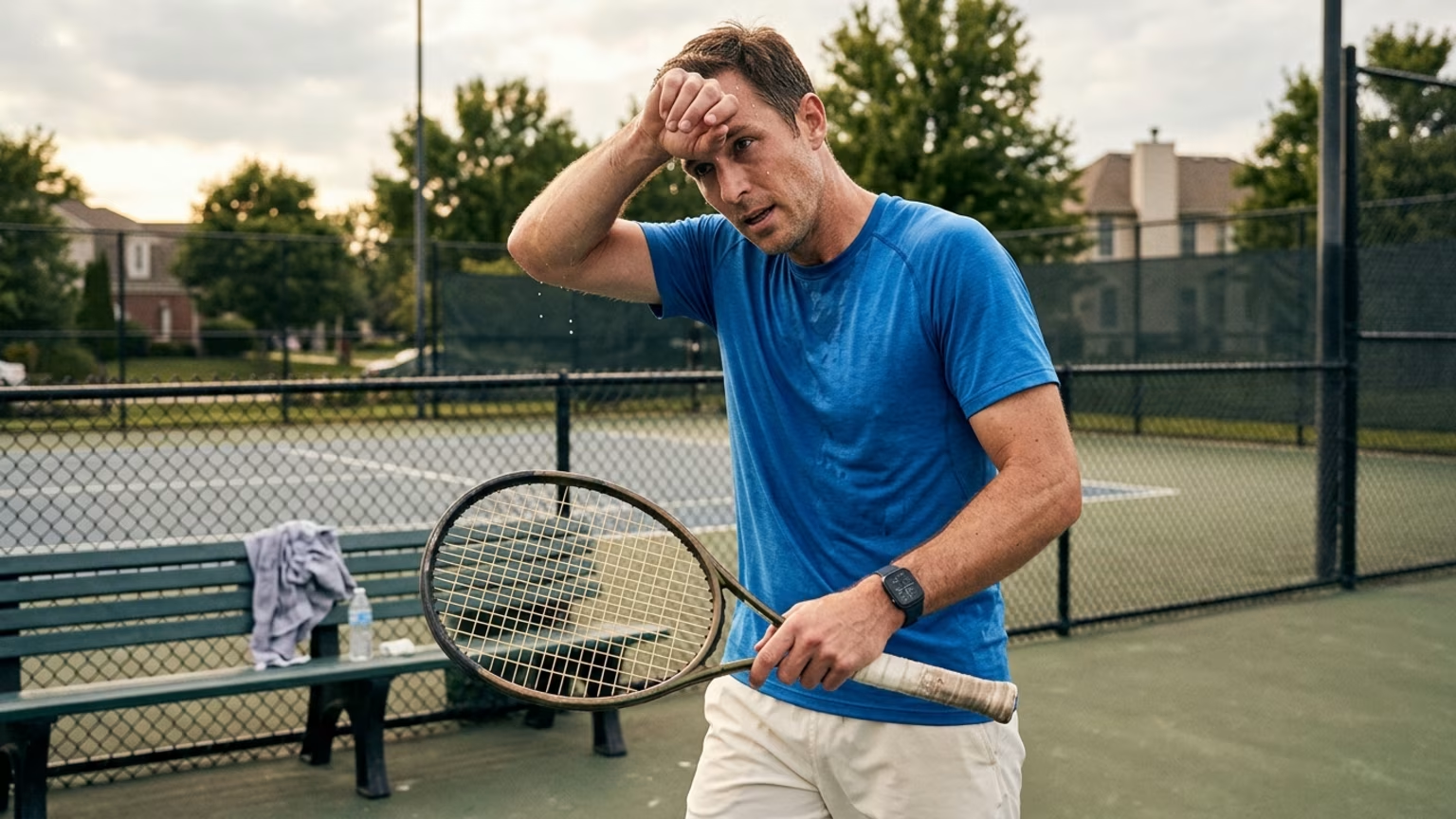
In late 2026, Oura analyzed wearable data to see how recreational tennis impacts heart health and recovery. Learn what this means for your athletic longevity.
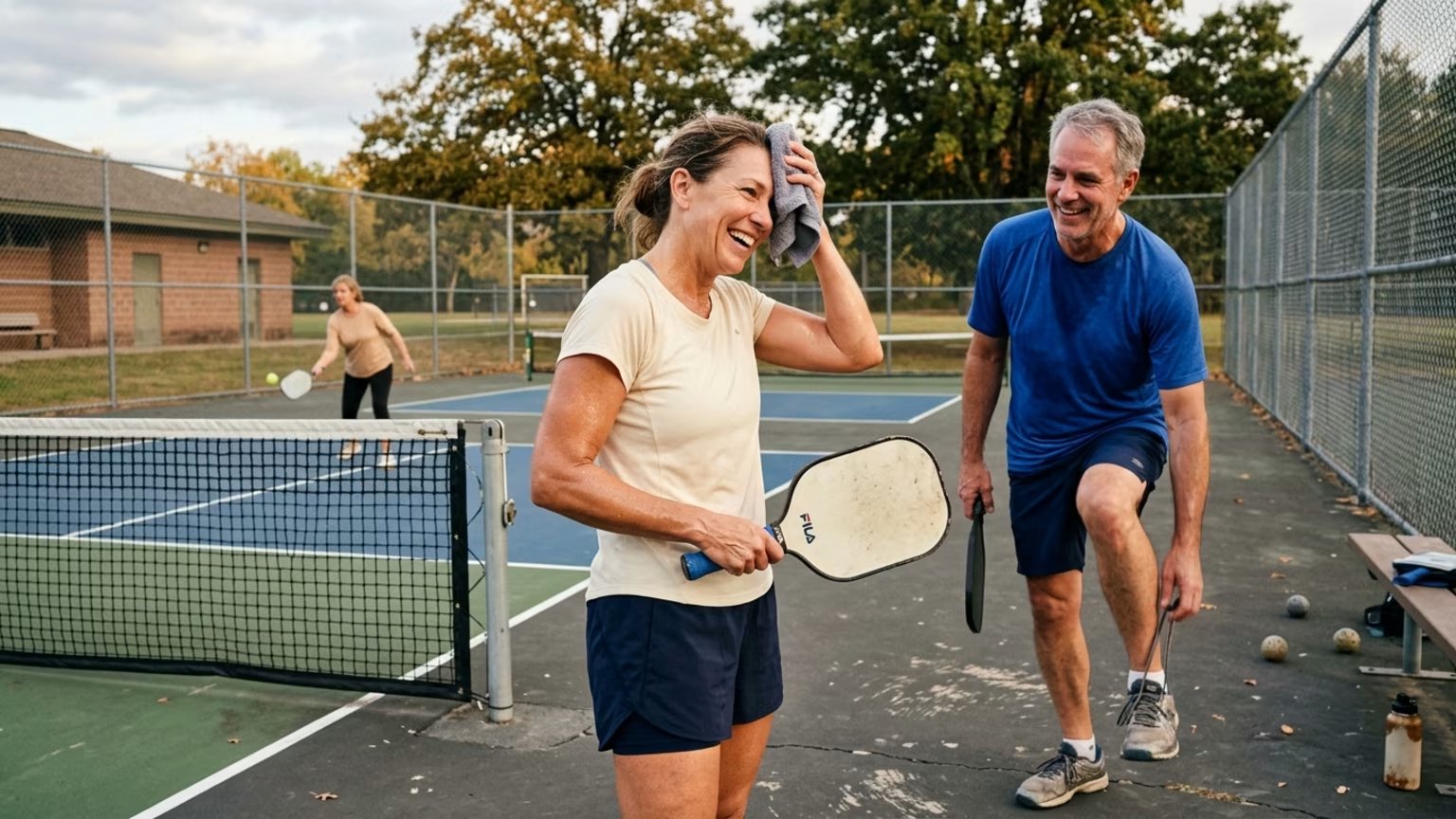
Recent guidelines emphasize gradual progression, dynamic warm-ups, and scheduled recovery to help adult racquet sports players maintain athletic longevity.
Read practical guidance for better movement, smarter preparation and a game that keeps working for you.
explore the Blog
