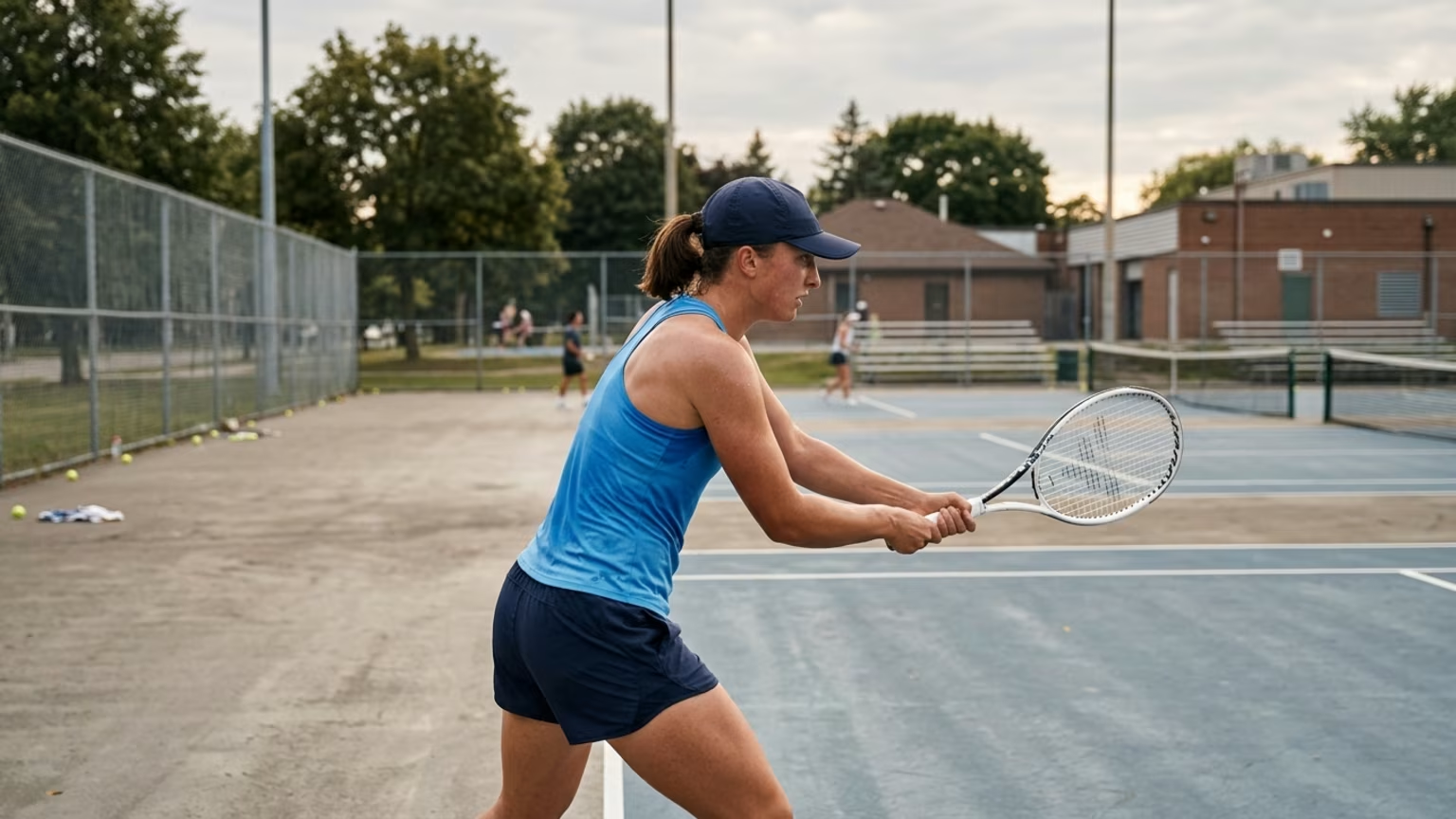

Coach Francis Roig recently detailed the footwork and rally tempo changes behind Iga Swiatek’s game. Learn how to apply these concepts to recreational play.




In September 2026, coach Francis Roig detailed the technical and footwork changes he implemented with Iga Swiatek after Wimbledon. Roig stated that they delayed major alterations earlier in the year because Swiatek was struggling with low confidence. The timing of the clay season was also unsuitable for major technical revisions. The coaching changes occurred during a results-driven period as Swiatek sought to reverse a difficult stretch of performance.
According to reports from Punto de Break, Roig and Swiatek relocated to Barcelona after Wimbledon. They completed 15 intensive training sessions before introducing the changes during the North American hard court swing. Roig described his primary objective as changing the speed of Swiatek's point construction. He argued that players need to play tennis instead of ping-pong.
The tactical adjustments focused heavily on movement and tempo management. Roig wanted Swiatek to use her forehand more often as a complement to her backhand. He specifically instructed her to add more spin to her backhand side. This extra spin creates more time between one shot and the next.
Adding margin to the backhand effectively reduces the speed at which the entire exchange unfolds. Roig noted that Swiatek possesses the physical condition and movement skills to use a slower rally pattern. He believed she could rely on a more deliberate construction instead of rushing to finish points. These technical changes were closely linked to her footwork and a calmer acceleration profile.
Roig’s technical thesis is that greater control does not necessarily mean passive tennis. Instead, the player can use spin and court position to create a more favorable ball. Only after creating this advantage should the player accelerate. His comments suggest that footwork is not merely a defensive skill in Swiatek’s case.
It is the foundation that allows her to change rally tempo and move around the backhand. The second serve was another major area of focus for the coaching team. Roig disliked Swiatek standing too close to the baseline on her second serve. He believes elite opponents can immediately attack a serve that lacks exceptional power from that position.
His preferred pattern was for her to create momentum from farther behind the baseline. Starting further back creates space to look for a more manageable ball during the ensuing rally. Roig connected these changes directly to error reduction across her game. He noted that Swiatek had previously tried to hit too hard when the situation did not require it.
Swiatek has separately mentioned that her work with Roig eventually clicked and became more natural. She noted that the adjustments required less conscious thought over time. The initial results showed promise alongside moments of competitive volatility. During the North American hard court swing, Swiatek and Roig won the WTA Toronto title.
They also reached the semifinals in Cincinnati while the changes were being actively implemented. Roig called the Toronto title particularly important for her confidence moving forward. He also emphasized that the development process remained unfinished and required more time. That ongoing transition was evident during the US Open round of 16.
Swiatek lost to Qinwen Zheng after leading 5-0 in the opening set. She also held three set points before losing, which illustrated that the technical changes had not eliminated all match pressure. The transition toward a more deliberate point construction requires significant time to execute consistently under tournament conditions.
Translating elite coaching changes to adult recreational racquet sports requires looking at the underlying principles. Professional players possess the physical conditioning to sustain long and grueling rallies. Adult players can still apply Roig's philosophy of tempo management to their own matches. The central lesson is that point construction can be adjusted through height, spin, and court position.
Players do not have to rely solely on hitting with maximal pace to win points. Our team at Evercourts sees this exact issue frequently at the local club level. Many players rush their shots and try to hit a winner on every ball. You can often see a dramatic improvement by aiming to create neutral balls before attacking.
Adding spin gives you more time to recover and choose your next shot under less pressure. This approach builds a more reliable game and supports athletic longevity on the court. Finding ways to reduce the physical toll of each rally allows you to play longer and recover faster. Managing your court coverage efficiently is a critical skill for adult players.
Adult players should also consider building their game around their stronger wing. If the forehand is your more reliable attacking shot, use height and cross-court patterns to earn opportunities. You can use these tactical setups to run around the backhand safely. If your backhand is stronger, do not force a forehand-centered game simply because it worked for Swiatek.
Treating footwork as the true foundation of shot production is another vital takeaway. When I first started playing pickleball, I noticed how many people skipped warming up entirely. They would jump straight out of their cars and right up to the kitchen line. I tried doing that and immediately pulled a calf muscle.
Pickleball requires just as much explosive lateral movement as tennis, just in a tighter space. Since then, I always spend five minutes doing dynamic lunges and ankle rolls. It changes everything about how confident I feel pushing off the baseline. A stable base allows you to control the timing of the exchange without abandoning attacking opportunities.
Roig explicitly linked Swiatek’s technical adjustments to movement and footwork. Before changing your swing mechanics, examine whether you are arriving balanced and using small adjustment steps. This is a critical factor when diagnosing the preparation and movement mistakes behind racquet sport misses. Proper recovery footwork allows you to reset for the next shot effectively.
Adult players can also benefit from rethinking their second serve strategy. Roig's advice to start further back on the second serve is highly practical. Moving a step behind the baseline can create more reaction time for the server. It allows you to build momentum and find a stable position for the next shot.
Testing this adjustment in practice is much better than blindly copying a professional. Practise serving from your normal position and then try standing one step farther back. Track whether the deeper starting spot improves your serve confidence and first-ball quality. This helps you understand why you feel slow on court after a difficult return.
A dependable second serve with adequate height and depth is incredibly valuable. Opponents can be pressured through consistent ball quality and smart movement. You do not need to force a powerful serve that results in double faults. Controlling your court positioning makes the next decision much easier to execute.
Better positioning directly improves how you pivot and change directions during a difficult rally. Roig argued that players can apply pressure through consistency rather than attempting to hit a winner constantly. For recreational players, protecting the ability to keep playing is the ultimate priority. Adjusting your tempo and court positioning helps you manage your physical exertion during long matches.
This aligns directly with safer court footwork principles designed to keep you playing.
Over the next season, expect more players to focus on slowing down the tempo of baseline exchanges. The pressure to hit harder has peaked, and coaches are now looking for tactical advantages through varied spin. Players who learn to manage the speed of the rally will find themselves in better control of tough matches. This shift toward deliberate point construction will likely redefine how baseline strategy is taught at every level.
Follow Evercourts for practical insights on tennis, pickleball and padel performance, movement, recovery and healthy ageing. Stay connected for new articles, research-led guidance and ideas to help you play well and keep playing for years.


An evidence check on sports supplements like tart cherry juice. Learn why racquet sports players should prioritize core nutrition over functional foods.
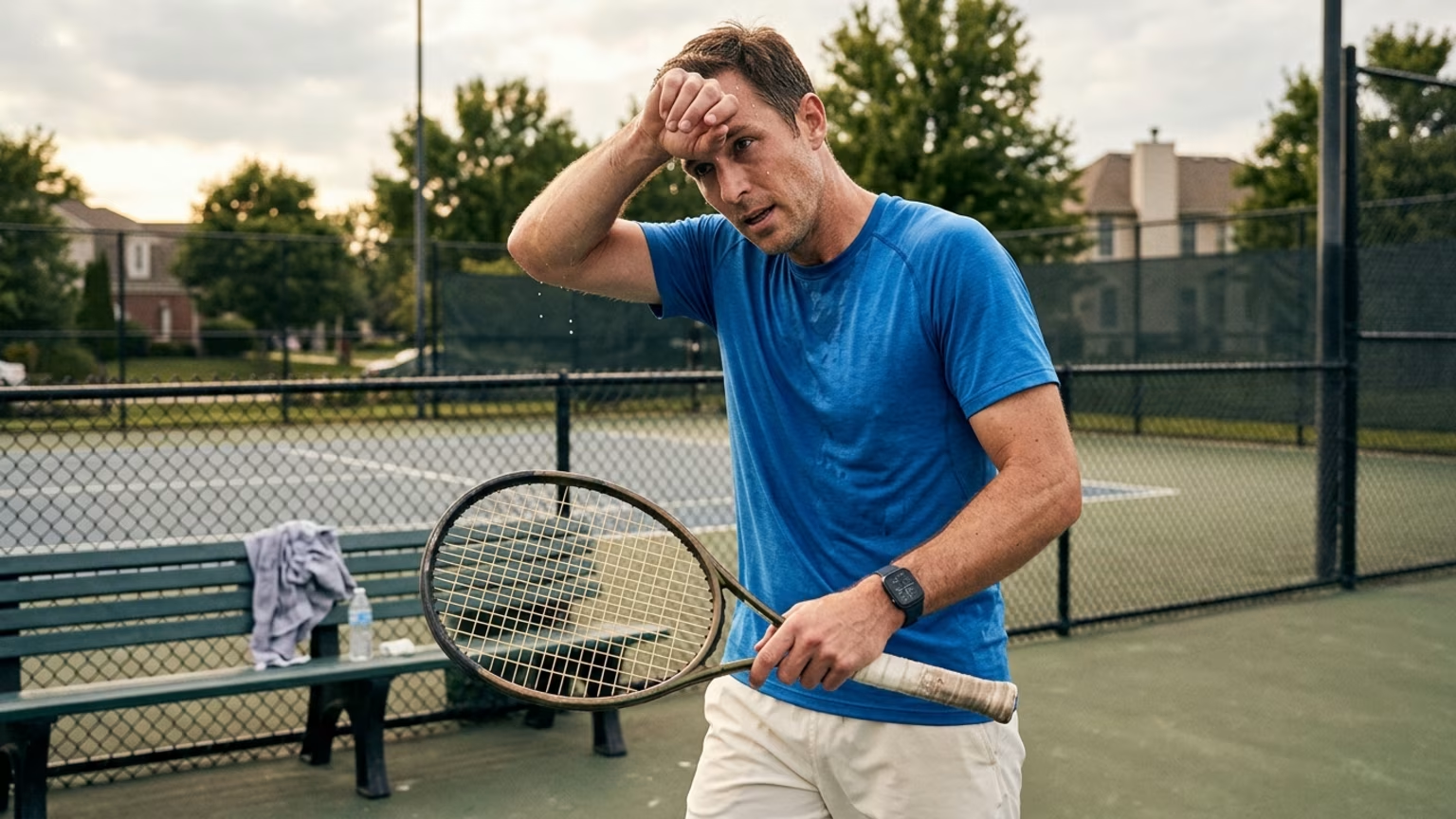
In late 2026, Oura analyzed wearable data to see how recreational tennis impacts heart health and recovery. Learn what this means for your athletic longevity.
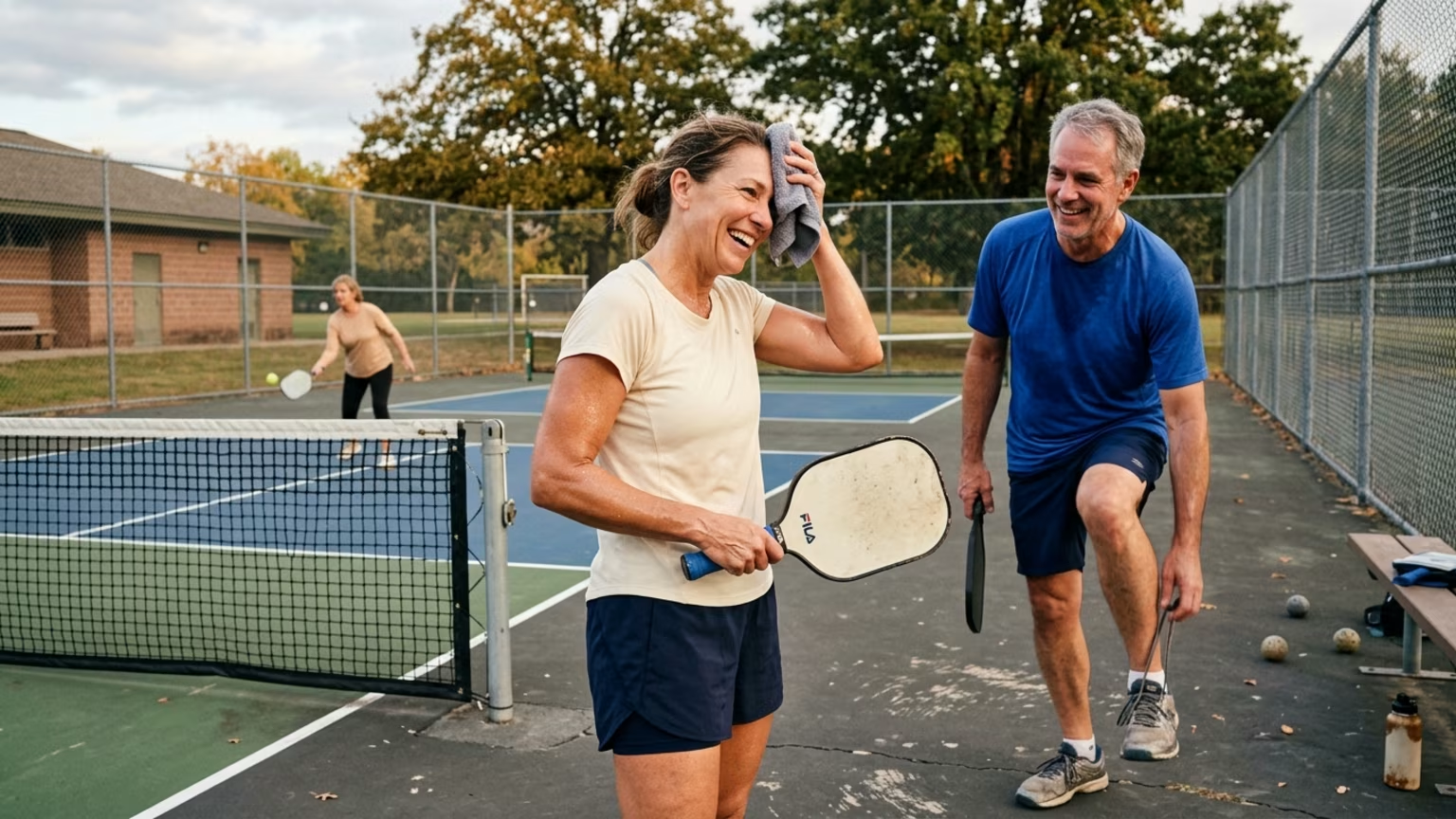
Recent guidelines emphasize gradual progression, dynamic warm-ups, and scheduled recovery to help adult racquet sports players maintain athletic longevity.
Read practical guidance for better movement, smarter preparation and a game that keeps working for you.
explore the Blog
