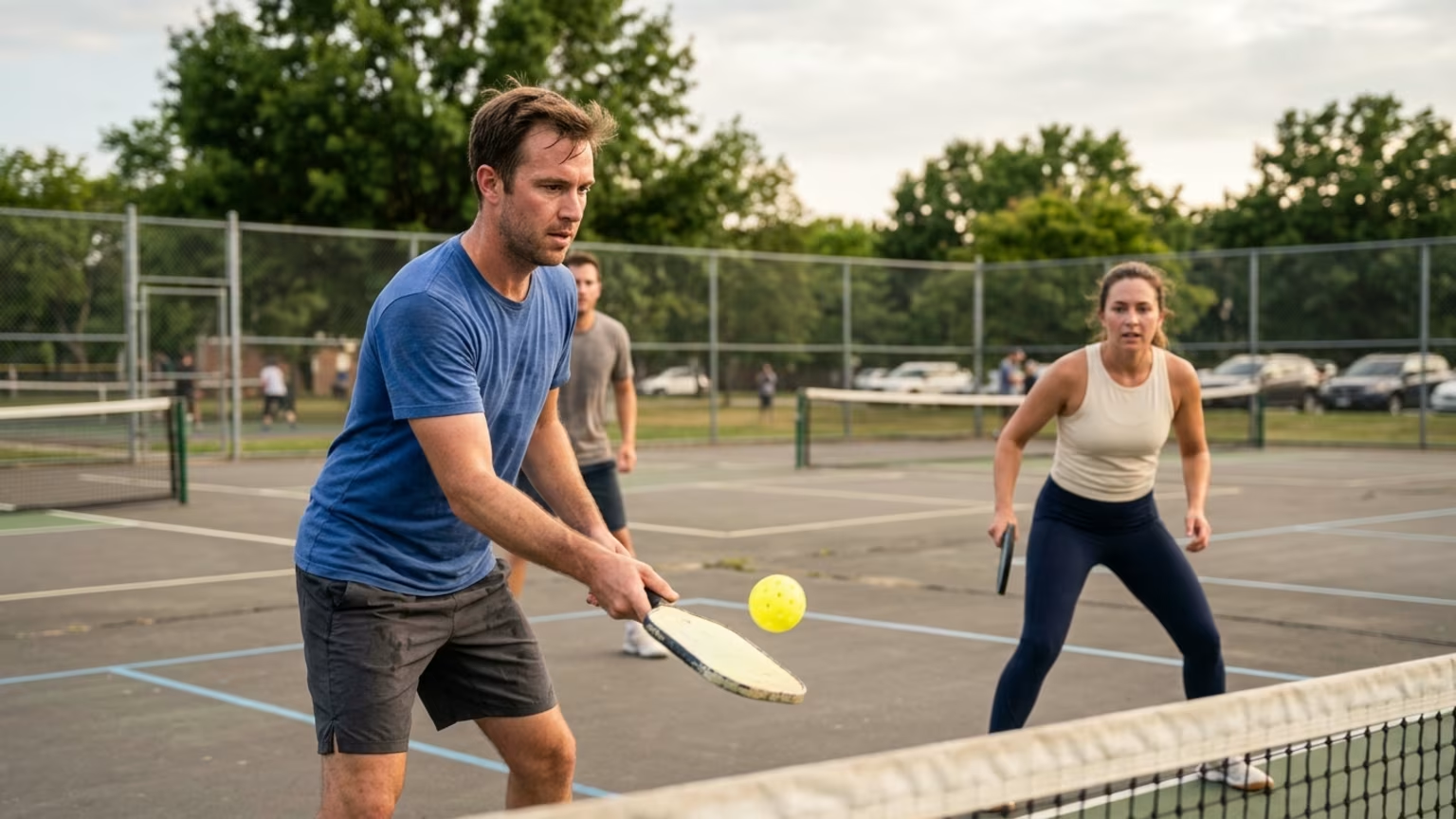

World No. 2 Gabriel Tardio shared a pickleball progression model during his 2026 Singapore clinics, emphasizing footwork, consistency, and targeted strength.




On September 16, 2026, The Straits Times published a detailed interview with 20-year-old Bolivian pickleball professional Gabriel Tardio. Speaking from ARFC Singapore in Woodleigh, the world No. 2 shared his progression model for amateur players. Tardio visited Singapore from September 16 to 18 to conduct three clinics for recreational players. His visit combined a professional tournament schedule with dedicated amateur instruction. This provided direct insight into how elite competitors view recreational development.
Tardio outlined specific priorities based on a player's development stage. For absolute beginners, his messaging is highly conservative. He recommends prioritizing consistency and basic shots rather than trying to replicate professional techniques. He specifically warned against learning advanced flick shots immediately.
New players encounter a massive volume of contradictory online instruction. Because of this, it remains vital to simplify the game early on. For players moving from a basic level toward advanced play, Tardio identified three main differentiators. He cited consistency, footwork, and strength as the defining factors that separate intermediate players from upper-level competitors.
His specific definition of strength focuses heavily on the forearms, wrists, and shoulders. Rather than lifting heavy weights to build overall muscle mass, he recommended pull exercises featuring lighter wrist loads and higher repetitions. He also stressed the importance of core stability, leg capacity, and explosiveness. Developing the wrist and mastering flick work allows a player to counter earlier in a rally.
This specific strength work improves hand speed and helps players attack from difficult positions. It also allows competitors to take balls out of the air with genuine pace. For the most advanced amateur players, Tardio shifts the training focus away from stroke mechanics. He instead prioritizes pattern recognition, identifying target areas against opponents, and adjusting tactics mid-match.
Tardio's presence in the region brings high-level validation to his structured coaching methods. His Singapore clinics were scheduled to cover fundamental mechanics alongside dinks and drops. Instructors also planned to teach hands battles, time management, and balls taken out of the air. These sessions help bridge the gap between amateur practice and professional strategy.
When a 20-year-old professional discusses athletic explosiveness, adult recreational players must interpret that guidance carefully. Tardio built his reputation on aggressive doubles play and extreme court athleticism. Regional coverage of his appearances, including his entry in the 2026 Kuala Lumpur Cup, consistently highlights these dynamic traits. For the weekend player, trying to replicate that raw movement speed directly is a fast track to physical setbacks.
In our experience, applying elite advice requires scaling the intensity for the adult body. When I first started playing pickleball, I noticed how many people skipped warming up entirely. They would jump straight out of their cars and right up to the kitchen line. I tried doing that and immediately pulled a calf muscle.
Pickleball requires just as much explosive lateral movement as tennis, just in a tighter space. Since then, I always spend five minutes doing dynamic lunges and ankle rolls before a match. It changes everything about how confident I feel pushing off the baseline. Recreational players should view Tardio's focus on footwork through a lens of athletic longevity.
Instead of chasing maximum sprinting speed, adult players should prioritize controlled deceleration, spatial balance, and recovering safely between shots. Tardio's specific wrist and shoulder advice also requires sensible application. High repetition wrist work can easily aggravate existing conditions if performed with poor technique or excessive volume. Players managing previous injuries must begin below maximum intensity.
Health and injury prevention guidance consistently recommends stopping rather than playing through joint pain. Adult athletes must also ensure safe court conditions before starting intense practice sessions. Beginners should choose one or two trusted coaching sources instead of constantly overhauling their technique. Focusing on these basic health variables ensures a longer playing career.
Building a foundation of lower body strength is crucial before attempting aggressive upper body shots. A structured 12-minute court-ready warm-up prepares the shoulders and core safely. These simple routines prevent the common setbacks that plague recreational leagues. Sensible preparation is the true foundation of sustainable court movement.
The coaching framework Tardio discussed relies heavily on the Dynamic Universal Pickleball Rating system. This global rating scale organizes players from a base rating of 2.000 for beginners up to 8.000 for top professionals. Tardio reported his own rating as an elite 6.923 during his Singapore visit. This provides a clear mathematical context for his coaching divisions and training priorities.
He specifically highlighted the developmental gap between the 3.0 and 5.0 levels. Players sitting around a 3.0 rating generally have basic rallies established but lack the consistency required for higher divisions. Moving toward the 5.0 threshold requires the dedicated strength and footwork routines Tardio outlined. Players safely above the 5.0 mark are the ones who must shift toward tactical pattern recognition.
This rating system helps players benchmark their current capabilities without relying on guesswork. It gives amateurs a realistic timeline for their development across several seasons. Trying to skip from a 3.0 mindset directly to a 6.0 strategy usually results in mounting unforced errors. A functional strength program bridges these rating gaps reliably.
The integration of top professional competition with local amateur clinics will likely accelerate across international markets over the next season. As leading professionals travel for major events, their instructional sessions will help standardize training methods globally. We expect to see more structured development models filter down into recreational club programming across the world. This structured approach will slowly replace the chaotic instruction that currently defines many local courts.
As players demand better coaching, regional clinics will focus less on trick shots and more on deliberate point construction. Instructors will emphasize sustainable mechanics, intelligent match management, and targeted physical preparation. This shift will ultimately support healthier, more competitive racquet sport communities worldwide.
Follow Evercourts for practical insights on tennis, pickleball and padel performance, movement, recovery and healthy ageing. Stay connected for new articles, research-led guidance and ideas to help you play well and keep playing for years.


An evidence check on sports supplements like tart cherry juice. Learn why racquet sports players should prioritize core nutrition over functional foods.
In late 2026, Oura analyzed wearable data to see how recreational tennis impacts heart health and recovery. Learn what this means for your athletic longevity.
Recent guidelines emphasize gradual progression, dynamic warm-ups, and scheduled recovery to help adult racquet sports players maintain athletic longevity.
Read practical guidance for better movement, smarter preparation and a game that keeps working for you.
explore the Blog
