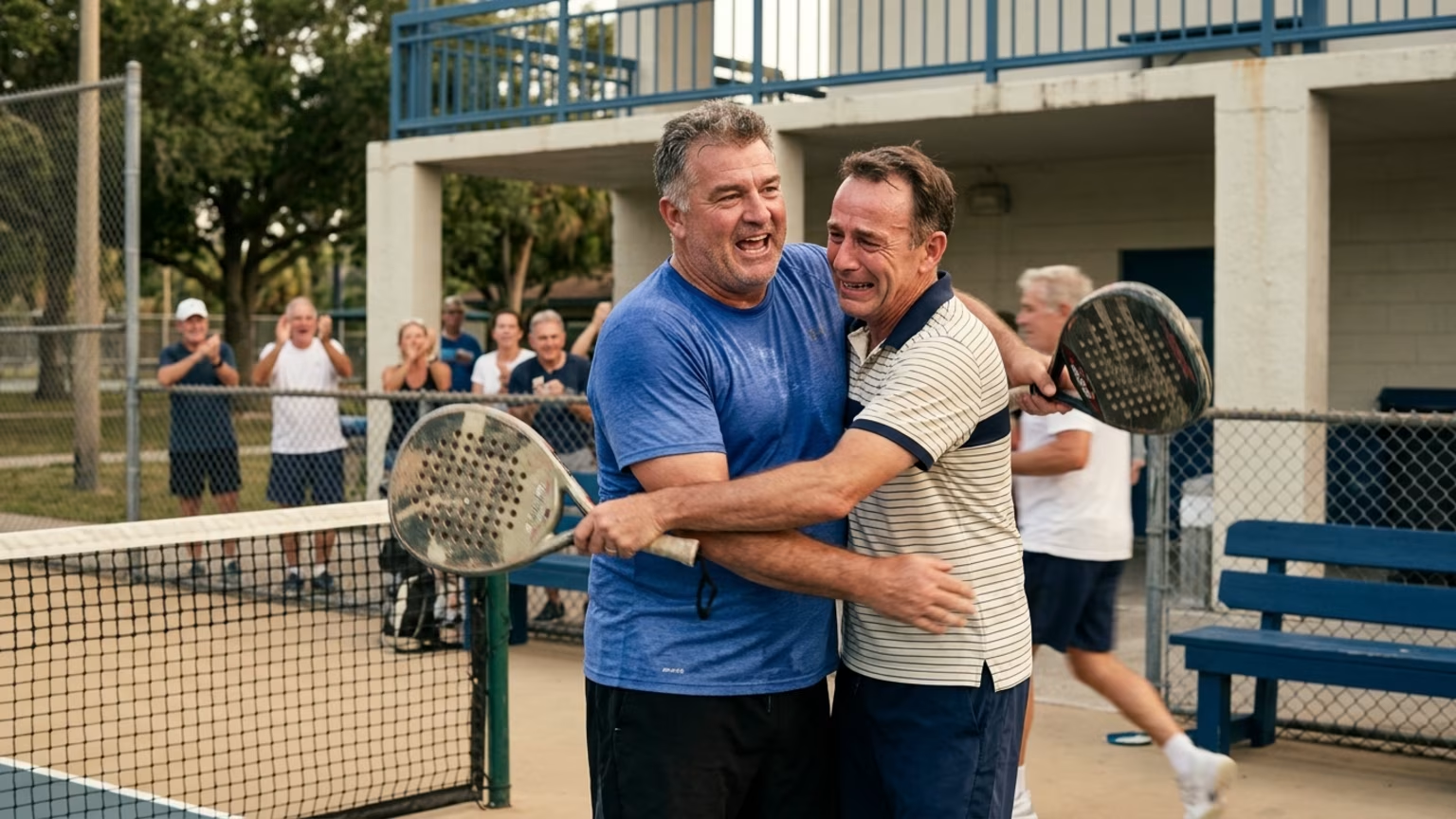

Gibraltar made history at the FIP Senior World Cup padel qualifiers in Argentina. Learn what adult players can take from the multi-day senior team format.




In September 2026, the Gibraltar men's padel team made history by defeating Poland at the FIP Senior World Cup qualifying event in Argentina. This victory marked Gibraltar's first participation in a team championship and immediately secured their qualification for the tournament's final stage. The opening day results demonstrate that senior international padel is not limited to the most established nations. Teams from Europe and the Americas traveled to Argentina to compete, showcasing a formal pathway for older athletes to remain involved in organized international sport.
The International Padel Federation hosted the qualifying stage with a format designed to test national depth. Men's teams competed across five distinct age categories, which include the 40+, 45+, 50+, 55+ and 60+ divisions. Gibraltar won three of the five category matches against Poland to secure the overall tie.
The winning pairings were Taylor and Olivero in the 40+ category, Federico and Valverde in the 45+ category and Aguilera and Sheriff in the 60+ category. Poland managed to win the 50+ and 55+ divisions. However, those two victories were not enough to overcome Gibraltar's strong start. The Gibraltar team was guided by Jerry Aguilera and Yari Olivero.
Slovakia also secured a historic result by qualifying for the final stage of a team championship for the first time. They defeated Lithuania 3 to 2 in a closely contested tie. Lithuania won the 45+ category and later regained the lead by winning the 60+ match.
However, Slovakia completed a resilient comeback by winning the 40+, 55+ and 50+ categories. Slovakia's decisive victories came from Chovanec and Holly in the 40+ category, Šurina and Hatiar in the 55+ category and Stanko and Strapek in the 50+ category.
Venezuela joined the list of qualifiers after defeating Ukraine in a demanding matchup. Ukraine won the opening 45+ category, which immediately put pressure on the Venezuelan squad. Venezuela responded with four consecutive victories to claim the tie and secure its first appearance at the tournament's final stage.
Garcia and Pazos won the 40+ category, Calvo and Zavatti took the 60+ category, Sydow and Lopez won the 55+ category and Urdaneta and Linder secured the 50+ category. The International Padel Federation format also ensures that teams defeated in the first round get another opportunity to qualify through a subsequent stage.
The official schedule identified Saturday's matches as beginning at 10 a.m. local time, which is 3 p.m. Central European Summer Time. The final qualifying match was scheduled for Sunday.
For the adult recreational player, this international format offers practical lessons in athletic longevity and squad depth. The tournament relies on a team structure where national success depends on results across multiple age groups rather than a single open age match. A national team can lose individual categories and still advance if it wins enough of the five match tie.
Weekend players should view their own club matches through a similar lens of match-by-match resilience. You do not need to win every set, and early deficits are simply information about tactics and conditions.
Venezuela and Slovakia both proved that tactical adaptability is vital. Losing an early match does not mean the entire event is lost. For older players, maintaining more than one tactical option can help manage changing physical capacity without ending competitive participation.
This might mean playing with greater margin, changing your return position or reducing unnecessary court coverage during a tough set. Mastering these subtle adjustments is just as important as mastering essential footwork skills.
Physical preparation is the true differentiator for players aiming to compete into their later decades. I remember finishing a tough two-hour padel match on a cold Tuesday night. I woke up the next morning feeling like my lower back was locked in concrete.
For a long time, I just accepted this as the price of playing hard in my forties. But once I started spending just ten minutes on targeted hip mobility before heading to the club, the stiffness almost completely vanished. It taught me that consistent mobility work is the secret to retaining your court coverage as you age, rather than relying solely on speed. A structured routine, like a proper 10-minute padel warm-up, ensures you have the flexibility required to reach wide balls during long tournaments.
Maintaining energy across a multi-day schedule, like the Saturday to Sunday format in Argentina, requires strategic rest. I used to think a tough conditioning block was the only way to improve my court endurance. Then I started tracking my sleep.
I noticed that on days I slept less than six hours, my reaction time at the net was noticeably sluggish. I felt completely gassed by the second set, and my shot selection became reckless. Prioritizing consistent rest did more for my tactical discipline and late match decision making than any extra sprints ever did. Managing sleep schedules is the most effective way to maintain mental sharpness during multi-day schedules for player rest.
The requirement to field competitive teams across five age groups exposes the physical demands of the sport. According to a recent report in the Economic Times, physiotherapists are seeing more padel and pickleball related injuries. These clinical reports highlight an increase in ankle, wrist, knee and shoulder problems as participation grows.
Adult players must treat recurring pain and reduced mobility as clear signals to consult a qualified clinician. Ignoring symptoms or simply playing through discomfort will only shorten your competitive timeline. Developing a reliable doubles partnership and balancing heavy padel matches with targeted strength training are necessary steps for athletic longevity.
As we look toward the next season, the FIP Senior World Cup format will likely influence how regional federations organize their own tournaments. The clear progression from the 40+ to 60+ categories provides a visible incentive for continuous participation. Expect more countries to develop dedicated training programs specifically designed for their older athletes.
The ability to field healthy, well prepared pairs in the 55+ and 60+ categories will become a significant competitive advantage. This evolution confirms that smart preparation, consistent recovery and tactical discipline are the true keys to a long career on the court.
Follow Evercourts for practical insights on tennis, pickleball and padel performance, movement, recovery and healthy ageing. Stay connected for new articles, research-led guidance and ideas to help you play well and keep playing for years.


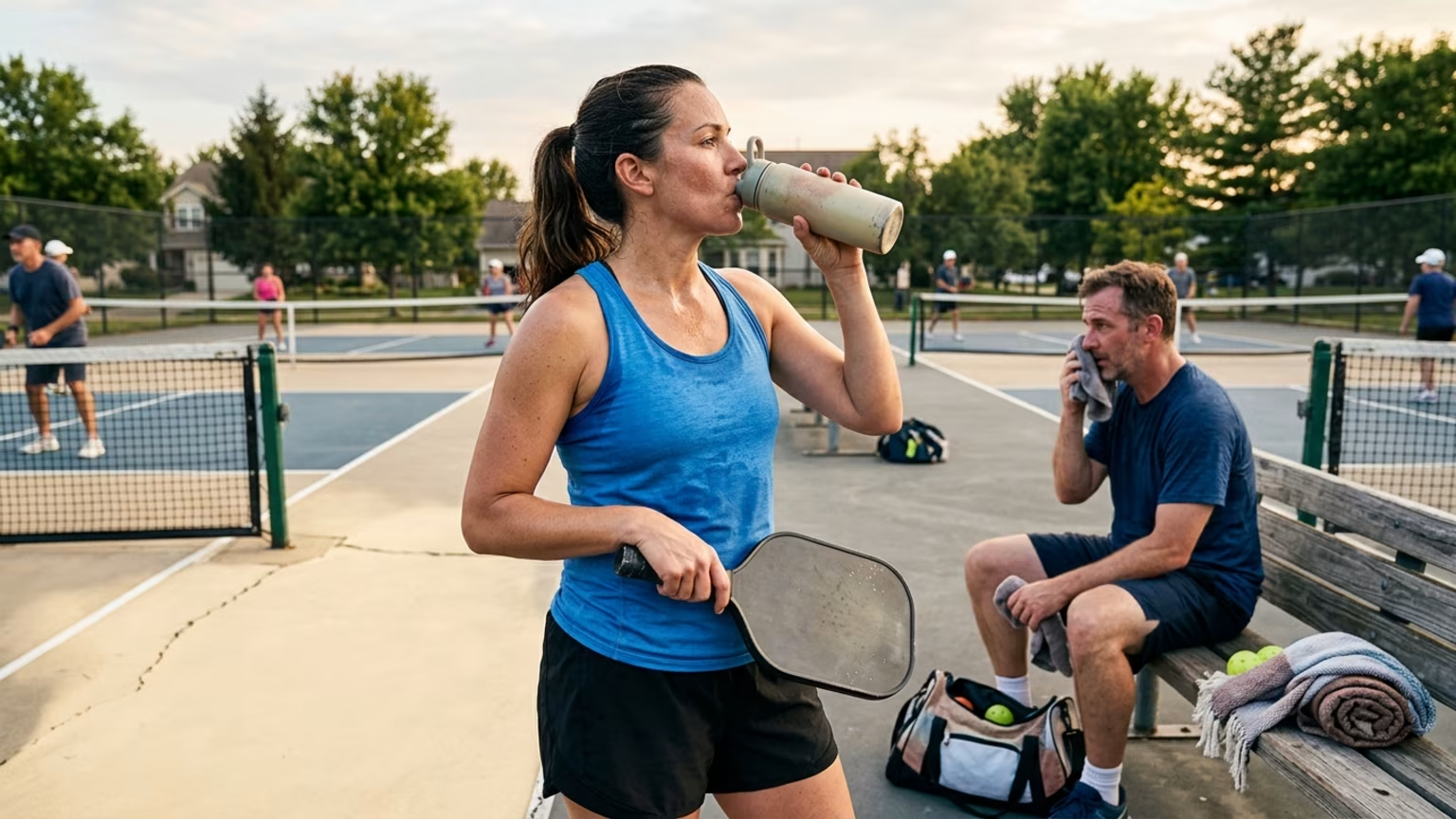
Understand how sleep impacts recovery for tennis, pickleball, and padel. Learn practical ways adult players can monitor rest and manage their injury risks.
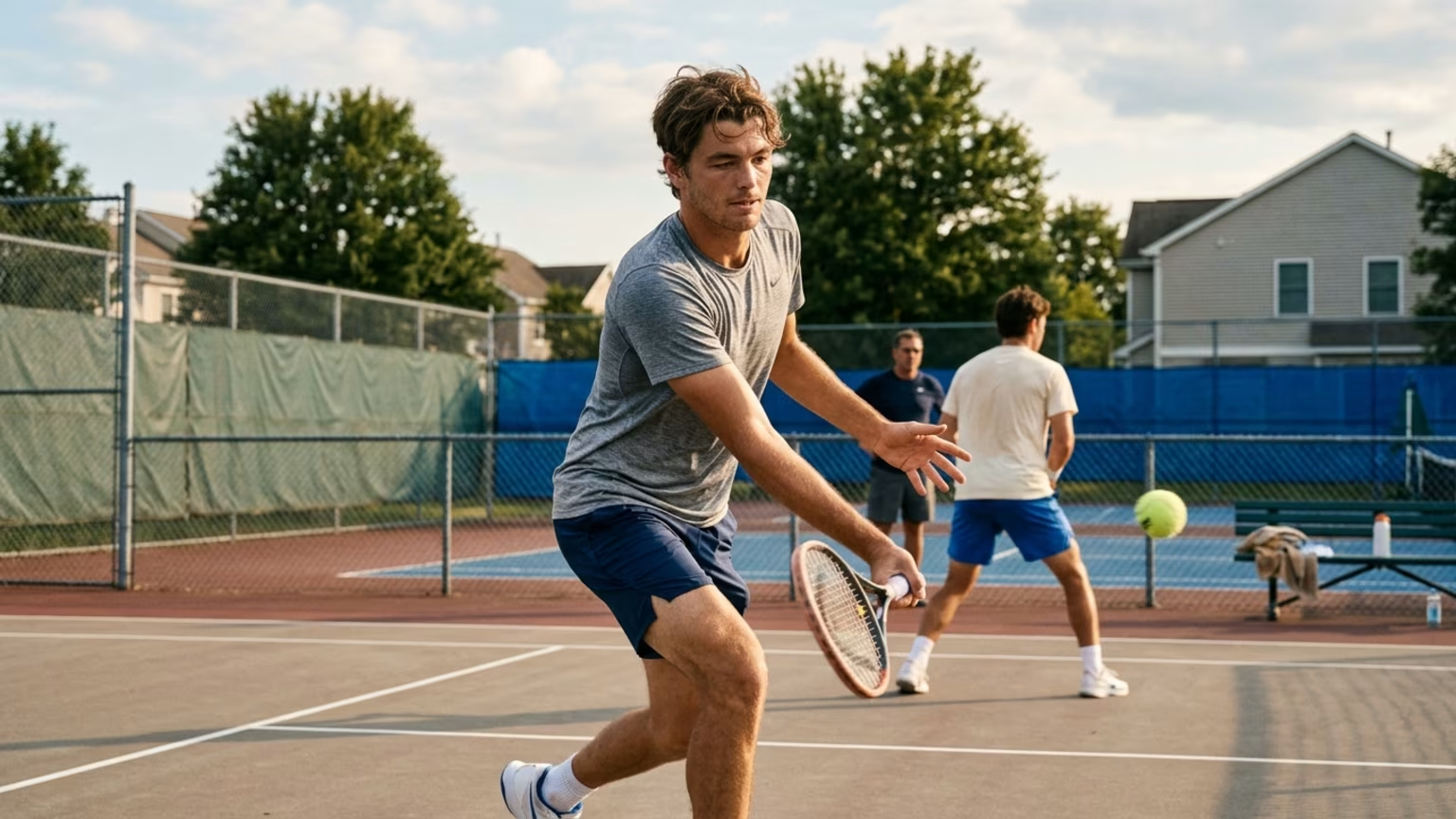
Taylor Fritz says retail and tournament tennis balls perform differently. Learn how equipment consistency impacts match preparation for adult racquet players.
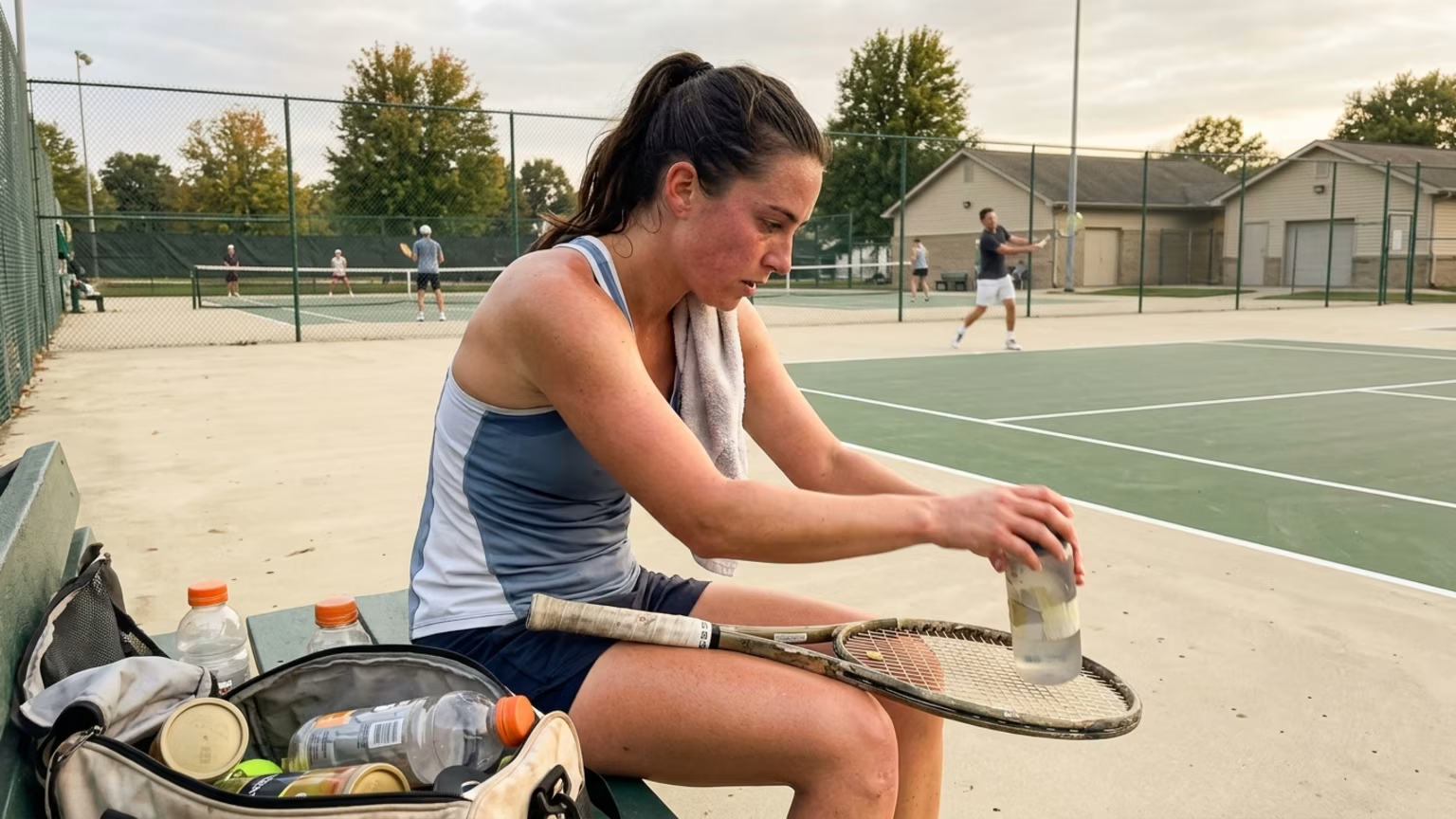
A Times analysis highlights how an expanded pro tennis calendar and late matches affect player health. See how adult amateurs should manage their court workload.
Read practical guidance for better movement, smarter preparation and a game that keeps working for you.
explore the Blog
