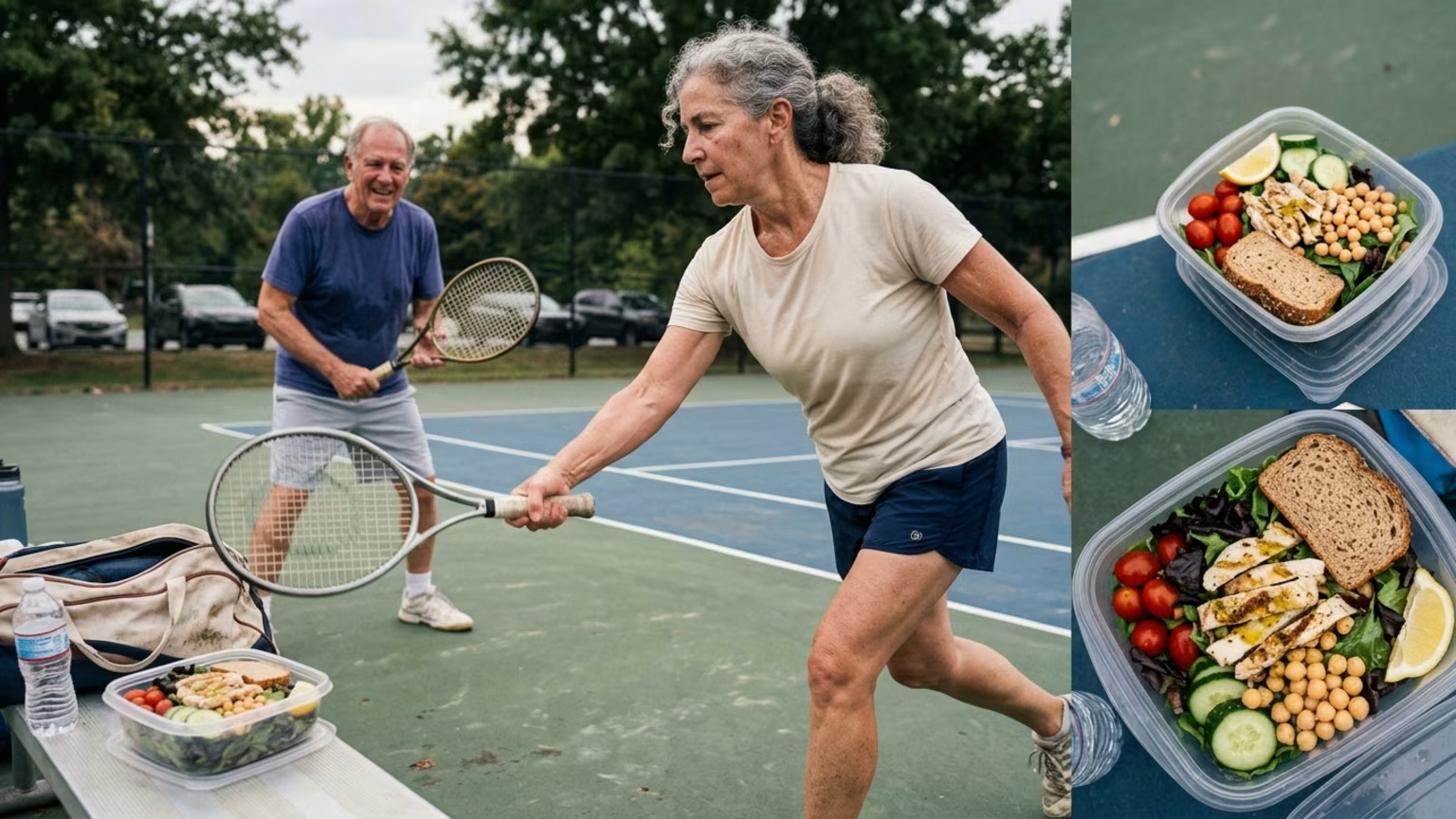

Discover how a Mediterranean-style diet and consistent protein distribution can help aging racquet sports athletes preserve muscle mass and on-court performance.




When I first started playing pickleball, I noticed how many people skipped warming up entirely. They would jump straight out of their cars and right up to the kitchen line. I tried doing that and immediately pulled a calf muscle. Pickleball requires just as much explosive lateral movement as tennis.
The sport demands serious agility in a very tight space. Since then, I always spend five minutes doing dynamic lunges and ankle rolls. It changes everything about how confident I feel pushing off the baseline. That same rushed mentality often applies to how we feed our bodies after walking off the court.
You have heard it a million times: You must consume a massive protein shake immediately after playing to prevent muscle loss. Here is why that is outdated. Modern sports nutrition shows that overall daily protein intake and consistent dietary patterns matter far more than a single post-match supplement. Relying solely on a rapid liquid drink ignores the comprehensive benefits of whole foods.
A balanced approach is critical for athletes focused on healthy aging. Rather than stressing over a strict anabolic window immediately after a match, players should focus on distributing nutrients evenly throughout the day. This shift in perspective helps players maintain lean tissue and functional strength over decades of play on hard courts. Understanding the broad nutritional requirements of your body is a much more effective strategy for staying active.
Many recreational players focus too heavily on post-workout recovery while completely neglecting their morning and afternoon nutrition. They might eat a small breakfast and skip lunch before heading to the tennis club. By the time they finish playing, their bodies are already severely depleted of energy. A single protein shake cannot undo an entire day of poor nutritional choices.
This misconception largely originated in competitive bodybuilding and was quickly adopted by recreational athletes. Supplement companies popularized the idea that muscles would waste away if they were not flooded with amino acids instantly after exercise. Racquet sports players naturally adopted this advice to protect their joints and muscles from the physical toll of continuous play. It seemed logical that a hard session of padel required an equally aggressive nutritional response.
This belief is further reinforced by the convenience of modern sports products. It is much easier to buy a pre-packaged shake than to meal prep a balanced lunch. When busy players leave the office and head straight to the padel courts, liquid nutrition feels like a necessary shortcut. Over time, this shortcut morphs into a hard rule that players blindly follow without checking the actual science.
It is easy to understand why this idea stuck around in locker rooms. Older players naturally want to preserve their power on the tennis court and avoid losing a step to younger opponents. When fitness magazines promise that a powder can halt age-related decline, athletes understandably listen. However, this narrow focus on supplements often causes players to ignore the actual quality and consistency of their daily meals.
The physiological reality is that the human body builds and repairs tissue continuously over a 24-hour cycle. The U.S. National Institutes of Health Office of Dietary Supplements summarizes sports nutrition guidance recommending approximately 1.2 to 2.0 grams of protein per kilogram of body weight per day for athletes. The American College of Cardiology 2026 review also confirms that evidence in healthy adults is most consistently supportive of protein intakes around 1.2 to 2.0 grams per kilogram per day when distributed across meals and snacks.
Protein is composed of amino acids, which act as the primary building blocks for our muscles. When we play an aggressive game of tennis, we create tiny micro-tears in our muscle fibers. The body requires a steady stream of these amino acids to repair those tears efficiently. Delivering a massive dose of protein all at once does not force the body to use it all for muscle repair.
This daily total is significantly higher than basic recommendations for the general public. The British Dietetic Association says athletes generally require approximately 1.4 to 2.0 grams of protein per kilogram of body weight per day, compared with about 0.75 grams per kilogram per day for non-exercising adults. The American College of Cardiology review notes that approximately 0.8 grams per kilogram per day merely reflects a long-standing deficiency-prevention estimate.
For players aiming to stay strong, matching protein intake to activity level is crucial. Racquet sports demand intense lateral movement, sudden decelerations, and explosive overhead swings. The American College of Cardiology review describes approximately 1.6 grams per kilogram per day as a level at which resistance-training adaptations are often optimized in typical training conditions, while endurance athletes may require about 1.8 grams per kilogram per day.
Beyond just raw protein numbers, the overall quality of your diet plays a vital role in muscle preservation. A 2026 observational study of 639 people in Henan, China, reported that participants with the highest Mediterranean diet adherence had lower odds of low muscle mass and sarcopenia than those with the lowest adherence. The reported odds ratios were 0.368 for high muscle mass and 0.319 for low sarcopenia risk, although the study did not find a relationship between Mediterranean diet adherence and muscle strength or gait speed. This suggests that preserving muscle and strength for lifelong racquet sports is heavily influenced by how you structure your meals overall.
Translating these guidelines to the real world requires simple math and practical grocery habits. For a 75-kilogram player, that recommended range corresponds to approximately 90 to 150 grams of protein per day. Hitting this target requires planning rather than relying on a single large dinner or a post-match shake. Distributing this amount across the day ensures the body has a steady supply of building blocks for recovery.
Timing still matters, but it does not need to be stressful. The National Institutes of Health fact sheet describes a practical post-exercise target of approximately 0.3 grams per kilogram of high-quality protein within 0 to 2 hours after exercise, followed by additional protein every 3 to 5 hours. Fish, poultry, and beans provide excellent protein. Lentils, nuts, and seeds also deliver important micronutrients that support long-term performance.
Incorporating these Mediterranean elements does not mean you have to overhaul your entire life. It simply requires making intentional swaps during your regular grocery runs. You might choose Greek yogurt instead of a sugary cereal for breakfast. Small changes compound over time, providing your muscles with a consistent supply of quality fuel.
Players experiencing stiffness and fatigue should track their actual on-court metrics rather than just obsessing over protein grams. Serve speed, repeated sprint ability, and late-match movement are true indicators of recovery quality. If you are learning how aging changes racquet sports performance, adjusting your daily nutrition to meet these higher targets can make a noticeable difference in how your legs feel during a third set. Taking an integrated approach is key to supporting healthy aging on court: a performance framework for playing longer.
Fuel your recovery continuously throughout the day with a balanced, high-protein diet rather than relying on a single post-match supplement.
True athletic longevity requires sustained daily habits instead of rushed solutions. By combining targeted protein intake with a nutrient-rich eating pattern, you give your body the exact tools it needs to recover and thrive. Consistent habits build resilient athletes. Stay consistent, eat well, and the evercourts team will see you on the courts.
Follow Evercourts for practical insights on tennis, pickleball and padel performance, movement, recovery and healthy ageing. Stay connected for new articles, research-led guidance and ideas to help you play well and keep playing for years.


A recent live-play test of a silent pickleball highlights its value for practice, but standard balls still perform better for match play and power control.

An evidence check on sports supplements like tart cherry juice. Learn why racquet sports players should prioritize core nutrition over functional foods.

In late 2026, Oura analyzed wearable data to see how recreational tennis impacts heart health and recovery. Learn what this means for your athletic longevity.
Read practical guidance for better movement, smarter preparation and a game that keeps working for you.
explore the Blog
