

Learn how tennis, pickleball, and padel players can apply the 2026 Hopkins Clinic healthy aging guide to their weekly physical activity and sleep routines.




On September 18, 2026, the Hopkins Clinic published a scientific framework titled "How to Slow Aging? 2026 Scientific Guide: Sleep, Exercise, Nutrition and Stress Management." This new report establishes specific weekly baseline targets for aerobic activity, strength work, and sleep. The guide outlines practical lifestyle targets for adults aiming to preserve their physical function.
Dr. Jing-Yuan Wang medically reviewed the guide. Dr. Wang specializes in neurology and autonomic nervous-system health. His clinical focus also includes brain health, sleep, and longevity medicine. The core exercise benchmark in the report requires 150 to 300 minutes of moderate aerobic activity per week.
Alternatively, individuals can perform 75 to 150 minutes of vigorous aerobic activity weekly. The clinic pairs this cardiovascular target with a requirement for muscle-strengthening work on at least two days per week. The Hopkins article emphasizes that healthy aging means maintaining healthspan, independent movement, and quality of life. The report does not promise to stop or reverse normal biological aging.
The report advises adults to secure seven to nine hours of sleep per night. Sleep duration alone is insufficient to guarantee optimal recovery. Continuity, restoration, and snoring all factor into overall recuperation. Breathing interruptions and daytime fatigue are also critical metrics for an individual's healthspan.
The Hopkins report outlines clear nutrition parameters for adults. The guidance favors vegetables, fruit, whole grains, and legumes. It also recommends consuming nuts, quality protein, and unsaturated fats. Individuals should limit refined sugar, sugary drinks, heavily processed foods, and excess calories.
The guide does not prescribe a specific fixed diet, protein dose, or racquet sports nutrition plan. It strictly rejects the idea that a single biomarker can represent an overall rate of biological aging. Nutrition messages focus heavily on building meals around adequate overall sustenance. Players should prioritize sustainable eating patterns over relying on a single healthy aging food or supplement.
Professional tennis and padel players utilize detailed analytics and extensive coaching teams to monitor their physical output. Elite athletes adjust their training loads daily based on exact physiological responses. For the adult recreational player, applying these Hopkins Clinic targets requires a more practical and self-directed approach. The clinic report does not directly discuss tennis, pickleball, padel, or other racquet sports.
Players must creatively integrate their court hours into these broader health recommendations. Learning how to design a sustainable racquet sports week requires honest evaluation of physical output. Players should track their genuine active movement against the 150 to 300 minute moderate target. The Hopkins article does not specify how many minutes of tennis, pickleball, or padel equal moderate or vigorous activity.
Many players spend significant time at the facility without sustaining an elevated heart rate. Match duration simply is not the same as aerobic training duration. Time spent waiting between games, retrieving balls, or resting during changeovers reduces the actual active minutes. A two hour court booking might only yield sixty minutes of true moderate aerobic work.
Many adults assume that playing matches provides enough physical conditioning for their bodies. Court play alone does not necessarily provide a complete major muscle group strength program. Recreational athletes need to retain at least two weekly strength sessions covering fundamental movement patterns. Understanding how to balance strength training and court time is critical for joint protection.
These sessions should cover squatting, hinging, pushing, and pulling. Players also need to incorporate carrying movements, trunk control, and lower leg work. Short strength sessions are generally easier to sustain than infrequent, exhausting workouts.
I remember finishing a tough two hour padel match on a cold Tuesday night and waking up the next morning feeling like my lower back was locked in concrete. For a long time, I just accepted this as the price of playing hard in my forties. But once I started spending just ten minutes on targeted hip mobility before heading to the club, the stiffness almost completely vanished. It taught me that we do not have to accept pain as a default state of aging.
I used to think a tough conditioning block was the only way to improve my court endurance. Then I started tracking my sleep. I noticed that on days I slept less than six hours, my reaction time at the net was noticeably sluggish, and I felt gassed by the second set. Prioritizing consistent rest did more for my late match stamina than any extra sprints ever did.
A reported British cohort analysis of 80,306 adults provides notable statistical context for court sports. The analysis found that racquet sports participation was associated with a 47 percent lower risk of all-cause mortality compared with non-participation. The same cohort research noted a 56 percent lower risk of cardiovascular mortality among active players. These findings represent observational associations rather than definitive proof that sport participation alone guarantees a longer life.
The Hopkins guide reinforces that aerobic activity alone may be insufficient to preserve muscle capacity as people age. While court sports offer excellent cardiovascular benefits, players must still address basic muscular strength. Combining regular court time with targeted resistance work provides a more complete approach to athletic longevity.
Players should view the new recommendations as a flexible framework rather than a rigid set of rules. A player who has a heavy match week should use sleep and recovery as strict performance constraints. Maintaining a consistent sleep and wake rhythm supports the body after strenuous tournament weekends. Recognizing pain and warning signs on court helps players adapt their volume safely.
The Hopkins article cautions that a single symptom does not prove accelerated physical decline. Conditions such as sleep disorders, infections, and medication effects can produce severe fatigue. Anemia, thyroid disease, depression, and cardiopulmonary issues also share similar symptoms. Players should look for long term trends like declining walking speed or reduced muscle mass over months.
Individuals experiencing unexplained breathlessness, chest pain, rapid weight loss, or fainting during activity must seek immediate medical assessment. Adjusting a training program cannot replace proper medical care.
Over the coming season, expect adult racquet sports communities to increasingly prioritize structured recovery over isolated fitness trends. Players will likely shift toward tracking their foundational sleep patterns, consistent strength sessions, and active court minutes. By viewing these basic routines as structural necessities rather than optional extras, recreational athletes will build greater physical resilience. This practical approach will help adults maintain their athletic capabilities and keep enjoying the court for years.
Follow Evercourts for practical insights on tennis, pickleball and padel performance, movement, recovery and healthy ageing. Stay connected for new articles, research-led guidance and ideas to help you play well and keep playing for years.


An evidence check on sports supplements like tart cherry juice. Learn why racquet sports players should prioritize core nutrition over functional foods.
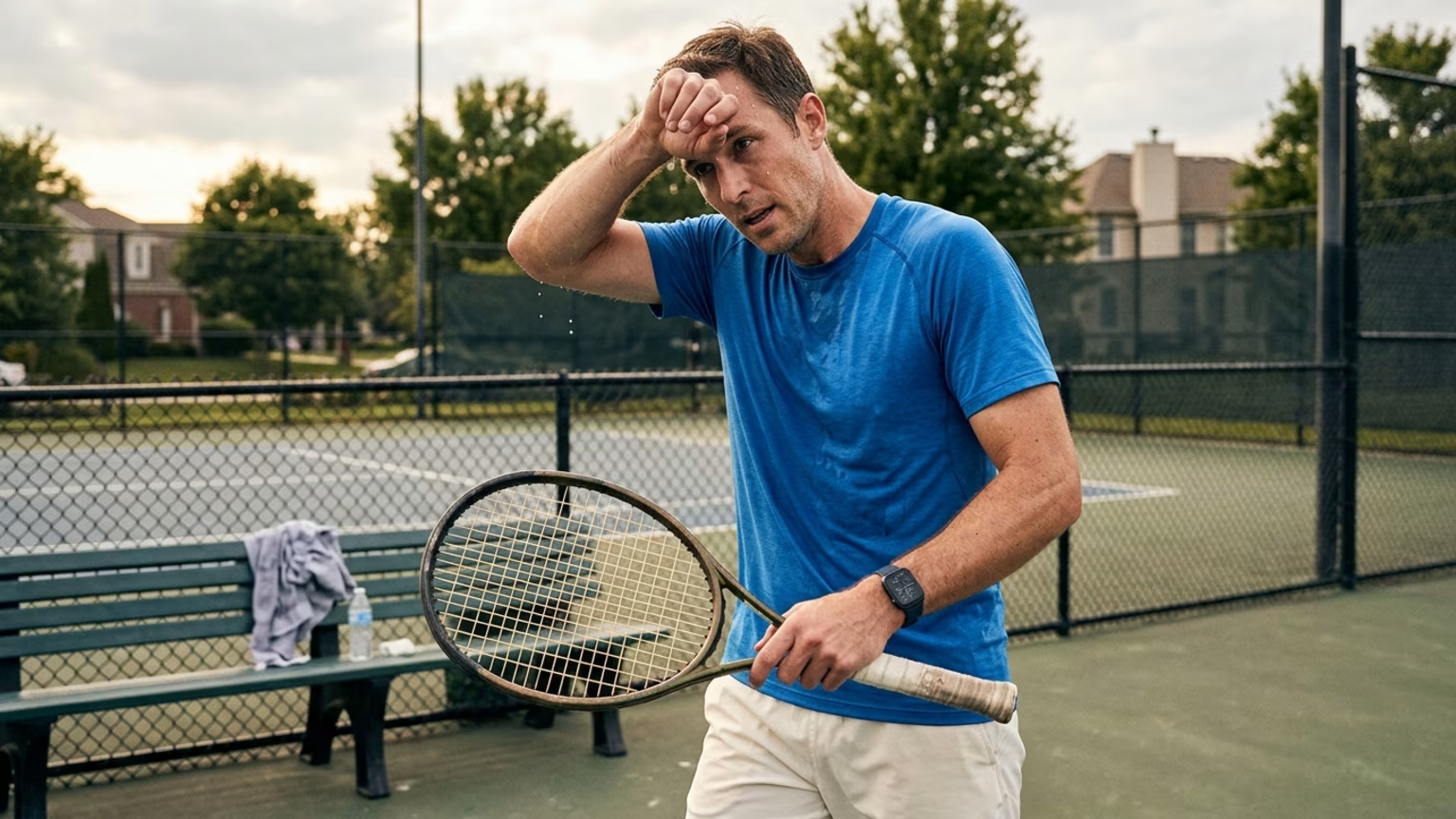
In late 2026, Oura analyzed wearable data to see how recreational tennis impacts heart health and recovery. Learn what this means for your athletic longevity.
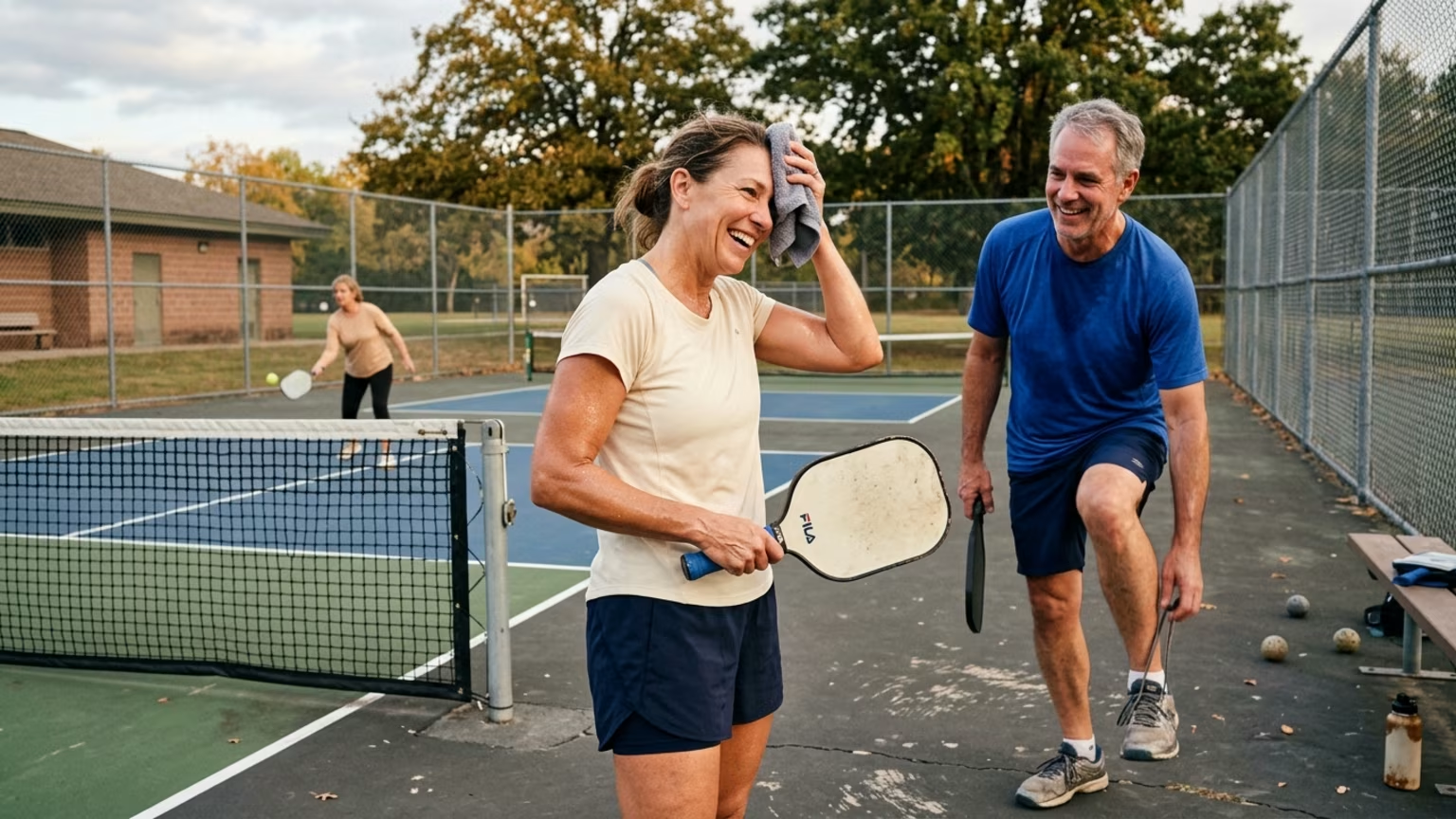
Recent guidelines emphasize gradual progression, dynamic warm-ups, and scheduled recovery to help adult racquet sports players maintain athletic longevity.
Read practical guidance for better movement, smarter preparation and a game that keeps working for you.
explore the Blog
