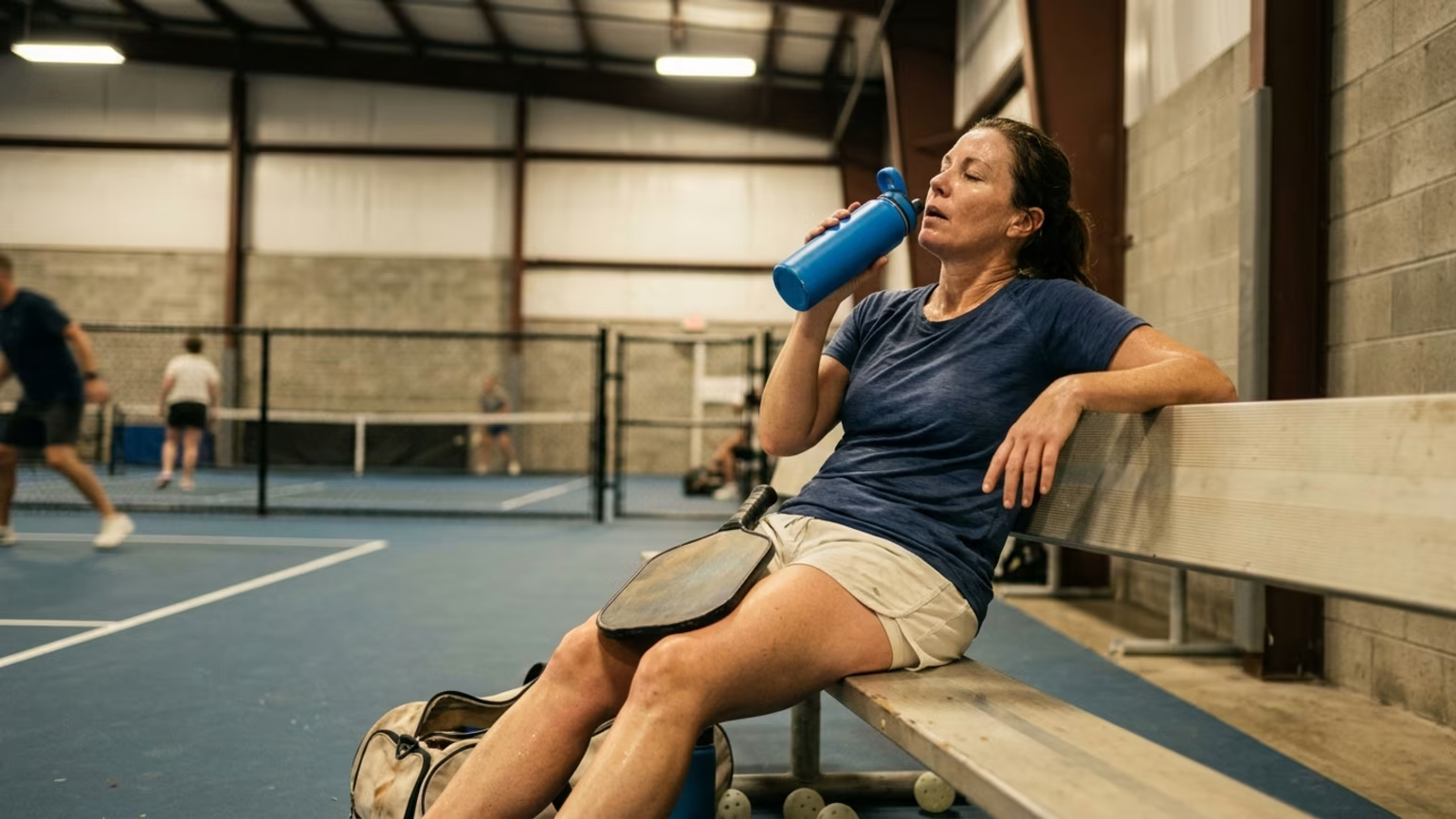

Evercourts examines how compressed evening tennis schedules impact player recovery. Learn why protecting sleep and spacing matches is vital for joint health.




On Wednesday, September 16, 2026, BBC Sport published a tennis schedule that heavily concentrated matches into the late evening. The timetable for Davis Cup World Group II, the WTA São Paulo Open, and the WTA Guadalajara Open Akron listed estimated starts running from 19:00 through 23:00 UK time. This late-night clustering illustrates a common challenge in modern racquet sports. Players are frequently facing compressed recovery windows between consecutive high-intensity sessions.
The BBC scheduling page highlights how tightly match play can be stacked on a single day. In São Paulo, matches were estimated to begin at six different intervals between 19:30 and 23:00. The Guadalajara event showed a similar evening density. Matches there were listed or estimated at 19:00, 20:00, 20:30, 21:30, and 22:00.
The listing also identified multiple players handling double duty on the same day. Jazmin Ortenzi was scheduled for a singles match estimated at 19:30 and a doubles match at 23:00. Caroline Dolehide faced a singles match at 20:00 followed by a doubles appearance at 22:00. These scheduled times imply very short nominal gaps between competitive appearances. Ortenzi had a roughly three-and-a-half-hour window, while Dolehide had just two hours.
These listed intervals do not account for actual match duration, mandatory media, physical treatment, or even basic meals. A listed start time is simply an estimate. A player's actual recovery interval shrinks rapidly if an early match runs long or requires extensive medical timeouts.
The page also noted three suspended matches in São Paulo. Matches involving Eva Lys versus Gabriela Ce, Cadence Brace versus Solana Sierra, and Xiaodi You versus Alina Charaeva were all suspended around 18:00. The schedule records these suspended matches but does not identify the cause or connect the interruptions to player health. It is entirely possible that weather or operational issues caused the delays.
The professional tour offers a visible example of accumulated physical load, but amateur players face a much different reality. When a club player finishes a late league match, they do not have a dedicated physiotherapist waiting for them. Most recreational players have to wake up for work the next morning without the luxury of sleeping in. Stacking a long singles match and a late doubles match into the same evening often severely compromises sleep quality.
We see many league organizers replicating professional tournament structures without adding the necessary recovery buffers. A late finish should always be treated as a strict workload management issue. If a match runs past your normal bedtime, you should intentionally adjust the following day's activity. Avoid assuming that the next day's tennis or padel session can be played at maximum intensity.
Instead of booking another competitive match, choose technical drilling, mobility work, or simple rest. We have seen the impact of these scheduling decisions firsthand at Evercourts. Our team used to think a tough conditioning block was the only way to handle a dense tournament schedule. Then we started tracking our sleep after late evening matches.
We noticed that on days we slept less than six hours, our reaction time at the net was noticeably sluggish, and we felt gassed by the second set. Prioritizing consistent rest between evening and morning sessions did more for our overall tournament resilience than any extra sprints ever did. Recovery is the true foundation of performance.
Adult recreational players need to leave a meaningful buffer after demanding play for cooling down, eating, rehydrating, and sleeping. Track simple signals such as sleep duration, unusual joint pain, persistent soreness, reduced reaction speed, and declining concentration. Players with persistent pain or swelling should seek individualized advice from a qualified medical professional rather than relying on general scheduling guidance. Establishing a smart and sustainable tournament calendar helps players avoid the burnout seen at higher levels of the sport.
The tension between crowded schedules and physiological recovery is supported by specific performance research. A 2026 Frontiers in Physiology paper proposes scheduled 36-hour micro-recovery periods several times per year as an elite-sport planning framework. The paper proposed these multidimensional recovery periods approximately five to eight times per year, or roughly once every four to six weeks. The researchers identified sleep extension as a strongly supported element of this proposed recovery model, targeting at least eight to nine hours of rest.
Separate evidence highlights the direct impact of extending sleep on athletic reaction time and perceived exertion. A Journal of Sleep Research study involving youth elite ice-hockey players measured the effects of an extended-sleep condition. The participants slept an average of 424 minutes on a normal night and 491 minutes during the extended period. This change represented a 16 percent increase in total sleep time.
Following this extended sleep, the study reported an 8 percent improvement in reaction time on a demanding cognitive task. The researchers also noted a 23 percent reduction in perceived fatigue. While this study was conducted in ice hockey rather than tennis, it highlights how extending rest intervals can directly support physical readiness. Managing these rest periods is often the deciding factor in when to play or rest during a busy week.
Meanwhile, professional tennis schedules continue to create potential conflicts between participation and medical rest. Sports Business Journal reports that the ATP’s participation rules can reduce a player’s bonus by 25 percent per missed Masters event beyond one, even in injury cases. Carlos Alcaraz missed four Masters events while recovering from a wrist injury. He could lose a seven-figure sum under the policy if he plays the final two events in Shanghai and Paris.
The conversation around schedule density and player health will likely prompt serious discussions about tournament formats over the coming season. We expect more top professionals to follow the precedent of prioritizing long-term health over immediate calendar obligations. BBC Sport reported that Jack Draper would sit out the rest of 2026 to continue recovering and target a return in 2027. His early finish follows a persistent arm problem.
This decision serves as a clear warning about the physical toll of compressed play across a long season. As the calendar continues to challenge physiological limits, both professional tours and local leagues will need to confront the reality of tight recovery windows. Staggering match times and protecting sleep schedules will be critical for maintaining player availability and healthy aging across the entire year. Managing these late-night sleep and recovery challenges remains a vital skill for anyone hoping to compete consistently.
Follow Evercourts for practical insights on tennis, pickleball and padel performance, movement, recovery and healthy ageing. Stay connected for new articles, research-led guidance and ideas to help you play well and keep playing for years.


A recent live-play test of a silent pickleball highlights its value for practice, but standard balls still perform better for match play and power control.

An evidence check on sports supplements like tart cherry juice. Learn why racquet sports players should prioritize core nutrition over functional foods.
In late 2026, Oura analyzed wearable data to see how recreational tennis impacts heart health and recovery. Learn what this means for your athletic longevity.
Read practical guidance for better movement, smarter preparation and a game that keeps working for you.
explore the Blog
