

Build a sustainable racquet sports calendar by balancing tournament match density with adequate recovery, helping you maintain long-term athletic health.




How many tournaments should I play each year to stay competitive without risking burnout or injury? You should build your schedule around your life constraints and total court workload rather than trying to hit a specific number of events.
Many players assume that playing one event a month is a light schedule. However, Kitman Labs’ Stephen Smith argues that simply counting tournaments does not fully describe tennis workload or injury risk. Your total court time matters much more than the number of weekends you spend competing. A single weekend can involve unpredictable match durations and highly variable recovery windows.
You might wait three hours for a court and then play a grueling three-set match. This compressed schedule often causes more fatigue than your regular weekly practice routine. Traveling to the venue adds another layer of physical and mental stress. Long drives and strange hotel beds actively work against your body as it tries to repair itself.
We know this from our own experience. "I used to think a tough conditioning block was the only way to improve my court endurance. Then I started tracking my sleep. I noticed that on days I slept less than six hours, my reaction time at the net was noticeably sluggish, and I felt gassed by the second set. Prioritizing consistent rest did more for my late match stamina than any extra sprints ever did."
Travel, early starts, and unfamiliar beds all interfere with that essential sleep. You have to account for these disruptions when you plan your season. Reporting on professional tennis explains that late starts and long waits can disrupt warm-ups, eating schedules, energy management, and body temperature. While adult recreational players rarely face midnight finishes, a local tournament can still feature long rain delays.
These unpredictable waits make it incredibly hard to manage your nutrition properly. You might eat a large meal assuming a long break, only to get called to the court immediately. A tournament guide notes that match duration and the time available between matches can vary considerably. Because of this, players should use a simple and repeatable recovery routine.
Cool down, replace fluids, and eat familiar food between matches. You should treat travel and irregular timing as a heavy part of your total physical workload.
Spacing out your events requires you to look closely at match density. Reporting on professional tennis research describes event-scheduling density as a modifiable condition associated with predictable injury clusters. Researchers cited by Sports Illustrated identified predictable injury clusters around April, August, and October at the professional level. While adult recreational players have different physical demands, the core lesson about compressed recovery remains valid.
Elite players face unique pressures that do not perfectly map onto recreational play. However, the fundamental mechanism of physical fatigue applies to everyone. Al Murphy of Tennis Australia said that extended Masters events create more weeks on the road and greater physical and mental fatigue. A crowded amateur schedule creates a remarkably similar problem.
For an adult player juggling employment and family, stacking demanding weekends by default creates a tremendous strain. Work deadlines and caregiving responsibilities already consume a large portion of your energy. You should leave deliberate space after a high-volume event. Wait until your normal walking, sleep, and easy hitting return to baseline before entering another high-stakes draw.
A local event might impose less travel and psychological stress than a major regional tournament. However, it can still become physically demanding if you enter multiple divisions or play several matches in one day. Match count and format matter just as much as event prestige. You must calculate the total hours you expect to spend running on the court.
Instead of treating every event as a major priority, create a simple competition hierarchy. Choose a few priority events that require more preparation and protected recovery time. Fill the rest of your calendar with lower-pressure formats that allow you to practice without demanding peak physical form. This approach helps in managing your competition timeline effectively.
Yes, because each sport imposes different physical demands and typical match formats. Tennis tournaments often feature longer matches with significant ground coverage. Players might spend over two hours on a hard court during a single singles match. Padel relies heavily on repeated bursts of acceleration and awkward reaching.
Pickleball might look smaller, but it requires sharp lateral changes of direction in tight spaces. "When I first started playing pickleball, I noticed how many people skipped warming up entirely. They would jump straight out of their cars and right up to the kitchen line. I tried doing that and immediately pulled a calf muscle."
"Pickleball requires just as much explosive lateral movement as tennis, just in a tighter space. Since then, I always spend five minutes doing dynamic lunges and ankle rolls. It changes everything about how confident I feel pushing off the baseline." Proper preparation makes every format safer and more enjoyable over a long weekend.
A pickleball-focused review from Racket Chronicle says retrospective data repeatedly identify sessions under two hours and avoiding back-to-back playing days as load-management habits. You can apply this wisdom to all racquet sports by recognizing when you are playing too many consecutive matches. Repeated heavy loading without adequate rest slowly chips away at your joint health. Modifying your schedule to avoid playing heavy matches on consecutive days is a highly effective strategy.
Doubles play may reduce court coverage relative to singles competition, but it should not automatically be labeled easy. Long days, repeated acceleration, awkward reaching, and multiple divisions can still produce substantial fatigue. You also have to manage partner coordination and the mental focus required for rapid net exchanges. Treating doubles as a pure rest day often leads to unexpected soreness on Monday morning.
Making smart choices here is essential for keeping your body prepared for continuous play. You must listen to your body and adjust your time on the court accordingly. This proactive strategy keeps you fresh and ready for your next training session. Recognizing the unique demands of each sport is the foundation of athletic longevity.
Playing fewer high-stress tournaments does not mean you have to stop playing altogether. A 2026 Frontiers in Public Health study found a positive association between sport participation and healthy aging after statistical adjustment for several demographic, socioeconomic, health-related, and ecological factors. The key phrase to remember is sport participation. You do not need to enter major bracketed events every weekend to stay fit.
Local round robins and casual social leagues provide the same physical movement with much less psychological stress. Texas Health reports that one study found improvements in blood pressure, cholesterol, and cardiorespiratory fitness after middle-aged and older adults played pickleball for one hour three times weekly for six weeks. This shows that regular and manageable activity provides significant benefits. You can maintain your health simply by keeping up a steady routine of court time.
Reducing your tournament count can actually improve the quality of your remaining matches. When you are not constantly recovering from grueling competition weekends, your regular practice sessions become much more productive. You will have more energy to focus on technique and tactical improvement. This is how you build a resilient body that handles the occasional hard tournament easily.
Furthermore, ongoing physical activity offers profound social benefits. The Society of Behavioral Medicine summarizes research associating physical activity with lower likelihood of social isolation and severe loneliness in older adults. Playing regularly with friends keeps you connected to your community. By protecting these lower-pressure matches, you can establish a consistent group of hitting partners that supports your well-being over the long term.
A sustainable competition calendar respects your life constraints and balances intense tournament weekends with adequate rest. View your matches as adjustable doses of healthy activity that keep you moving well for years to come.
Follow Evercourts for practical insights on tennis, pickleball and padel performance, movement, recovery and healthy ageing. Stay connected for new articles, research-led guidance and ideas to help you play well and keep playing for years.


An evidence check on sports supplements like tart cherry juice. Learn why racquet sports players should prioritize core nutrition over functional foods.
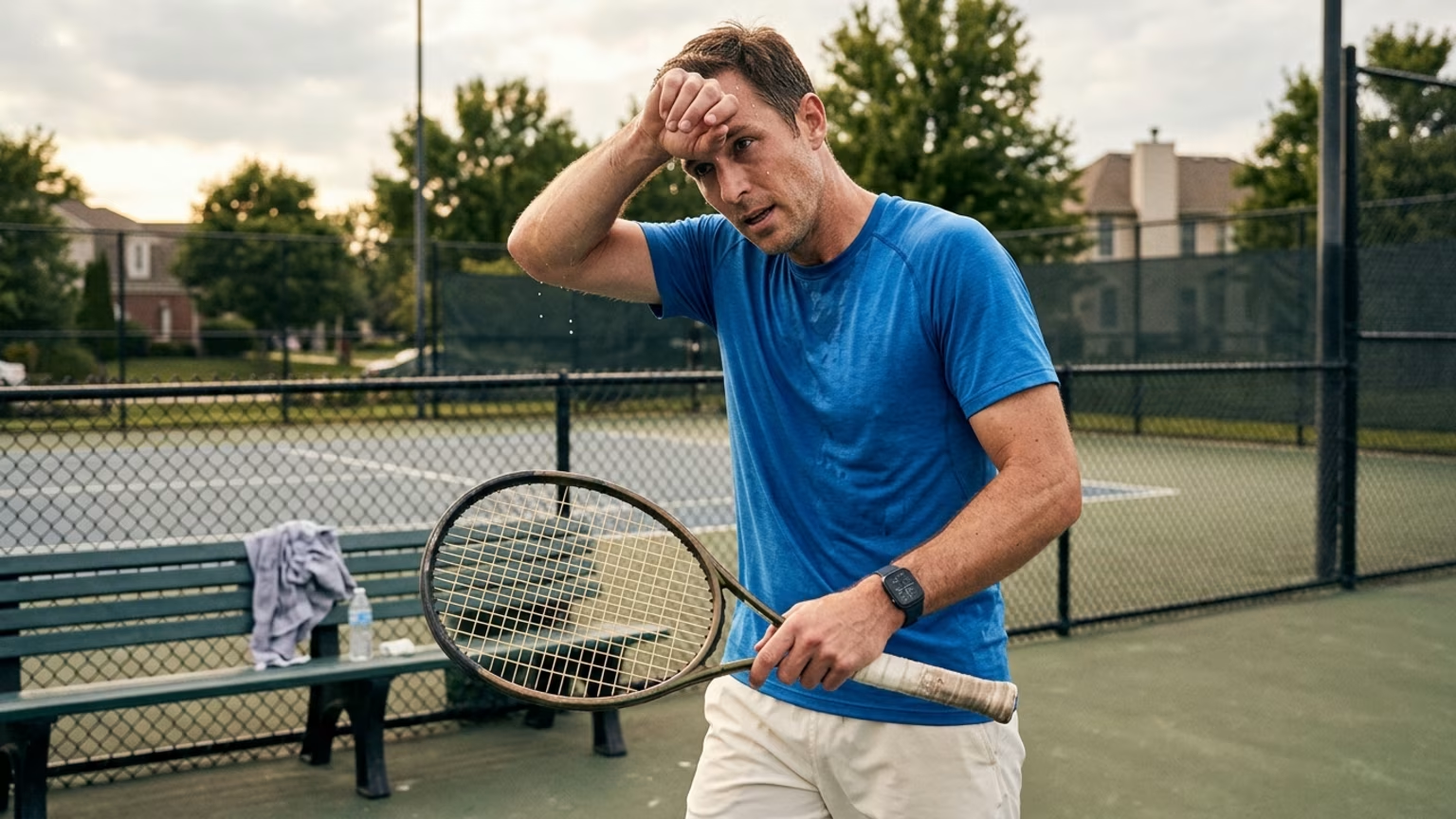
In late 2026, Oura analyzed wearable data to see how recreational tennis impacts heart health and recovery. Learn what this means for your athletic longevity.
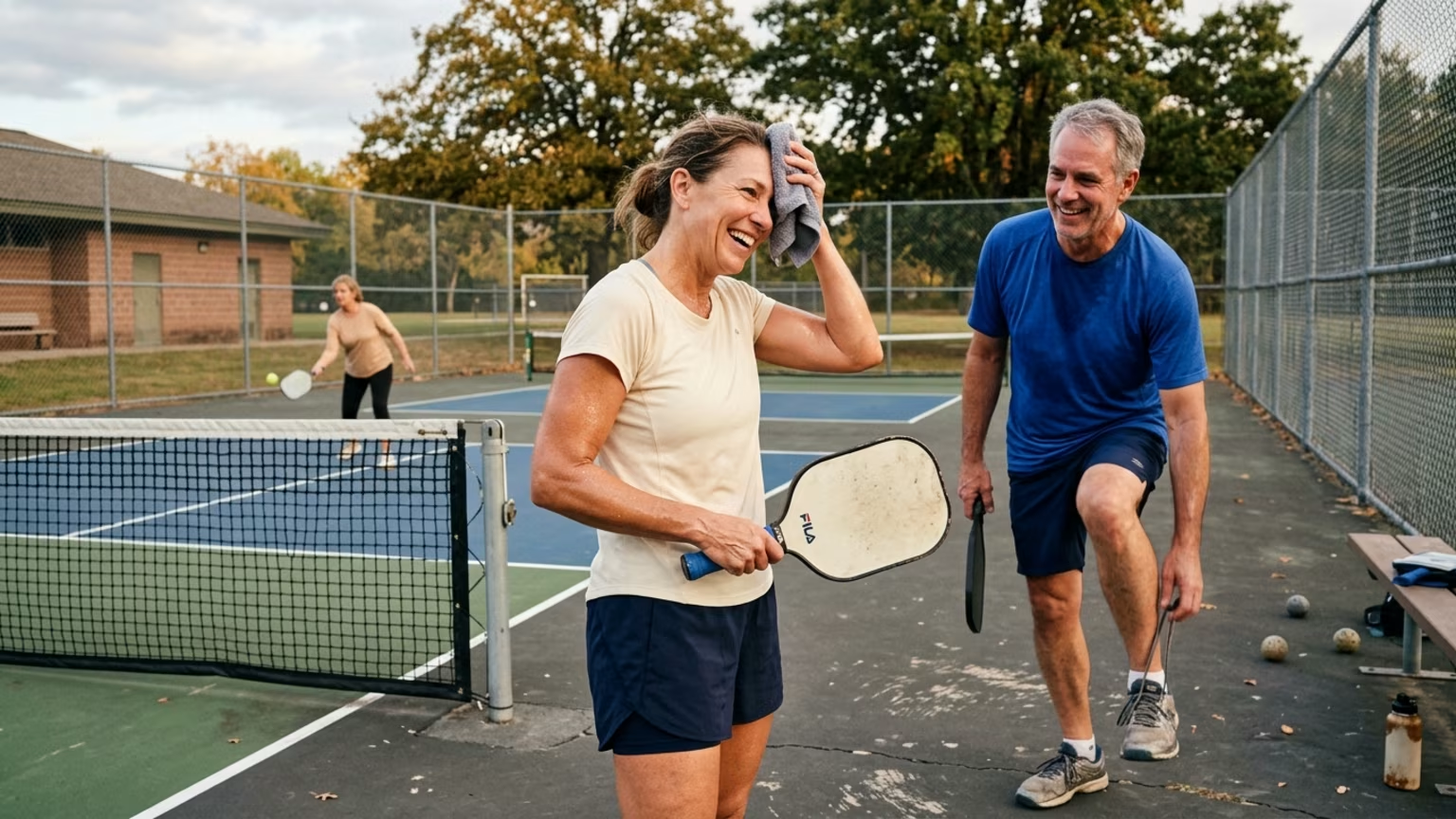
Recent guidelines emphasize gradual progression, dynamic warm-ups, and scheduled recovery to help adult racquet sports players maintain athletic longevity.
Read practical guidance for better movement, smarter preparation and a game that keeps working for you.
explore the Blog
