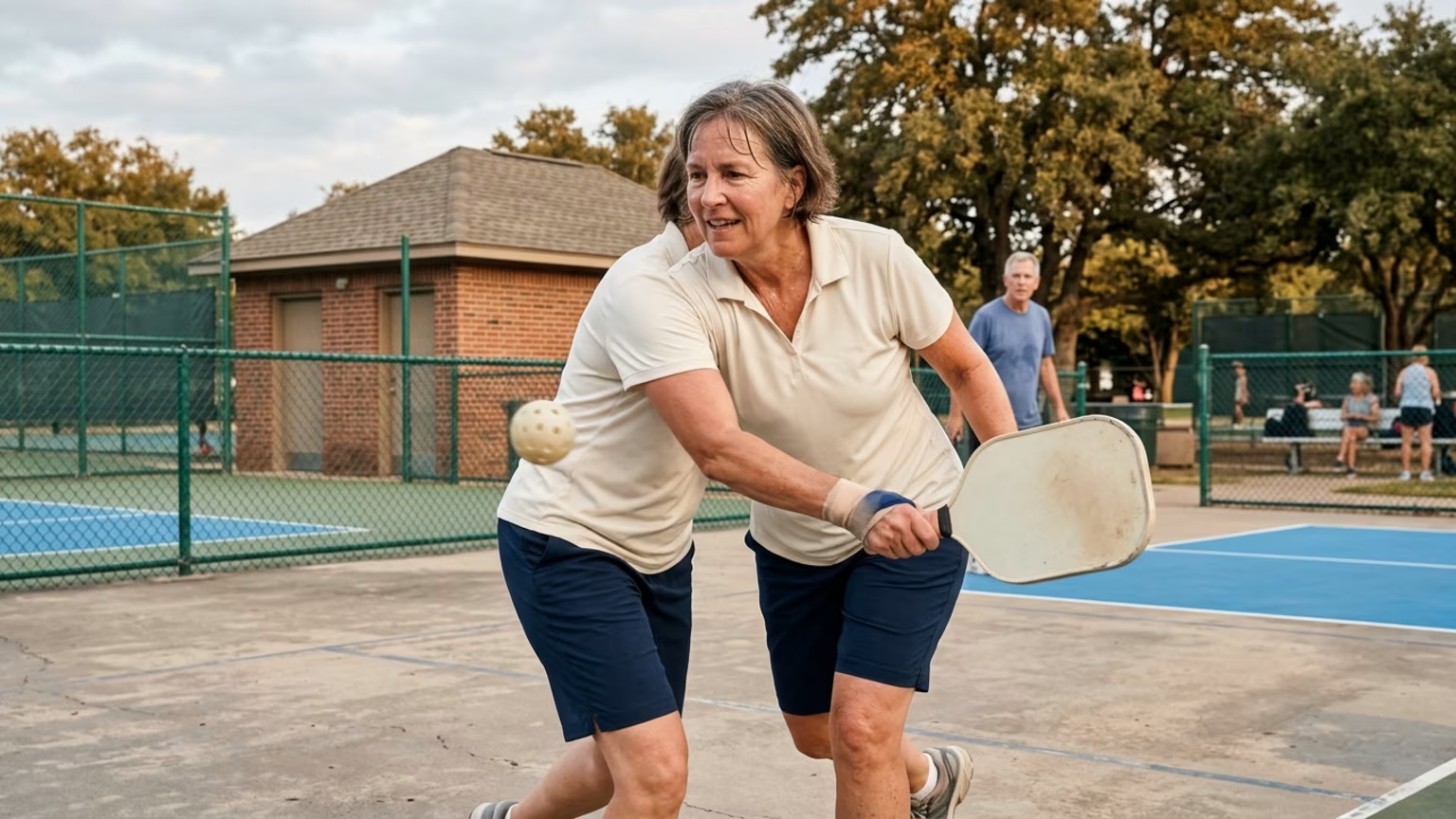

Learn how to choose a pickleball paddle based on swing weight, shape, and grip size to support relaxed mechanics and reduce the risk of overuse injuries.




What is the best pickleball paddle for preventing elbow and shoulder pain? The truth is that no specific paddle weight or shape is medically proven to prevent overuse injuries, so you must choose equipment that allows you to maintain relaxed mechanics throughout an entire match.
Many players worry that adding mass to their paddle will automatically damage their joints over time. A heavier paddle is not universally dangerous to your arms. If you are strong enough to support the extra mass, a heavier paddle might actually reduce the effort required to hit deep drives. The real problem occurs when a paddle feels too heavy to maneuver late in a match.
The available industry guidance characterizes heavier paddles as offering more “plow-through” while increasing fatigue demands on the wrist. Plow-through means the paddle easily pushes through the ball on contact. This stability helps defend against hard shots from opponents. However, your wrist must absorb the repeated stress of swinging and stopping that extra weight.
When comparing options, you must look beyond the simple ounce measurement listed on the box. A paddle-testing database reported measurements for 592 paddles, with a median static weight of 8.00 ounces and a median swing-weight reading of 114.3 in its testing system. Swing weight measures how much resistance you feel when moving the paddle through the air. Two paddles can weigh exactly eight ounces on a scale but feel completely different during play.
If you select a paddle with a very high swing weight, you might struggle to reposition it during fast kitchen exchanges. This sluggishness often causes players to swing late and muscle the ball with their forearm. Over time, that forced compensation is what leads to aching elbows and sore shoulders. We recommend finding the lowest swing weight that still feels stable against incoming pace.
An elongated paddle gives you slightly more room to retrieve wide shots and execute a two-handed backhand. This extra reach is incredibly appealing for players transitioning from tennis. However, this extra length comes at a specific cost to your overall reaction speed. Adding length changes where the balance point sits in your hand.
Summaries of the official standards state that paddle length may not exceed 17 inches and that length plus width may not exceed 24 inches. One equipment guide describes this as a trade-off within the combined 24-inch length-and-width limit. If you stretch the paddle out to maximize reach, you inevitably lose width. This tradeoff can create a narrower sweet spot and a paddle that feels top-heavy.
Many beginners assume that a longer paddle will make up for slow footwork on the court. Instead of relying on an elongated paddle to save you from bad positioning, you should train the movements behind better tennis, pickleball and padel footwork. Good court coverage reduces the need for desperate lunges and awkward reaches. When you move well, a standard paddle shape provides more than enough coverage to win points.
We always suggest evaluating how a longer paddle feels during rapid volleys before committing to it. If the paddle head feels sluggish during fast hand exchanges, you might start compensating by pushing with your shoulder. A wider standard shape often provides a more forgiving sweet spot for recreational play. You should prioritize stability over a tiny increase in reach if you want to play without joint pain.
Choosing the right grip size requires understanding the unique demands of different racquet sports. In tennis, a relatively large grip is common to help players manage heavy racquets and high topspin. In padel, players often build up extremely thick grips to handle a heavy solid racket. Pickleball requires much faster wrist action and subtle paddle manipulation.
For pickleball, one industry guide lists approximately 4.0 inches for smaller hands and around 4.25 inches as a common adult reference point. Keep in mind that this is just a starting reference rather than a medical prescription. Your grip should allow a relaxed hold without forcing you to squeeze excessively. If your hand is constantly clamped down, tension will radiate straight into your elbow.
Players frequently misdiagnose equipment issues when the real problem is a lack of physical preparation. When I first started playing pickleball, I noticed how many people skipped warming up entirely. They would jump straight out of their cars and right up to the kitchen line. I tried doing that and immediately pulled a calf muscle.
Pickleball requires just as much explosive lateral movement as tennis, just in a tighter space. Since then, I always spend five minutes doing dynamic lunges and ankle rolls. If you jump into intense play without a proper 12-minute court-ready warm-up, you will likely squeeze the paddle too hard. Even the perfect grip size feels terrible if your muscles are completely cold and tense.
The best way to evaluate a paddle is to test it while you are genuinely fatigued. If you are trying to decide when to upgrade your tennis racquet or pickleball paddle, you need to know how the gear performs under stress. A paddle that feels incredible for five minutes might become difficult to accelerate after an hour of play. Most players only hit drives when testing, which completely ignores the subtle parts of the game.
Perform a series of quick volleys, defensive blocks, and controlled dinks. Pay close attention to whether the paddle causes grip tightening or late contact as your session continues. Notice if your shoulder starts doing the work that your forearm should be doing. You want a paddle that maintains your comfortable stroke mechanics from the first serve to the final point.
If a paddle forces you to alter your natural swing to generate power, it is not the right fit. It is very easy to fall for marketing labels that promise unlimited power or perfect control. The reality is that your comfort and relaxed technique dictate how well you play. Prioritize equipment that feels invisible in your hand and lets you focus completely on the match.
Finding the right equipment is about trusting how your body feels during play rather than relying on flashy marketing claims. A carefully chosen paddle supports your natural mechanics and allows you to enjoy the courts with confidence for years to come.
Follow Evercourts for practical insights on tennis, pickleball and padel performance, movement, recovery and healthy ageing. Stay connected for new articles, research-led guidance and ideas to help you play well and keep playing for years.


An evidence check on sports supplements like tart cherry juice. Learn why racquet sports players should prioritize core nutrition over functional foods.
In late 2026, Oura analyzed wearable data to see how recreational tennis impacts heart health and recovery. Learn what this means for your athletic longevity.

Recent guidelines emphasize gradual progression, dynamic warm-ups, and scheduled recovery to help adult racquet sports players maintain athletic longevity.
Read practical guidance for better movement, smarter preparation and a game that keeps working for you.
explore the Blog
